Bafat
A coastal Indian spice blend for pork stews and meat dishes
Bafat is a masala blend from the coastal regions of Karnataka and Goa, widely used in Catholic cooking. It combines ground chillies with aromatic seeds and bark to create a hot, earthy seasoning for stews and vegetables.
- Also spelled bafad or baffat
- Combines chilli with coriander, cumin, and mustard
- Key seasoning for pork stew and dukra maas
- Served alongside steamed sanna rice bread
- Central to Mangalorean and Goan Catholic cooking
What is Bafat?
Bafat is a traditional masala blend originating from the western coast of India. It brings together dried and ground chilli peppers with a selection of warming seeds and bark. The result is a coarse, deeply coloured seasoning that packs heat alongside earthy and sweet undertones.
Where does Bafat come from?
This blend hails from the coastal districts of Karnataka and Goa. It is particularly tied to the culinary practices of local Catholic communities, who adapted it over generations to suit their regional pantry and climate.
What does Bafat taste like?
The base heat comes from dried chilli peppers, giving it a sharp bite. Cinnamon and cloves add a sweet warmth, while coriander, cumin, and mustard seeds contribute an earthy depth. Turmeric lends a subtle bitterness and bright colour.
Bafat, drawn
How Bafat is used
Cookers typically grind the components into a fine powder or moist paste. It serves as the primary seasoning for slow-cooked pork stews, though it also flavours other meats and vegetables. The blend is simmered until the raw edge fades and the spices meld.
Bafat in the world's kitchens
Mangalorean and Goan cuisines rely on it heavily. Within these regional styles, it holds special status in Catholic households, distinguishing their meat preparations from those of neighbouring Hindu and Muslim communities.
At a glance: where it turns up
Spiritual and ceremonial use
While not a ritual offering itself, bafat sits at the centre of Catholic community feasting and daily kitchen routines in coastal Karnataka and Goa. It marks the distinct foodways of the region's Christian families.
Meal
It anchors dinner plates, most famously in hearty pork stews that accompany steamed rice breads like sanna. Its robust profile suits evening meals where long cooking times develop deeper savoury notes.
Questions people ask about Bafat
What exactly is bafat?
It is a masala blend from coastal India, mixing ground chillies with coriander, cumin, mustard, pepper, cinnamon, cloves, and turmeric.
Where does this spice come from?
It originates in the Mangalore and Goa regions of western India, developed by local Catholic communities over many generations to suit the coastal climate.
How would you describe its taste?
It delivers a sharp chilli heat balanced by the sweet warmth of cinnamon and cloves, plus earthy notes from coriander and cumin.
What is the most famous dish using it?
Pork bafat, a rich stew often called dukra maas, which is traditionally eaten with steamed rice bread known as sanna.
Good reading and sources
The facts on this page come from the Wikipedia article "Bafat", written by its contributors and used under the CC BY-SA 4.0 licence, and from its Wikidata record (CC0). EveryMasala rewrote the text in its own words, with AI assistance, and compares every page with the article to make sure no passage is copied. It may be reused under the same CC BY-SA 4.0 licence with a link back.
It may contain mistakes. Names, strengths and customs differ from one grower, kitchen or shop to the next. Traditional and medicinal uses are described as tradition, never as medical advice, and none of this is a substitute for a doctor. If something is wrong, tell us. Last refreshed 2026-10-04.
More from India
All the spices of India 🇮🇳 India and 3 moreGaram masalaगरम मसाला
A ground blend of warm spices from the Indian subcontinent used to finish curries and stews.Blend · Warm and sweet-spiced · Sharp and pungent
🇮🇳 India and 3 moreGaram masalaगरम मसाला
A ground blend of warm spices from the Indian subcontinent used to finish curries and stews.Blend · Warm and sweet-spiced · Sharp and pungent
 🇮🇳 India and 4 moreCurry powder
A Western adaptation of Indian spice blends for cooking sauces and stews.Blend · Warm and sweet-spiced · Earthy and deep
🇮🇳 India and 4 moreCurry powder
A Western adaptation of Indian spice blends for cooking sauces and stews.Blend · Warm and sweet-spiced · Earthy and deep
 🇮🇳 IndiaChaat masala
A tangy Indian spice blend for savory snacks and fruit saladsBlend · Sour and tart · Sharp and pungent
🇮🇳 IndiaChaat masala
A tangy Indian spice blend for savory snacks and fruit saladsBlend · Sour and tart · Sharp and pungent
Its cousins elsewhere
All blend 🇪🇹 Ethiopia and 1 moreBerbereበርበሬ (bärbäre)
A complex Ethiopian spice blend built on chili peppers, coriander, and ginger.Hot and fiery · Warm and sweet-spiced
🇪🇹 Ethiopia and 1 moreBerbereበርበሬ (bärbäre)
A complex Ethiopian spice blend built on chili peppers, coriander, and ginger.Hot and fiery · Warm and sweet-spiced
 🇪🇹 EthiopiaMitmitaሚጥሚጣ
A fiery Ethiopian spice blend of bird's eye chilies, cardamom, and cloves.Blend · Hot and fiery · Warm and sweet-spiced
🇪🇹 EthiopiaMitmitaሚጥሚጣ
A fiery Ethiopian spice blend of bird's eye chilies, cardamom, and cloves.Blend · Hot and fiery · Warm and sweet-spiced
 🇱🇾 Libya and 1 morePilpelchumaפלפלצ'ומה
A steamed chili and garlic paste from Libyan Jewish cuisine, now common in Israel.Hot and fiery · Sharp and pungent
🇱🇾 Libya and 1 morePilpelchumaפלפלצ'ומה
A steamed chili and garlic paste from Libyan Jewish cuisine, now common in Israel.Hot and fiery · Sharp and pungent
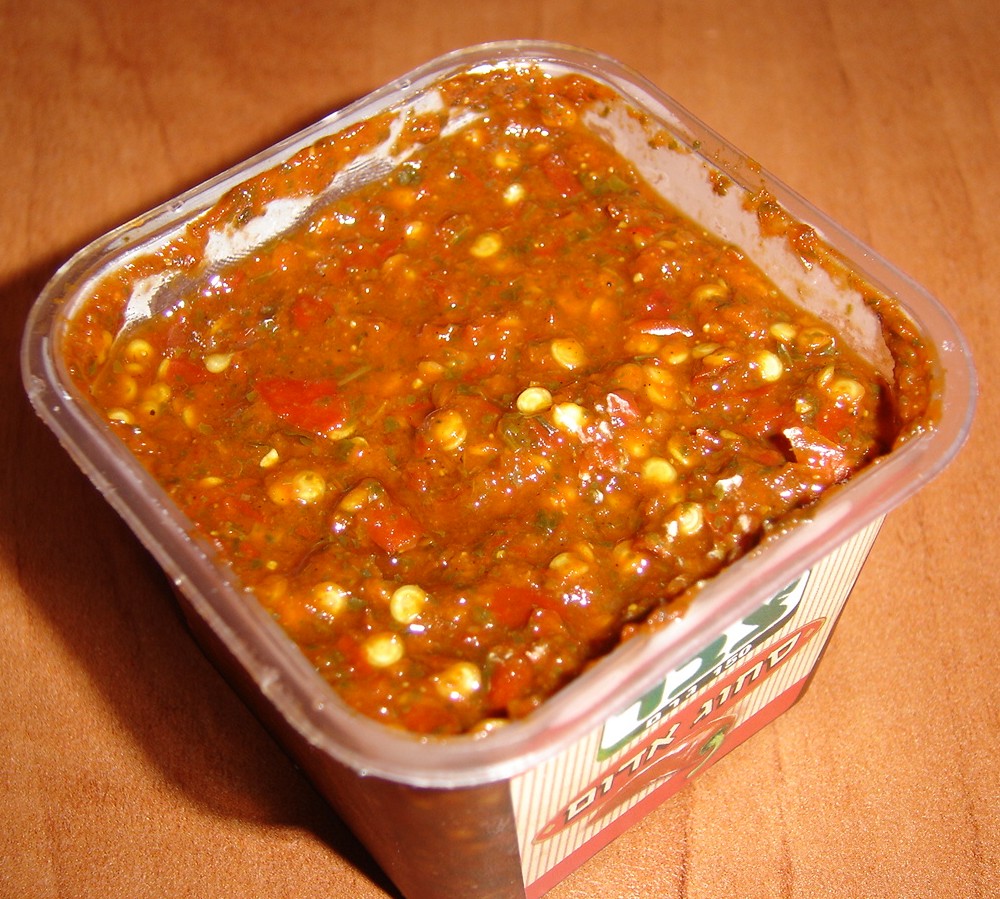 🇾🇪 Yemen and 1 moreZhugسحوق
A Yemeni hot sauce of crushed chilies, garlic, and corianderHot and fiery · Sharp and pungent
🇾🇪 Yemen and 1 moreZhugسحوق
A Yemeni hot sauce of crushed chilies, garlic, and corianderHot and fiery · Sharp and pungent