
Curry powder
A Western adaptation of Indian spice blends for cooking sauces and stews.
This is a blend of ground spices created to mimic the taste of Indian curries. It originated in India as an adaptation of garam masala and was introduced to Britain by traders in the late eighteenth century. The mix typically contains turmeric, coriander, cumin, and chili peppers.
- First sold commercially in London in 1784 by Sorlie's Perfumery.
- Adapted from Indian garam masala for British traders.
- Turmeric gives the blend its characteristic yellow color.
- Introduced to Japan in the mid-nineteenth century.
- US standards require turmeric, coriander, and cumin.
What is Curry powder?
Curry powder is a dry seasoning mixture used primarily to flavor dishes that are called curries in Western contexts. It consists of various ground plant parts, including seeds, roots, and barks. The blend is characterized by its bright yellow hue, which comes from turmeric, and its complex, warm aroma. It delivers a combination of earthy, pungent, and often hot flavors depending on the specific recipe. Unlike fresh herbs, this powder is a stable, shelf-ready ingredient designed to provide a consistent taste profile in cooked meals.
Where does Curry powder come from?
The mixture was developed as a convenient alternative to traditional Indian spice preparations like garam masala. Indian merchants initially supplied these blends to British traders during the era of Company rule in India. The first known commercial product appeared in London in 1784, sold by Sorlie's Perfumery. This introduction allowed British cooks to replicate Indian-style sauces without grinding individual spices. Over time, brands such as Crosse & Blackwell and Sharwood's established themselves in the market, making the powder a staple in Western kitchens.
What does Curry powder taste like?
The taste profile is dominated by the earthy sweetness of turmeric and the warm, citrusy notes of coriander and cumin. Chili peppers add heat, while black pepper and ginger contribute a sharp, pungent bite. Some recipes include fenugreek for bitterness or cinnamon for sweetness. The flavor is robust and aromatic, designed to stand up to long cooking times. The exact balance varies by region and brand, but the combination aims to recreate the layered complexity of traditional Indian sauces.
How Curry powder is grown and processed
The individual components of curry powder come from plants grown in various climates. Turmeric and ginger are rhizomes harvested from tropical regions. Coriander and cumin are seeds collected from flowering plants. Chili peppers are dried fruits. These ingredients are processed separately before being ground into fine powders. The final blend is created by mixing these ground components in specific proportions. No single plant produces curry powder; it is a manufactured mixture of distinct agricultural products.
Curry powder, drawn
How Curry powder is used
Cookists use curry powder to season meats, vegetables, and legumes in stews and sautés. A common technique involves dusting chicken pieces with the powder before frying them with onions. It serves as a base for creating quick versions of Indian-inspired dishes in home kitchens. The powder can be added directly to liquids during simmering to infuse flavor. In Japan, it evolved into a distinct dish known as Japanese curry, which is thicker and sweeter than its Indian counterparts.
Curry powder in the world's kitchens
In India, similar blends exist under names like garam masala, but curry powder is largely a Western invention. British cooks adopted it to approximate Indian flavors using readily available ingredients. In Australia, local brands like Keen's have become household staples. In Japan, the spice was introduced in the mid-nineteenth century and adapted into a unique national dish. In the United States and East Africa, standards define specific ingredient requirements, reflecting local tastes and regulatory needs.
At a glance: where it turns up


Spiritual and ceremonial use
There is no significant spiritual or religious role associated with curry powder itself. It is a secular culinary product without ritual significance. Traditional Indian spice blends may have Ayurvedic connections, but curry powder as a commercial commodity does not carry religious meaning. It is used purely for flavor enhancement in everyday cooking across various cultural contexts.
Curry powder at celebrations
Curry powder is not tied to specific festivals or celebrations. It is a general-purpose seasoning used in daily life rather than for special occasions. While curries may be served at weddings or holidays, the powder itself is not a ceremonial item. Its usage is driven by convenience and taste preference rather than tradition or festivity.
Traditional and medicinal use
Traditional medicine systems like Ayurveda recognize individual ingredients such as turmeric and ginger for their health properties. However, curry powder as a blended product is not traditionally used for medicinal purposes. There are no established folk remedies involving the mixed powder. Consumers should view it solely as a food ingredient rather than a health supplement.
Buying and storing Curry powder
To maintain freshness, curry powder should be stored in an airtight container away from light and heat. Ground spices lose their potency over time, so buying small quantities is advisable. Check for clumping or faded color as signs of age. Properly stored, the blend retains its flavor for several months. Avoid storing it near strong-smelling foods to prevent odor absorption.
What to use instead of Curry powder
Garam masala is the closest traditional substitute, though it often lacks the high turmeric content found in curry powder. For a milder flavor, reduce the amount of chili or omit it entirely. If a specific brand is unavailable, homemade blends using turmeric, coriander, cumin, and chili can replicate the taste. Japanese curry roux blocks offer a ready-made alternative for those seeking that specific style.
The trade in Curry powder
The global trade of curry powder began with British colonial commerce in the eighteenth century. Today, it is produced and consumed worldwide, with regional variations reflecting local preferences. Standards in the United States, Uganda, and other countries define permissible ingredients and analytical requirements. Adulteration and quality control are monitored through these regulations. The spice remains a key export from producing nations to Western markets.
Meal
This spice mix is primarily associated with main courses, particularly lunch and dinner. It is commonly used in hearty stews and roasted meat dishes. While less common for breakfast, it can appear in savory morning meals in some cultures. The powder is also suitable for preparing larger batches of food for feasts or family gatherings. Its convenience makes it a practical choice for everyday cooking when time is limited.
Questions people ask about Curry powder
Where does curry powder come from?
It originated in India as an adaptation of garam masala. Indian merchants sold it to British traders during the colonial period. The first commercial product appeared in London in 1784.
What does curry powder taste like?
It has a warm, earthy flavor with pungent notes from pepper and ginger. Heat comes from chili peppers, while turmeric provides an earthy base. The taste is complex and robust.
Is curry powder the same as garam masala?
No. Garam masala is a traditional Indian blend. Curry powder is a Western adaptation designed to mimic Indian sauces. It typically contains more turmeric and chili than traditional mixes.
What are the main ingredients in curry powder?
Common ingredients include turmeric, coriander, cumin, chili peppers, black pepper, and ginger. Some blends also contain fenugreek, mustard seed, or cinnamon.
How is curry powder used in cooking?
It is used to season meats, vegetables, and legumes in stews and sautés. Cooks often dust proteins with it before frying. It serves as a base for quick Indian-inspired dishes in home kitchens.
Good reading and sources
- Curry powder on WikipediaEncyclopedia
- More photos on Wikimedia CommonsPhotos and video
- Wikidata recordOpen data
The facts on this page come from the Wikipedia article "Curry powder", written by its contributors and used under the CC BY-SA 4.0 licence, and from its Wikidata record (CC0). EveryMasala rewrote the text in its own words, with AI assistance, and compares every page with the article to make sure no passage is copied. It may be reused under the same CC BY-SA 4.0 licence with a link back.
It may contain mistakes. Names, strengths and customs differ from one grower, kitchen or shop to the next. Traditional and medicinal uses are described as tradition, never as medical advice, and none of this is a substitute for a doctor. If something is wrong, tell us. Last refreshed 2026-10-04.
More from India
All the spices of India 🇮🇳 India and 3 moreGaram masalaगरम मसाला
A ground blend of warm spices from the Indian subcontinent used to finish curries and stews.Blend · Warm and sweet-spiced · Sharp and pungent
🇮🇳 India and 3 moreGaram masalaगरम मसाला
A ground blend of warm spices from the Indian subcontinent used to finish curries and stews.Blend · Warm and sweet-spiced · Sharp and pungent
 🇮🇳 IndiaChaat masala
A tangy Indian spice blend for savory snacks and fruit saladsBlend · Sour and tart · Sharp and pungent
🇮🇳 IndiaChaat masala
A tangy Indian spice blend for savory snacks and fruit saladsBlend · Sour and tart · Sharp and pungent
 🇧🇩 Bangladesh and 2 morePanch phoronপাঁচ ফোড়ন
A Bengali blend of five whole seeds used to temper dishesBlend · Bitter · Warm and sweet-spiced
🇧🇩 Bangladesh and 2 morePanch phoronপাঁচ ফোড়ন
A Bengali blend of five whole seeds used to temper dishesBlend · Bitter · Warm and sweet-spiced
Its cousins elsewhere
All blend 🇪🇹 Ethiopia and 1 moreBerbereበርበሬ (bärbäre)
A complex Ethiopian spice blend built on chili peppers, coriander, and ginger.Hot and fiery · Warm and sweet-spiced
🇪🇹 Ethiopia and 1 moreBerbereበርበሬ (bärbäre)
A complex Ethiopian spice blend built on chili peppers, coriander, and ginger.Hot and fiery · Warm and sweet-spiced
 🇪🇹 EthiopiaMitmitaሚጥሚጣ
A fiery Ethiopian spice blend of bird's eye chilies, cardamom, and cloves.Blend · Hot and fiery · Warm and sweet-spiced
🇪🇹 EthiopiaMitmitaሚጥሚጣ
A fiery Ethiopian spice blend of bird's eye chilies, cardamom, and cloves.Blend · Hot and fiery · Warm and sweet-spiced
 🇱🇾 Libya and 1 morePilpelchumaפלפלצ'ומה
A steamed chili and garlic paste from Libyan Jewish cuisine, now common in Israel.Hot and fiery · Sharp and pungent
🇱🇾 Libya and 1 morePilpelchumaפלפלצ'ומה
A steamed chili and garlic paste from Libyan Jewish cuisine, now common in Israel.Hot and fiery · Sharp and pungent
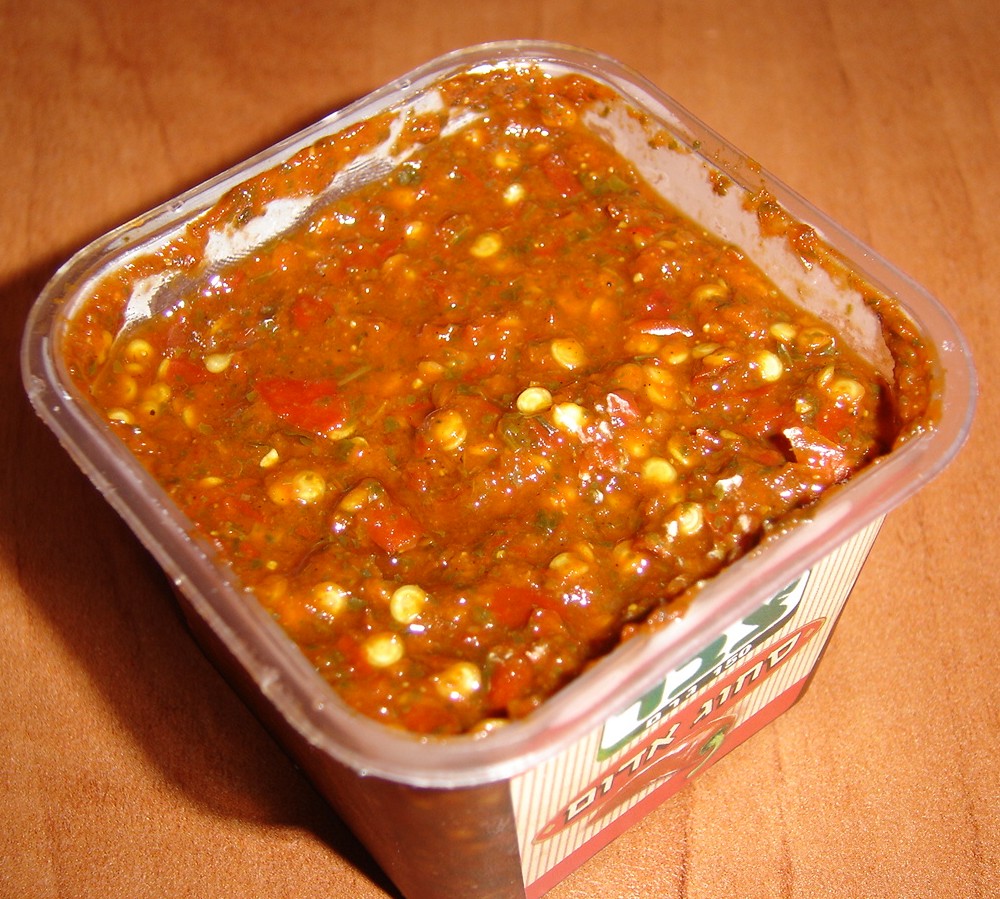 🇾🇪 Yemen and 1 moreZhugسحوق
A Yemeni hot sauce of crushed chilies, garlic, and corianderHot and fiery · Sharp and pungent
🇾🇪 Yemen and 1 moreZhugسحوق
A Yemeni hot sauce of crushed chilies, garlic, and corianderHot and fiery · Sharp and pungent