
Korean brining salt
In its own language: 왕소금
A coarse, minimally processed salt used for fermenting kimchi in Korea.
This is a type of edible salt with large crystals, known locally as wang-sogeum. It comes from Korea and is traditionally used to draw moisture from napa cabbage during kimchi preparation. The minimal processing leaves beneficial microbes that aid fermentation.
- Known as wang-sogeum in Korea.
- Used primarily for salting napa cabbage.
- Contains microorganisms from minimal processing.
- Has a larger grain size than table salt.
- Essential for developing kimchi flavors.
What is Korean brining salt?
Korean brining salt consists of large, irregular crystals that stand out against finer table salts. Locals refer to it by names such as wang-sogeum or gulgeun-sogeum, which translate to king salt or coarse salt. This variety is not refined to the same degree as standard kitchen salts, preserving its natural texture and composition. It appears as white, chunky grains rather than a fine powder. The larger size allows it to sit on vegetables without dissolving too quickly, making it ideal for drawing out water during the initial stages of preservation.
Where does Korean brining salt come from?
This salt originates from the culinary traditions of Korea. It has been a staple ingredient for generations of Korean cooks who prepare fermented dishes. The name wang-sogeum reflects its esteemed status in traditional food preparation. While specific historical records of its first use are not detailed here, its role in Korean cuisine is well-established. It represents a method of seasoning that prioritizes texture and microbial activity over pure sodium chloride purity.
What does Korean brining salt taste like?
The taste profile is defined by its interaction with other ingredients rather than a single dominant note. Because it contains microorganisms from minimal processing, it contributes to the development of complex, sour flavours during fermentation. These microbes help break down sugars in vegetables, creating the characteristic tang of kimchi. The salt itself provides a clean, saline base that enhances the natural tastes of the produce it preserves.
How Korean brining salt is grown and processed
The salt is produced through methods that involve minimal processing to retain its natural state. Unlike highly refined salts, it is not stripped of all impurities or microscopic life forms. This lack of heavy processing means the crystals remain large and irregular. The harvesting and drying processes are designed to keep the beneficial microorganisms intact. These microbes are crucial for the subsequent fermentation steps in cooking.
Korean brining salt, drawn
How Korean brining salt is used
Cooking with this salt primarily involves preparing kimchi. The large grains are sprinkled over napa cabbages to draw out excess water through osmosis. This salting process softens the leaves and prepares them for the spicy paste application. The salt's ability to hold its structure while drawing moisture makes it superior for this task compared to finer salts. It is also used in other preservation techniques where a slow release of saltiness is desired.
Korean brining salt in the world's kitchens
Korean cuisine relies heavily on this salt for its signature fermented dishes. It is a fundamental component in the creation of kimchi, which is a cornerstone of Korean food culture. The use of coarse, unrefined salt distinguishes traditional Korean preservation methods from those using modern refined salts. Other East Asian cuisines may use similar salts, but the specific application in Korean kimchi making is unique. The salt supports the bold, pungent, and sour flavours typical of Korean table settings.
At a glance: where it turns up
By meal
Cuisines

Spiritual and ceremonial use
There are no specific religious rituals or spiritual ceremonies directly tied to this salt in the provided information. Its importance lies in its practical application within daily life and traditional foodways. It serves as a tool for preservation and flavour enhancement rather than a sacred object. However, its role in maintaining food supplies through fermentation holds cultural value in Korean society.
Korean brining salt at celebrations
No specific festivals or celebrations are mentioned in connection with this salt. Its use is integrated into everyday cooking practices rather than special occasion menus. The preparation of kimchi using this salt is a routine activity for many households. It does not have a designated role in weddings, births, or harvest festivals according to the available data.
Traditional and medicinal use
In traditional Korean medicine and folk practices, the salt is valued for its role in food preservation. The presence of microorganisms is seen as beneficial for digestive health when consumed in fermented foods. Traditional knowledge emphasizes the importance of using coarse salt for optimal fermentation results. There are no specific medicinal dosages or cure claims associated with the salt itself. It is respected for its ability to transform fresh vegetables into stable, flavourful preserves.
Buying and storing Korean brining salt
To maintain its quality, the salt should be kept in a dry environment to prevent clumping. The large grains resist moisture better than fine salts, but humidity can still affect its texture. Storing it in an airtight container helps preserve the beneficial microorganisms inside. The shelf life is generally long due to the preservative nature of salt itself. Cooks should look for crystals that are free from excessive moisture or contamination.
What to use instead of Korean brining salt
If this specific salt is unavailable, coarse sea salt can serve as a substitute. Table salt is not recommended because it dissolves too quickly and lacks the necessary grain size. Some recipes may call for kosher salt, which shares a similar coarse texture. However, these substitutes may not contain the same microbial profile, potentially altering the fermentation outcome. The best alternative is another type of unrefined, coarse salt.
Meal
This ingredient is central to the preparation of preserved foods rather than immediate consumption. It is most commonly associated with dinner preparations involving fermented vegetables. The salting process is a key step in making kimchi, which is served alongside main meals. It also plays a role in creating preserves and pickles that can be stored for long periods. Its use extends to snack-like side dishes that accompany rice-based meals.
Questions people ask about Korean brining salt
What is Korean brining salt?
It is a coarse, minimally processed edible salt used in Korea. Locals call it wang-sogeum or gulgeun-sogeum. It features large crystals that help draw moisture from vegetables during fermentation.
Where does this salt come from?
It originates from South Korea. It is a traditional ingredient in Korean cuisine, specifically developed for preserving vegetables like napa cabbage.
How does it taste?
It provides a clean saline base that enhances natural vegetable flavours. Its minimal processing allows microbes to develop sour, complex notes during fermentation.
Why is it used for kimchi?
Its large grains draw water from cabbage without dissolving too fast. This prepares the leaves for seasoning. The contained microbes aid in the fermentation process.
Good reading and sources
The facts on this page come from the Wikipedia article "Korean brining salt", written by its contributors and used under the CC BY-SA 4.0 licence, and from its Wikidata record (CC0). EveryMasala rewrote the text in its own words, with AI assistance, and compares every page with the article to make sure no passage is copied. It may be reused under the same CC BY-SA 4.0 licence with a link back.
It may contain mistakes. Names, strengths and customs differ from one grower, kitchen or shop to the next. Traditional and medicinal uses are described as tradition, never as medical advice, and none of this is a substitute for a doctor. If something is wrong, tell us. Last refreshed 2026-10-04.
More from South Korea
All the spices of South Korea 🇰🇷 South KoreaBamboo salt죽염
Sea salt baked nine times in bamboo stems and pine fire, a Korean condiment and traditional remedy.Seasoning · Sweet and mellow
🇰🇷 South KoreaBamboo salt죽염
Sea salt baked nine times in bamboo stems and pine fire, a Korean condiment and traditional remedy.Seasoning · Sweet and mellow
 🇨🇳 China and 2 moreChinese prickly-ash
A thorny East Asian shrub whose reddish berries yield Sichuan pepperFruit
🇯🇵 Japan and 4 moreMugwort艾草 (ài cǎo)
Aromatic leaves from the Artemisia genus used in Asian cuisine and traditional medicine.Leaf · Bitter · Herbal and green
🇨🇳 China and 2 moreChinese prickly-ash
A thorny East Asian shrub whose reddish berries yield Sichuan pepperFruit
🇯🇵 Japan and 4 moreMugwort艾草 (ài cǎo)
Aromatic leaves from the Artemisia genus used in Asian cuisine and traditional medicine.Leaf · Bitter · Herbal and green
 🇨🇳 China and 5 moreGarlic chives韭菜
A flat-leaved Allium with a garlic scent, used across Asia as a herb and vegetable.Leaf · Sweet and mellow
🇨🇳 China and 5 moreGarlic chives韭菜
A flat-leaved Allium with a garlic scent, used across Asia as a herb and vegetable.Leaf · Sweet and mellow
Its cousins elsewhere
All seasoning 🇫🇷 France and 1 moreDijon mustardMoutarde de Dijon
A sharp condiment made from brown mustard seeds and white wine or verjuice, originating in Burgundy.Sharp and pungent · Sour and tart
🇫🇷 France and 1 moreDijon mustardMoutarde de Dijon
A sharp condiment made from brown mustard seeds and white wine or verjuice, originating in Burgundy.Sharp and pungent · Sour and tart
 🇮🇹 Italy and 5 moreMustard
A pungent paste made from ground mustard seeds mixed with liquid and spices.Paste · Sharp and pungent · Hot and fiery
🇮🇹 Italy and 5 moreMustard
A pungent paste made from ground mustard seeds mixed with liquid and spices.Paste · Sharp and pungent · Hot and fiery
 🇱🇰 Sri LankaLunumirisලුණු මිරිස්
A traditional Sri Lankan condiment of ground chillies and saltHot and fiery · Sour and tart
🇱🇰 Sri LankaLunumirisලුණු මිරිස්
A traditional Sri Lankan condiment of ground chillies and saltHot and fiery · Sour and tart
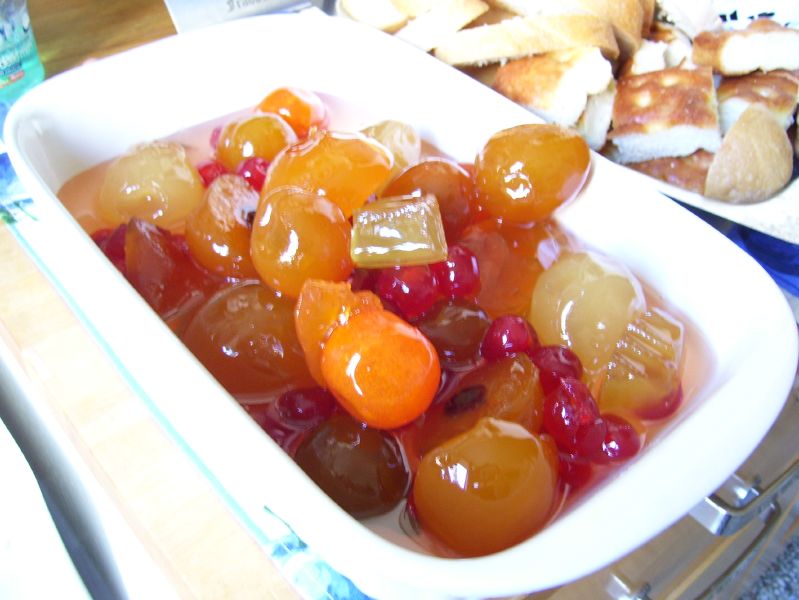 🇮🇹 ItalyMostardamostarda di frutta
A northern Italian condiment of candied fruit in a sharp mustard syrupBlend · Sweet and mellow · Sharp and pungent
🇮🇹 ItalyMostardamostarda di frutta
A northern Italian condiment of candied fruit in a sharp mustard syrupBlend · Sweet and mellow · Sharp and pungent