Pastes and wet masalas
Kimchi seasoning paste
A gochugaru, garlic and fish sauce paste rubbed between cabbage leaves for kimchi.
Presented by ClearTrust Free for cooks, makers and the curious.
Kimchi is the best-known fermented vegetable dish of Korea, and the red paste that coats the cabbage is its seasoning. The chilli is gochugaru, a coarse flake with a mild, smoky warmth. The practice of making kimchi in bulk, gimjang, is on UNESCO's list of intangible cultural heritage.
What goes in
- Gochugaru633%, Chilli flakes.
- Garlic422%, Pungent.
- Ginger211%, Fresh.
- Fish sauce317%, Salty umami.
- Spring onion211%, Freshness.
- Sugar16%, Balance.
Parts by volume of the whole spice. The ring shows each part's share.
Made step by step
Each drawing shows the operation for that step. Ratios and timings differ from house to house; this is one traditional-style way.
Step 1: Infuse Cook rice flour with water into a thin porridge and let it cool. Step 2: Pound Pound or blend the garlic and ginger to a paste. Step 3: Bloom Stir the gochugaru into the porridge and let it hydrate. Step 4: Blend Add the garlic, ginger, fish sauce and sugar. Step 5: Blend Fold in spring onion. Step 6: Rest Rest the paste for a short time before using it on salted cabbage. Step 7: Store Store the finished kimchi cold. Finished Kimchi seasoning paste, by share.
The paste
Gochugaru is mixed with garlic, ginger, fish sauce or salted shrimp, spring onion and often a rice-flour porridge, which helps fermentation and sticks the paste to the leaves. Vegan versions use kelp or fruit instead of fish.
Making kimchi
Salted cabbage is washed and drained, then the paste is rubbed between each leaf. It is packed into jars and left to ferment. Recipes differ by region and family.
Where it is used
The spices in it
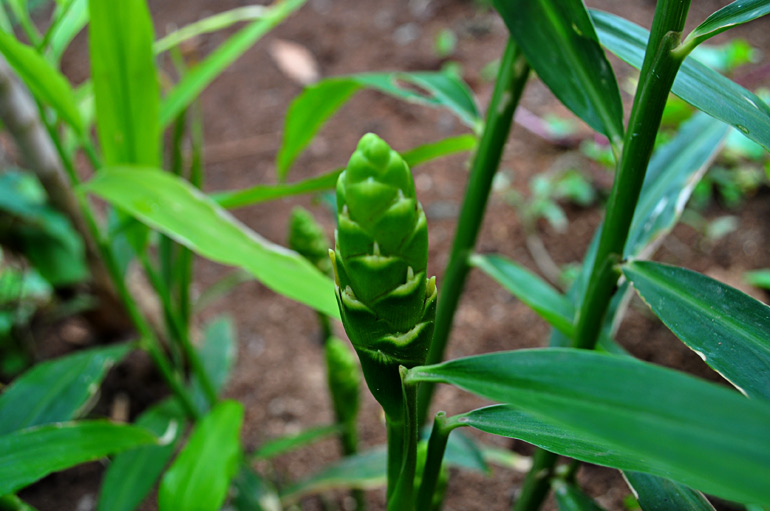 GingerFresh.
 Chili pepperThe pungent berry of the Capsicum plant, used to add heat to dishes worldwide.
 GingerThe pungent rhizome of a flowering plant, widely used as a spice and folk medicine.
Also part of it, and being written: Gochugaru (Korean chilli flake.), Garlic (Pungent.).
More on EveryMasala
No spices here yet. New pages are added every day.
Sources and further reading
Original text and drawings by the EveryMasala desk, written with AI assistance and checked against the sources above. The shares are an illustrative, traditional-style ratio, not a standard: every family and maker blends differently. If we have something wrong, tell us.
Photo credits on this page
The small pictures above come from Wikimedia Commons under free licences. Some are cropped to fit.
- Chili pepper: Takeaway, CC BY-SA 4.0, source
- Ginger: Forest & Kim Starr, CC BY 3.0, source
- Ginger: Venkatx5, CC BY-SA 3.0, source