Buddhist: spices in ritual
Incense and offerings of the temple, and the temple kitchens of East and Southeast Asia.
In Buddhist communities spices appear in monastery kitchens, in festival foods and in incense, with practice shaped by local culture across Sri Lanka, Thailand, Tibet, China, Japan and elsewhere.
In offerings
Incense of sandalwood, agarwood and herbs is burned before images of the Buddha in many countries. Fruits, flowers and sweets are offered at shrines. Practice varies between Theravada, Mahayana and Vajrayana communities.
In monastery and vegetarian cooking
Many Mahayana monasteries and lay followers keep a vegetarian diet, and some Chinese Buddhist cooking avoids the pungent alliums, such as garlic and onion, using ginger, pepper and Sichuan pepper instead. Sri Lankan temple food uses curry leaf, turmeric and coconut.
In festivals
On Vesak, the day marking the Buddha's birth, enlightenment and passing, communities share meals and offer alms. Spiced rice and sweets are common in Sri Lanka and Southeast Asia. Details differ from place to place.
Buddhist on EveryMasala
The spices written up so far, best known first.
 🇬🇷 Greece and 4 moreThyme
The dried leaves of a Mediterranean mint-family herb, used to perfume stews and baths alike.Leaf · Earthy and deep · Warm and sweet-spiced
🇬🇷 Greece and 4 moreThyme
The dried leaves of a Mediterranean mint-family herb, used to perfume stews and baths alike.Leaf · Earthy and deep · Warm and sweet-spiced
 🇮🇳 India and 5 moreMustard seed
Tiny seeds from Brassica plants that become a sharp condiment or cooking oil.Seed · Sharp and pungent · Hot and fiery
🇮🇳 India and 5 moreMustard seed
Tiny seeds from Brassica plants that become a sharp condiment or cooking oil.Seed · Sharp and pungent · Hot and fiery
 🇮🇳 India and 5 moreTurmericहल्दी
The dried rhizome of a tropical ginger relative, prized for its golden color and earthy bite.Root · Warm and sweet-spiced · Bitter
🇮🇳 India and 5 moreTurmericहल्दी
The dried rhizome of a tropical ginger relative, prized for its golden color and earthy bite.Root · Warm and sweet-spiced · Bitter
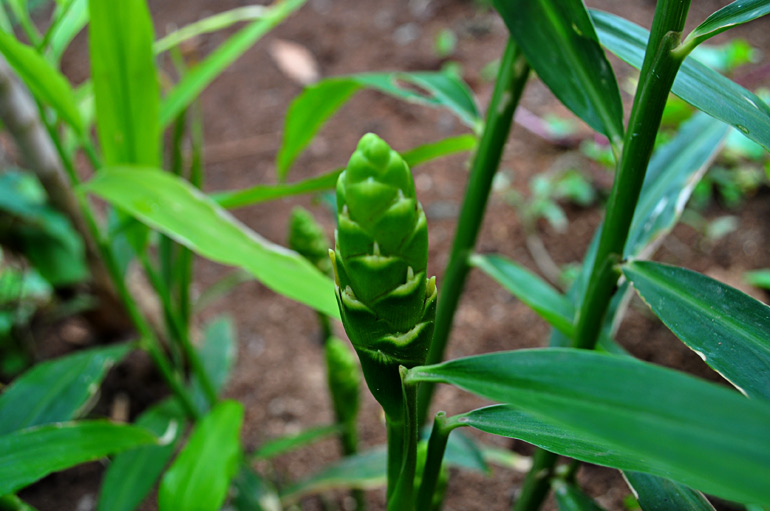 🇮🇩 Indonesia and 5 moreGinger
The pungent rhizome of a flowering perennial, one of the world's most traded spices.Root · Hot and fiery · Sharp and pungent
🇮🇩 Indonesia and 5 moreGinger
The pungent rhizome of a flowering perennial, one of the world's most traded spices.Root · Hot and fiery · Sharp and pungent
 🇰🇭 Cambodia and 5 moreVietnamese corianderrau răm
The fresh leaves of a tropical herb used in Southeast Asian soups and saladsLeaf · Citrus and bright · Sharp and pungent
🇰🇭 Cambodia and 5 moreVietnamese corianderrau răm
The fresh leaves of a tropical herb used in Southeast Asian soups and saladsLeaf · Citrus and bright · Sharp and pungent
 🇮🇳 India and 5 moreGinger
The pungent rhizome of a flowering plant, widely used as a spice and folk medicine.Root · Hot and fiery · Sharp and pungent
🇮🇳 India and 5 moreGinger
The pungent rhizome of a flowering plant, widely used as a spice and folk medicine.Root · Hot and fiery · Sharp and pungent
 🇮🇳 India and 5 moreMustard seed
Tiny seeds from three Brassica plants that create pungent condiments and cooking oil.Seed · Hot and fiery · Sharp and pungent
🇮🇳 India and 5 moreMustard seed
Tiny seeds from three Brassica plants that create pungent condiments and cooking oil.Seed · Hot and fiery · Sharp and pungent
Photo credits on this page
The small pictures above come from Wikimedia Commons under free licences. Some are cropped to fit.
- Turmeric: J.M.Garg, CC BY 3.0, source
- Ginger: Forest & Kim Starr, CC BY 3.0, source
- Mustard seed: Novalis at en.wikipedia, CC BY-SA 3.0, source
- Thyme: Evan-Amos, CC0, source
- Ginger: Venkatx5, CC BY-SA 3.0, source
- Vietnamese coriander: Joditran, CC BY-SA 4.0, source
- Mustard seed: Pancrat, CC BY-SA 3.0, source