
Mustard seed
Brassica nigra, Brassica juncea, Sinapis alba
Tiny seeds from Brassica plants that become a sharp condiment or cooking oil.
Mustard seeds are small round spices from three plant species: black, brown, and white mustard. They originate in temperate regions and are widely grown in India, Canada, and the United States. The seeds provide a pungent heat when ground with liquid and yield a rich oil used in South Asian cooking.
- Seeds are 1-2 mm in diameter and range from yellow to black.
- Three species produce the seeds: black, brown, and white mustard.
- Ground seeds mixed with liquid create the common mustard condiment.
- India, Canada, and the US are major growing countries.
- Referenced in the Bible, Quran, and Buddhist texts as a symbol.
What is Mustard seed?
Mustard seeds are the tiny, spherical harvests of several plants in the Brassica family. They measure between one and two millimeters across and range in color from pale yellow to deep black. These seeds come from three main species: black mustard, brown mustard, and white mustard. When whole, they have a mild nutty scent, but grinding them releases a sharp, nose-clearing heat. Mixing the powder with water or vinegar triggers a chemical reaction that creates the familiar yellow or brown condiment known as mustard. The seeds also contain a high percentage of oil, which is pressed for cooking and massage.
Where does Mustard seed come from?
The plants that produce these seeds thrive in temperate climates around the world. India stands as a major producer, alongside Canada, the United States, Pakistan, Nepal, and Hungary. In Pakistan, rapeseed-mustard is a vital crop for edible oil. The seeds have deep roots in global culture, appearing in religious texts as symbols of smallness and faith. Stories from the Bible, the Quran, and Buddhist traditions use the seed to teach lessons about humility and the nature of life.
What does Mustard seed taste like?
The taste of mustard seed is defined by its pungency and heat. This sharp quality comes from chemical compounds released only when the seeds are crushed and mixed with liquid. Whole seeds offer a milder, earthy flavor, while the ground paste delivers a biting spice that clears the sinuses. The heat level varies by species, with brown and black varieties typically providing more intensity than white mustard. The seeds also yield a robust oil that carries a distinct savory depth.
How Mustard seed is grown and processed
Mustard plants grow well in cool, moist environments. Seeds germinate quickly, often within eight to ten days, if conditions are right. The plants mature into shrubs over eighty-five to ninety-five days, depending on the variety. Flowering begins five weeks after sprouting and lasts for about a week. Longer bloom periods generally lead to higher seed yields. Farmers in temperate regions harvest these crops, with major production centers in North America and South Asia.
Mustard seed, drawn
How Mustard seed is used
In South Asian kitchens, mustard seeds are fried until they pop, releasing their aroma into dishes. They are essential in spicy fish preparations and pickles made with mangoes and chilies. The extracted oil serves as a primary cooking medium and is used for winter body massages to retain warmth. In North America, the seeds are ground into powder and mixed with vinegar to create table condiments for sandwiches and fast food. Roughly one thousand seeds are needed to make eight ounces of prepared mustard.
Mustard seed in the world's kitchens
South Asian cuisine relies heavily on mustard seeds and their oil for both flavor and preservation. Dishes like jhaal and paturi feature the seeds prominently, and shorsher tel is a standard cooking fat. North American cuisine uses the seeds primarily for condiments, favoring the bright yellow paste made from white mustard. Other regions, including parts of Europe and Central Asia, cultivate the seeds for oil production and local spice blends.
At a glance: where it turns up
Cuisines
Celebrations

Spiritual and ceremonial use
The mustard seed holds significant meaning in several world religions. In Christianity, Jesus uses it as a metaphor for faith and the Kingdom of God. Buddhism features the seed in stories about grief and acceptance, such as the tale of Kisa Gotami. Jewish texts compare the universe to the seed's size to teach humility. Islam references the seed in the Quran regarding divine justice and in Hadith concerning pride.
Mustard seed at celebrations
Their spiritual references are thematic rather than tied to calendar events.
Traditional and medicinal use
Traditional practices in South Asia use mustard oil for body massage during cold winters, believing it keeps the body warm. Ground meal is sometimes applied to soil to manage diseases in other crops, reflecting traditional agricultural knowledge.
The trade in Mustard seed
India, Canada, and the United States are leading producers in the global trade. Nepal ranked highest in production in 2021, followed by Russia and Canada. The United States produces millions of pounds annually, mostly in the upper Midwest. The seeds are traded worldwide for both culinary use and oil extraction.
Meal
These seeds appear in daily cooking across many cultures. In South Asia, they season lunch and dinner dishes, particularly fish curries and vegetable stir-fries. They are key ingredients in preserves like mango pickles. In North America, they form the basis of lunch condiments served with sandwiches and snacks. The oil derived from the seeds is used for cooking throughout the day.
Blends with Mustard seed
Questions people ask about Mustard seed
What are mustard seeds?
They are small, round seeds from three Brassica plants: black, brown, and white mustard. They measure about one to two millimeters across and come in yellow, brown, or black colors.
Where do mustard seeds come from?
They grow in temperate regions worldwide. Major producers include India, Canada, the United States, Pakistan, Nepal, and Hungary. The plants thrive in cool, moist soil.
How do mustard seeds taste?
Whole seeds have a mild, nutty flavor. When ground and mixed with liquid, they release a sharp, pungent heat that clears the sinuses. The intensity varies by species.
How are mustard seeds used in cooking?
In South Asia, they are fried until popping and used in fish dishes and pickles. The oil is a common cooking medium. In North America, they are ground into condiments for sandwiches.
Why are mustard seeds important in religion?
They appear in the Bible, Quran, and Buddhist stories as metaphors for smallness, faith, and humility. They symbolize how small beginnings can grow into something significant.
Good reading and sources
- Mustard seed on WikipediaEncyclopedia
- More photos on Wikimedia CommonsPhotos and video
- Wikidata recordOpen data
The facts on this page come from the Wikipedia article "Mustard seed", written by its contributors and used under the CC BY-SA 4.0 licence, and from its Wikidata record (CC0). EveryMasala rewrote the text in its own words, with AI assistance, and compares every page with the article to make sure no passage is copied. It may be reused under the same CC BY-SA 4.0 licence with a link back.
It may contain mistakes. Names, strengths and customs differ from one grower, kitchen or shop to the next. Traditional and medicinal uses are described as tradition, never as medical advice, and none of this is a substitute for a doctor. If something is wrong, tell us. Last refreshed 2026-10-04.
More from India
All the spices of India 🇮🇳 India and 4 moreFennel
The anise-scented seeds and crisp bulb of a Mediterranean perennial herbSeed · Anise and liquorice · Sweet and mellow
🇮🇳 India and 4 moreFennel
The anise-scented seeds and crisp bulb of a Mediterranean perennial herbSeed · Anise and liquorice · Sweet and mellow
 🇮🇳 India and 2 moreCardamom
Aromatic seeds from spindle-shaped pods used in sweet and savory dishes across Asia and the Middle East.Seed · Sharp and pungent · Warm and sweet-spiced
🇮🇳 India and 2 moreCardamom
Aromatic seeds from spindle-shaped pods used in sweet and savory dishes across Asia and the Middle East.Seed · Sharp and pungent · Warm and sweet-spiced
 🇮🇳 IndiaMalabar pepper
A Geographical Indication black pepper from Kerala and neighbouring regions.Seed · Sharp and pungent
🇮🇳 IndiaMalabar pepper
A Geographical Indication black pepper from Kerala and neighbouring regions.Seed · Sharp and pungent
 🇮🇳 IndiaAmchoorआमचूर
A sour powder made from dried unripe green mangoes, used to add tang to Indian dishes.Seed · Sour and tart · Citrus and bright
🇮🇳 IndiaAmchoorआमचूर
A sour powder made from dried unripe green mangoes, used to add tang to Indian dishes.Seed · Sour and tart · Citrus and bright
Its cousins elsewhere
All seed 🇱🇾 Libya and 1 morePilpelchumaפלפלצ'ומה
A steamed chili and garlic paste from Libyan Jewish cuisine, now common in Israel.Hot and fiery · Sharp and pungent
🇱🇾 Libya and 1 morePilpelchumaפלפלצ'ומה
A steamed chili and garlic paste from Libyan Jewish cuisine, now common in Israel.Hot and fiery · Sharp and pungent
 🇬🇧 United Kingdom and 4 moreRock samphire
A coastal succulent with peppery leaves and carrot-scented roots, used fresh or pickled.Leaf · Hot and fiery · Sharp and pungent
🇬🇧 United Kingdom and 4 moreRock samphire
A coastal succulent with peppery leaves and carrot-scented roots, used fresh or pickled.Leaf · Hot and fiery · Sharp and pungent
 🇯🇵 JapanKarashiからし
A potent Japanese mustard made from brown mustard seeds, served as a sharp condiment.Seed · Hot and fiery · Sharp and pungent
🇯🇵 JapanKarashiからし
A potent Japanese mustard made from brown mustard seeds, served as a sharp condiment.Seed · Hot and fiery · Sharp and pungent
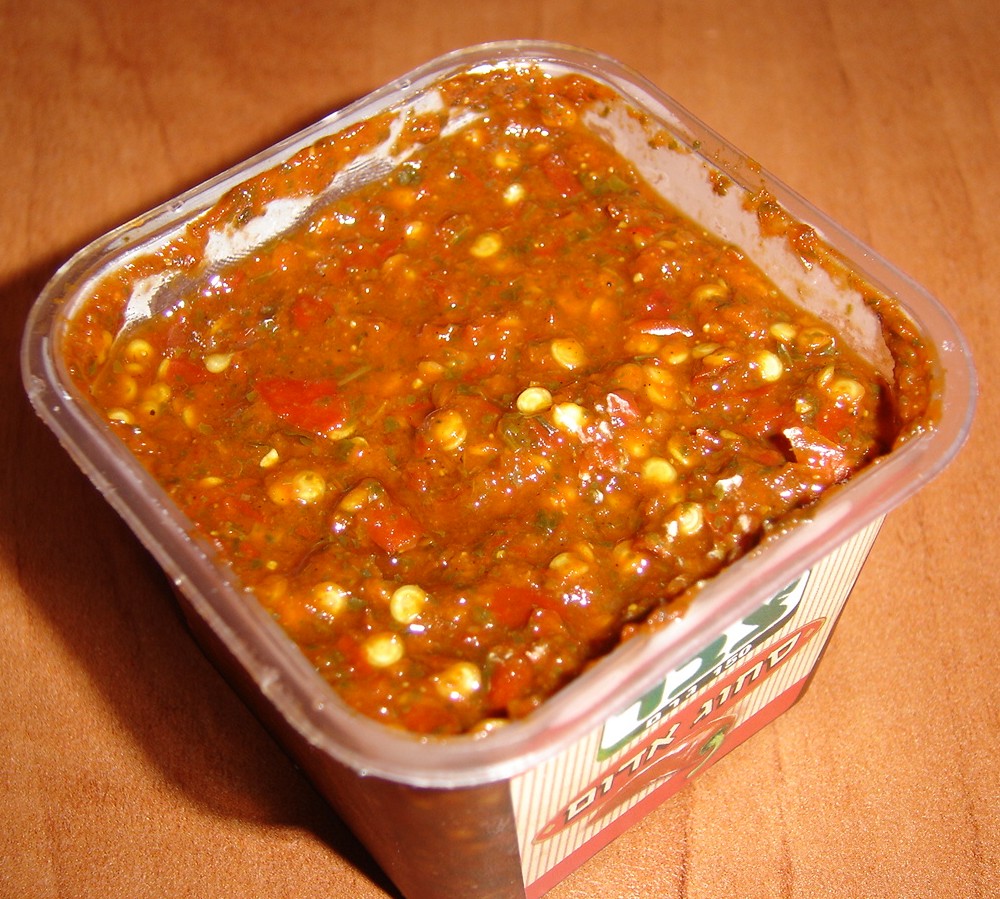 🇾🇪 Yemen and 1 moreZhugسحوق
A Yemeni hot sauce of crushed chilies, garlic, and corianderHot and fiery · Sharp and pungent
🇾🇪 Yemen and 1 moreZhugسحوق
A Yemeni hot sauce of crushed chilies, garlic, and corianderHot and fiery · Sharp and pungent