Warm and sweet-spiced
Cinnamon, clove, nutmeg and allspice: the warmth of baking and mulled drinks.
Warm spices, such as cinnamon, clove, nutmeg, allspice and ginger, give a sweet, deep, comforting aroma that is more about scent than heat.
What makes them warm
The flavour comes from compounds such as cinnamaldehyde in cinnamon, eugenol in clove and allspice, and myristicin in nutmeg. They are not hot like chilli, but they give a feeling of warmth to the nose and mouth.
How cooks use them
They go into baked goods, mulled wine and cider, chai, garam masala, Moroccan tagines and Middle Eastern rice dishes. Sweet and savoury cooking both use them, often together with a little salt.
Seasons and customs
Many cultures link warm spices with winter and festivals, from Christmas gingerbread and mince pies to Indian chai and Persian winter stews. They are used in small amounts, as nutmeg and clove can overpower.
Warm and sweet-spiced on EveryMasala
The spices written up so far, best known first.
 🇮🇳 India and 3 moreErode TurmericErodu Manjal
A high-curcumin turmeric variety from Tamil Nadu, India, recognized as a Geographical Indication in 2019.Root · Earthy and deep · Warm and sweet-spiced
 🇮🇳 IndiaLakadong turmeric
A high-curcumin variety of turmeric grown in the Jaintia Hills of Meghalaya, India.Root · Earthy and deep · Warm and sweet-spiced
 🇮🇳 India and 2 moreWild turmericKasthuri Manjal
A fragrant rhizome from South Asia used for colouring and skin care.Root · Earthy and deep · Warm and sweet-spiced
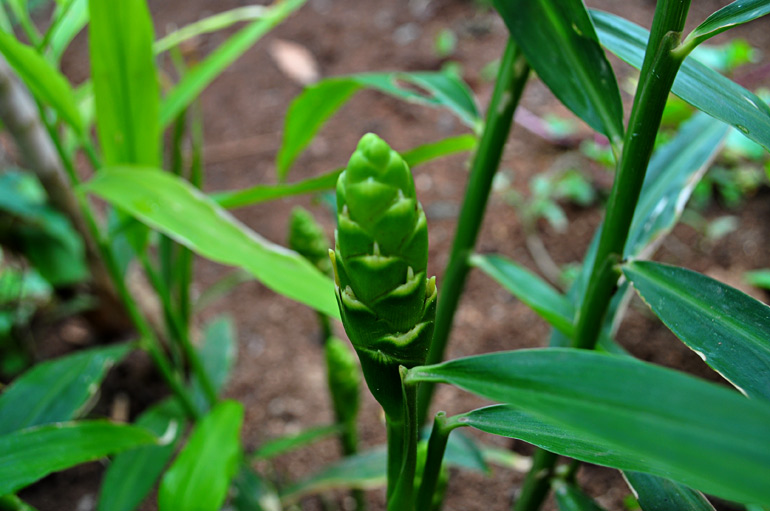 🇮🇳 India and 5 moreGinger
The pungent rhizome of a flowering plant from Southeast Asia, used globally as spice and medicine.Root · Hot and fiery · Sharp and pungent
🇮🇩 Indonesia and 3 moreGalangal
A pungent rhizome from the ginger family used in Southeast Asian cooking and traditional medicine.Root · Sharp and pungent · Warm and sweet-spiced
🇨🇳 China and 4 moreLesser galangal高良薑
An aromatic Asian rhizome with orange flesh and a sweet, gentle spiceRoot · Sweet and mellow · Warm and sweet-spiced
 🇮🇳 India and 5 moreGinger
The pungent rhizome of a flowering plant, widely used as a spice and folk medicine.Root · Hot and fiery · Sharp and pungent
Photo credits on this page
The small pictures above come from Wikimedia Commons under free licences. Some are cropped to fit.
- Erode Turmeric: Sivaranjani, CC BY-SA 3.0, source
- Lakadong turmeric: Trinity Saioo, CC0, source
- Ginger: Venkatx5, CC BY-SA 3.0, source
- Wild turmeric: goldentakin, CC BY 2.0, source
- Ginger: Forest & Kim Starr, CC BY 3.0, source