Xiao Mi La Pepper
In its own language: 小米辣
Capsicum frutescens
A wild Capsicum frutescens cultivar from southern China, prized for intense heat in spicy regional dishes.
The Xiao Mi La is a wild chili cultivar of Capsicum frutescens native to southern China. It delivers very hot heat, rated around 75,000 Scoville units, and is a staple in Sichuan cooking for its sharp, pungent kick.
- Cultivar of Capsicum frutescens native to southern China.
- Rated ~75,000 Scoville units for intense heat.
- One of three most common peppers in Chinese cuisine.
- Grows wild as a perennial shrub in Yunnan Province.
- Used in Sichuan dishes like Mala Xiang Guo.
What is Xiao Mi La Pepper?
The Xiao Mi La, meaning millet pepper, is a specific cultivar of the Capsicum frutescens species. It grows as a perennial shrub in the wild, particularly in Yunnan Province. The plant thrives in high humidity and temperature while resisting local diseases and poor soil conditions. Its pods are small but deliver significant heat, making it one of the most potent peppers available in Chinese markets. It is often ground into flakes or powder for use in various culinary applications.
Where does Xiao Mi La Pepper come from?
This chili is indigenous to southern China, where it has naturalized as a wild species. It is considered the only wild pepper species found in the country. While it is sometimes called Thai Pepper within China, that name refers to different cultivars elsewhere. The plant is adapted to the specific environmental pressures of East Asia, allowing it to survive in barren soils and low light conditions typical of its native range.
What does Xiao Mi La Pepper taste like?
The primary characteristic of the Xiao Mi La is its intense heat. With a Scoville rating of approximately 75,000, it falls into the hot category, comparable to cayenne or tabasco peppers. The flavor profile is dominated by this pungency, providing a sharp, biting sensation that defines many spicy dishes. It lacks complex sweet or floral notes, focusing instead on delivering a direct, fiery kick to the palate.
How Xiao Mi La Pepper is grown and processed
Xiao Mi La grows naturally as a perennial shrub in southern China, particularly in Yunnan Province. It is well-adapted to environments with high temperatures and humidity. The plant demonstrates strong resistance to East Asian disease pressures, low light levels, and nutrient-poor soils. These hardy traits allow it to thrive in wild settings without extensive cultivation efforts, though it is also widely available in commercial markets.
Xiao Mi La Pepper, drawn
How Xiao Mi La Pepper is used
It is one of the three most common peppers in Chinese cuisine, alongside facing heaven chilli and two vitex chilli. Cooks use it fresh or processed into flakes and powders. It features prominently in spicy Sichuan dishes such as Lazi Dry Pepper Chicken Wings and Mala Xiang Guo. It is also used in salads like Shangxin Ban Kongxincai, where its heat cuts through other ingredients. The pepper is valued for its ability to impart significant spiciness to stir-fries and hotpot preparations.
Xiao Mi La Pepper in the world's kitchens
Xiao Mi La is central to Sichuan cuisine, known for its bold, spicy flavors. It is a key ingredient in classic dishes like Lazi Dry Pepper Chicken Wings and Shangxin Ban Kongxincai. It is also used in Mala Xiang Guo, a popular stir-fried hotpot dish. Beyond Sichuan, it is a staple across broader Chinese cooking, often cited as one of the top three essential peppers in the country's culinary repertoire.
At a glance: where it turns up
By meal
Meal
The pepper is primarily used in dinner and snack contexts. It appears in substantial meals like stir-fried hotpot (Mala Xiang Guo) and chicken wing dishes. It is also used in cold salads served as snacks or side dishes. Its intense heat makes it suitable for savory, hearty eating occasions rather than breakfast or dessert.
Questions people ask about Xiao Mi La Pepper
What is the Xiao Mi La pepper?
It is a cultivar of Capsicum frutescens, a wild chili native to southern China. It is known for its small size and very high heat level, often used fresh or dried in Chinese cooking.
How hot is the Xiao Mi La pepper?
It scores around 75,000 on the Scoville scale. This places it in the hot category, similar to cayenne peppers, providing a sharp and pungent kick to dishes.
Where does the Xiao Mi La come from?
It originates from southern China, specifically naturalizing in Yunnan Province. It is the only wild pepper species found in China, adapted to humid, warm climates.
How is it used in cooking?
It is a staple in Sichuan cuisine, used in dishes like Mala Xiang Guo and dry pepper chicken wings. It can be used fresh, ground into flakes, or made into powder.
Good reading and sources
The facts on this page come from the Wikipedia article "Xiao mi la pepper", written by its contributors and used under the CC BY-SA 4.0 licence, and from its Wikidata record (CC0). EveryMasala rewrote the text in its own words, with AI assistance, and compares every page with the article to make sure no passage is copied. It may be reused under the same CC BY-SA 4.0 licence with a link back.
It may contain mistakes. Names, strengths and customs differ from one grower, kitchen or shop to the next. Traditional and medicinal uses are described as tradition, never as medical advice, and none of this is a substitute for a doctor. If something is wrong, tell us. Last refreshed 2026-10-04.
More from China
All the spices of China 🇨🇳 ChinaEr jing tiao二荆条
A fragrant Chinese chili cultivar prized for its deep hue and medium heatChilli · Hot and fiery · Sharp and pungent
🇨🇳 ChinaEr jing tiao二荆条
A fragrant Chinese chili cultivar prized for its deep hue and medium heatChilli · Hot and fiery · Sharp and pungent
 🇨🇳 ChinaHainan yellow lantern chili海南黃燈籠椒
A bright yellow Capsicum chinense cultivar from Hainan Island known for its intense heat and high yield.Chilli · Hot and fiery
🇨🇳 ChinaHainan yellow lantern chili海南黃燈籠椒
A bright yellow Capsicum chinense cultivar from Hainan Island known for its intense heat and high yield.Chilli · Hot and fiery
 🇨🇳 ChinaYongfeng chili sauce永丰辣酱
A fermented paste of peppers, rice and wheat from Hunan province, one of the region's three treasures.Paste · Hot and fiery · Sweet and mellow
🇨🇳 ChinaYongfeng chili sauce永丰辣酱
A fermented paste of peppers, rice and wheat from Hunan province, one of the region's three treasures.Paste · Hot and fiery · Sweet and mellow
 🇨🇳 China and 2 moreChinese prickly-ash
A thorny East Asian shrub whose reddish berries yield Sichuan pepperFruit
🇨🇳 China and 2 moreChinese prickly-ash
A thorny East Asian shrub whose reddish berries yield Sichuan pepperFruit
Its cousins elsewhere
All chilli 🇪🇬 EgyptShattaشطة
A fermented chili and garlic condiment from the LevantHot and fiery · Sharp and pungent
🇪🇬 EgyptShattaشطة
A fermented chili and garlic condiment from the LevantHot and fiery · Sharp and pungent
 🇬🇧 United Kingdom and 4 moreRock samphire
A coastal succulent with peppery leaves and carrot-scented roots, used fresh or pickled.Leaf · Hot and fiery · Sharp and pungent
🇬🇧 United Kingdom and 4 moreRock samphire
A coastal succulent with peppery leaves and carrot-scented roots, used fresh or pickled.Leaf · Hot and fiery · Sharp and pungent
 🇱🇾 Libya and 1 morePilpelchumaפלפלצ'ומה
A steamed chili and garlic paste from Libyan Jewish cuisine, now common in Israel.Hot and fiery · Sharp and pungent
🇱🇾 Libya and 1 morePilpelchumaפלפלצ'ומה
A steamed chili and garlic paste from Libyan Jewish cuisine, now common in Israel.Hot and fiery · Sharp and pungent
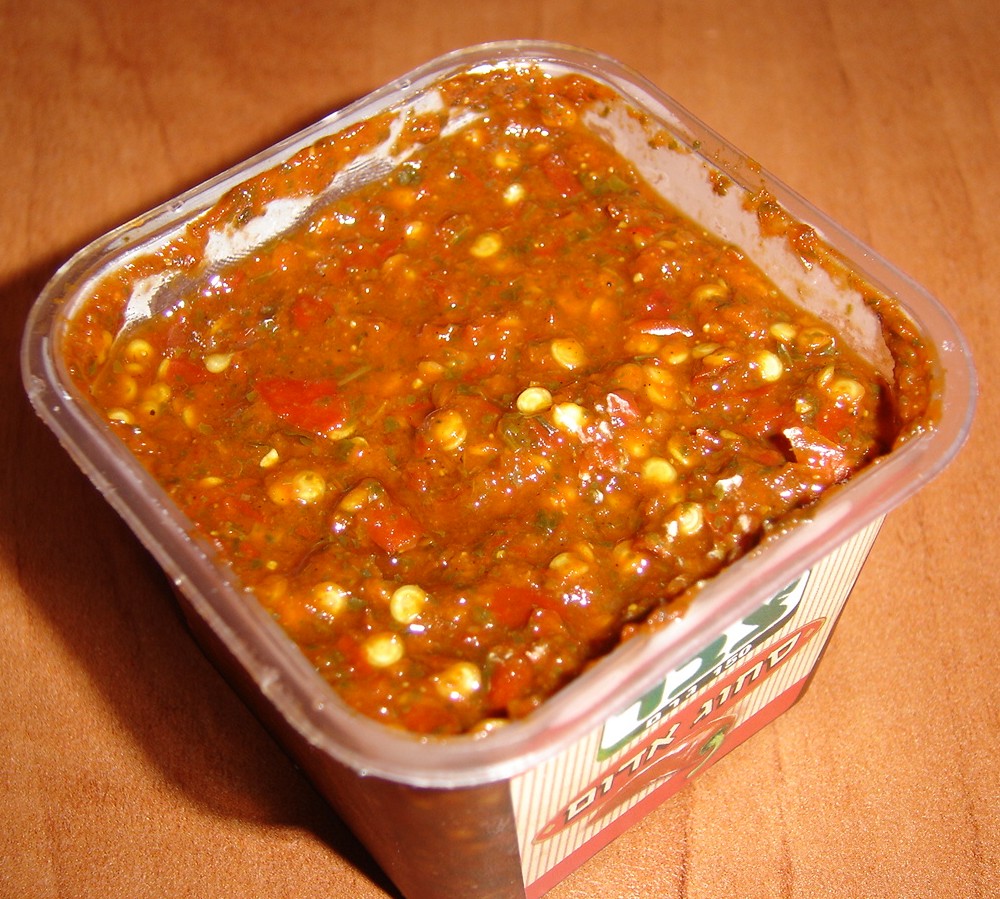 🇾🇪 Yemen and 1 moreZhugسحوق
A Yemeni hot sauce of crushed chilies, garlic, and corianderHot and fiery · Sharp and pungent
🇾🇪 Yemen and 1 moreZhugسحوق
A Yemeni hot sauce of crushed chilies, garlic, and corianderHot and fiery · Sharp and pungent