
Garlic powder
Allium sativum
A dry, savory spice made from dehydrated and ground garlic cloves.
This spice is produced by drying garlic bulbs until they are brittle, then grinding them into a fine powder. It delivers a concentrated garlic flavor without the moisture of fresh cloves. Cooks use it to season meats, sauces, and vegetable dishes throughout the day.
- China produces 80% of the world's garlic.
- Made from dehydrated softneck garlic bulbs.
- Lasts up to 4 years if stored dry.
- Key ingredient in seasoned salts and spice mixes.
- Heated to 150-160°C during processing.
What is Garlic powder?
Garlic powder is a culinary spice created from the bulb of the garlic plant. The process begins with harvesting mature bulbs, peeling the cloves, and slicing them. These slices undergo dehydration to remove nearly all water content, leaving behind a dry, brittle material. Finally, the dried pieces are milled into a fine, beige-colored dust. This form concentrates the natural sulfur compounds found in fresh garlic, resulting in a potent, earthy aroma and a sharp, pungent taste that lacks the initial bite of raw cloves but retains the core savory character.
Where does Garlic powder come from?
The exact origins of garlic cultivation remain debated, with theories pointing to Central Asia, South Asia, or southwestern Siberia. Wild garlic grows naturally in parts of Europe, including Italy and southern France. However, China has become the dominant force in production, accounting for roughly eighty percent of the global supply. India also plays a significant role as a major producer and consumer. The shift toward industrial powder manufacturing has standardized the product globally, moving away from regional variations in favor of consistent flavor profiles.
What does Garlic powder taste like?
The flavor profile is defined by its pungency and earthiness. Because the water is removed, the volatile oils responsible for the scent become more concentrated. Softneck varieties, which are most commonly used for this spice, offer a less complex taste than hardneck types, making them ideal for general seasoning. The powder provides a steady, savory background note rather than the sharp, immediate heat of fresh garlic. It integrates easily into liquids and fats, distributing its flavor evenly without adding texture.
How Garlic powder is grown and processed
Garlic cultivation depends on the variety. Softneck garlic thrives in warmer climates with mild winters, while hardneck types require cold weather for vernalization. Planting typically occurs in mid-autumn or late autumn, depending on the region's temperature. Bulbs are split into cloves and planted about four to six inches apart. Harvesting happens when the leaves turn yellow, usually in early summer for tropical areas or late summer for cooler zones. After harvest, the bulbs are cleaned, peeled, sliced, and heated to between 150 and 160 degrees Celsius to reduce moisture to approximately six and a half percent before milling.
Garlic powder, drawn
How Garlic powder is used
Chefs and home cooks use this spice to enhance the flavor of a wide array of dishes. It is sprinkled over roasted vegetables, mixed into meat rubs, and stirred into soups and stews. Because it dissolves easily, it is often added earlier in the cooking process than fresh garlic. It serves as a key ingredient in many commercial spice mixes and seasoned salts. Its dry nature makes it suitable for dry marinades and crusts for proteins, providing a consistent garlic presence without introducing extra liquid to the recipe.
Garlic powder in the world's kitchens
Chinese cuisine utilizes garlic powder extensively, benefiting from the country's massive domestic production. Indian cooking incorporates it into curries, marinades, and everyday home meals. In Western kitchens, particularly in North America and Europe, it serves as a convenient alternative to fresh cloves in baking, roasting, and fast food preparation. The spice bridges culinary gaps by offering a uniform flavor intensity that varies little between batches, unlike fresh bulbs which can differ significantly in strength based on growing conditions.
At a glance: where it turns up
Celebrations

Spiritual and ceremonial use
There are no specific spiritual rituals or religious offerings tied directly to garlic powder in the provided sources. While garlic itself has historical associations with various cultural practices, the powdered form is treated purely as a commercial food ingredient without documented sacred or ceremonial roles.
Garlic powder at celebrations
It is considered an everyday pantry item rather than a specialty ingredient reserved for particular occasions or seasonal events.
Traditional and medicinal use
Traditional uses of garlic include its application in folk medicine and dietary practices across Asia and Europe. Garlic powder is sometimes viewed as a convenient way to access these traditional flavors without the labor of preparing fresh bulbs. Some cultures believe garlic supports health, though modern science focuses on its nutritional content, such as B vitamins and minerals. Safety notes suggest storing the powder properly to prevent clumping or loss of potency, ensuring it remains safe and effective for consumption.
Buying and storing Garlic powder
Garlic powder should be kept in a cool, dry place to maintain its quality. Exposure to moisture or heat can cause the powder to harden or clump together. When stored correctly, it can remain in good condition for up to four years. Manufacturers typically print a 'best before' date on packaging to indicate peak flavor and texture. Sealed containers help preserve the aromatic compounds and prevent absorption of ambient odors.
What to use instead of Garlic powder
Cooking substitutes for garlic powder include fresh garlic cloves, which require crushing or mincing, and garlic salt, which adds sodium along with the flavor. Garlic flakes or granules offer a coarser texture but similar taste. Onion powder or celery powder may provide a savory depth but lack the distinct garlic profile. If a recipe calls for a small amount, a pinch of garlic paste can work in a pinch, though it introduces moisture.
The trade in Garlic powder
China dominates the global trade of garlic powder, producing twenty million tonnes annually. India follows as another major producer and consumer. The market includes numerous internal suppliers within these countries. International trade routes connect these Asian hubs with markets in North America, Europe, and the Asia-Pacific region. Large-scale manufacturing involves specialized machinery for drying and milling, ensuring consistent particle size. Adulteration is a potential concern in bulk trade, leading to certifications and quality controls to verify purity.
Meal
This versatile spice fits into almost any meal of the day. It is common in breakfast dishes like scrambled eggs or hash browns. Lunches often feature it in sandwiches, salads, and grain bowls. Dinner preparations rely on it for pasta sauces, stir-fries, and grilled meats. It is also a staple in snack foods, such as flavored chips and crackers. Street food vendors use it to season fried items and quick-cooked street snacks. Additionally, it appears in preserves and cured foods where a stable garlic flavor is needed over time.
Blends with Garlic powder
Questions people ask about Garlic powder
What is garlic powder made from?
It is made from garlic bulbs, specifically the softneck variety, which are peeled, sliced, dehydrated to remove water, and then ground into a fine powder.
Where does garlic powder come from?
While wild garlic grows in Europe, China is the largest producer, accounting for most of the global supply. India is also a major producer and consumer.
How does garlic powder taste?
It has a pungent, earthy flavor that is concentrated due to dehydration. It offers a savory depth without the sharp bite of raw garlic.
How is garlic powder used in cooking?
It is used to season meats, vegetables, soups, and sauces. It is also a common component of spice mixes and seasoned salts.
How long does garlic powder last?
Stored in a cool, dry place, it can last up to four years. Moisture causes clumping, so keeping it sealed is important.
Good reading and sources
- Garlic powder on WikipediaEncyclopedia
- More photos on Wikimedia CommonsPhotos and video
- Wikidata recordOpen data
The facts on this page come from the Wikipedia article "Garlic powder", written by its contributors and used under the CC BY-SA 4.0 licence, and from its Wikidata record (CC0). EveryMasala rewrote the text in its own words, with AI assistance, and compares every page with the article to make sure no passage is copied. It may be reused under the same CC BY-SA 4.0 licence with a link back.
It may contain mistakes. Names, strengths and customs differ from one grower, kitchen or shop to the next. Traditional and medicinal uses are described as tradition, never as medical advice, and none of this is a substitute for a doctor. If something is wrong, tell us. Last refreshed 2026-10-04.
More from China
All the spices of China 🇨🇳 China and 2 moreChinese prickly-ash
A thorny East Asian shrub whose reddish berries yield Sichuan pepperFruit
🇨🇳 China and 2 moreChinese prickly-ash
A thorny East Asian shrub whose reddish berries yield Sichuan pepperFruit
 🇨🇳 China and 3 moreZanthoxylum bungeanum
A shrub from China that produces the numbing peppercorns of Sichuan cuisine.Seed · Numbing and tingling
🇨🇳 China and 3 moreZanthoxylum bungeanum
A shrub from China that produces the numbing peppercorns of Sichuan cuisine.Seed · Numbing and tingling
 🇨🇳 ChinaYongfeng chili sauce永丰辣酱
A fermented paste of peppers, rice and wheat from Hunan province, one of the region's three treasures.Paste · Hot and fiery · Sweet and mellow
🇨🇳 ChinaYongfeng chili sauce永丰辣酱
A fermented paste of peppers, rice and wheat from Hunan province, one of the region's three treasures.Paste · Hot and fiery · Sweet and mellow
 🇨🇳 China and 5 moreSichuan pepper花椒 (huājiāo)
The dried husk of Zanthoxylum fruit, prized for its citrus scent and electric numbness.Fruit · Citrus and bright · Sharp and pungent
🇨🇳 China and 5 moreSichuan pepper花椒 (huājiāo)
The dried husk of Zanthoxylum fruit, prized for its citrus scent and electric numbness.Fruit · Citrus and bright · Sharp and pungent
Its cousins elsewhere
All seed 🇮🇷 Iran and 4 moreSaffronزعفران
The dried crimson stigmas of the autumn-blooming saffron crocus.Stigma · Sharp and pungent · Bitter
🇮🇷 Iran and 4 moreSaffronزعفران
The dried crimson stigmas of the autumn-blooming saffron crocus.Stigma · Sharp and pungent · Bitter
 🇲🇽 Mexico and 5 moreAnnatto
The orange-red pigment from achiote seeds used as a natural food coloring and mild spice.Seed · Earthy and deep · Sweet and mellow
🇲🇽 Mexico and 5 moreAnnatto
The orange-red pigment from achiote seeds used as a natural food coloring and mild spice.Seed · Earthy and deep · Sweet and mellow
 🇱🇾 Libya and 1 morePilpelchumaפלפלצ'ומה
A steamed chili and garlic paste from Libyan Jewish cuisine, now common in Israel.Hot and fiery · Sharp and pungent
🇱🇾 Libya and 1 morePilpelchumaפלפלצ'ומה
A steamed chili and garlic paste from Libyan Jewish cuisine, now common in Israel.Hot and fiery · Sharp and pungent
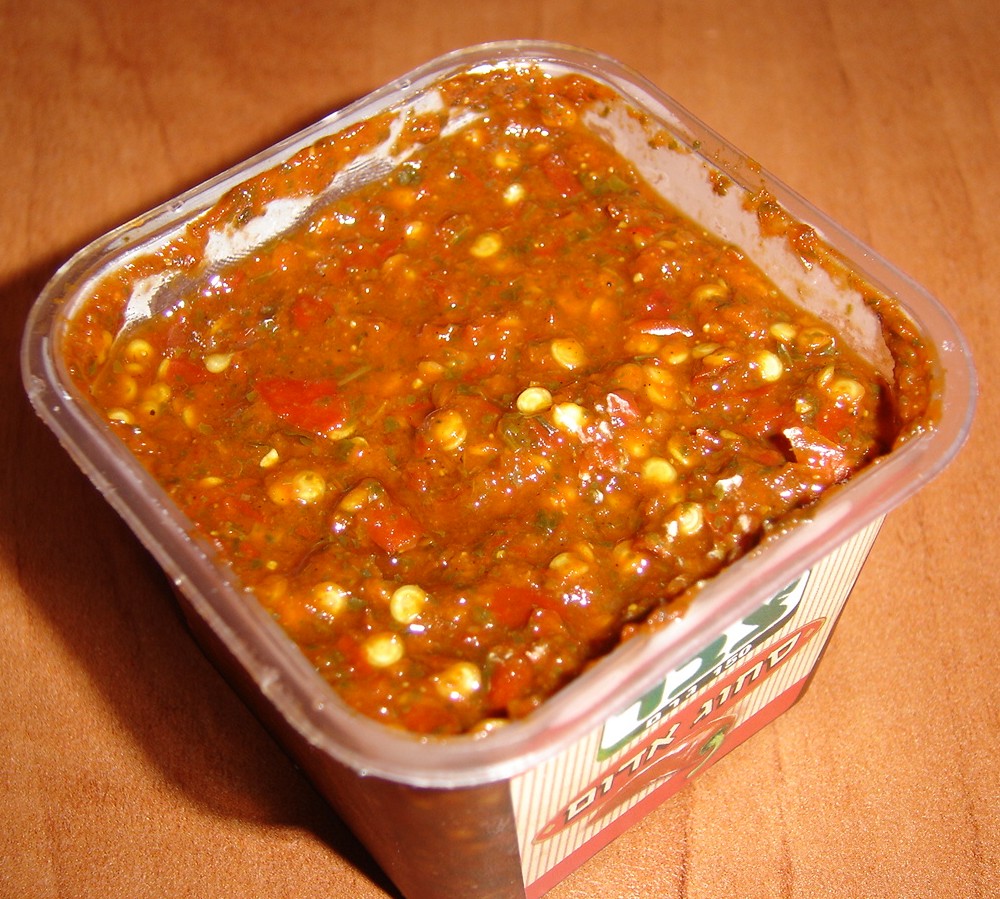 🇾🇪 Yemen and 1 moreZhugسحوق
A Yemeni hot sauce of crushed chilies, garlic, and corianderHot and fiery · Sharp and pungent
🇾🇪 Yemen and 1 moreZhugسحوق
A Yemeni hot sauce of crushed chilies, garlic, and corianderHot and fiery · Sharp and pungent