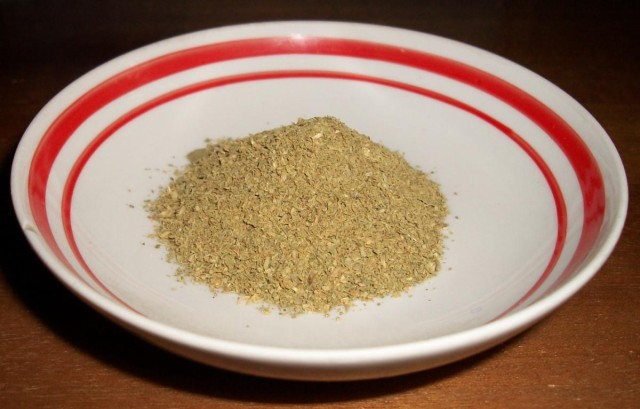
Khmeli suneli
In its own language: ხმელი სუნელი
A flexible Georgian blend of dried herbs and seeds for stews and meats.
Khmeli suneli is a traditional spice mix from Georgia. It combines ground coriander, fenugreek, savory, and various dried herbs like basil and marigold. The blend seasons hearty stews, meat dishes, and sauces in Georgian cooking.
- Translates directly to 'dried spice' in Georgian.
- Contains blue fenugreek, marigold, and summer savory.
- No fixed recipe; varies by region and maker.
- Key ingredient in Georgian soup kharcho.
- Svanetia is noted as the best source region.
What is Khmeli suneli?
Khmeli suneli translates to 'dried spice' in the Georgian language. It is not a single herb but a composite seasoning used widely in Georgia. The mixture typically includes ground coriander seed, celery seed, blue fenugreek, summer savory, and bay leaf. It also incorporates dried herbs such as basil, dill, parsley, mint, and petals from marigold flowers. There is no single fixed recipe for the blend, allowing for regional variations. Ready-made versions can range in colour from pale green to deep umber, depending on the proportions of ingredients used.
Where does Khmeli suneli come from?
The spice mix originates from Georgia, a country in the Caucasus region. Svanetia, a mountainous area within Georgia, is noted as a primary source for high-quality khmeli suneli. The blend shares a flexible nature with other traditional mixes like Indian garam masala, meaning recipes vary by household or region rather than following a strict standard.
What does Khmeli suneli taste like?
The taste profile is complex, balancing warm, earthy notes from the seeds with fresh, herbal tones from the leaves and flowers. Blue fenugreek contributes a distinct bitterness, while savory and mint add brightness. Coriander provides a subtle citrus undertone. The overall effect is aromatic and grounding, designed to enhance rather than overpower the main ingredients in a dish.
How Khmeli suneli is grown and processed
Ingredients are harvested from various plants native to or cultivated in the region. Herbs like basil, dill, parsley, mint, and marigold are dried thoroughly before use. Seeds from coriander, celery, and blue fenugreek are ground into powder. Bay leaves and summer savory are also dried. The components are then mixed together. The quality of the final blend depends on the freshness of the dried materials and the skill of the mixer.
Khmeli suneli, drawn
How Khmeli suneli is used
Cooking with khmeli suneli involves adding it to soups, stews, and meat dishes. It is a key ingredient in kharcho, a traditional spicy beef soup. The blend also seasons meatballs known as abkhazura. It pairs well with vegetable dishes, such as cabbage cooked with walnuts or aubergine salads. It is generally sprinkled over food during cooking to infuse the flavors throughout the meal.
Khmeli suneli in the world's kitchens
Khmeli suneli is central to Georgian cuisine. It distinguishes Georgian cooking from its neighbors by combining specific herbs like blue fenugreek and marigold with more common spices. While similar blends exist elsewhere, the Georgian version has a unique balance of bitter, sweet, and herbal notes. It is used across the country, with Svanetia being particularly renowned for its preparation.
At a glance: where it turns up
Spiritual and ceremonial use
There is no specific religious ritual or spiritual offering associated with khmeli suneli in the provided sources. It is a secular culinary staple used in everyday cooking and family meals rather than in religious ceremonies.
Khmeli suneli at celebrations
The spice is used in daily cooking rather than being reserved for specific festivals or celebrations. It is an essential part of the regular Georgian diet, appearing in home-cooked meals and restaurant dishes alike without special occasion restrictions.
Traditional and medicinal use
Traditional use focuses on flavor enhancement in stews and meats. It is valued purely for its culinary contribution to Georgian food culture.
What to use instead of Khmeli suneli
No direct substitutes are mentioned. However, because the recipe varies, cooks might adjust the ratio of herbs based on availability. The flexibility of the mix means that slight variations in ingredients do not ruin the dish.
The trade in Khmeli suneli
Svanetia is highlighted as the best source for this spice mix. The blend remains a local staple within Georgia, with limited international trade information available.
Meal
This spice is primarily used in lunch and dinner settings. It features prominently in heartier meals like stews and roasted meats. It is less common in breakfast or dessert contexts. The blend is suited to substantial dishes that benefit from long simmering times, making it ideal for midday and evening meals.
Questions people ask about Khmeli suneli
What is khmeli suneli?
It is a traditional Georgian spice blend made from ground seeds and dried herbs. Common ingredients include coriander, blue fenugreek, savory, basil, and marigold petals. It is used to season stews and meats.
Where does khmeli suneli come from?
It originates from Georgia, specifically associated with the Svanetia region. The blend is a staple of Georgian cuisine and is not tied to a single fixed recipe.
What does khmeli suneli taste like?
The flavor is warm, earthy, and herbal with a hint of bitterness from fenugreek. It has aromatic notes from mint and savory, balanced by the citrus touch of coriander.
How is khmeli suneli used in cooking?
It is added to soups like kharcho, meat dishes, and vegetable stews. It seasons meatballs and cabbage dishes, providing depth to slow-cooked meals.
Good reading and sources
- Khmeli suneli on WikipediaEncyclopedia
- More photos on Wikimedia CommonsPhotos and video
- Wikidata recordOpen data
The facts on this page come from the Wikipedia article "Khmeli suneli", written by its contributors and used under the CC BY-SA 4.0 licence, and from its Wikidata record (CC0). EveryMasala rewrote the text in its own words, with AI assistance, and compares every page with the article to make sure no passage is copied. It may be reused under the same CC BY-SA 4.0 licence with a link back.
It may contain mistakes. Names, strengths and customs differ from one grower, kitchen or shop to the next. Traditional and medicinal uses are described as tradition, never as medical advice, and none of this is a substitute for a doctor. If something is wrong, tell us. Last refreshed 2026-10-04.
More from Georgia
All the spices of Georgia 🇷🇺 Russia and 4 moreTarragon
A slender perennial herb with anise-scented leaves, prized in French and Middle Eastern cooking.Leaf · Anise and liquorice · Sweet and mellow
🇷🇺 Russia and 4 moreTarragon
A slender perennial herb with anise-scented leaves, prized in French and Middle Eastern cooking.Leaf · Anise and liquorice · Sweet and mellow
 🇬🇪 GeorgiaSvan saltსვანური მარილი
A moist, aromatic spice blend from the Georgian mountains, combining herbs with salt.Sharp and pungent · Earthy and deep
🇬🇪 GeorgiaSvan saltსვანური მარილი
A moist, aromatic spice blend from the Georgian mountains, combining herbs with salt.Sharp and pungent · Earthy and deep
 🇬🇪 GeorgiaUtskho suneliუცხო სუნელი
A Georgian spice blend centered on blue fenugreek, with roots in Persian and Mughal traditions.Earthy and deep · Herbal and green
🇬🇪 GeorgiaUtskho suneliუცხო სუნელი
A Georgian spice blend centered on blue fenugreek, with roots in Persian and Mughal traditions.Earthy and deep · Herbal and green
 🇬🇪 Georgia and 1 moreBlue fenugreekუცხო სუნელი
The blue-flowered annual herb that seasons Georgian stews and Swiss cheeseSeed · Earthy and deep · Bitter
🇬🇪 Georgia and 1 moreBlue fenugreekუცხო სუნელი
The blue-flowered annual herb that seasons Georgian stews and Swiss cheeseSeed · Earthy and deep · Bitter
Its cousins elsewhere
All blend 🇮🇳 IndiaErode TurmericErodu Manjal
A Geographical Indication turmeric from Tamil Nadu with high curcumin content.Root · Earthy and deep · Bitter
🇮🇳 IndiaErode TurmericErodu Manjal
A Geographical Indication turmeric from Tamil Nadu with high curcumin content.Root · Earthy and deep · Bitter
 🇬🇷 Greece and 4 moreThyme
The dried leaves of a Mediterranean mint-family herb, used to perfume stews and baths alike.Leaf · Earthy and deep · Warm and sweet-spiced
🇬🇷 Greece and 4 moreThyme
The dried leaves of a Mediterranean mint-family herb, used to perfume stews and baths alike.Leaf · Earthy and deep · Warm and sweet-spiced
 🇧🇩 Bangladesh and 2 morePanch phoronপাঁচ ফোড়ন
A Bengali blend of five whole seeds used to temper dishesBlend · Bitter · Warm and sweet-spiced
🇧🇩 Bangladesh and 2 morePanch phoronপাঁচ ফোড়ন
A Bengali blend of five whole seeds used to temper dishesBlend · Bitter · Warm and sweet-spiced
 🇮🇳 India and 5 moreTurmericहल्दी
The dried rhizome of a tropical ginger relative, prized for its golden color and earthy bite.Root · Warm and sweet-spiced · Bitter
🇮🇳 India and 5 moreTurmericहल्दी
The dried rhizome of a tropical ginger relative, prized for its golden color and earthy bite.Root · Warm and sweet-spiced · Bitter