
Svan salt
In its own language: სვანური მარილი
A moist, aromatic spice blend from the Georgian mountains, combining herbs with salt.
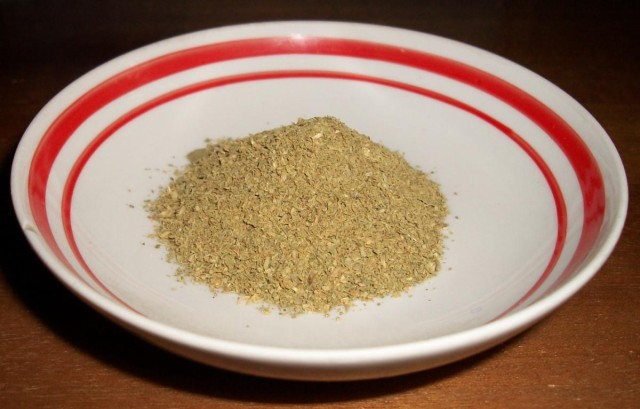
Svan salt is a traditional seasoning mix from Svaneti in Georgia. It combines ground herbs and spices with salt to create a moist, highly aromatic powder used in soups, salads, and meat dishes.
- Made with wild herbs from 1,800 to 2,400 meters altitude.
- Created to stretch scarce salt supplies in mountainous Svaneti.
- Contains coriander, dill, fenugreek, pepper, marigold, garlic, and cumin.
- Listed as intangible cultural heritage in Georgia since 2015.
- Traditionally believed to promote longevity among the Svans.
What is Svan salt?
This seasoning is a dry or slightly damp powder made by grinding together several plant parts and salt. The mixture typically includes coriander seeds, dill, fenugreek leaves, chili peppers, marigold petals, garlic cloves, and cumin seeds, all bound with white salt. When freshly prepared, the blend retains moisture and releases a strong scent. The ingredients are sourced from wild plants found at high elevations in the Caucasus region. The combination creates a complex flavor profile that is both sharp and herbaceous.
Where does Svan salt come from?
The blend originates from Svaneti, a mountainous region in Georgia. Historically, this area faced difficulties accessing sufficient quantities of salt due to its remote location. To stretch their supply, local people traveled to coastal areas to harvest salt and brought it back inland. They then mixed it with abundant wild herbs to create a more voluminous seasoning. This practice turned a necessity into a distinctive culinary tradition unique to the Svans.
What does Svan salt taste like?
The taste is dominated by the pungency of garlic and the heat of red pepper, balanced by the earthy notes of cumin and fenugreek. Dill and coriander add fresh, citrusy undertones, while marigold contributes a subtle floral quality. The overall sensation is warm and aromatic, with a noticeable bite from the chili. The moisture content helps release these flavors immediately upon contact with food.
How Svan salt is grown and processed
Key herbal components are gathered from the wild in Upper Svaneti, where altitudes range between 1,800 and 2,400 meters. The plants are harvested at these heights before being processed. Salt is obtained from external sources, often coastal regions, and transported to the mountains. Once all ingredients arrive, they are dried, ground, and thoroughly mixed to form the final blend. The process relies on seasonal availability of wild herbs.
Svan salt, drawn
How Svan salt is used
Cooks use this blend to season a wide variety of dishes. It is commonly stirred into soups to deepen the broth's flavor. It also serves as a finishing touch for salads, adding texture and aroma. Meat preparations, including stews and roasted dishes, benefit from its savory depth. Potato recipes and fish dishes similarly incorporate the mix to enhance their natural tastes without overpowering them.
Svan salt in the world's kitchens
Georgian cuisine, particularly the regional cooking of Svaneti, defines this spice. The Svans developed the blend to suit their local environment and ingredient availability. While other Georgian spice mixes exist, Svan salt remains distinct due to its specific herb combination and historical context. It represents a core element of mountain Georgian food culture.
At a glance: where it turns up
Spiritual and ceremonial use
There are no recorded religious rituals or spiritual ceremonies associated with this spice blend. It is purely a culinary item used for flavoring food in domestic settings.
Svan salt at celebrations
The spice is not tied to specific festivals, weddings, or harvest celebrations. It is considered a staple for daily cooking rather than a ceremonial ingredient used only on special days.
Traditional and medicinal use
Local tradition holds that the ingredients in Svan salt contribute to longevity and health. While not prescribed as medicine, the blend is valued for its perceived benefits. No specific dosages or therapeutic claims are made; it is simply regarded as a wholesome addition to the diet based on folk belief.
Buying and storing Svan salt
Freshly made batches retain some moisture, which helps preserve the aromatic oils. The blend should be kept in a cool, dry place to prevent clumping or mold. Proper storage maintains its potency for extended periods, though freshness is best appreciated soon after preparation.
What to use instead of Svan salt
No direct single substitute replicates the full complexity of Svan salt. Cooks might approximate it by mixing individual herbs like dill, coriander, and fenugreek with salt and chili. Khmeli suneli is another Georgian blend but differs significantly in composition and usage.
The trade in Svan salt
In 2015, Svan salt was added to Georgia's list of intangible cultural heritage, recognizing its importance to national identity. This status highlights its role beyond mere seasoning, reflecting historical survival strategies and regional pride. The blend remains primarily a local product, celebrated within Georgia for its authentic preparation methods.
Meal
The seasoning fits comfortably into everyday meals across the day. It frequently appears in lunchtime soups and salads, providing a quick flavor boost. For dinner, it enhances main courses featuring meat, potatoes, or fish. Its versatility allows it to be used in casual home cooking rather than reserved for special occasions alone.
Questions people ask about Svan salt
What is Svan salt?
It is a traditional Georgian spice mix from Svaneti, combining ground herbs like coriander, dill, and fenugreek with salt and chili. It creates a moist, aromatic seasoning used in many local dishes.
Where does Svan salt come from?
It originates in Svaneti, a mountainous region in Georgia. The herbs are gathered wild at high altitudes, while salt was historically imported from coastal areas to supplement local shortages.
How does Svan salt taste?
The flavor is pungent and aromatic, driven by garlic and chili heat. Earthy cumin and fenugreek provide depth, while dill and coriander add fresh, citrusy notes to the blend.
What dishes is Svan salt used in?
It is versatile and commonly used in soups, salads, meat stews, potato recipes, and fish dishes. It adds a robust, herbaceous flavor to everyday Georgian cooking.
Good reading and sources
The facts on this page come from the Wikipedia article "Svan salt", written by its contributors and used under the CC BY-SA 4.0 licence, and from its Wikidata record (CC0). EveryMasala rewrote the text in its own words, with AI assistance, and compares every page with the article to make sure no passage is copied. It may be reused under the same CC BY-SA 4.0 licence with a link back.
It may contain mistakes. Names, strengths and customs differ from one grower, kitchen or shop to the next. Traditional and medicinal uses are described as tradition, never as medical advice, and none of this is a substitute for a doctor. If something is wrong, tell us. Last refreshed 2026-10-04.
More from Georgia
All the spices of Georgia 🇷🇺 Russia and 4 moreTarragon
A slender perennial herb with anise-scented leaves, prized in French and Middle Eastern cooking.Leaf · Anise and liquorice · Sweet and mellow
🇷🇺 Russia and 4 moreTarragon
A slender perennial herb with anise-scented leaves, prized in French and Middle Eastern cooking.Leaf · Anise and liquorice · Sweet and mellow
 🇬🇪 GeorgiaKhmeli suneliხმელი სუნელი
A flexible Georgian blend of dried herbs and seeds for stews and meats.Blend · Warm and sweet-spiced · Earthy and deep
🇬🇪 GeorgiaKhmeli suneliხმელი სუნელი
A flexible Georgian blend of dried herbs and seeds for stews and meats.Blend · Warm and sweet-spiced · Earthy and deep
 🇬🇪 GeorgiaUtskho suneliუცხო სუნელი
A Georgian spice blend centered on blue fenugreek, with roots in Persian and Mughal traditions.Earthy and deep · Herbal and green
🇬🇪 GeorgiaUtskho suneliუცხო სუნელი
A Georgian spice blend centered on blue fenugreek, with roots in Persian and Mughal traditions.Earthy and deep · Herbal and green
 🇬🇪 Georgia and 1 moreBlue fenugreekუცხო სუნელი
The blue-flowered annual herb that seasons Georgian stews and Swiss cheeseSeed · Earthy and deep · Bitter
🇬🇪 Georgia and 1 moreBlue fenugreekუცხო სუნელი
The blue-flowered annual herb that seasons Georgian stews and Swiss cheeseSeed · Earthy and deep · Bitter
Its cousins elsewhere
 🇮🇳 India and 4 moreCurry paste
A blended mixture of spices and aromatics used as the base for curries in Asia.Warm and sweet-spiced · Earthy and deep
🇮🇳 India and 4 moreCurry paste
A blended mixture of spices and aromatics used as the base for curries in Asia.Warm and sweet-spiced · Earthy and deep
 🇮🇳 India and 3 moreGaram masalaगरम मसाला
A ground blend of warm spices from the Indian subcontinent used to finish curries and stews.Blend · Warm and sweet-spiced · Sharp and pungent
🇮🇳 India and 3 moreGaram masalaगरम मसाला
A ground blend of warm spices from the Indian subcontinent used to finish curries and stews.Blend · Warm and sweet-spiced · Sharp and pungent
 🇮🇳 India and 4 moreCurry powder
A Western adaptation of Indian spice blends for cooking sauces and stews.Blend · Warm and sweet-spiced · Earthy and deep
🇮🇳 India and 4 moreCurry powder
A Western adaptation of Indian spice blends for cooking sauces and stews.Blend · Warm and sweet-spiced · Earthy and deep
 🇲🇦 Morocco and 2 moreRas el hanoutرأس الحانوت
A complex Maghrebi spice blend meaning 'head of the shop', used in savory dishes across North Africa.Warm and sweet-spiced · Earthy and deep
🇲🇦 Morocco and 2 moreRas el hanoutرأس الحانوت
A complex Maghrebi spice blend meaning 'head of the shop', used in savory dishes across North Africa.Warm and sweet-spiced · Earthy and deep