
Blue fenugreek
In its own language: უცხო სუნელი
Trigonella caerulea
The blue-flowered annual herb that seasons Georgian stews and Swiss cheese
Trigonella caerulea is a small flowering plant in the legume family. It provides seeds, pods, and leaves for cooking. The flavour is like fenugreek but gentler.
- Known as utskho suneli in Georgia
- Flowers are bright blue
- Used in Swiss schabziger cheese
- Milder than common fenugreek
What is Blue fenugreek?
This plant stands thirty to sixty centimetres tall. It belongs to the Fabaceae family. The leaves are narrow and saw-toothed at the top. Blue flowers grow in tight clusters. The seeds are small and elongated. They ripen in late spring. The taste resembles common fenugreek. However, it is much milder on the palate.
Where does Blue fenugreek come from?
The plant grows naturally in regions of Georgia and Switzerland. In Georgia, it has long been part of local cooking traditions. Swiss cooks also use it for specific dairy products.
What does Blue fenugreek taste like?
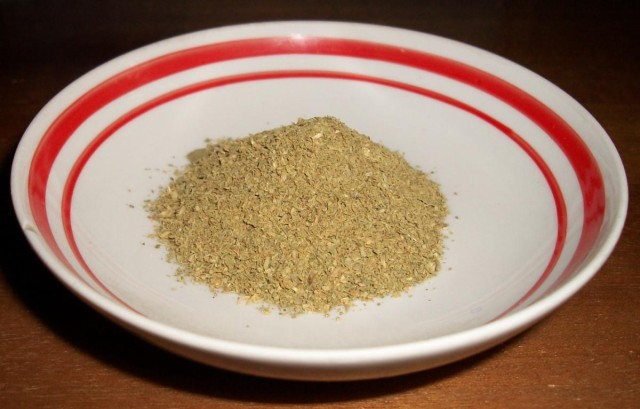
The seeds and leaves carry an earthy note. There is a slight bitterness. The aroma is similar to fenugreek. But the intensity is lower. Cooks value it for its gentle presence.
How Blue fenugreek is grown and processed
It blooms from April through May. Seeds mature by June. The plant pollinates itself. Farmers harvest the green parts and dried pods. The seeds are collected after ripening.
Blue fenugreek, drawn
How Blue fenugreek is used
Georgian kitchens use the whole plant. Seeds, pods, and leaves go into dishes. It is a key part of khmeli suneli mix. Swiss makers add it to schabziger cheese. The flavour enhances these foods without overpowering them.
Blue fenugreek in the world's kitchens
Georgian cuisine relies on utskho suneli heavily. It defines many meat and vegetable stews. Swiss tradition uses it only for schabziger. This cheese is a regional specialty. The two cuisines treat the herb differently.
At a glance: where it turns up

Spiritual and ceremonial use
No religious rituals or offerings involve this spice. It remains a secular ingredient in both countries.
Blue fenugreek at celebrations
Festivals do not specifically feature this herb. It is used in everyday cooking rather than special occasions.
Buying and storing Blue fenugreek
Store dried seeds in a cool place. Keep them away from moisture. Fresh leaves should be used quickly. Ground spice loses flavour over time.
What to use instead of Blue fenugreek
Common fenugreek is the closest match. Use less of it because it is stronger. Other mild herbs cannot replace its unique taste.
The trade in Blue fenugreek
Georgia produces it for local use. Switzerland imports or grows it for cheese making. It is not a major global trade commodity.
Meal
It appears in dinner preparations. Georgian stews often include it. Swiss cheese is eaten as a snack or side. It does not typically appear in breakfast or dessert contexts.
Blends with Blue fenugreek
Questions people ask about Blue fenugreek
What does blue fenugreek taste like?
It tastes like regular fenugreek but is significantly milder. The seeds have an earthy, slightly bitter profile.
Where is blue fenugreek grown?
It is native to Georgia and Switzerland. These are the primary regions where it is cultivated and used.
How is it used in cooking?
In Georgia, it is ground into spice mixes for stews. In Switzerland, it flavours schabziger cheese. All parts of the plant are edible.
Good reading and sources
- Trigonella caerulea on WikipediaEncyclopedia
- More photos on Wikimedia CommonsPhotos and video
- Wikidata recordOpen data
The facts on this page come from the Wikipedia article "Trigonella caerulea", written by its contributors and used under the CC BY-SA 4.0 licence, and from its Wikidata record (CC0). EveryMasala rewrote the text in its own words, with AI assistance, and compares every page with the article to make sure no passage is copied. It may be reused under the same CC BY-SA 4.0 licence with a link back.
It may contain mistakes. Names, strengths and customs differ from one grower, kitchen or shop to the next. Traditional and medicinal uses are described as tradition, never as medical advice, and none of this is a substitute for a doctor. If something is wrong, tell us. Last refreshed 2026-10-04.
More from Georgia
All the spices of Georgia 🇷🇺 Russia and 4 moreTarragon
A slender perennial herb with anise-scented leaves, prized in French and Middle Eastern cooking.Leaf · Anise and liquorice · Sweet and mellow
🇷🇺 Russia and 4 moreTarragon
A slender perennial herb with anise-scented leaves, prized in French and Middle Eastern cooking.Leaf · Anise and liquorice · Sweet and mellow
 🇬🇪 GeorgiaUtskho suneliუცხო სუნელი
A traditional Georgian spice blend featuring blue fenugreek.Blend
🇬🇪 GeorgiaUtskho suneliუცხო სუნელი
A traditional Georgian spice blend featuring blue fenugreek.Blend
 🇬🇪 GeorgiaKhmeli suneliხმელი სუნელი
A flexible Georgian blend of dried herbs and seeds for stews and meats.Blend · Warm and sweet-spiced · Earthy and deep
🇬🇪 GeorgiaKhmeli suneliხმელი სუნელი
A flexible Georgian blend of dried herbs and seeds for stews and meats.Blend · Warm and sweet-spiced · Earthy and deep
 🇬🇪 GeorgiaSvan saltსვანური მარილი
A moist, aromatic spice blend from the Georgian mountains, combining herbs with salt.Sharp and pungent · Earthy and deep
🇬🇪 GeorgiaSvan saltსვანური მარილი
A moist, aromatic spice blend from the Georgian mountains, combining herbs with salt.Sharp and pungent · Earthy and deep
Its cousins elsewhere
All seed 🇮🇷 Iran and 4 moreSaffronزعفران
The dried crimson stigmas of the autumn-blooming saffron crocus.Stigma · Sharp and pungent · Bitter
🇮🇷 Iran and 4 moreSaffronزعفران
The dried crimson stigmas of the autumn-blooming saffron crocus.Stigma · Sharp and pungent · Bitter
 🇾🇪 Yemen and 1 moreHilbehحلبة
A frothy Yemeni condiment made from ground fenugreek seeds and waterPaste · Bitter · Earthy and deep
🇾🇪 Yemen and 1 moreHilbehحلبة
A frothy Yemeni condiment made from ground fenugreek seeds and waterPaste · Bitter · Earthy and deep
 🇮🇳 IndiaLakadong turmericShynrai Lakadong (Khasi), Chyrmit Lakadong (Pnar)
A high-curcumin turmeric variety grown organically in the Jaintia Hills of Meghalaya, India.Earthy and deep · Bitter
🇮🇳 IndiaLakadong turmericShynrai Lakadong (Khasi), Chyrmit Lakadong (Pnar)
A high-curcumin turmeric variety grown organically in the Jaintia Hills of Meghalaya, India.Earthy and deep · Bitter
 🇮🇩 Indonesia and 3 moreTemulawak
The rhizome of a Javanese ginger relative, used for its earthy flavour and traditional wellness drinks.Root · Earthy and deep · Bitter
🇮🇩 Indonesia and 3 moreTemulawak
The rhizome of a Javanese ginger relative, used for its earthy flavour and traditional wellness drinks.Root · Earthy and deep · Bitter