Ramanathapuram Mundu chilli
Capsicum annuum
A round, mild red chilli from Tamil Nadu with a GI tag.
The Ramanathapuram Mundu is a cultivar of Capsicum annuum grown in the Tiruvadanai and Mudukulathur taluks of Tamil Nadu, India. It produces small, thick-skinned fruits that are milder than many peppers and prized for their flavour in South Indian cooking.
- Round, cherry-sized red chilli from Tamil Nadu, India.
- Heat level is approximately 17,500 Scoville units.
- Named 'Mundu' in Tamil, meaning fat and round.
- Received a Geographical Indication tag in 2022.
- Used traditionally in sambar and chutneys.
What is Ramanathapuram Mundu chilli?
This spice is a specific variety of dry red chilli pepper belonging to the species Capsicum annuum. The fruits are distinctively round, roughly the size of a cherry, and possess a notably thick skin. The name 'Mundu' comes from the Tamil word for 'fat and round', describing its shape. While it delivers heat, it is generally considered milder and more flavorful than standard commercial chillies. It is used whole or ground to add warmth and depth to dishes.
Where does Ramanathapuram Mundu chilli come from?
The chilli originates from the Ramanathapuram district in the Indian state of Tamil Nadu. It has been cultivated in this region for over two centuries. Historically, the area was known as the Kingdom of Ramnad, which is why the pepper is also called Ramnad Mundu Chilli. The plant thrives in local conditions, tolerating both drought and soil salinity, and is typically sown directly into the field rather than started in nurseries.
What does Ramanathapuram Mundu chilli taste like?
The Ramanathapuram Mundu offers a moderate level of heat, registering around 17,500 on the Scoville scale. This places it in a range similar to a jalapeño. Cooks value it not just for its spice, but for its robust flavour profile. The thick skin contributes to a substantial texture when dried, and the taste is described as earthy and rich, making it a preferred choice for traditional preparations where a clean, warm heat is desired without overwhelming bitterness.
How Ramanathapuram Mundu chilli is grown and processed
Farmers grow this chilli as a rain-fed crop, relying on natural monsoon patterns rather than extensive irrigation. It is planted directly into the soil in the taluks of Tiruvadanai, Mudukulathur, Kadaladi, RS Mangalam, and Kamuthi. The plant is hardy, adapted to withstand salty soils and dry spells common in the region. After harvesting, the pods are dried to preserve them for use as a dry spice.
Ramanathapuram Mundu chilli, drawn
How Ramanathapuram Mundu chilli is used
In South Indian cuisine, this chilli is a staple ingredient. It is commonly used to season sambar, a lentil-based vegetable stew, as well as various chutneys and curries. Because it is often sold as a dry red chilli, cooks may use the whole pod to infuse dishes during cooking or grind it into powder. Its mild heat allows it to complement other spices without dominating the palate.
Ramanathapuram Mundu chilli in the world's kitchens
The spice is central to South Indian cooking, specifically within the culinary traditions of Tamil Nadu. It distinguishes regional dishes by providing a characteristic mild heat and aromatic quality. Unlike hotter varieties used in other parts of India, the Ramanathapuram Mundu is chosen for its balance, ensuring that the complex layers of tamarind, lentils, and vegetables in sambar remain the focus of the dish.
At a glance: where it turns up
Cuisines
Spiritual and ceremonial use
There is no specific information regarding religious rituals, offerings, or sacred uses associated with this chilli in the provided sources.
Traditional and medicinal use
Traditional use focuses on its culinary application rather than medicinal purposes. The plant's resilience to salinity and drought makes it a reliable crop for local farmers, supporting agricultural traditions in the Ramanathapuram district. No folk medicine applications or safety warnings are recorded in the available text.
The trade in Ramanathapuram Mundu chilli
On February 22, 2022, the Ramanathapuram Mundu chilli received a Geographical Indication (GI) tag from the Indian government. This legal protection ensures that only chillies grown in the specified districts of Tamil Nadu can bear this name. The registration was proposed by the Ramnad Mundu Chilli Producer Company Limited. It became the first chilli variety from Tamil Nadu to receive this status, protecting the local trade and reputation of the product.
Meal
It is primarily used in main meals such as lunch and dinner, particularly in home-cooked South Indian fare. It features heavily in sambar and rice-based lunches. It is also used in chutneys, which serve as accompaniments or snacks alongside meals. The chilli is less common in breakfast contexts compared to fresh green varieties, but remains essential for daily savory cooking.
Place
ramanathapuram district, tiruvadanai, mudukulathur
Questions people ask about Ramanathapuram Mundu chilli
Where does the Ramanathapuram Mundu chilli come from?
It originates from the Ramanathapuram district in Tamil Nadu, India, specifically grown in areas like Tiruvadanai and Mudukulathur.
How hot is the Ramanathapuram Mundu chilli?
It has a moderate heat level of about 17,500 Scoville units, making it milder than many common commercial chillies.
What does the name Mundu mean?
Mundu is a Tamil word that translates to 'fat and round', describing the distinctive shape of the dried fruit.
What dishes is this chilli used in?
It is a key ingredient in South Indian cuisine, particularly for seasoning sambar, chutneys, and various curries.
Is this chilli protected by any certification?
Yes, it holds a Geographical Indication (GI) tag, meaning only chillies from this specific region can be named Ramanathapuram Mundu.
Good reading and sources
The facts on this page come from the Wikipedia article "Ramanathapuram Mundu chilli", written by its contributors and used under the CC BY-SA 4.0 licence, and from its Wikidata record (CC0). EveryMasala rewrote the text in its own words, with AI assistance, and compares every page with the article to make sure no passage is copied. It may be reused under the same CC BY-SA 4.0 licence with a link back.
It may contain mistakes. Names, strengths and customs differ from one grower, kitchen or shop to the next. Traditional and medicinal uses are described as tradition, never as medical advice, and none of this is a substitute for a doctor. If something is wrong, tell us. Last refreshed 2026-10-04.
More from India
All the spices of India 🇳🇵 Nepal and 2 moreDalle Khursaniडल्ले खुर्सानी
A round, fiery chilli from the Himalayas, known for its intense heat and vitamin content.Chilli · Hot and fiery
🇳🇵 Nepal and 2 moreDalle Khursaniडल्ले खुर्सानी
A round, fiery chilli from the Himalayas, known for its intense heat and vitamin content.Chilli · Hot and fiery
 🇮🇳 India and 2 moreGhost pepperbhut jolokia
A superhot chili from Northeast India with over one million Scoville units of heat.Chilli · Hot and fiery
🇮🇳 India and 2 moreGhost pepperbhut jolokia
A superhot chili from Northeast India with over one million Scoville units of heat.Chilli · Hot and fiery
 🇨🇳 China and 2 moreCrushed red pepper
Dried and crushed chilli peppers, often with seeds, used as a spicy condiment.Chilli · Hot and fiery · Earthy and deep
🇮🇳 India and 4 moreMizo chilliHmarchte
A pungent Capsicum frutescens cultivar from Mizoram, India, holding a Geographical Indication tag.Chilli · Hot and fiery
🇨🇳 China and 2 moreCrushed red pepper
Dried and crushed chilli peppers, often with seeds, used as a spicy condiment.Chilli · Hot and fiery · Earthy and deep
🇮🇳 India and 4 moreMizo chilliHmarchte
A pungent Capsicum frutescens cultivar from Mizoram, India, holding a Geographical Indication tag.Chilli · Hot and fiery
Its cousins elsewhere
All chilli 🇵🇪 Peru and 5 moreChili pepperchīlli
The pungent berry of the Capsicum plant, used to add heat to dishes worldwide.Fruit · Hot and fiery · Earthy and deep
🇵🇪 Peru and 5 moreChili pepperchīlli
The pungent berry of the Capsicum plant, used to add heat to dishes worldwide.Fruit · Hot and fiery · Earthy and deep
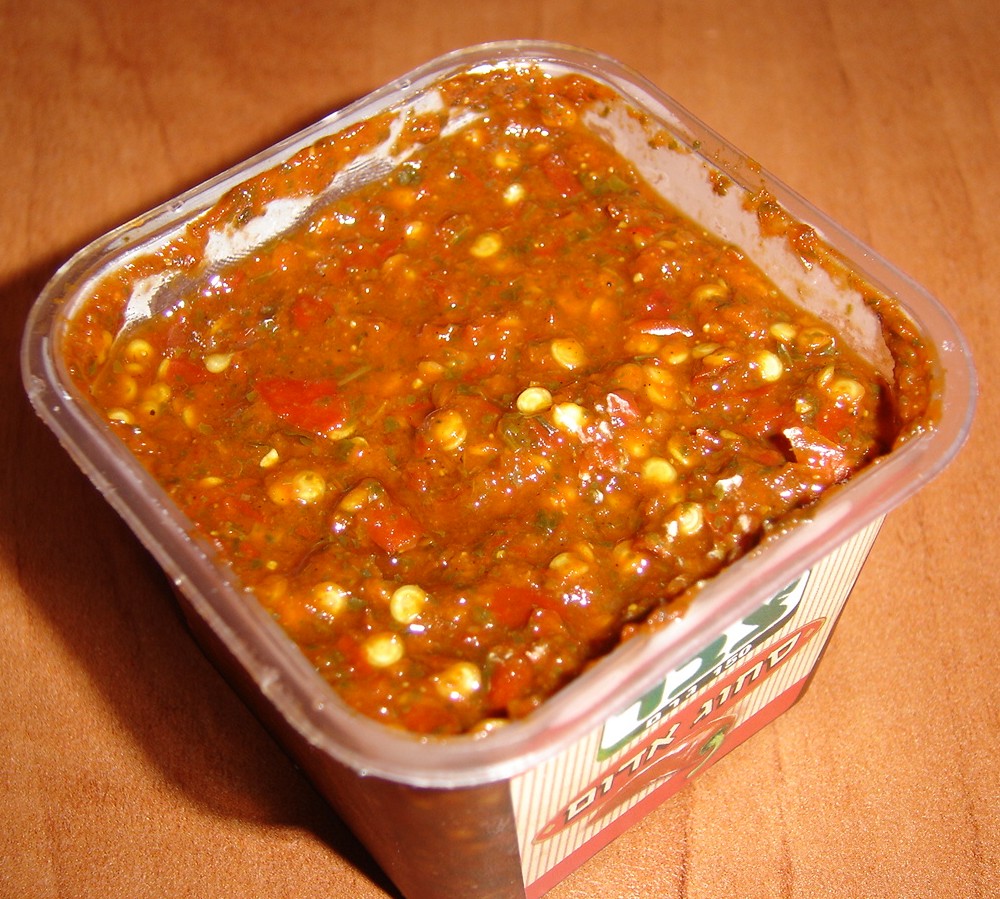 🇾🇪 Yemen and 1 moreZhugسحوق
A Yemeni hot sauce of crushed chilies, garlic, and corianderHot and fiery · Sharp and pungent
🇾🇪 Yemen and 1 moreZhugسحوق
A Yemeni hot sauce of crushed chilies, garlic, and corianderHot and fiery · Sharp and pungent
 🇱🇾 Libya and 1 morePilpelchumaפלפלצ'ומה
A steamed chili and garlic paste from Libyan Jewish cuisine, now common in Israel.Hot and fiery · Sharp and pungent
🇱🇾 Libya and 1 morePilpelchumaפלפלצ'ומה
A steamed chili and garlic paste from Libyan Jewish cuisine, now common in Israel.Hot and fiery · Sharp and pungent
 🇳🇬 NigeriaYaji
A spicy rub from Nigeria made with chili, ginger, and ground peanuts.Blend · Hot and fiery · Earthy and deep
🇳🇬 NigeriaYaji
A spicy rub from Nigeria made with chili, ginger, and ground peanuts.Blend · Hot and fiery · Earthy and deep