
Paprika
Capsicum annuum
A red powder made from dried Capsicum annuum peppers, used to colour and flavour dishes across Europe and the Middle Eas
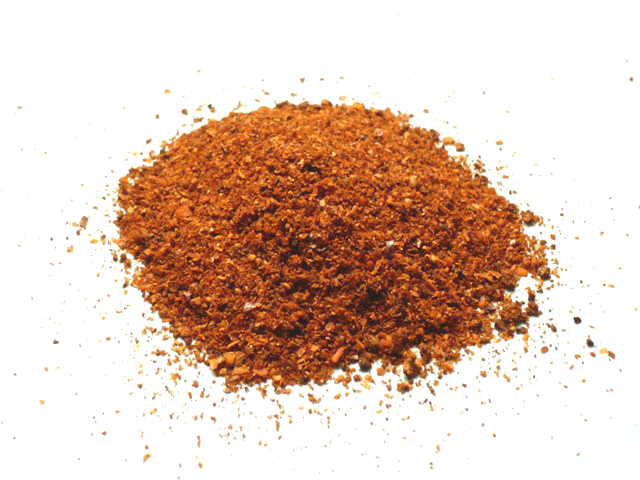
This spice is a fine red powder produced by drying and grinding peppers of the Capsicum annuum species. It originated in the Americas before reaching Europe in the sixteenth century. The taste ranges from sweet and earthy to mildly hot, depending on the seeds and flesh retained during processing.
- Originated in the Americas, introduced to Europe in the 16th century.
- Hungary and Spain are leading producers of distinct styles.
- Colour comes from carotenoids like capsanthin and beta-carotene.
- Smoked Spanish pimentón is dried over oak wood fires.
- Essential ingredient in Hungarian goulash and Spanish chorizo.
What is Paprika?
Paprika is a culinary powder created by drying and grinding the fruits of Capsicum annuum plants. The spice typically displays shades of red, orange, or yellow, determined by its carotenoid content. Sweet varieties consist mostly of the pepper's fleshy pericarp with most seeds removed, while hotter versions retain seeds, stalks, and internal membranes. The texture is fine and dusty, and the aroma reflects the specific drying method used, ranging from fresh and vegetal to deep and woody.
Where does Paprika come from?
Wild ancestors of the pepper grew along the Amazon River and were cultivated in central Mexico as early as seven thousand years ago. Spanish and Portuguese traders introduced the plant to Europe in the sixteenth century. It spread through the Balkans and reached Hungary by 1569, where it became culturally central. The name derives from Hungarian, which borrowed it from Serbo-Croatian roots linked to Latin words for pepper.
What does Paprika taste like?
The taste profile varies significantly based on the cultivar and preparation. Sweet paprika offers a mild, vegetal sweetness with earthy undertones. Hotter grades introduce a sharp pungency derived from capsaicin in the retained seeds and membranes. Spanish pimentón often carries a distinct smoky character because the peppers are dried over oak wood fires. Orange and yellow powders tend to be sweeter and less pungent than their red counterparts.
How Paprika is grown and processed
Peppers are grown in warm climates and harvested when fully ripe. The fruits are then dried, traditionally by sun exposure for up to ten days, though kilns are also used. In Spain, some varieties undergo a smoking process using oak wood to develop their signature flavour. After drying, the peppers are ground into a powder. The final colour depends on the specific carotenoids present and how long the product is stored before grinding.
Paprika, drawn
How Paprika is used
Cooking applications include seasoning stews, soups, rice dishes, and sausages. In Hungary, it is essential for goulash and paprikash sauces. Spanish cuisine uses it in chorizo sausages and paella, particularly the smoked variety from La Vera. Portuguese cooks use it in poultry and fish stews. It is also sprinkled onto hummus in the Middle East and mixed into sofrito bases in Spain.
Paprika in the world's kitchens
Hungarian cuisine relies on it heavily for national dishes like gulyás. Spanish cooking distinguishes between sweet, semi-sweet, and spicy types, with smoked versions being prized. Portuguese cuisine uses it as colorau for pork and seafood. French recipes often label paprika-infused dishes as 'hongroise'. German and Austrian kitchens use it in braised meats and dumplings. Moroccan cuisine incorporates it into chermoula marinades.
At a glance: where it turns up


Spiritual and ceremonial use
There are no specific religious rituals or dietary laws associated with paprika in the provided sources. It is treated purely as a secular food ingredient across all mentioned cultures.
Paprika at celebrations
Its use is described as daily and traditional within regional cuisines rather than tied to specific calendar events.
Traditional and medicinal use
No safety warnings or dosage recommendations are provided.
Buying and storing Paprika
Proper keeping would presumably maintain the vibrant red, orange, or yellow hues derived from carotenoids.
What to use instead of Paprika
No direct substitutes are listed. However, bell peppers are related to the same species. Chili powder is mentioned as a comparison, noting that paprika peppers generally have thinner flesh and milder heat than those used for chili powder.
The trade in Paprika
China and India are major producers, accounting for over twenty-two million tonnes annually. Hungary and Spain also have significant production volumes. Hungarian paprika is graded into five commercial categories based on quality and heat. Spanish pimentón de la vera holds a Denomination of Origin certification, protecting its regional production methods.
Meal
The spice features prominently in lunch and dinner dishes, particularly hearty stews and meat-based mains. It is common in street-food style sausages like chorizo. In France, it appears in cream-based chicken dishes served for dinner. It is also used in snack preparations such as spreads and dips like rouille or Liptauer.
Blends with Paprika
Questions people ask about Paprika
What is paprika made from?
It is made from dried and ground fruits of the Capsicum annuum plant. The powder can range from sweet to hot depending on whether seeds and membranes are included in the grind.
Where does paprika come from originally?
The pepper plant is native to the Americas, specifically cultivated in central Mexico thousands of years ago before being brought to Europe by Spanish and Portuguese explorers.
How does Hungarian paprika differ from Spanish pimentón?
Hungarian paprika is typically sun-dried and graded by sweetness. Spanish pimentón often involves smoking the peppers over oak wood, giving it a distinct woody, smoky flavour profile.
What colours can paprika be?
It appears in red, orange, or yellow shades. These colours result from different concentrations of carotenoids such as capsanthin for red and beta-carotene for yellow-orange.
Is paprika always spicy?
No. Sweet paprika contains little to no heat because the seeds are removed. Hotter varieties retain seeds and stalks, providing a mild to moderate pungency compared to other chillies.
Good reading and sources
- Paprika on WikipediaEncyclopedia
- More photos on Wikimedia CommonsPhotos and video
- Wikidata recordOpen data
The facts on this page come from the Wikipedia article "Paprika", written by its contributors and used under the CC BY-SA 4.0 licence, and from its Wikidata record (CC0). EveryMasala rewrote the text in its own words, with AI assistance, and compares every page with the article to make sure no passage is copied. It may be reused under the same CC BY-SA 4.0 licence with a link back.
It may contain mistakes. Names, strengths and customs differ from one grower, kitchen or shop to the next. Traditional and medicinal uses are described as tradition, never as medical advice, and none of this is a substitute for a doctor. If something is wrong, tell us. Last refreshed 2026-10-04.
More from Mexico
All the spices of Mexico 🇲🇽 Mexico and 5 moreAnnatto
The orange-red pigment from achiote seeds used as a natural food coloring and mild spice.Seed · Earthy and deep · Sweet and mellow
🇲🇽 Mexico and 5 moreAnnatto
The orange-red pigment from achiote seeds used as a natural food coloring and mild spice.Seed · Earthy and deep · Sweet and mellow
 🇵🇪 Peru and 5 moreChili pepperchīlli
The pungent berry of the Capsicum plant, used to add heat to dishes worldwide.Fruit · Hot and fiery · Earthy and deep
🇵🇪 Peru and 5 moreChili pepperchīlli
The pungent berry of the Capsicum plant, used to add heat to dishes worldwide.Fruit · Hot and fiery · Earthy and deep
 🇲🇽 MexicoPineapple sage
A Mexican shrub with leaves that smell of pineapple and flowers that feed hummingbirdsLeaf · Citrus and bright · Sweet and mellow
🇲🇽 MexicoPineapple sage
A Mexican shrub with leaves that smell of pineapple and flowers that feed hummingbirdsLeaf · Citrus and bright · Sweet and mellow
 🇲🇽 Mexico and 2 moreVanilla
The cured fruit of a climbing orchid, the world's primary source of vanilla flavouringSweet and mellow · Warm and sweet-spiced
🇲🇽 Mexico and 2 moreVanilla
The cured fruit of a climbing orchid, the world's primary source of vanilla flavouringSweet and mellow · Warm and sweet-spiced
Its cousins elsewhere
All seed 🇮🇳 IndiaChammanthi podi
A dry coconut and spice condiment from Kerala that preserves fresh chutney for months.Hot and fiery · Earthy and deep
🇮🇳 IndiaChammanthi podi
A dry coconut and spice condiment from Kerala that preserves fresh chutney for months.Hot and fiery · Earthy and deep
 🇨🇳 China and 5 moreChili oil辣椒油
A red condiment of infused vegetable oil and hot peppers used across Asia and Europe.Hot and fiery · Smoky
🇨🇳 China and 5 moreChili oil辣椒油
A red condiment of infused vegetable oil and hot peppers used across Asia and Europe.Hot and fiery · Smoky
 🇸🇾 Syria and 1 moreAleppo pepperفلفل حلبي
A moderately spicy, fruity flake from Syria and Turkey, named for the city of Aleppo.Chilli · Hot and fiery · Sweet and mellow
🇸🇾 Syria and 1 moreAleppo pepperفلفل حلبي
A moderately spicy, fruity flake from Syria and Turkey, named for the city of Aleppo.Chilli · Hot and fiery · Sweet and mellow
 🇺🇸 United States and 1 moreNew Mexico chilechile de Nuevo México
A cultivar group of Capsicum annuum from New Mexico, valued for its smoky flavor and range of heat levels.Sharp and pungent · Sweet and mellow
🇺🇸 United States and 1 moreNew Mexico chilechile de Nuevo México
A cultivar group of Capsicum annuum from New Mexico, valued for its smoky flavor and range of heat levels.Sharp and pungent · Sweet and mellow