
Sassafras
Sassafras
An aromatic tree of North America and East Asia, famed for filé powder and root tea
Sassafras comes from aromatic deciduous trees native to eastern North America and East Asia. Known for its citrus-scented crushed leaves and distinctive root aroma, it provides dried leaves for filé powder in stews and roots for traditional teas.
- A single sassafras tree can produce three distinct leaf patterns: oval, mitten-shaped, and three-lobed.
- Ground sassafras leaves make filé powder, the classic thickening spice of Louisiana gumbo.
- The largest recorded sassafras tree stands over 30 metres tall in Owensboro, Kentucky.
- Sassafras root was among the earliest goods exported from North America to Europe in 1609.
What is Sassafras?
Sassafras is a group of deciduous trees in the laurel family, Lauraceae. The trees reach heights between nine and thirty-five metres, bearing yellow or orange-brown bark, tiny six-petaled yellow flowers, and blue-black fruits. A single tree can grow three different leaf shapes: plain oval, mitten-shaped with two lobes, and three-pronged leaves. Every part of the plant holds aromatic oils. When crushed, fresh green leaves and slender twigs release a bright, lemon-like fragrance. The leaves become mucilaginous when young, giving them natural thickening power when dried and powdered into filé for soups and stews.
Where does Sassafras come from?
Living species of sassafras grow wild across eastern North America, mainland China, and Taiwan, alongside an extinct species known from North American fossils. European botanist Nicolas Monardes recorded the name in 1569, which connects to earlier French naming and Latin terms for stone-breaking. Long before colonists arrived, indigenous peoples throughout North America gathered the tree. Timucua communities called it pauane, while Native Americans in Virginia and Delaware called it winauk. They separated the plant into red and white varieties according to the colour, part, and practical use of the tree.
What does Sassafras taste like?
Sassafras offers a fragrant and layered profile. Bruised young leaves and tender green twigs carry a crisp citrus aroma. The bark and subterranean roots possess a pungent, warm fragrance reminiscent of fennel, which inspired the historical German name Fenchelholz. Distilled oils from the dried root bark are dominated by safrole, alongside natural amounts of camphor, eugenol, and asarone. In cooking, the ground leaves contribute an earthy, herbal presence and a viscous texture rather than sharp heat.
How Sassafras is grown and processed
Unlike many evergreen members of the laurel family, sassafras trees are deciduous, dropping their foliage during dry intervals or autumn seasons. They flourish across open woodlands, old fields, and fence lines. The trees prefer well-drained, moist sandy loam, though they adapt readily to many ground types. Growth reaches its greatest size in warm, damp southern climates, where individual trees can exceed thirty metres in height. North American trees are dioecious, with separate male and female flowering plants, whereas East Asian species develop male and female blossoms together on the same tree.
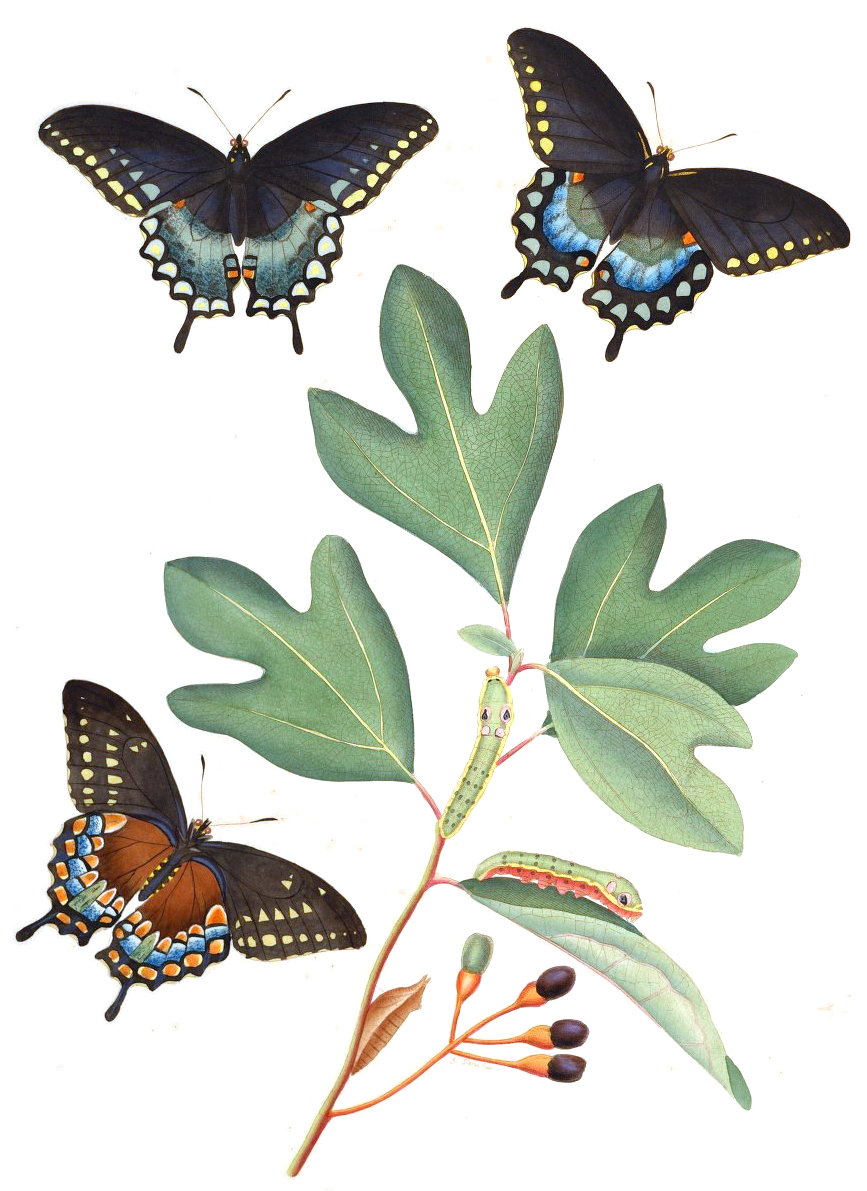
Sassafras, drawn
How Sassafras is used
Cooks dry and grind sassafras leaves into filé powder, an essential seasoning and soup thickener. Peeled subterranean roots are dried and boiled to brew aromatic teas. Leaves and yellow blossoms are tossed into fresh salads, while parts of the plant are applied to cure meats and flavour fats. Tender young shoots can be consumed fresh or dried. Outside the kitchen, the durable wood has been crafted into ships, furniture, and fire starters. Its aromatic twigs historically served as simple toothbrushes, and distilled oils were widely used in soaps, perfumes, and homemade liquors.
Sassafras in the world's kitchens
Sassafras is closely tied to the regional cooking of the American Gulf Coast. In Louisiana, ground sassafras leaves became an iconic staple of Cajun cooking and Creole heritage, blending indigenous American forest ingredients with European culinary practices. The dried leaf powder provides body and subtle flavour to traditional gumbo recipes. In East Asia, regional species in China and Taiwan hold long historical roles in domestic herbal preparations, while Brazilian growers cultivate related laurel trees for the commercial distillation of fragrant essential oils.
At a glance: where it turns up


Traditional and medicinal use
In Native American tradition, rubbed sassafras leaves were applied to skin wounds, while various parts of the plant were used to treat fevers, acne, and urinary troubles. Traditional Chinese medicine employs East Asian species to soothe trauma and rheumatism. Across historical folk practice, bark and roots were used for toothaches, bronchitis, dysentery, and scurvy. Modern health authorities identify safrole, the main compound in sassafras oil, as a weak liver carcinogen, leading to a ban on mass-produced sassafras foods and drugs in the United States since 1960.
The trade in Sassafras
Sassafras root became one of the earliest commercial exports shipped from North America to Europe, with regular maritime trade recorded as early as 1609. The aromatic timber and medicinal bark fetched high attention across Atlantic ports. In modern commerce, trees are harvested primarily in East Asia and Brazil for extracting essential oils. These oils supply chemical precursors for industrial products, including household insecticides. Because safrole can also serve in illicit drug manufacturing, government authorities strictly regulate the sale, import, and bulk transport of concentrated sassafras oils.
Meal
Sassafras finds its place in main dinner pots, cured meat preparations, and soothing drinks. Ground dried leaves are stirred into hearty gumbos and rich Creole stews during evening meals. The peeled, dried roots are steeped into boiling water to create warm infusions or chilled, lightly sweetened table drinks. Fresh seasonal leaves and delicate flowers occasionally garnish daylight salads.
Questions people ask about Sassafras
Where does sassafras come from?
Sassafras trees are native to eastern North America, mainland China, and Taiwan. They grow naturally in open woodlands, fields, and along borders with moist, well-drained soils.
How is sassafras used in cooking?
The dried, ground leaves are used as filé powder to season and thicken Louisiana gumbo. Roots are boiled for traditional teas, while flowers and fresh leaves occasionally go into salads.
Why was sassafras oil banned in commercial food?
The United States banned sassafras oil in mass-produced food in 1960 because safrole, its primary chemical component, was found to act as a weak liver carcinogen in animal studies.
What does sassafras smell and taste like?
Crushed leaves and green twigs have a fresh citrus scent. The root and bark release an aromatic, fennel-like fragrance that historically earned the tree the name fennel wood.
Good reading and sources
- Sassafras on WikipediaEncyclopedia
- More photos on Wikimedia CommonsPhotos and video
- Wikidata recordOpen data
The facts on this page come from the Wikipedia article "Sassafras", written by its contributors and used under the CC BY-SA 4.0 licence, and from its Wikidata record (CC0). EveryMasala rewrote the text in its own words, with AI assistance, and compares every page with the article to make sure no passage is copied. It may be reused under the same CC BY-SA 4.0 licence with a link back.
It may contain mistakes. Names, strengths and customs differ from one grower, kitchen or shop to the next. Traditional and medicinal uses are described as tradition, never as medical advice, and none of this is a substitute for a doctor. If something is wrong, tell us. Last refreshed 2026-10-04.
More from the United States
All the spices of the United States 🇺🇸 United States and 1 moreCommon prickly ash
An aromatic North American tree whose bark and berries give a sharp, numbing biteBark · Bitter · Numbing and tingling
🇺🇸 United States and 1 moreCommon prickly ash
An aromatic North American tree whose bark and berries give a sharp, numbing biteBark · Bitter · Numbing and tingling
 🇺🇸 United States and 1 moreCalifornian white sage
An aromatic desert shrub whose seeds flavour maize foods and roots make tonic teaSeed · Herbal and green · Sharp and pungent
🇺🇸 United States and 1 moreCalifornian white sage
An aromatic desert shrub whose seeds flavour maize foods and roots make tonic teaSeed · Herbal and green · Sharp and pungent
 🇺🇸 United StatesSpicebush
The dried fruit of a North American shrub, used as an allspice substitute.Fruit · Citrus and bright · Sharp and pungent
🇺🇸 United StatesMrs. Burns' Lemon Basil
An heirloom sweet basil cultivar from New Mexico with intense lemon flavor and large leaves.Leaf · Citrus and bright · Floral and perfumed
🇺🇸 United StatesSpicebush
The dried fruit of a North American shrub, used as an allspice substitute.Fruit · Citrus and bright · Sharp and pungent
🇺🇸 United StatesMrs. Burns' Lemon Basil
An heirloom sweet basil cultivar from New Mexico with intense lemon flavor and large leaves.Leaf · Citrus and bright · Floral and perfumed
Its cousins elsewhere
All leaf 🇮🇳 India and 4 moreBasil
A tender culinary herb with glossy leaves and a licorice-like aroma, native to tropical Asia.Leaf · Anise and liquorice · Warm and sweet-spiced
🇮🇳 India and 4 moreBasil
A tender culinary herb with glossy leaves and a licorice-like aroma, native to tropical Asia.Leaf · Anise and liquorice · Warm and sweet-spiced
 🇲🇽 Mexico and 1 moreHoja santa
The large, heart-shaped leaf of a Mexican pepper plant, used to wrap and flavor food.Anise and liquorice · Warm and sweet-spiced
🇲🇽 Mexico and 1 moreHoja santa
The large, heart-shaped leaf of a Mexican pepper plant, used to wrap and flavor food.Anise and liquorice · Warm and sweet-spiced
 🇰🇷 South Korea and 5 moreKorean mint배초향
An anise-scented Asian mint leaf used in Korean stews and herbal traditionsLeaf · Anise and liquorice · Herbal and green
🇰🇷 South Korea and 5 moreKorean mint배초향
An anise-scented Asian mint leaf used in Korean stews and herbal traditionsLeaf · Anise and liquorice · Herbal and green
 🇷🇺 Russia and 4 moreTarragon
A slender perennial herb with anise-scented leaves, prized in French and Middle Eastern cooking.Leaf · Anise and liquorice · Sweet and mellow
🇷🇺 Russia and 4 moreTarragon
A slender perennial herb with anise-scented leaves, prized in French and Middle Eastern cooking.Leaf · Anise and liquorice · Sweet and mellow