
Prekese
In its own language: prɛkɛsɛ
Tetrapleura tetraptera
The scented pod of a West African tree, used to perfume soups.
Prekese is the dried fruit of a medium-sized tree native to tropical Africa. It has a sweet fragrance and is primarily used to season palm nut soup and light soups in West African cooking.
- Native to tropical Africa from Senegal to Kenya.
- Known as prekese in Ghana and uhio in Nigeria.
- Used to perfume palm nut soup and light soups.
- Fruit has four wing-like ridges and rattling seeds.
- Family Fabaceae, a deciduous tree reaching 25m tall.
What is Prekese?
Prekese is the fruit of Tetrapleura tetraptera, a deciduous tree found across tropical Africa. The tree reaches twenty-five meters in height and features grey bark that reveals a reddish, scented layer when cut. The fruit is a dark brown or black pod marked by four wing-like ridges. Inside, tiny seeds rattle against the shell. The pod contains an edible pulp that releases a distinct sweet aroma. This scent defines its culinary value, earning it the name 'soup perfume' in local markets.
Where does Prekese come from?
The species originates in Western and Central Africa. Its natural range extends from Senegal in the west to Sudan and Kenya in the east. It also grows southward into Tanzania and Angola. In Ghana, the Akan people call it prekese. In Nigeria, the Igbo community refers to it as uhio. These names highlight its deep integration into local cultures long before modern trade routes expanded.
What does Prekese taste like?
The primary characteristic of prekese is its sweet fragrance. This aroma permeates dishes during cooking, acting as a background note rather than a sharp spice. The taste is mild, allowing other ingredients to shine while adding depth. The scent comes from the edible pulp inside the woody pod. Cooks value this gentle sweetness for balancing heavier, richer soups common in the region.
How Prekese is grown and processed
The tree thrives in tropical climates across Africa. Harvesters collect the mature pods, which hang from the branch edges. The fruit is typically dried before use. The drying process concentrates the sweet scent within the pod. Cooks often add the whole pod to simmering liquids, allowing the aroma to infuse the dish over time. The hard ridges protect the inner pulp until cooking begins.
Prekese, drawn
How Prekese is used
Prekese is essential for preparing Banga soup, a traditional palm nut soup. It is also standard in light soups, where its aroma provides a distinctive flavor profile. Cooks usually drop the whole dried pod into the pot. The heat releases the sweet scent into the broth. It is rarely ground; instead, it simmers whole to perfume the meal. The pulp inside the pod dissolves slightly, thickening the soup.
Prekese in the world's kitchens
West African cuisines rely heavily on prekese. The Akan people of Ghana use it as a fundamental seasoning. The Igbo people of Nigeria incorporate it into their traditional dishes. Other regions in tropical Africa also utilize the fruit. The spice bridges different ethnic groups through shared culinary techniques. It remains a defining element of authentic palm nut and light soup recipes across these areas.
At a glance: where it turns up


Traditional and medicinal use
Traditional medicine uses are not detailed in the provided text. The fruit is valued primarily for its culinary properties.
Buying and storing Prekese
Dried pods can be stored for extended periods. Their hard shells protect the aromatic pulp from moisture. Keep them in a cool, dry place to preserve the scent. The fragrance may fade if exposed to air for too long. Whole pods retain their flavor longer than ground versions.
What to use instead of Prekese
Prekese has a unique sweet aroma that is difficult to replicate. Cooks seeking similar effects might look for other fragrant pods, but none are confirmed as direct replacements.
The trade in Prekese
The spice is traded within West and Central Africa. Ghana and Nigeria are key centers for its use. Distribution extends to East African nations like Kenya and Tanzania. Local markets handle most of the trade, ensuring availability for regional cooks.
Meal
This spice belongs to main meals, specifically lunch and dinner. It is the key seasoning for substantial soups served with starches like fufu or rice. It is not used for breakfast or snacks. The strong aroma makes it suitable for hearty evening meals. Families often prepare these soups on weekends or for special gatherings, making prekese a staple of communal dining.
Questions people ask about Prekese
What is prekese?
Prekese is the fruit of Tetrapleura tetraptera, a tree native to tropical Africa. It is a dark brown pod with four ridges and a sweet scent used to season soups.
Where does prekese come from?
It originates in Western and Central Africa. Its range includes Senegal, Ghana, Nigeria, Sudan, Kenya, Tanzania, and Angola.
How does prekese taste?
It has a sweet fragrance that perfumes dishes. The taste is mild, adding depth to heavy soups without overpowering other ingredients.
How is prekese used in cooking?
Cooks add the whole dried pod to simmering soups. It is essential for Banga soup and light soups, releasing its aroma into the broth.
Good reading and sources
- Tetrapleura tetraptera on WikipediaEncyclopedia
- More photos on Wikimedia CommonsPhotos and video
- Wikidata recordOpen data
The facts on this page come from the Wikipedia article "Tetrapleura tetraptera", written by its contributors and used under the CC BY-SA 4.0 licence, and from its Wikidata record (CC0). EveryMasala rewrote the text in its own words, with AI assistance, and compares every page with the article to make sure no passage is copied. It may be reused under the same CC BY-SA 4.0 licence with a link back.
It may contain mistakes. Names, strengths and customs differ from one grower, kitchen or shop to the next. Traditional and medicinal uses are described as tradition, never as medical advice, and none of this is a substitute for a doctor. If something is wrong, tell us. Last refreshed 2026-10-04.
More from Ghana
All the spices of Ghana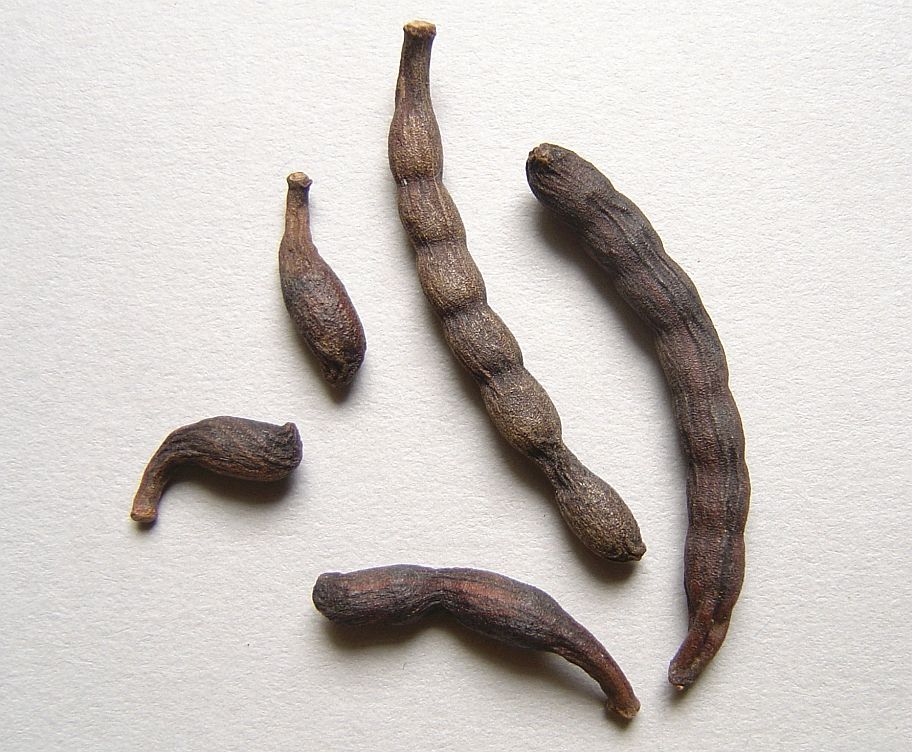 🇬🇭 Ghana and 5 moreGrains of Selimdiarr
The dried fruit of a West African shrub, used as a peppery spice and coffee flavouring.Fruit · Sharp and pungent · Bitter
🇬🇭 Ghana and 5 moreGrains of Selimdiarr
The dried fruit of a West African shrub, used as a peppery spice and coffee flavouring.Fruit · Sharp and pungent · Bitter
 🇬🇭 GhanaShitoshitor din
A dark, spicy sauce made from fried fish and peppers, central to Ghanaian cooking.Hot and fiery · Sharp and pungent
🇬🇭 GhanaShitoshitor din
A dark, spicy sauce made from fried fish and peppers, central to Ghanaian cooking.Hot and fiery · Sharp and pungent
 🇬🇼 Guinea-Bissau and 5 moreCalabash nutmeg
The dried seed of a West African tree, used as a local substitute for nutmeg.Warm and sweet-spiced · Sweet and mellow
🇬🇼 Guinea-Bissau and 5 moreCalabash nutmeg
The dried seed of a West African tree, used as a local substitute for nutmeg.Warm and sweet-spiced · Sweet and mellow
Its cousins elsewhere
All fruit 🇮🇳 India and 4 moreFennel
The anise-scented seeds and crisp bulb of a Mediterranean perennial herbSeed · Anise and liquorice · Sweet and mellow
🇮🇳 India and 4 moreFennel
The anise-scented seeds and crisp bulb of a Mediterranean perennial herbSeed · Anise and liquorice · Sweet and mellow
 🇱🇰 Sri Lanka and 5 moreCinnamon
The dried inner bark of Cinnamomum trees, prized for its sweet warmth and essential oil.Bark · Warm and sweet-spiced · Sweet and mellow
🇱🇰 Sri Lanka and 5 moreCinnamon
The dried inner bark of Cinnamomum trees, prized for its sweet warmth and essential oil.Bark · Warm and sweet-spiced · Sweet and mellow
 🇮🇩 Indonesia and 3 moreNutmeg
The dried seed of a tropical evergreen tree, prized for its warm, pungent flavor.Seed · Warm and sweet-spiced · Sweet and mellow
🇮🇩 Indonesia and 3 moreNutmeg
The dried seed of a tropical evergreen tree, prized for its warm, pungent flavor.Seed · Warm and sweet-spiced · Sweet and mellow
 🇷🇺 Russia and 4 moreTarragon
A slender perennial herb with anise-scented leaves, prized in French and Middle Eastern cooking.Leaf · Anise and liquorice · Sweet and mellow
🇷🇺 Russia and 4 moreTarragon
A slender perennial herb with anise-scented leaves, prized in French and Middle Eastern cooking.Leaf · Anise and liquorice · Sweet and mellow