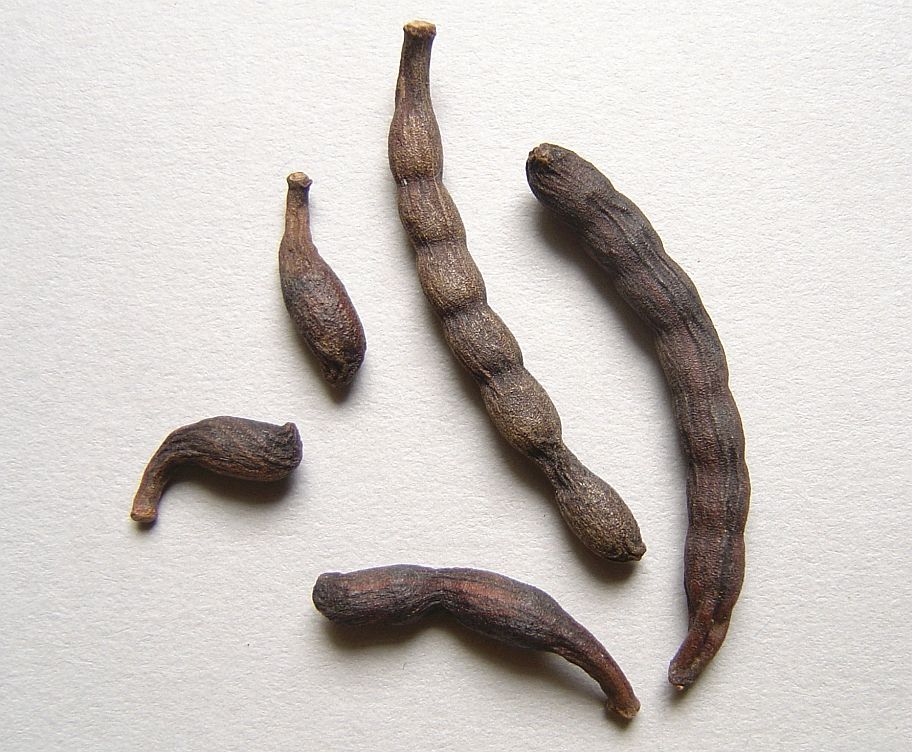
Grains of Selim
In its own language: diarr
Xylopia aethiopica
The dried fruit of a West African shrub, used as a peppery spice and coffee flavouring.
Grains of Selim are the dried fruits of Xylopia aethiopica, a tree native to Africa. They offer a musky, pungent taste with notes of nutmeg and resin, and are essential in Senegalese coffee and West African soups.
- Dried fruit of Xylopia aethiopica, native to Africa.
- Tastes like nutmeg, cubeb pepper, and resin.
- Key ingredient in Senegalese café Touba coffee.
- Used whole in bouquets for West African stews.
- Known as diarr in Wolof and Etso in Ewe.
What is Grains of Selim?
Grains of Selim come from the shrubby tree Xylopia aethiopica, which grows across Africa. The spice is the dried whole fruit pod. The outer hull provides an aromatic quality described as musky, while the inner seeds add a sharp, bitter punch. The overall taste blends elements of cubeb pepper and nutmeg with hints of resin. It is often compared to black pepper but carries its own distinct, heavier profile.
Where does Grains of Selim come from?
The plant is native to tropical Africa. Historical European traders knew it as Moor pepper or Negro pepper. Today it is widely recognized by names like Senegal pepper or Ethiopian pepper. In local languages, it has many names: diarr in Wolof, Etso in Ewe, hwentia among the Akan, and chimba among the Dagomba people of Ghana.
What does Grains of Selim taste like?
The flavour is complex and pungent. The hull contributes a musky, resinous aroma similar to nutmeg. The seeds inside are notably bitter and sharp. When smoked, as is common in Senegal, the spice gains a sticky texture and deeper savoury notes. The scent is strong enough to induce sneezing when roasted.
How Grains of Selim is grown and processed
The tree grows wild in African forests. Harvesters collect the green fruits, which are then dried. In Senegal, they are often smoked over fires until sticky. The dried pods are lightly crushed before use to release their oils. They may be ground into a paste or kept whole for infusing dishes.
Grains of Selim, drawn
How Grains of Selim is used
Cookes typically tie the crushed pods in a cloth bundle and drop them into soups and stews, removing them before serving. A smoked paste made from pounded pods serves as a rub for fish. In Senegal, the grains are added to coffee beans during roasting to create café Touba. It also flavours porridges, sauces like shito, and traditional beverages.
Grains of Selim in the world's kitchens
In Senegal, it is the defining ingredient of café Touba coffee. In Cameroon, it is known as kieng and appears in tea mixes with ginger and cloves. Ghanaian cuisine uses it extensively: the Ga make shito sauce and shitodaa drinks with it, while the Ewes use it in soups and bisap drinks. Northern Ghanaians and Nigerians add it to millet or sorghum porridges.
At a glance: where it turns up

Traditional and medicinal use
Traditional use focuses on culinary application rather than medicine.
What to use instead of Grains of Selim
It is sometimes confused with Ashanti pepper or grains of paradise due to ambiguous naming.
The trade in Grains of Selim
The spice is traded in markets across West Africa. In Senegal, it is sold as poivre de Sénégal. Larger pods from the related species Xylopia striata are also used similarly. Historical trade involved European merchants who labelled it Negro pepper.
Meal
It features prominently in lunch dishes like hearty soups and stews across West Africa. In Senegal, it defines café Touba, a daily coffee drink prepared by roasting the grains with the beans. Among the Ga people of Ghana, it flavours shitodaa, a specific beverage. It also spices up morning porridges in northern regions.
Blends with Grains of Selim
Questions people ask about Grains of Selim
What do Grains of Selim taste like?
They have a musky, pungent flavour with notes of nutmeg and resin. The seeds add a bitter, sharp bite similar to black pepper but with a heavier, aromatic profile.
Where does this spice come from?
It comes from the African shrub Xylopia aethiopica. It is widely used in West African countries including Senegal, Ghana, Cameroon, and Nigeria.
How is it used in cooking?
The dried pods are often tied in a cloth bundle and simmered in soups and stews. A smoked paste can rub fish, and the grains are roasted with coffee beans in Senegal.
What are other names for this spice?
It is also called Senegal pepper, Ethiopian pepper, Moor pepper, and Negro pepper. Local names include diarr, Etso, and hwentia.
Is it hot like chili peppers?
No, it does not contain capsaicin heat. Its pungency comes from aromatic compounds that provide a sharp, biting sensation rather than burning heat.
Good reading and sources
The facts on this page come from the Wikipedia article "Grains of Selim", written by its contributors and used under the CC BY-SA 4.0 licence, and from its Wikidata record (CC0). EveryMasala rewrote the text in its own words, with AI assistance, and compares every page with the article to make sure no passage is copied. It may be reused under the same CC BY-SA 4.0 licence with a link back.
It may contain mistakes. Names, strengths and customs differ from one grower, kitchen or shop to the next. Traditional and medicinal uses are described as tradition, never as medical advice, and none of this is a substitute for a doctor. If something is wrong, tell us. Last refreshed 2026-10-04.
More from Ghana
All the spices of Ghana 🇬🇭 Ghana and 5 morePrekeseprɛkɛsɛ
The scented pod of a West African tree, used to perfume soups.Fruit · Sweet and mellow
🇬🇭 Ghana and 5 morePrekeseprɛkɛsɛ
The scented pod of a West African tree, used to perfume soups.Fruit · Sweet and mellow
 🇬🇭 GhanaShitoshitor din
A dark, spicy sauce made from fried fish and peppers, central to Ghanaian cooking.Hot and fiery · Sharp and pungent
🇬🇭 GhanaShitoshitor din
A dark, spicy sauce made from fried fish and peppers, central to Ghanaian cooking.Hot and fiery · Sharp and pungent
 🇬🇼 Guinea-Bissau and 5 moreCalabash nutmeg
The dried seed of a West African tree, used as a local substitute for nutmeg.Warm and sweet-spiced · Sweet and mellow
🇬🇼 Guinea-Bissau and 5 moreCalabash nutmeg
The dried seed of a West African tree, used as a local substitute for nutmeg.Warm and sweet-spiced · Sweet and mellow
Its cousins elsewhere
All fruit 🇬🇷 Greece and 4 moreParsley
A bright green herb from the celery family, used fresh across Europe and the Middle East.Leaf · Bitter · Herbal and green
🇬🇷 Greece and 4 moreParsley
A bright green herb from the celery family, used fresh across Europe and the Middle East.Leaf · Bitter · Herbal and green
 🇮🇷 Iran and 4 moreSaffronزعفران
The dried crimson stigmas of the autumn-blooming saffron crocus.Stigma · Sharp and pungent · Bitter
🇮🇷 Iran and 4 moreSaffronزعفران
The dried crimson stigmas of the autumn-blooming saffron crocus.Stigma · Sharp and pungent · Bitter
 🇬🇷 Greece and 1 moreMasticΜαστίχα
A bitter-sweet resin from the mastic tree, used in desserts and traditional medicine.Bitter · Sharp and pungent
🇬🇷 Greece and 1 moreMasticΜαστίχα
A bitter-sweet resin from the mastic tree, used in desserts and traditional medicine.Bitter · Sharp and pungent
 🇮🇹 Italy and 5 moreMustard
A pungent paste made from ground mustard seeds mixed with liquid and spices.Paste · Sharp and pungent · Hot and fiery
🇮🇹 Italy and 5 moreMustard
A pungent paste made from ground mustard seeds mixed with liquid and spices.Paste · Sharp and pungent · Hot and fiery