
Nutmeg
Myristica fragrans
The dried seed of a tropical evergreen tree, prized for its warm, pungent flavor.
Nutmeg comes from the seed of Myristica fragrans, a tree native to Indonesia's Banda Islands. It has a warm, slightly sweet taste and a sharp aroma. The spice is used in baking, savory dishes, and drinks.
- Native to Indonesia's Banda Islands.
- Used in baking, savory dishes, and drinks.
- Contains myristicin, which is toxic in high doses.
- Dutch East India Company controlled its trade.
- Mace comes from the seed's red covering.
What is Nutmeg?
Nutmeg is the hard, inner seed of the Myristica fragrans tree. This evergreen plant grows in tropical regions. The seed is dried until it becomes hard and brittle. It has a rough, brown exterior. Inside, the kernel is dark and aromatic. The taste is warm with a hint of sweetness. The smell is sharp and distinct. It is often ground into a fine powder before use. A related spice called mace comes from the red covering around the seed.
Where does Nutmeg come from?
This spice originates from the Banda Islands in Indonesia. These small volcanic islands are part of the Maluku group. They were the only source of this spice for centuries. Ancient traders moved it across maritime routes by 1500 BCE. Evidence of its use dates back 3,500 years. It spread to India and then to Constantinople. Arab traders kept its origin secret from Europeans for a long time.
What does Nutmeg taste like?
The flavor is described as warm and slightly sweet. It has a strong, pungent fragrance that reaches the nose. The taste comes from essential oils inside the seed. Mace offers a similar but more delicate profile. Nutmeg provides a deeper, richer note. It adds depth to both sweet and savory foods. The heat level is low, focusing on aroma rather than burn.
How Nutmeg is grown and processed
Trees are dioecious, meaning they are male or female. Only female trees produce seeds. Farmers prefer grafting to ensure productive plants. Sexual propagation creates too many male trees. Harvest begins seven to nine years after planting. Full production takes twenty years. Seeds are dried in the sun for weeks. They shrink away from the shell during drying.
Nutmeg, drawn
How Nutmeg is used
Cooks use whole seeds or ground powder. It flavors baked goods, puddings, and confections. Savory dishes like meats, sausages, and vegetables benefit from it. Indian cuisine uses it in meat preparations and desserts. Indonesian soups and stews often include it. European cooking features it in potato and spinach dishes. It is also common in mulled wine and eggnog.
Nutmeg in the world's kitchens
Indonesian cuisine uses it in spicy soups and meat gravies. Indian cooks add it to garam masala and sweets. Dutch cuisine includes it in Brussels sprouts. Scottish haggis often contains both nutmeg and mace. Italian dumplings use it in their stuffing. Caribbean drinks feature it as a garnish. European traditions use it in dairy-based desserts.
At a glance: where it turns up


Spiritual and ceremonial use
There are no specific religious rituals mentioned for this spice. It is not tied to any particular faith's dietary laws. Its use is primarily culinary and medicinal in folk traditions. No sacred offerings or incense practices are recorded.
Nutmeg at celebrations
No specific festivals or holidays are linked to this spice. It is used in everyday cooking rather than special occasions. It does not appear in wedding feasts or harvest celebrations in the provided records.
Traditional and medicinal use
Folk medicine has used it for psychoactive effects. High doses can cause toxicity and psychosis. It was historically believed to be an aphrodisiac, but this lacks clinical support. Pregnant women should avoid large amounts. The seed contains myristicin, which can be toxic in excess.
Buying and storing Nutmeg
Store whole seeds in a cool, dry place. Ground powder loses flavor faster. Keep it away from light and moisture. Use within a reasonable time for best aroma. Whole seeds last longer than ground versions.
What to use instead of Nutmeg
Mace is the closest alternative, coming from the same fruit. Allspice can mimic some of its warmth. Cloves provide a similar pungency. Cardamom offers a different but complementary flavor. No single spice replicates it exactly.
The trade in Nutmeg
The Banda Islands controlled the supply for centuries. European powers fought for control of this trade. The Dutch East India Company established a monopoly. Conflicts led to significant loss of life in the region. British forces later moved trees to other colonies. Grenada and Sri Lanka became major producers. The trade shaped global politics and colonial history.
Meal
It appears in breakfast drinks like eggnog. Desserts such as pumpkin pie rely on it. Dinner meals include meat stews and vegetable sides. Street food vendors may sprinkle it on snacks. Preserves and pickles sometimes use it. It enhances the flavor of winter squashes and rice puddings.
Blends with Nutmeg
Questions people ask about Nutmeg
Where does nutmeg come from?
It comes from the seed of the Myristica fragrans tree. This tree is native to the Banda Islands in Indonesia. These islands were the only source for centuries.
What does nutmeg taste like?
It has a warm, slightly sweet flavor. The aroma is sharp and pungent. It adds depth to both sweet and savory dishes without adding heat.
How is nutmeg processed?
Seeds are dried in the sun for weeks. They shrink away from the hard shell. Workers break the shell to remove the kernel. The kernel is then ground into powder.
Is nutmeg safe to eat?
It is safe in normal culinary amounts. High doses can cause toxicity and psychosis. It contains myristicin, which is harmful in excess. Pregnant women should limit intake.
What is mace?
Mace comes from the red covering around the nutmeg seed. It has a similar but more delicate flavor. It is often used in lighter dishes for color.
Good reading and sources
- Nutmeg on WikipediaEncyclopedia
- More photos on Wikimedia CommonsPhotos and video
- Wikidata recordOpen data
The facts on this page come from the Wikipedia article "Nutmeg", written by its contributors and used under the CC BY-SA 4.0 licence, and from its Wikidata record (CC0). EveryMasala rewrote the text in its own words, with AI assistance, and compares every page with the article to make sure no passage is copied. It may be reused under the same CC BY-SA 4.0 licence with a link back.
It may contain mistakes. Names, strengths and customs differ from one grower, kitchen or shop to the next. Traditional and medicinal uses are described as tradition, never as medical advice, and none of this is a substitute for a doctor. If something is wrong, tell us. Last refreshed 2026-10-04.
More from Indonesia
All the spices of Indonesia 🇮🇩 Indonesia and 5 moreAndaliman
A citrus-scented, tongue-numbing seed husk related to Sichuan pepperFruit · Numbing and tingling · Citrus and bright
🇮🇩 Indonesia and 5 moreAndaliman
A citrus-scented, tongue-numbing seed husk related to Sichuan pepperFruit · Numbing and tingling · Citrus and bright
 🇮🇩 Indonesia and 3 moreTemulawak
The rhizome of a Javanese ginger relative, used for its earthy flavour and traditional wellness drinks.Root · Earthy and deep · Bitter
🇮🇩 Indonesia and 3 moreTemulawak
The rhizome of a Javanese ginger relative, used for its earthy flavour and traditional wellness drinks.Root · Earthy and deep · Bitter
 🇮🇳 India and 4 moreCurry paste
A blended mixture of spices and aromatics used as the base for curries in Asia.Warm and sweet-spiced · Earthy and deep
🇮🇳 India and 4 moreCurry paste
A blended mixture of spices and aromatics used as the base for curries in Asia.Warm and sweet-spiced · Earthy and deep
 🇮🇩 Indonesia and 2 moreIndonesian bay leafdaun salam
The aromatic leaves of a Myrtaceae tree used to flavour soups and stews across Indonesia and Suriname.Leaf · Bitter
🇮🇩 Indonesia and 2 moreIndonesian bay leafdaun salam
The aromatic leaves of a Myrtaceae tree used to flavour soups and stews across Indonesia and Suriname.Leaf · Bitter
Its cousins elsewhere
All seed 🇱🇰 Sri Lanka and 5 moreCinnamon
The dried inner bark of Cinnamomum trees, prized for its sweet warmth and essential oil.Bark · Warm and sweet-spiced · Sweet and mellow
🇱🇰 Sri Lanka and 5 moreCinnamon
The dried inner bark of Cinnamomum trees, prized for its sweet warmth and essential oil.Bark · Warm and sweet-spiced · Sweet and mellow
 🇮🇳 India and 3 moreGaram masalaगरम मसाला
A ground blend of warm spices from the Indian subcontinent used to finish curries and stews.Blend · Warm and sweet-spiced · Sharp and pungent
🇯🇴 Jordan and 5 moreBaharatبهارات
A versatile Middle Eastern spice blend used to season meats and soups.Warm and sweet-spiced · Sharp and pungent
🇮🇳 India and 3 moreGaram masalaगरम मसाला
A ground blend of warm spices from the Indian subcontinent used to finish curries and stews.Blend · Warm and sweet-spiced · Sharp and pungent
🇯🇴 Jordan and 5 moreBaharatبهارات
A versatile Middle Eastern spice blend used to season meats and soups.Warm and sweet-spiced · Sharp and pungent
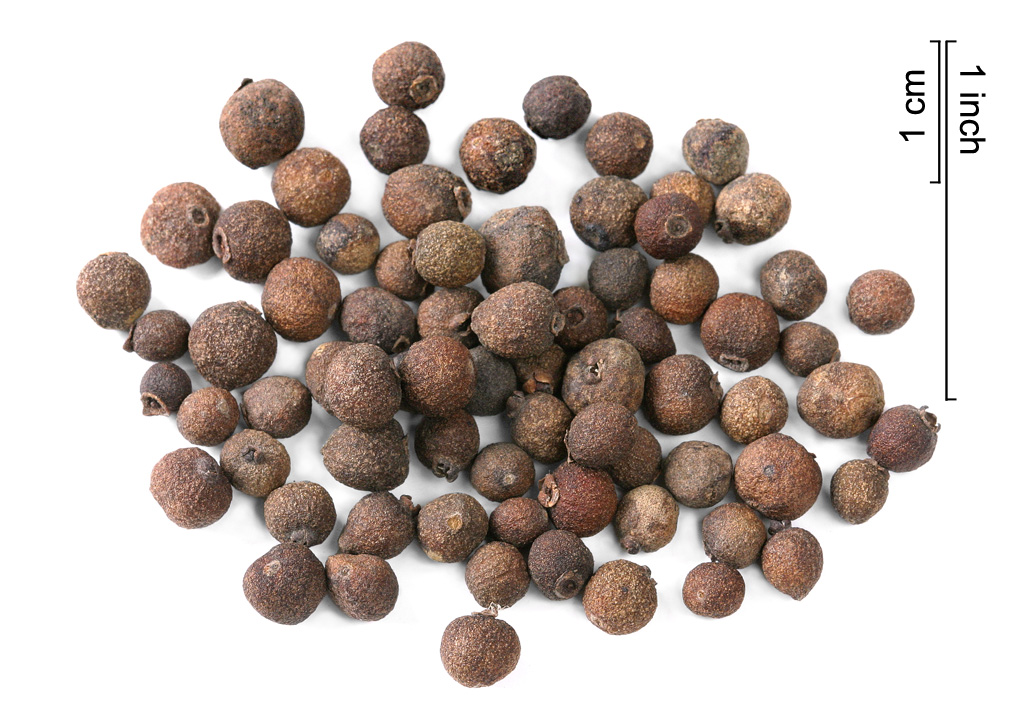 🇯🇲 Jamaica and 2 moreAllspice
The dried green berry of a tropical tree, named for its blend of cinnamon, nutmeg, and clove notes.Fruit · Warm and sweet-spiced · Sweet and mellow
🇯🇲 Jamaica and 2 moreAllspice
The dried green berry of a tropical tree, named for its blend of cinnamon, nutmeg, and clove notes.Fruit · Warm and sweet-spiced · Sweet and mellow