Tea and drink blends
Mulled wine spices (Gluhwein)
Cinnamon, clove, star anise, orange and sugar warmed into red wine at winter markets.
Presented by ClearTrust Free for cooks, makers and the curious.
Mulled wine is red wine warmed with sugar, citrus peel and spices. It is known as Gluhwein in German-speaking lands, glogg in Sweden, and is sold at Christmas markets across Europe. Mulling spices are also packed in teabag-like sachets.
What goes in
- Cinnamon stick431%, Sweet.
- Clove215%, Pungent.
- Star anise215%, Anise.
- Orange peel323%, Citrus.
- Allspice18%, Warm.
- Cardamom18%, Optional.
Parts by volume of the whole spice. The ring shows each part's share.
Made step by step
Each drawing shows the operation for that step. Ratios and timings differ from house to house; this is one traditional-style way.
Step 1: Dry Dry strips of orange peel on a rack until firm. Step 2: Pound Break the cinnamon sticks and lightly crack the cardamom. Step 3: Infuse Simmer the spices with sugar and a little water into a syrup. Step 4: Infuse Add the wine and warm gently, without boiling. Step 5: Rest Leave to stand for ten minutes off the heat. Step 6: Store Strain into mugs and serve hot. Store dry spices in a jar. Finished Mulled wine spices (Gluhwein), by share.
Method
Whole spices are gently simmered in a little water and sugar to make a syrup, then wine is added and warmed but not boiled, which would burn off the alcohol and make it bitter. Ground spices make it cloudy.
Variation
Cardamom, ginger, bay and nutmeg are included in some. In Scandinavia, raisins and almonds are added to glogg. Non-alcoholic versions use apple juice or grape juice.
Where it is used
The spices in it
 CinnamonSticks.
 ClovePungent.
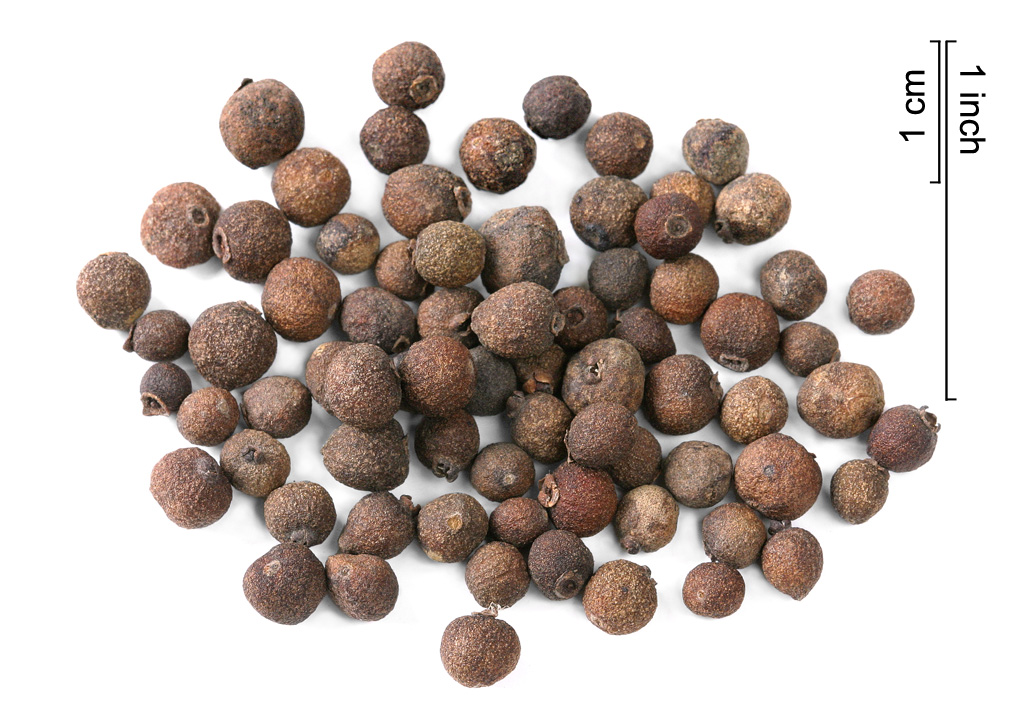 AllspiceThe dried green berry of a tropical tree, named for its blend of cinnamon, nutmeg, and clove notes.
 CardamomAromatic seeds from spindle-shaped pods used in sweet and savory dishes across Asia and the Middle East.
Also part of it, and being written: Star anise (Anise.).
More on EveryMasala
No spices here yet. New pages are added every day.
Sources and further reading
Original text and drawings by the EveryMasala desk, written with AI assistance and checked against the sources above. The shares are an illustrative, traditional-style ratio, not a standard: every family and maker blends differently. If we have something wrong, tell us.
Photo credits on this page
The small pictures above come from Wikimedia Commons under free licences. Some are cropped to fit.
- Clove: Bayu Nugroho, CC BY-SA 4.0, source
- Allspice: Unknown author, CC BY 2.5, source
- Cardamom: Didier Descouens, CC BY-SA 4.0, source
- Cinnamon: Luc Viatour, CC BY-SA 3.0, source