Allspice
Pimenta dioica
The dried green berry of a tropical tree, named for its blend of cinnamon, nutmeg, and clove notes.
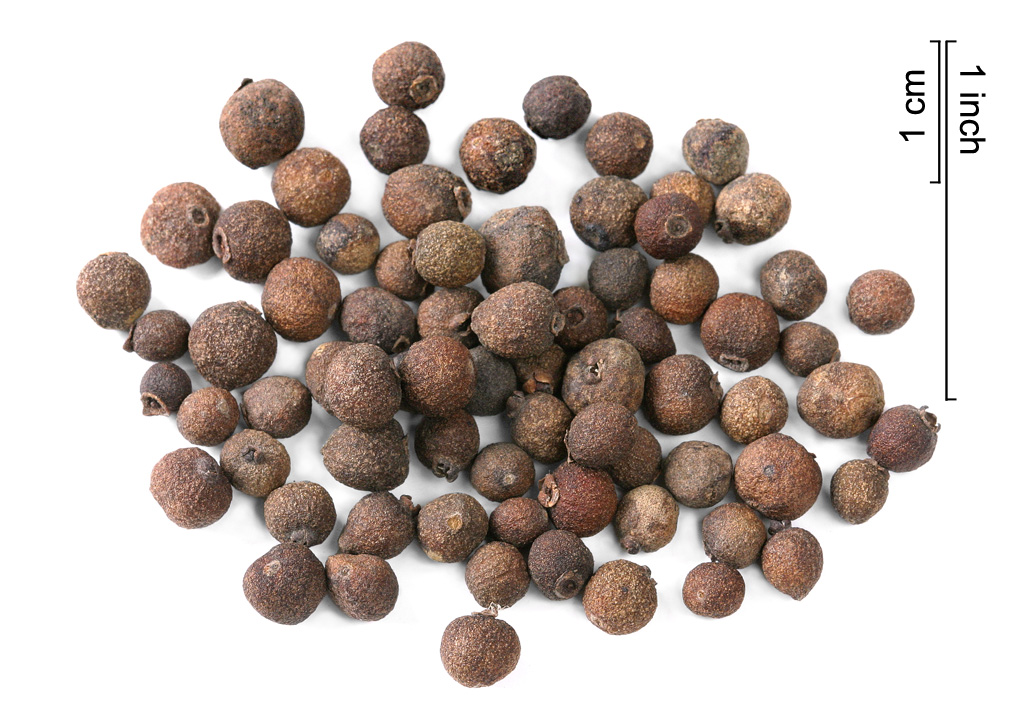
Allspice is the dried unripe fruit of Pimenta dioica, a tree native to Central America and the Caribbean. It tastes like a combination of cinnamon, nutmeg, and cloves. Cooks use it in savory stews, sweet pies, and pickles across many regions.
- Tastes like cinnamon, nutmeg, and clove combined.
- Dried green berries of the Pimenta dioica tree.
- Essential for Jamaican jerk seasoning.
- Birds help spread the seeds naturally.
- Used in Polish soups and Swedish meatballs.
What is Allspice?
This spice comes from the dried, unripe berries of the Pimenta dioica tree. The small, round fruits turn dark brown when fully dried. They look much like large peppercorns. The name allspice was chosen because the taste combines cinnamon, nutmeg, and clove. It is not a mixture of different spices. The fresh leaves also have a bay-like texture and are used in cooking.
Where does Allspice come from?
The plant grows naturally in parts of Central America and southern Mexico. It is also native to the Greater Antilles islands. Jamaica remains the main producer today. Birds spread the seeds through their droppings. Early growers could not make the seeds sprout elsewhere. Scientists later found that bird digestion was necessary for germination.
What does Allspice taste like?
The taste is warm and sweet with a sharp bite. The scent comes from volatile oils inside the berry. Eugenol is a key compound that gives it a clove-like aroma. The flavour profile mimics several other spices at once. This unique mix makes it versatile in many dishes.
How Allspice is grown and processed
The tree can grow tall or stay small and scrubby. It thrives in tropical and subtropical climates. Gardeners can grow it in pots or greenhouses. Frost can kill young plants, but older ones survive better. The berries are picked while still green. They are then dried in the sun to preserve their oils.
Allspice, drawn
How Allspice is used
Cooks use this spice in both savoury and sweet dishes. In Jamaica, it is essential for jerk seasoning and smoking meats. Middle Eastern cooks add it to stews and tomato sauces. North Americans often put it in pumpkin pie spice. It also appears in pickles, sausages, and curries. Whole berries are common in Northern European soups.
Allspice in the world's kitchens
West Indian cuisine relies on it heavily for jerk dishes. Middle Eastern cooks use it in meat stews. Polish cuisine calls it English herb and uses it in soups. Swedes add it to meatballs and hot pots. Portuguese cooks use it in Azorean stews. British recipes include it in brown sauce.
At a glance: where it turns up


Spiritual and ceremonial use
Its role is purely culinary and commercial.
Allspice at celebrations
No specific festivals or holidays feature this spice. It is used in everyday cooking rather than special occasions. It does not appear in wedding feasts or harvest celebrations.
Traditional and medicinal use
Traditional medicine does not highlight this spice. No folk remedies or healing practices are described. It is valued only for its taste and smell in kitchens.
Buying and storing Allspice
Keep the dried berries in a sealed container. Store them away from light and heat. This preserves the volatile oils inside. Ground spice loses flavour faster than whole berries.
What to use instead of Allspice
Cookmakers often mix cinnamon, nutmeg, and cloves together. This blend mimics the single-berry flavour. Other shrubs share similar names but are unrelated plants. Do not confuse it with Carolina allspice or Japanese allspice.
The trade in Allspice
Jamaica dominates the global supply of this spice. Historically, growers protected the trade by blocking seed exports. Birds were needed to help seeds germinate elsewhere. Today, it is grown in Hawaii and Tonga. The United Kingdom was once a major exporter.
Meal
It fits into dinner meals as a stew ingredient. It is also used in desserts like pies. Pickle jars and preserved foods often contain it. Some regions serve it in snacks or street food. It adds depth to hearty evening meals.
Blends with Allspice
Questions people ask about Allspice
Is allspice a mix of spices?
No, it is not a mixture. It is the dried unripe berry of a single tree called Pimenta dioica. The name comes because its taste resembles cinnamon, nutmeg, and cloves together.
Where does allspice come from?
It originates in Central America, southern Mexico, and the Greater Antilles. Jamaica is currently the leading producer of these dried berries.
How should I use allspice in cooking?
Use whole berries in stews, pickles, and soups. Use ground powder in pies, sausages, and jerk marinades. It works in both sweet and savoury dishes.
What does allspice taste like?
It has a warm, sweet, and pungent flavour. The main taste notes are similar to cloves, cinnamon, and nutmeg mixed together.
Can I grow an allspice tree at home?
Yes, in warm climates. It grows well in pots or greenhouses. Young plants need protection from frost, but mature trees are hardier.
Good reading and sources
- Allspice on WikipediaEncyclopedia
- More photos on Wikimedia CommonsPhotos and video
- Wikidata recordOpen data
The facts on this page come from the Wikipedia article "Allspice", written by its contributors and used under the CC BY-SA 4.0 licence, and from its Wikidata record (CC0). EveryMasala rewrote the text in its own words, with AI assistance, and compares every page with the article to make sure no passage is copied. It may be reused under the same CC BY-SA 4.0 licence with a link back.
It may contain mistakes. Names, strengths and customs differ from one grower, kitchen or shop to the next. Traditional and medicinal uses are described as tradition, never as medical advice, and none of this is a substitute for a doctor. If something is wrong, tell us. Last refreshed 2026-10-04.
More from Jamaica
All the spices of Jamaica 🇻🇪 Venezuela and 5 moreAjí dulce
A mild, sweet perennial pepper from the Caribbean and Latin America, used as a seasoning base.Chilli · Smoky · Sweet and mellow
🇻🇪 Venezuela and 5 moreAjí dulce
A mild, sweet perennial pepper from the Caribbean and Latin America, used as a seasoning base.Chilli · Smoky · Sweet and mellow
 🇯🇲 Jamaica and 4 moreCanella
The aromatic inner bark of a Caribbean tree, often called white cinnamon.Bark · Warm and sweet-spiced · Sharp and pungent
🇯🇲 Jamaica and 4 moreCanella
The aromatic inner bark of a Caribbean tree, often called white cinnamon.Bark · Warm and sweet-spiced · Sharp and pungent
 🇯🇲 JamaicaPimiento
A sweet, heart-shaped red chili pepper used for stuffing olives and making cheese spreads.Chilli · Sweet and mellow · Hot and fiery
🇯🇲 JamaicaPimiento
A sweet, heart-shaped red chili pepper used for stuffing olives and making cheese spreads.Chilli · Sweet and mellow · Hot and fiery
 🇨🇳 China and 4 moreSpearmint
The square-stemmed herb with pointed leaves used for tea and flavouring oil.Leaf
🇨🇳 China and 4 moreSpearmint
The square-stemmed herb with pointed leaves used for tea and flavouring oil.Leaf
Its cousins elsewhere
All fruit 🇱🇰 Sri Lanka and 5 moreCinnamon
The dried inner bark of Cinnamomum trees, prized for its sweet warmth and essential oil.Bark · Warm and sweet-spiced · Sweet and mellow
🇱🇰 Sri Lanka and 5 moreCinnamon
The dried inner bark of Cinnamomum trees, prized for its sweet warmth and essential oil.Bark · Warm and sweet-spiced · Sweet and mellow
 🇮🇩 Indonesia and 4 moreNutmeg
The dried seed of a tropical tree, prized for its warm, pungent spice.Seed · Warm and sweet-spiced · Sweet and mellow
🇮🇩 Indonesia and 4 moreNutmeg
The dried seed of a tropical tree, prized for its warm, pungent spice.Seed · Warm and sweet-spiced · Sweet and mellow
 🇮🇳 India and 3 moreGaram masalaगरम मसाला
A ground blend of warm spices from the Indian subcontinent used to finish curries and stews.Blend · Warm and sweet-spiced · Sharp and pungent
🇯🇴 Jordan and 5 moreBaharatبهارات
A versatile Middle Eastern spice blend used to season meats and soups.Warm and sweet-spiced · Sharp and pungent
🇮🇳 India and 3 moreGaram masalaगरम मसाला
A ground blend of warm spices from the Indian subcontinent used to finish curries and stews.Blend · Warm and sweet-spiced · Sharp and pungent
🇯🇴 Jordan and 5 moreBaharatبهارات
A versatile Middle Eastern spice blend used to season meats and soups.Warm and sweet-spiced · Sharp and pungent