
Chammanthi podi
A dry coconut and spice condiment from Kerala that preserves fresh chutney for months.
Chammanthi podi is a dry condiment from the Indian state of Kerala. It is made by roasting shredded coconut with spices and grinding them into a powder. This method allows the flavors to be stored for long periods without refrigeration.
- Dry condiment from Kerala, India.
- Preserves coconut chutney flavor for months.
- Made by roasting coconut and spices.
- Ground into a powder after drying.
- Name means 'chutney powder' in Malayalam.
What is Chammanthi podi?
Chammanthi podi is a dry condiment originating from Kerala in South India. The name comes from Malayalam words meaning 'chutney' and 'powder'. It serves as a shelf-stable alternative to fresh coconut chutneys, which typically spoil within a day. The mixture combines shredded coconut with various spices, creating a textured powder that retains the essence of a wet sauce but in a dry form.
Where does Chammanthi podi come from?
This condiment hails from the Indian state of Kerala. It was developed as a practical solution to preserve the flavor of coconut chutney. Fresh versions require immediate consumption or refrigeration. By drying the ingredients, families could store the mixture for months, ensuring the taste remained available throughout the year without waste.
What does Chammanthi podi taste like?
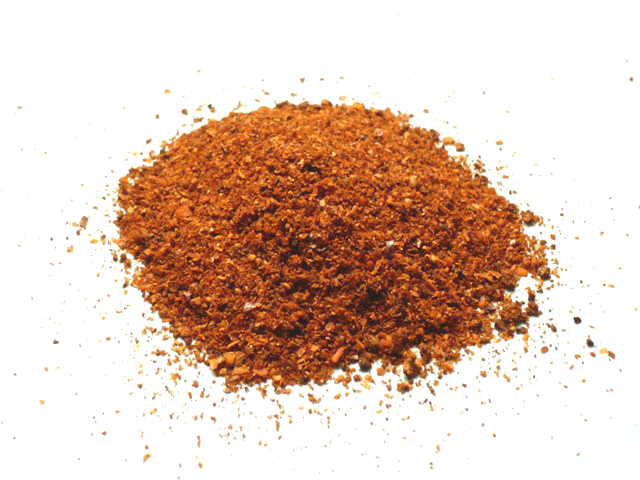
The powder offers a blend of heat from dry chillies and earthy notes from coriander and curry leaves. Shredded coconut provides a subtle sweetness and rich texture. Dry-roasting the ingredients deepens the flavors, removing moisture while concentrating the spicy and savory elements. The result is a complex seasoning that mimics the profile of a fresh chutney.
How Chammanthi podi is grown and processed
The preparation begins with dry-roasting shredded coconut alongside spices in a pan. This step evaporates all moisture from the mixture, which is crucial for long-term storage. Once cooled, the roasted ingredients are ground into a fine powder. The resulting chammanthi podi is then stored in containers, ready for use whenever needed.
Chammanthi podi, drawn
How Chammanthi podi is used
Cooks use this powder as a condiment to add flavor to meals. It can be mixed with rice, yogurt, or hot water to recreate a chutney-like consistency. It serves as a versatile topping or side dish. The dry format makes it easy to keep in the kitchen pantry for quick additions to breakfast or lunch plates.
Chammanthi podi in the world's kitchens
Kerala cuisine relies heavily on coconut and spices. Chammanthi podi reflects this regional preference by combining local ingredients into a durable form. It is distinct from other Indian condiments due to its specific focus on preserving coconut-based flavors. The powder is an essential part of home cooking in the region.
At a glance: where it turns up
Cuisines

Spiritual and ceremonial use
It is treated as a secular food item used for everyday culinary purposes rather than ceremonial offerings.
Chammanthi podi at celebrations
It is a staple for regular household meals rather than special occasion foods.
Traditional and medicinal use
Traditional use focuses on food preservation. Before modern refrigeration was widespread, drying chutneys was a common practice to prevent spoilage. This method ensured that families could enjoy coconut-based flavors even when fresh ingredients were less accessible or prone to rapid decay.
Buying and storing Chammanthi podi
Store the powder in an airtight container to maintain freshness. Because the moisture has been removed during roasting, it does not require refrigeration. It can be kept in the pantry for several months without spoiling.
What to use instead of Chammanthi podi
Fresh coconut chutney is the primary alternative, though it lacks the shelf stability of the powder. Other dry spice mixes may provide similar heat but will not replicate the coconut base. No direct substitutes are mentioned for maintaining the exact traditional profile.
The trade in Chammanthi podi
It appears to be primarily a homemade or locally produced condiment within Kerala.
Meal
This condiment fits well into daily eating routines across Kerala. It is commonly served with breakfast items like idli or dosa. It also accompanies lunch and dinner dishes, providing a spicy kick. Additionally, it works as a snack ingredient or a quick fix for a light meal when time is short.
Questions people ask about Chammanthi podi
What is chammanthi podi?
It is a dry condiment from Kerala, India. Made from roasted coconut and spices, it is ground into a powder to preserve chutney flavors for months without refrigeration.
How is it different from regular chutney?
Regular coconut chutney spoils quickly and needs refrigeration. Chammanthi podi is dry-roasted and ground, allowing it to be stored at room temperature for extended periods while keeping the same taste.
What ingredients are in it?
The main ingredients include shredded coconut, dry chillies, coriander, shallots, and curry leaves. These are dry-roasted together before being ground into a powder.
How do you eat it?
It is used as a condiment. You can mix it with rice, yogurt, or water to create a sauce. It pairs well with breakfast items like idli or dosa and adds spice to daily meals.
Good reading and sources
The facts on this page come from the Wikipedia article "Chammanthi podi", written by its contributors and used under the CC BY-SA 4.0 licence, and from its Wikidata record (CC0). EveryMasala rewrote the text in its own words, with AI assistance, and compares every page with the article to make sure no passage is copied. It may be reused under the same CC BY-SA 4.0 licence with a link back.
It may contain mistakes. Names, strengths and customs differ from one grower, kitchen or shop to the next. Traditional and medicinal uses are described as tradition, never as medical advice, and none of this is a substitute for a doctor. If something is wrong, tell us. Last refreshed 2026-10-04.
More from India
All the spices of India 🇮🇳 India and 4 moreFennel
The anise-scented seeds and crisp bulb of a Mediterranean perennial herbSeed · Anise and liquorice · Sweet and mellow
🇮🇳 India and 4 moreFennel
The anise-scented seeds and crisp bulb of a Mediterranean perennial herbSeed · Anise and liquorice · Sweet and mellow
 🇮🇳 India and 4 moreBasil
A tender culinary herb with glossy leaves and a licorice-like aroma, native to tropical Asia.Leaf · Anise and liquorice · Warm and sweet-spiced
🇮🇳 India and 4 moreBasil
A tender culinary herb with glossy leaves and a licorice-like aroma, native to tropical Asia.Leaf · Anise and liquorice · Warm and sweet-spiced
 🇱🇰 Sri Lanka and 5 moreCinnamon
The dried inner bark of Cinnamomum trees, prized for its sweet warmth and essential oil.Bark · Warm and sweet-spiced · Sweet and mellow
🇱🇰 Sri Lanka and 5 moreCinnamon
The dried inner bark of Cinnamomum trees, prized for its sweet warmth and essential oil.Bark · Warm and sweet-spiced · Sweet and mellow
 🇮🇷 Iran and 4 moreSaffronزعفران
The dried crimson stigmas of the autumn-blooming saffron crocus.Stigma · Sharp and pungent · Bitter
🇮🇷 Iran and 4 moreSaffronزعفران
The dried crimson stigmas of the autumn-blooming saffron crocus.Stigma · Sharp and pungent · Bitter
Its cousins elsewhere
 🇲🇽 Mexico and 5 morePaprika
A red powder made from dried Capsicum annuum peppers, used to colour and flavour dishes across Europe and the Middle EasSeed · Sweet and mellow · Hot and fiery
🇲🇽 Mexico and 5 morePaprika
A red powder made from dried Capsicum annuum peppers, used to colour and flavour dishes across Europe and the Middle EasSeed · Sweet and mellow · Hot and fiery
 🇸🇾 Syria and 1 moreAleppo pepperفلفل حلبي
A moderately spicy, fruity flake from Syria and Turkey, named for the city of Aleppo.Chilli · Hot and fiery · Sweet and mellow
🇸🇾 Syria and 1 moreAleppo pepperفلفل حلبي
A moderately spicy, fruity flake from Syria and Turkey, named for the city of Aleppo.Chilli · Hot and fiery · Sweet and mellow
 🇵🇪 Peru and 5 moreChili pepperchīlli
The pungent berry of the Capsicum plant, used to add heat to dishes worldwide.Fruit · Hot and fiery · Earthy and deep
🇵🇪 Peru and 5 moreChili pepperchīlli
The pungent berry of the Capsicum plant, used to add heat to dishes worldwide.Fruit · Hot and fiery · Earthy and deep
 🇱🇾 Libya and 1 morePilpelchumaפלפלצ'ומה
A steamed chili and garlic paste from Libyan Jewish cuisine, now common in Israel.Hot and fiery · Sharp and pungent
🇱🇾 Libya and 1 morePilpelchumaפלפלצ'ומה
A steamed chili and garlic paste from Libyan Jewish cuisine, now common in Israel.Hot and fiery · Sharp and pungent