
Indian costus
In its own language: कुष्ठ (kuṣṭha)
Dolomiaea costus
The dried root of a Himalayan thistle, used for centuries in perfumes and traditional remedies.
Indian costus is the stout root of a tall thistle native to South Asia and China. It has a strong scent that shifts from floral to musky and a burning taste. The root is ground into powder or sliced for use in incense, perfumes, and traditional medicine.
- Root used in sacred Jewish temple incense.
- Scent shifts from violet to musky.
- Listed as endangered by conservation groups.
- Native to high Himalayan elevations.
- Key ingredient in Ayurvedic fever remedies.
What is Indian costus?
Indian costus is the thick, woody root of a perennial thistle that grows up to two meters tall. The plant features jagged leaves and purple flowers. The root itself is stout and can reach forty centimeters in length. When processed, it appears as dried sticks, slices, or a fine powder. The scent is intense and lingering. It opens with notes of violets but deepens into a heavy, musky odor resembling goat as it ages. The taste is described as burning and pungent.
Where does Indian costus come from?
The plant is native to the high elevations of the Himalayas, spanning India and China. It thrives between two thousand five hundred and three thousand meters above sea level. Ancient texts from India refer to it as a divine plant derived from heavenly sources. In Jewish tradition, the root was known as kosht and was a key ingredient in the sacred temple incense. Roman traders called it costum and used it to flavor wine. Medieval cooks in England also incorporated it into their sauces.
What does Indian costus taste like?
The primary characteristic of Indian costus is its sharp, burning heat. This pungency comes from the natural compounds within the root. The aroma is complex and powerful. It begins with a sweet floral quality similar to violets. This distinct profile made it valuable in ancient perfumery and incense blends across multiple cultures.
How Indian costus is grown and processed
Costus grows in mountainous regions at high altitudes. It prefers moist soil that can range from sandy to clay-heavy. The plant flowers in July and August, with seeds ripening shortly after. Cultivation is difficult due to its specific altitude requirements. Over-collection has severely reduced wild populations. The species is now listed under CITES Appendix I to control international trade and prevent extinction.
Indian costus, drawn
How Indian costus is used
The root is the only part used. It is dried and then ground into powder or cut into thin slices. These slices are burned as incense or added to hot baths. The powder is mixed into ointments for skin conditions or used as a hair wash. In perfumery, essential oils extracted from the root provide a long-lasting base note. It is also used in traditional digestive remedies and tonics.
Indian costus in the world's kitchens
In Ayurveda, the root is a central remedy for balancing digestion and reducing fever. Traditional Chinese medicine uses it as a fundamental herb for stomach issues. Historical records show Romans using it to spice wine. Medieval English recipes included it in green sauces. Modern use is largely restricted to medicinal preparations and aromatic products rather than daily cooking.
At a glance: where it turns up

Spiritual and ceremonial use
The root holds significant religious importance. In Hinduism, mystics in Kashmir consumed it as a spiritual practice. In Judaism, it was a mandatory component of the ketoret, the holy incense offered in the Jerusalem Temples. Islamic tradition references it in hadith literature as a healing substance for throat and chest ailments. It remains a common offering in shrines today.
Traditional and medicinal use
Ayurveda classifies the root as a rasayana to strengthen the body and cleanse toxins. It is traditionally applied to ulcers and used to treat fevers. Traditional Chinese medicine utilizes it for digestive health. A hadith recommends sniffing the powder for throat trouble. These uses are based on historical tradition and folk medicine practices. They are not verified medical advice.
The trade in Indian costus
India and China are the primary exporters of the root. Hong Kong serves as a major re-export hub. Markets in Delhi and Calcutta have historically sold large quantities. The high demand for medicinal purposes has led to severe over-exploitation. Illegal trade and habitat loss threaten the species. Governments have enacted laws like the Kuth Act to regulate collection and protect the remaining wild plants.
Questions people ask about Indian costus
What does Indian costus smell like?
It has a strong, lingering scent. It starts with a floral violet aroma. As it ages, the smell becomes heavier and more musky, resembling a goat-like odor.
Where does Indian costus come from?
It is native to South Asia and China. It grows wild in the Himalayas at high altitudes between two thousand five hundred and three thousand meters.
How is the root used in cooking?
It is rarely used in modern cooking. Historically, Romans flavored wine with it. Medieval English cooks put it in sauces. Today it is mostly used in incense, perfumes, and traditional medicine.
Is Indian costus safe to eat?
It is traditionally used in Ayurveda and Chinese medicine for digestion and fever. However, these are traditional practices. It is not recommended as medical advice without professional consultation.
Good reading and sources
- Dolomiaea costus on WikipediaEncyclopedia
- More photos on Wikimedia CommonsPhotos and video
- Wikidata recordOpen data
The facts on this page come from the Wikipedia article "Dolomiaea costus", written by its contributors and used under the CC BY-SA 4.0 licence, and from its Wikidata record (CC0). EveryMasala rewrote the text in its own words, with AI assistance, and compares every page with the article to make sure no passage is copied. It may be reused under the same CC BY-SA 4.0 licence with a link back.
It may contain mistakes. Names, strengths and customs differ from one grower, kitchen or shop to the next. Traditional and medicinal uses are described as tradition, never as medical advice, and none of this is a substitute for a doctor. If something is wrong, tell us. Last refreshed 2026-10-04.
More from India
All the spices of India 🇮🇳 India and 2 moreWild turmericKasthuri Manjal
A South Asian rhizome with a musky scent, used for colouring and skin care.Root · Warm and sweet-spiced
🇮🇳 India and 2 moreWild turmericKasthuri Manjal
A South Asian rhizome with a musky scent, used for colouring and skin care.Root · Warm and sweet-spiced
 🇮🇳 IndiaErode TurmericErodu Manjal
A Geographical Indication turmeric from Tamil Nadu with high curcumin content.Root · Earthy and deep · Bitter
🇮🇳 IndiaErode TurmericErodu Manjal
A Geographical Indication turmeric from Tamil Nadu with high curcumin content.Root · Earthy and deep · Bitter
 🇮🇳 India and 4 moreEast Indian arrowrootകൂവ
A wild South Asian ginger valued for its turmeric-scented foliage and starchy rhizome.Root · Earthy and deep · Herbal and green
🇮🇳 India and 4 moreEast Indian arrowrootകൂവ
A wild South Asian ginger valued for its turmeric-scented foliage and starchy rhizome.Root · Earthy and deep · Herbal and green
 🇮🇳 India and 5 moreTurmericहल्दी
The dried rhizome of a tropical ginger relative, prized for its golden color and earthy bite.Root · Warm and sweet-spiced · Bitter
🇮🇳 India and 5 moreTurmericहल्दी
The dried rhizome of a tropical ginger relative, prized for its golden color and earthy bite.Root · Warm and sweet-spiced · Bitter
Its cousins elsewhere
All root 🇳🇬 NigeriaYaji
A spicy rub from Nigeria made with chili, ginger, and ground peanuts.Blend · Hot and fiery · Earthy and deep
🇳🇬 NigeriaYaji
A spicy rub from Nigeria made with chili, ginger, and ground peanuts.Blend · Hot and fiery · Earthy and deep
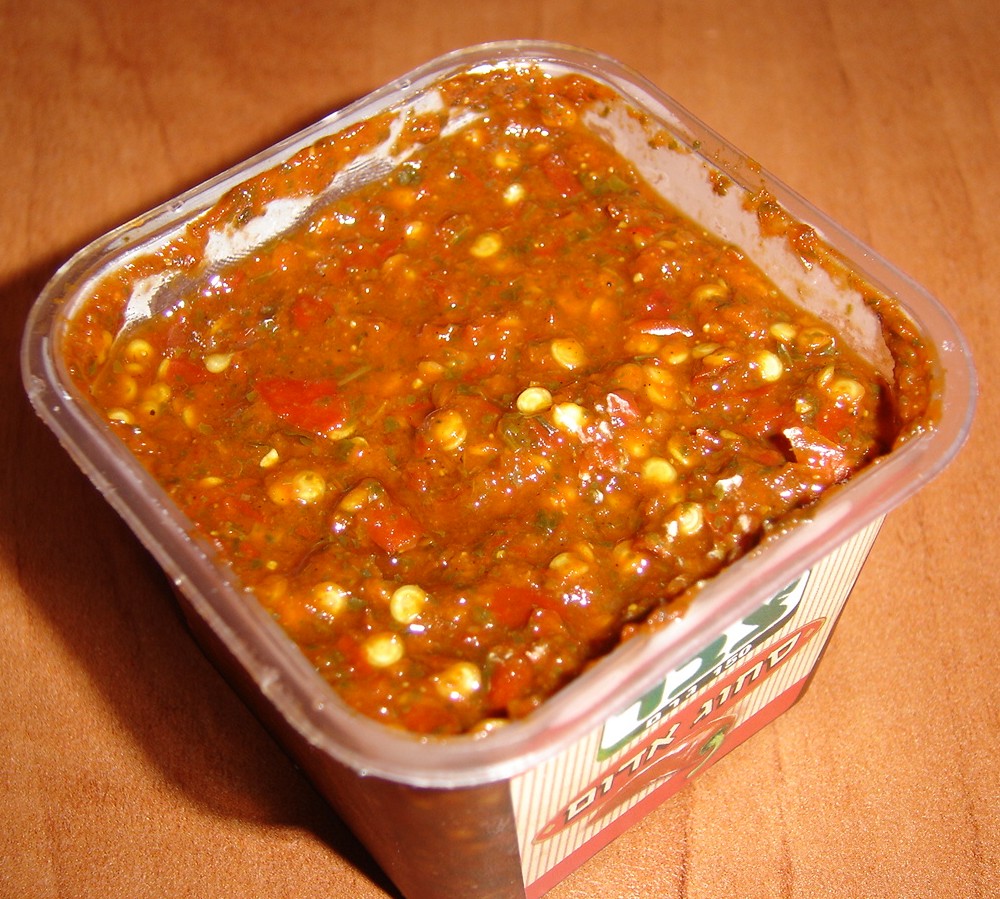 🇾🇪 Yemen and 1 moreZhugسحوق
A Yemeni hot sauce of crushed chilies, garlic, and corianderHot and fiery · Sharp and pungent
🇾🇪 Yemen and 1 moreZhugسحوق
A Yemeni hot sauce of crushed chilies, garlic, and corianderHot and fiery · Sharp and pungent
 🇱🇾 Libya and 1 morePilpelchumaפלפלצ'ומה
A steamed chili and garlic paste from Libyan Jewish cuisine, now common in Israel.Hot and fiery · Sharp and pungent
🇱🇾 Libya and 1 morePilpelchumaפלפלצ'ומה
A steamed chili and garlic paste from Libyan Jewish cuisine, now common in Israel.Hot and fiery · Sharp and pungent
 🇪🇹 Ethiopia and 1 moreBerbereበርበሬ (bärbäre)
A complex Ethiopian spice blend built on chili peppers, coriander, and ginger.Hot and fiery · Warm and sweet-spiced
🇪🇹 Ethiopia and 1 moreBerbereበርበሬ (bärbäre)
A complex Ethiopian spice blend built on chili peppers, coriander, and ginger.Hot and fiery · Warm and sweet-spiced