
Idli podi
In its own language: இட்லிப் பொடி
A coarse South Indian spice mix of roasted lentils and chillies, served with oil or ghee.
Idli podi is a dry seasoning blend from southern India made by grinding roasted chickpeas, black gram, sesame seeds, and dried chilies. It provides a savory, spicy flavor to steamed rice cakes and fermented crepes when mixed with oil or clarified butter.
- Made from roasted black gram, chickpeas, and sesame.
- Known informally as gunpowder due to its heat.
- Mixed with oil or ghee before serving.
- Staple in Tamil Nadu, Andhra, and Karnataka.
- Stores well in jars unlike fresh chutneys.
What is Idli podi?
This item is a textured mixture of ground ingredients rather than a single plant part. The base consists of split black gram, chickpeas, and sesame seeds combined with dried red chilies. Cooks often include garlic, curry leaves, asafoetida, and black pepper for extra depth. The result is a coarse, granular powder that looks like sand or gravel. It smells of toasted nuts and sharp heat. The taste is savory, salty, and pungent, with a strong earthy backbone from the lentils.
Where does Idli podi come from?
The blend comes from the Indian subcontinent, specifically the southern states. Historical mentions appear in Sangam literature, indicating it was a known food during ancient times. It gained wider recognition later, particularly during the Vijayanagara dynasty era. Today, it is a staple in Andhra Pradesh, Telangana, Karnataka, and Tamil Nadu. The name 'gunpowder' reflects its intense kick, while other local names describe its role as a chutney alternative.
What does Idli podi taste like?
The primary sensation is heat from the dried chilies, balanced by the nuttiness of roasted sesame and lentils. Black pepper adds a sharp bite, while asafoetida contributes a savory umami note. Garlic and curry leaves introduce herbal and aromatic layers. The texture is gritty and dry, requiring liquid to become a paste. The flavor profile is robust, salty, and warming, designed to cut through plain starches.
How Idli podi is grown and processed
No specific growing regions are listed for the blend itself, as it is a kitchen creation. Ingredients are sourced separately: lentils and grains from fields, chilies from farms, and spices from gardens. Preparation involves dry-roasting each component individually to release oils and aromas. After cooling, the items are ground together into a coarse meal. This method preserves freshness longer than wet pastes, allowing storage in sealed jars for weeks.
Idli podi, drawn
How Idli podi is used
Cooks serve this powder by mixing it with gingelly oil or melted ghee. The resulting paste is spread over hot idlis or dosas. It acts as a condiment to add moisture and flavor to bland steamed cakes. It can also be stirred into rice or eaten with bread. The dry form keeps well, making it a convenient pantry staple for quick meals where fresh chutneys are unavailable.
Idli podi in the world's kitchens
Southern Indian cuisine relies heavily on this blend. In Tamil Nadu and Kerala, it accompanies idli and dosa. Andhra and Telangana versions may emphasize spicier chili ratios. Karnataka preparations might adjust the lentil-to-spice balance. Each region adapts the ratio of ingredients to suit local palates, but the core concept of roasted lentils and heat remains constant throughout the south.
At a glance: where it turns up

Spiritual and ceremonial use
No specific religious rituals or offerings are tied to this spice mix. It is a secular household condiment used for everyday sustenance. While ingredients like sesame and lentils have cultural significance in broader Indian traditions, this specific blend does not hold sacred status in any major faith.
Idli podi at celebrations
It is not associated with weddings, festivals, or harvest ceremonies. Instead, it belongs to daily life and routine meals. Families keep jars of it for convenience during ordinary days. It lacks the ceremonial weight of festive foods, serving instead as a practical solution for quick, flavorful dining.
Traditional and medicinal use
Traditional use focuses on digestion and appetite stimulation. The combination of spices and lentils is considered warming for the body. No medicinal doses are prescribed, but it is valued for adding flavor to simple diets. Safety notes are absent; however, the high heat level means sensitive individuals should consume it cautiously.
Buying and storing Idli podi
Keep the powder in an airtight container to maintain freshness. Unlike wet chutneys, it does not spoil quickly due to the lack of moisture. Store in a cool, dark place. It remains usable for several weeks. Check for clumping, which indicates moisture exposure, and discard if off-smelling.
What to use instead of Idli podi
No direct substitute matches the exact lentil-chili-sesame profile. Dry roasting other beans and grinding them with chili powder offers a rough approximation. Fresh green chutneys provide heat but lack the nutty texture. Commercial spice blends may mimic the flavor but miss the coarse grind and specific ingredient balance.
The trade in Idli podi
It is primarily a household product rather than a traded commodity. Small-scale producers may package it for local markets in South India. Geographical Indication tags do not apply to this generic blend. Adulteration is rare as it is made fresh in homes. Trade routes focus on individual ingredients like chilies and lentils rather than the finished mix.
Meal
It is most common at breakfast, paired with steamed rice cakes or fermented crepes. It also works for lunch or dinner when served with rice or flatbreads. Because it is easy to prepare, it fits daily home cooking. It serves as a snack or side dish, replacing heavier sauces. Its versatility allows it to accompany simple meals across all main eating occasions.
Questions people ask about Idli podi
What is idli podi?
It is a coarse South Indian spice blend made of roasted lentils, sesame seeds, and dried chilies. It is ground into a powder and mixed with oil or ghee to season rice dishes.
Where does it come from?
It originates from southern India, including Tamil Nadu, Andhra Pradesh, Karnataka, and Telangana. Historical texts mention it as a popular food during ancient dynasties.
How does it taste?
It tastes spicy, nutty, and savory. The heat comes from chilies, while the lentils and sesame provide a toasted, earthy flavor. It is often described as having a 'gunpowder' kick.
How is it prepared?
Ingredients are dry-roasted separately to bring out their flavors. They are then cooled and ground together into a coarse powder. Additional spices like garlic or curry leaves may be added.
Good reading and sources
- Idli podi on WikipediaEncyclopedia
- More photos on Wikimedia CommonsPhotos and video
- Wikidata recordOpen data
The facts on this page come from the Wikipedia article "Idli podi", written by its contributors and used under the CC BY-SA 4.0 licence, and from its Wikidata record (CC0). EveryMasala rewrote the text in its own words, with AI assistance, and compares every page with the article to make sure no passage is copied. It may be reused under the same CC BY-SA 4.0 licence with a link back.
It may contain mistakes. Names, strengths and customs differ from one grower, kitchen or shop to the next. Traditional and medicinal uses are described as tradition, never as medical advice, and none of this is a substitute for a doctor. If something is wrong, tell us. Last refreshed 2026-10-04.
More from India
All the spices of India 🇮🇳 India and 4 moreFennel
The anise-scented seeds and crisp bulb of a Mediterranean perennial herbSeed · Anise and liquorice · Sweet and mellow
🇮🇳 India and 4 moreFennel
The anise-scented seeds and crisp bulb of a Mediterranean perennial herbSeed · Anise and liquorice · Sweet and mellow
 🇮🇳 India and 4 moreBasil
A tender culinary herb with glossy leaves and a licorice-like aroma, native to tropical Asia.Leaf · Anise and liquorice · Warm and sweet-spiced
🇮🇳 India and 4 moreBasil
A tender culinary herb with glossy leaves and a licorice-like aroma, native to tropical Asia.Leaf · Anise and liquorice · Warm and sweet-spiced
 🇱🇰 Sri Lanka and 5 moreCinnamon
The dried inner bark of Cinnamomum trees, prized for its sweet warmth and essential oil.Bark · Warm and sweet-spiced · Sweet and mellow
🇱🇰 Sri Lanka and 5 moreCinnamon
The dried inner bark of Cinnamomum trees, prized for its sweet warmth and essential oil.Bark · Warm and sweet-spiced · Sweet and mellow
 🇮🇷 Iran and 4 moreSaffronزعفران
The dried crimson stigmas of the autumn-blooming saffron crocus.Stigma · Sharp and pungent · Bitter
🇮🇷 Iran and 4 moreSaffronزعفران
The dried crimson stigmas of the autumn-blooming saffron crocus.Stigma · Sharp and pungent · Bitter
Its cousins elsewhere
 🇵🇪 Peru and 5 moreChili pepperchīlli
The pungent berry of the Capsicum plant, used to add heat to dishes worldwide.Fruit · Hot and fiery · Earthy and deep
🇵🇪 Peru and 5 moreChili pepperchīlli
The pungent berry of the Capsicum plant, used to add heat to dishes worldwide.Fruit · Hot and fiery · Earthy and deep
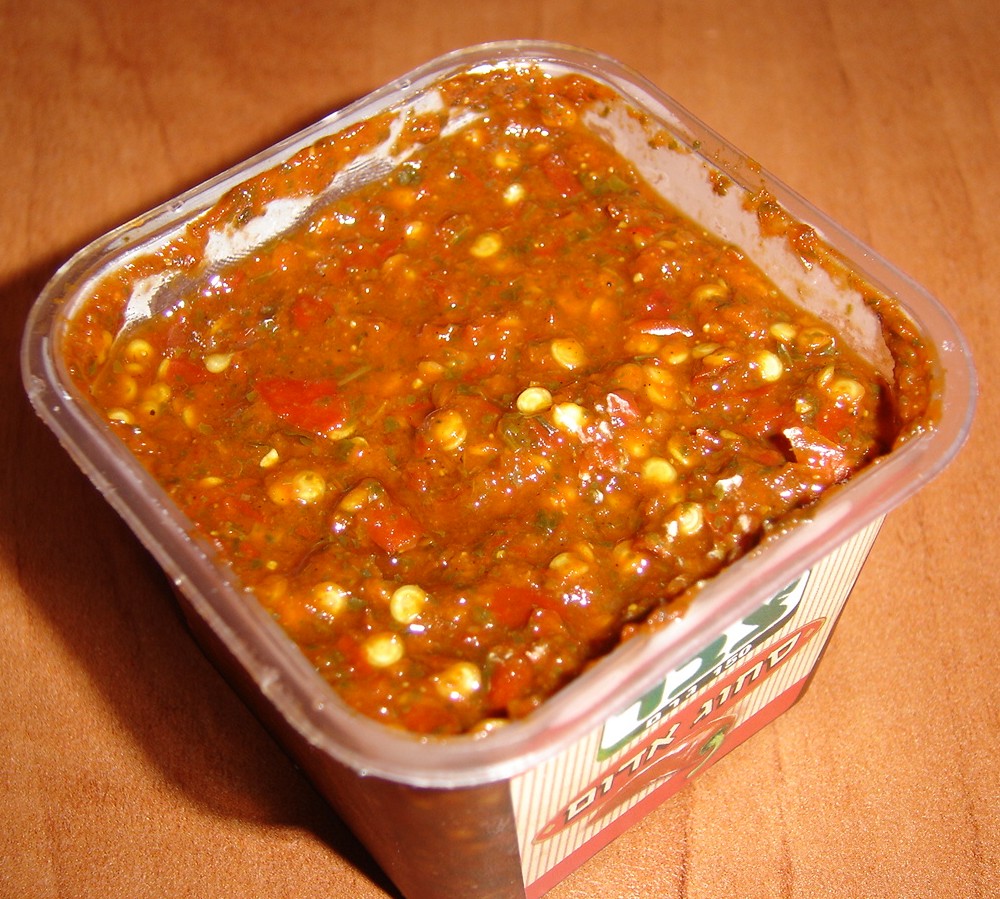 🇾🇪 Yemen and 1 moreZhugسحوق
A Yemeni hot sauce of crushed chilies, garlic, and corianderHot and fiery · Sharp and pungent
🇾🇪 Yemen and 1 moreZhugسحوق
A Yemeni hot sauce of crushed chilies, garlic, and corianderHot and fiery · Sharp and pungent
 🇱🇾 Libya and 1 morePilpelchumaפלפלצ'ומה
A steamed chili and garlic paste from Libyan Jewish cuisine, now common in Israel.Hot and fiery · Sharp and pungent
🇱🇾 Libya and 1 morePilpelchumaפלפלצ'ומה
A steamed chili and garlic paste from Libyan Jewish cuisine, now common in Israel.Hot and fiery · Sharp and pungent
 🇳🇬 NigeriaYaji
A spicy rub from Nigeria made with chili, ginger, and ground peanuts.Blend · Hot and fiery · Earthy and deep
🇳🇬 NigeriaYaji
A spicy rub from Nigeria made with chili, ginger, and ground peanuts.Blend · Hot and fiery · Earthy and deep