
Mala
In its own language: 麻辣
A fiery, tongue-numbing Chinese seasoning of Sichuan pepper and chillies
Mala is a pungent Chinese seasoning made from Sichuan peppercorns, chillies, aromatics, and oil. Known for its distinct tongue-tingling heat, it originated in Chongqing and flavours everything from hotpots to street snacks.
- Named after the Chinese characters for numbing (má) and spicy (là).
- The buzzing mouthfeel comes from hydroxy-alpha-sanshool in Sichuan pepper.
- Created in Chongqing night markets to feed nineteenth-century dockworkers.
- Simmered from chillies, Sichuan pepper, aromatics, beef tallow, and oil.
What is Mala?
Mala is an intensely savoury seasoning characterized by its sharp heat and mouth-numbing sensation. The name reflects this contrast, joining the Chinese terms for numbing and piquant. It relies on a pairing of fiery chillies and citrusy Sichuan peppercorn, whose natural hydroxy-alpha-sanshool creates a buzzing vibration across the tongue. Cooks prepare mala as an aromatic paste or sauce simmered in fat, or grind it into a dry, multi-spice powder. It delivers a rich, pungent profile layered with whole aromatics like star anise, garlic, and clove.
Where does Mala come from?
The history of mala traces back to nineteenth- and twentieth-century Chongqing. Vendors operating in busy night markets originally developed the pungent mixture for local pier labourers. The heavy spice load and generous layer of oil served practical purposes: preserving ingredients in humid riverfront conditions and concealing the gamey aromas of cheap blood and offal. Over time, the preparation spread across regional kitchens to become a central cornerstone of Sichuan gastronomy.
What does Mala taste like?
The seasoning creates a signature sensory interplay of deep pungency and tingling numbness. This buzzing effect comes directly from Sichuan peppercorns, which carry roughly three percent hydroxy-alpha-sanshool. Ground and dried chillies bring direct fire, balanced by the sweet, dark notes of cinnamon, star anise, black cardamom, and fennel. Simmering these spices with ginger and broad bean paste produces a deeply complex, oily savouriness.
Mala, drawn
How Mala is used
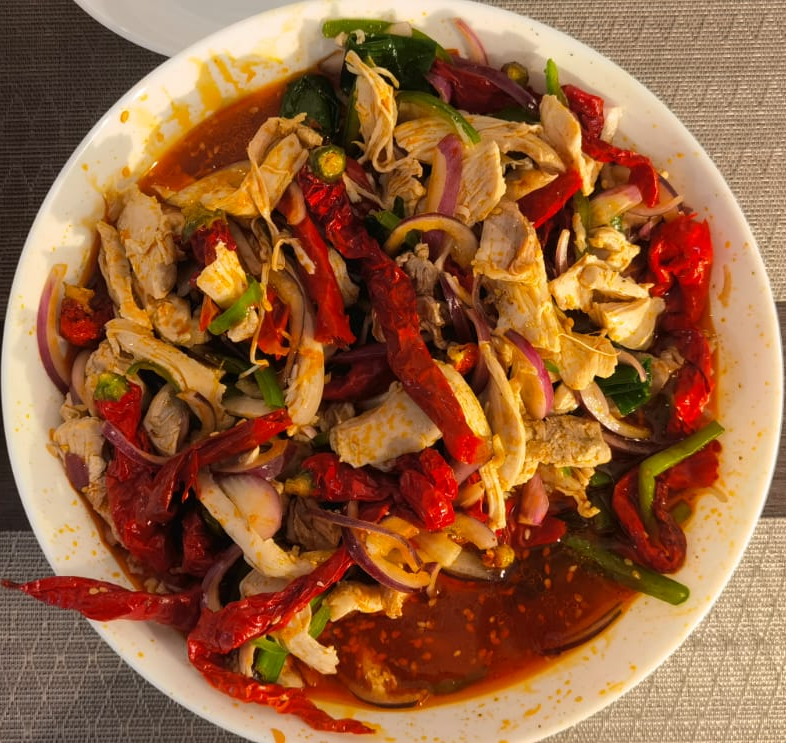
Cooks employ mala across numerous cooking techniques. As a simmered sauce, it forms the base for communal hotpots, rich soups, and dry stir-fries, or serves as a table dip alongside sesame oil and garlic. In dry form, the powder is dusted directly over roasted skewers, fried potatoes, and stinky tofu. It seasons prominent traditional dishes, including poached cold chicken, spicy braised duck necks, chicken and potato stews, and braised offal platters containing tripe and tendon.
Mala in the world's kitchens
This seasoning is a defining hallmark of Sichuan culinary tradition, especially within Chongqing cuisine. Its reach extends into neighbouring Yunnan, where cooks favour dry powder finishes on street snacks. Beyond regional borders, mala has gained immense popularity across greater Chinese cooking, finding its way into everyday home kitchens through ready-made supermarket pastes and concentrated broth cubes.
At a glance: where it turns up
Celebrations
Buying and storing Mala
After simmering the spice mixture for several hours in vegetable oil and beef tallow, cooks traditionally seal the prepared paste into jars. Modern commercial versions are widely sold in supermarkets as bottled sauces or compressed, instant bouillon-style cubes for quick home use.
Meal
Mala appears throughout lunch, dinner, and late-night street eating. In Sichuan and Yunnan, evening market stalls dust the dry blend onto snacks like fried potatoes, stinky tofu, and barbecued meats. At family dinners and restaurant banquets, simmering hotpots and hearty poultry stews bring diners together around boiling, seasoned broths.
Questions people ask about Mala
Where does mala come from?
Mala originated in southwestern China, developing in the bustling night markets of Chongqing during the nineteenth and twentieth centuries. It was created to provide cheap, hearty nourishment to local riverfront dockworkers.
What does mala taste like?
Mala delivers a distinct contrast of fiery chilli heat and tingling numbness. The Sichuan peppercorn buzzes on the tongue, complemented by warm spices like clove, cinnamon, star anise, and savoury broad bean paste.
How is mala used in cooking?
Mala is used as an oily paste simmered into hotpot broths, stews, and stir-fries, or served as a dipping sauce. As a dry powder, cooks sprinkle it over fried potatoes, stinky tofu, and barbecued skewers.
What ingredients are used to make mala sauce?
The sauce blends dried chillies, Sichuan peppercorns, broad bean paste, garlic, ginger, and spices such as black cardamom, star anise, fennel, and clove, all simmered for hours in beef tallow and vegetable oil.
Good reading and sources
- Mala (seasoning) on WikipediaEncyclopedia
- More photos on Wikimedia CommonsPhotos and video
- Wikidata recordOpen data
The facts on this page come from the Wikipedia article "Mala (seasoning)", written by its contributors and used under the CC BY-SA 4.0 licence, and from its Wikidata record (CC0). EveryMasala rewrote the text in its own words, with AI assistance, and compares every page with the article to make sure no passage is copied. It may be reused under the same CC BY-SA 4.0 licence with a link back.
It may contain mistakes. Names, strengths and customs differ from one grower, kitchen or shop to the next. Traditional and medicinal uses are described as tradition, never as medical advice, and none of this is a substitute for a doctor. If something is wrong, tell us. Last refreshed 2026-10-04.
More from China
All the spices of China 🇨🇳 ChinaYongfeng chili sauce永丰辣酱
A fermented paste of peppers, rice and wheat from Hunan province, one of the region's three treasures.Paste · Hot and fiery · Sweet and mellow
🇨🇳 ChinaYongfeng chili sauce永丰辣酱
A fermented paste of peppers, rice and wheat from Hunan province, one of the region's three treasures.Paste · Hot and fiery · Sweet and mellow
 🇯🇵 Japan and 3 moreWasabiわさび
The pungent rhizome of a stream-side plant, grated fresh for sushi.Paste · Sharp and pungent · Hot and fiery
🇯🇵 Japan and 3 moreWasabiわさび
The pungent rhizome of a stream-side plant, grated fresh for sushi.Paste · Sharp and pungent · Hot and fiery
 🇨🇳 China and 2 moreChinese prickly-ash
A thorny East Asian shrub whose reddish berries yield Sichuan pepperFruit
🇨🇳 China and 2 moreChinese prickly-ash
A thorny East Asian shrub whose reddish berries yield Sichuan pepperFruit
 🇨🇳 China and 5 moreSichuan pepper花椒 (huājiāo)
The dried husk of Zanthoxylum fruit, prized for its citrus scent and electric numbness.Fruit · Citrus and bright · Sharp and pungent
🇨🇳 China and 5 moreSichuan pepper花椒 (huājiāo)
The dried husk of Zanthoxylum fruit, prized for its citrus scent and electric numbness.Fruit · Citrus and bright · Sharp and pungent
Its cousins elsewhere
All paste 🇬🇧 United Kingdom and 4 moreRock samphire
A coastal succulent with peppery leaves and carrot-scented roots, used fresh or pickled.Leaf · Hot and fiery · Sharp and pungent
🇬🇧 United Kingdom and 4 moreRock samphire
A coastal succulent with peppery leaves and carrot-scented roots, used fresh or pickled.Leaf · Hot and fiery · Sharp and pungent
 🇪🇬 EgyptShattaشطة
A fermented chili and garlic condiment from the LevantHot and fiery · Sharp and pungent
🇪🇬 EgyptShattaشطة
A fermented chili and garlic condiment from the LevantHot and fiery · Sharp and pungent
 🇱🇾 Libya and 1 morePilpelchumaפלפלצ'ומה
A steamed chili and garlic paste from Libyan Jewish cuisine, now common in Israel.Hot and fiery · Sharp and pungent
🇱🇾 Libya and 1 morePilpelchumaפלפלצ'ומה
A steamed chili and garlic paste from Libyan Jewish cuisine, now common in Israel.Hot and fiery · Sharp and pungent
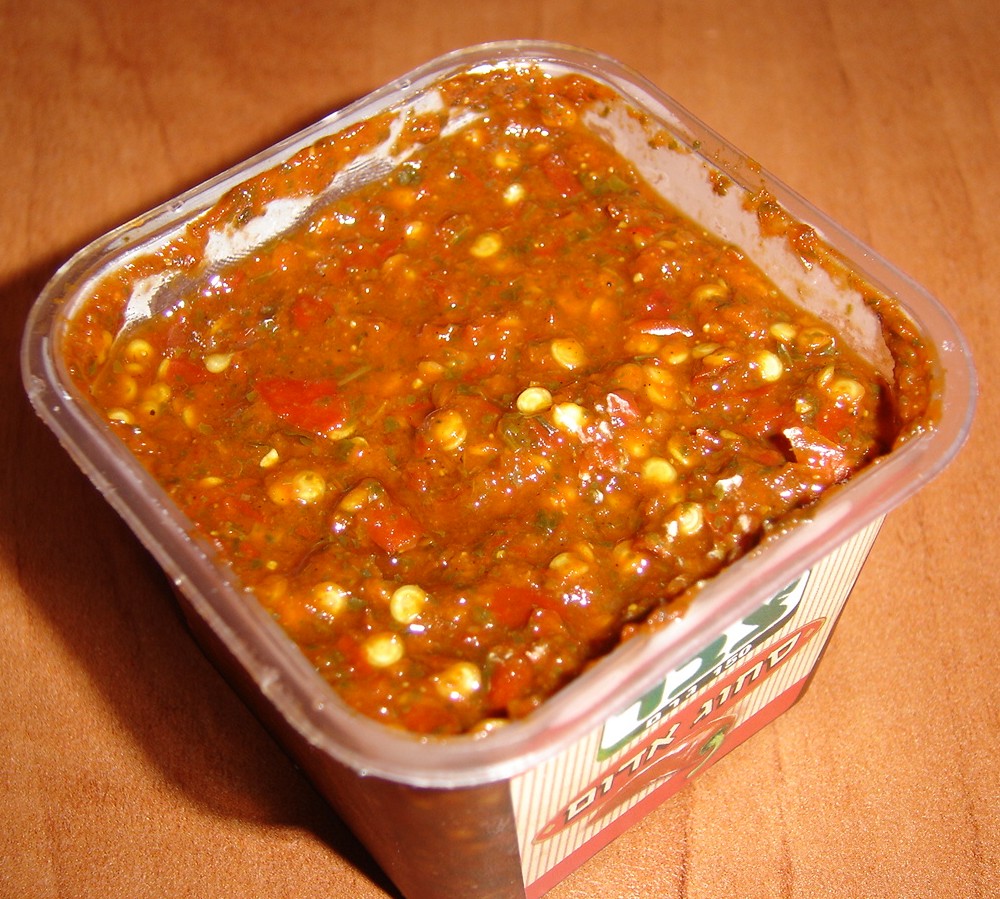 🇾🇪 Yemen and 1 moreZhugسحوق
A Yemeni hot sauce of crushed chilies, garlic, and corianderHot and fiery · Sharp and pungent
🇾🇪 Yemen and 1 moreZhugسحوق
A Yemeni hot sauce of crushed chilies, garlic, and corianderHot and fiery · Sharp and pungent