🇲🇽 The spices of Mexico
47 spices from Mexico, best known first, across 20 cities, markets and growing areas.
Mexican cooking rests on dried maize, common beans, and a wide array of native chile peppers. These foundations carry centuries of indigenous knowledge alongside Spanish and African contributions. Seasoning arrives through ground pastes, treated doughs, and slow simmered sauces that define every plate.
- Nixtamalization treats dried maize to unlock nutrients and create dough.
- Mole blends cacao, toasted seeds, and multiple peppers for ceremonies.
- Chipotle refers specifically to smoked-dried jalapeño pods.
- Day of the Dead altars hold mole and tamales for visiting spirits.
- Insect eating features roasted grasshoppers and ant larvae as seasonal snacks.
Spice in Mexico
The foodways of this region grew from early farming communities that first cultivated maize, beans, squash, and cacao. Later waves of settlers added their own techniques, while colonial traders introduced livestock, dairy, and wheat. Coastal ports absorbed African and Middle Eastern flavors through long sea routes. Neighboring territories share similar staple crops and grinding stones, yet local climates shape distinct ingredient choices. The result is a layered table where ancient practices meet imported goods without losing their original structure.
The spices of the kitchen
Native chile peppers form the backbone of the pantry. Cooks select dozens of varieties for their earthy, fruity, or smoky notes rather than pure heat. Dried pods often become the base for everyday sauces. Sweet cacao and vanilla beans were once reserved for elite rituals but now season both savory stews and desserts. Spanish arrivals brought garlic, onion, and leafy herbs, which now mingle with indigenous greens like papaloquelite and edible flowers. These aromatics build depth without overwhelming the main ingredients.
Blends and pastes
Ground chile pastes dominate the seasoning landscape. Cooks combine roasted pods with seeds, nuts, tomatoes, and dried herbs to create thick sauces that coat meats and vegetables. Mole stands out as a complex mixture prepared for gatherings, blending bitter cacao, toasted spices, and multiple pepper types. Simpler combinations rely on fresh tomato juice mixed with raw chiles and salt. Smoked varieties provide a woodsy layer to broths and marinades. Each blend carries a specific balance of acid, fat, and heat.
Today
Modern households increasingly use electric blades instead of stone mortars, speeding up paste production. Urban markets stock imported grains alongside native chiles and dried insects sold as sustainable snacks. Culinary schools document old techniques while chefs adapt traditional sauces for contemporary menus. UNESCO listed the tradition in 2010, helping safeguard farming practices and kitchen tools. Migration continues to introduce new herb combinations into home pantries.
The facts in this overview come from the Wikipedia article "Mexican cuisine", written by its contributors and used under the CC BY-SA 4.0 licence. EveryMasala rewrote the text in its own words, with AI assistance, and compares every page with the article to make sure no passage is copied. It may be reused under the same CC BY-SA 4.0 licence with a link back.
 🇲🇽 Mexico and 5 moreAnnatto
The orange-red pigment from achiote seeds used as a natural food coloring and mild spice.Seed · Earthy and deep · Sweet and mellow
🇲🇽 Mexico and 5 moreAnnatto
The orange-red pigment from achiote seeds used as a natural food coloring and mild spice.Seed · Earthy and deep · Sweet and mellow
 🇨🇳 China and 5 moreChili oil辣椒油
A red condiment of infused vegetable oil and hot peppers used across Asia and Europe.Hot and fiery · Smoky
🇨🇳 China and 5 moreChili oil辣椒油
A red condiment of infused vegetable oil and hot peppers used across Asia and Europe.Hot and fiery · Smoky
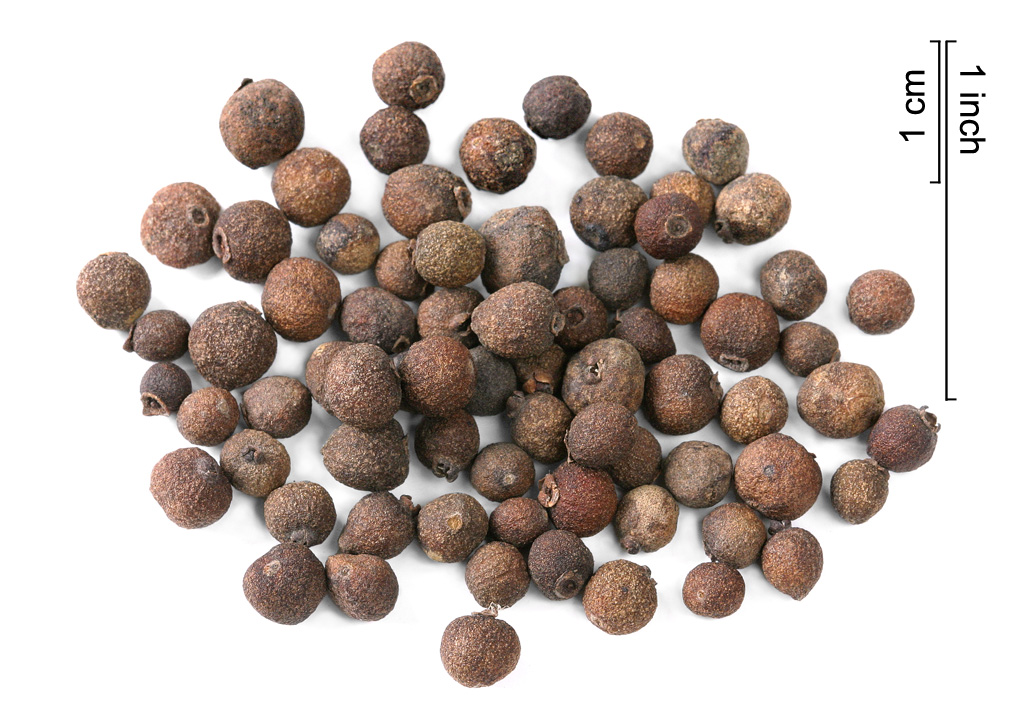 🇯🇲 Jamaica and 2 moreAllspice
The dried green berry of a tropical tree, named for its blend of cinnamon, nutmeg, and clove notes.Fruit · Warm and sweet-spiced · Sweet and mellow
🇯🇲 Jamaica and 2 moreAllspice
The dried green berry of a tropical tree, named for its blend of cinnamon, nutmeg, and clove notes.Fruit · Warm and sweet-spiced · Sweet and mellow
 🇲🇽 Mexico and 1 moreRecado rojo
A red-orange paste of annatto and spices used to marinate meats in Yucatán cuisine.Earthy and deep · Sharp and pungent
🇲🇽 Mexico and 1 moreRecado rojo
A red-orange paste of annatto and spices used to marinate meats in Yucatán cuisine.Earthy and deep · Sharp and pungent
 🇺🇸 United States and 1 moreNew Mexico chilechile de Nuevo México
A cultivar group of Capsicum annuum from New Mexico, valued for its smoky flavor and range of heat levels.Sharp and pungent · Sweet and mellow
🇺🇸 United States and 1 moreNew Mexico chilechile de Nuevo México
A cultivar group of Capsicum annuum from New Mexico, valued for its smoky flavor and range of heat levels.Sharp and pungent · Sweet and mellow
 🇲🇽 Mexico and 2 moreMexican oreganoorégano cimarrón
A fragrant shrub from the Americas, its leaves provide a thyme-like herbal note distinct from Mediterranean oregano.Warm and sweet-spiced · Sharp and pungent
🇲🇽 Mexico and 2 moreMexican oreganoorégano cimarrón
A fragrant shrub from the Americas, its leaves provide a thyme-like herbal note distinct from Mediterranean oregano.Warm and sweet-spiced · Sharp and pungent
 🇲🇽 Mexico and 5 moreCulantroជីរបន្លា
A tropical herb with serrated leaves, offering a deep and pungent coriander flavour.Leaf · Herbal and green · Sharp and pungent
🇲🇽 Mexico and 5 moreCulantroជីរបន្លា
A tropical herb with serrated leaves, offering a deep and pungent coriander flavour.Leaf · Herbal and green · Sharp and pungent
 🇲🇽 Mexico and 2 morePápalo
A pungent herb from central Mexico to the Andes, used fresh in salsas and tacos.Leaf · Citrus and bright · Sharp and pungent
🇲🇽 Mexico and 2 morePápalo
A pungent herb from central Mexico to the Andes, used fresh in salsas and tacos.Leaf · Citrus and bright · Sharp and pungent
 🇲🇽 Mexico and 2 moreEpazoteepazōtl
A pungent leafy herb from the Americas, traditionally used to flavor beans and stews.Sharp and pungent · Citrus and bright
🇺🇸 United States and 1 moreSandia pepper
A New Mexico-developed Capsicum annuum cultivar used for green and red dishes.Hot and fiery · Sharp and pungent
🇲🇽 Mexico and 2 moreEpazoteepazōtl
A pungent leafy herb from the Americas, traditionally used to flavor beans and stews.Sharp and pungent · Citrus and bright
🇺🇸 United States and 1 moreSandia pepper
A New Mexico-developed Capsicum annuum cultivar used for green and red dishes.Hot and fiery · Sharp and pungent
 🇮🇳 India and 5 moreCumin
The dried seed of a small parsley-family herb, used whole or ground in many world cuisines.Seed · Warm and sweet-spiced · Earthy and deep
🇮🇳 India and 5 moreCumin
The dried seed of a small parsley-family herb, used whole or ground in many world cuisines.Seed · Warm and sweet-spiced · Earthy and deep
 🇲🇽 Mexico and 5 moreCapsicum annuum
A flowering plant producing berries of many colors and heat levels, from sweet bell peppers to fiery chilies.Fruit · Hot and fiery · Sweet and mellow
🇲🇽 Mexico and 5 moreCapsicum annuum
A flowering plant producing berries of many colors and heat levels, from sweet bell peppers to fiery chilies.Fruit · Hot and fiery · Sweet and mellow
 🇲🇽 MexicoSerrano pepper
A hot Mexican chili from mountain regions, used fresh in salsas and sauces.Chilli · Hot and fiery · Sharp and pungent
🇲🇽 MexicoSerrano pepper
A hot Mexican chili from mountain regions, used fresh in salsas and sauces.Chilli · Hot and fiery · Sharp and pungent
Photo credits on this page
The small pictures above come from Wikimedia Commons under free licences. Some are cropped to fit.
- Pápalo: Wibowo Djatmiko ( Wie146 ), CC BY-SA 3.0, source
- Recado rojo: Paul Goyette, CC BY-SA 2.0, source
- Cumin: Sanjay Acharya, CC BY-SA 3.0, source
- Capsicum annuum: Franz Eugen Köhler, Köhler's Medizinal-Pflanzen, Public domain, source
- Serrano pepper: Cindy, CC BY-SA 2.0, source
- Mexican oregano: Dick Culbert, CC BY 2.0, source
- Annatto: Porto Neto, CC BY-SA 4.0, source
- Allspice: Unknown author, CC BY 2.5, source
- New Mexico chile: vxla, CC BY 2.0, source
- Chili oil: Alpha, CC BY-SA 2.0, source
- Culantro: Maxintaft, CC BY-SA 3.0, source
- Epazote: Francisco Manuel Blanco (O.S.A.), Public domain, source
The weekly digest
Every Monday: seven spices you may not know, what is cooking this week, and one blend explained step by step.