
Cumin
Cuminum cyminum
The dried seed of a small parsley-family herb, used whole or ground in many world cuisines.
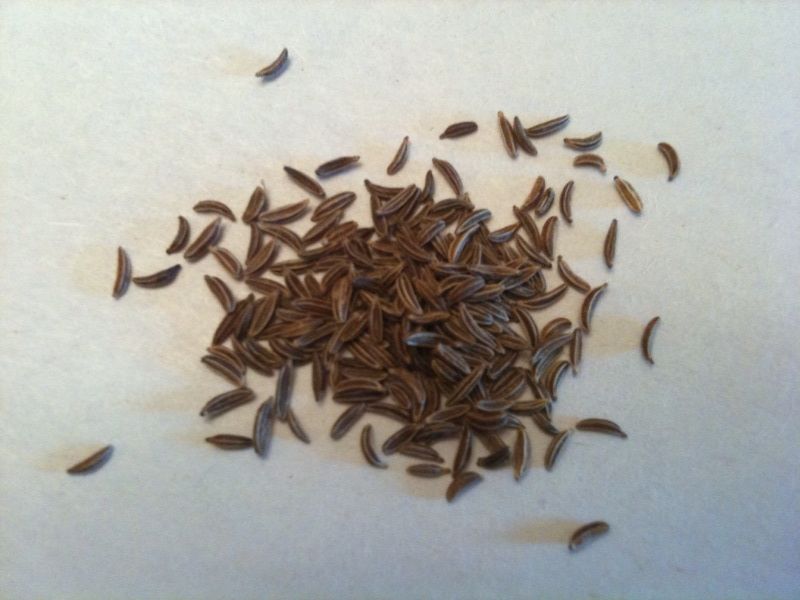
Cumin is the dried fruit and seed of Cuminum cyminum, an annual plant native to the Irano-Turanian region. It delivers a warm, earthy taste and a strong aroma that has made it a kitchen staple for thousands of years across Asia, Africa, and the Americas.
- India produces about seventy percent of global cumin.
- Seeds date back to six thousand BC in the Eastern Mediterranean.
- Ancient Egyptians used it in mummification processes.
- Essential oils provide its characteristic warm, earthy flavor.
- Often confused with caraway due to similar appearance.
What is Cumin?
This spice comes from the dried fruit of Cuminum cyminum, an annual herb belonging to the parsley family. The plant stands between thirty and fifty centimeters tall with slender green stems and thread-like leaves. Small white or pink flowers grow in clusters, eventually forming oblong fruits. Inside each fruit lie two narrow seeds marked by eight ridges. These seeds are yellow-brown in color and resemble caraway but possess a distinctively sharp and warming flavor profile. The aromatic quality comes from essential oils within the seed structure.
Where does Cumin come from?
Archaeological findings suggest cumin originated in the Eastern Mediterranean or Central Asia. Seeds dating back to the sixth millennium BC were found at Atlit-Yam. Later finds in Syria and ancient Egyptian sites show its early use. In Egypt, it served as a preservative during mummification. Ancient Greeks kept it on dining tables, a custom still seen in Morocco. Roman cuisine relied heavily on it. Spanish and Portuguese colonists brought it to the Americas. Today, major production occurs in India, Syria, Turkey, and Iran.
What does Cumin taste like?
The taste is primarily earthy and warm with a pungent bite. This character arises from volatile compounds like cuminaldehyde and cymene found in the essential oil. The aroma is strong and distinctive, often described as nutty or spicy. When heated, these oils release their scent, enhancing stews and soups. The flavor pairs well with other spices but can overpower dishes if used excessively. Its warmth makes it suitable for hearty meals rather than light snacks.
How Cumin is grown and processed
Cumin thrives in hot, dry climates with long summers. It requires about one hundred twenty frost-free days. Optimal growth happens between twenty-five and thirty degrees Celsius. Farmers sow seeds from October to December in India and November to January in Syria. Seedlings need gentle soil conditions and good drainage. They are sensitive to frost and high humidity, which can cause fungal diseases like Fusarium wilt. Weed control is essential due to the plant's slow early growth. Harvesting occurs when the plants turn brown and dry.
Cumin, drawn
How Cumin is used
Cooking uses both whole seeds and ground powder. It forms a base for many spice blends including garam masala and curry powder. In North Indian and Pakistani kitchens, it is often mixed with coriander seeds. Mexican and Tex-Mex cuisines include it in chili powders and adobos. French tradition uses it in certain cheeses and breads. Pickles and pastries also feature this spice. It adds depth to stews, gravies, and soups. The seeds are typically toasted before grinding to enhance their flavor.
Cumin in the world's kitchens
Indian cuisine relies on it heavily, often combining it with coriander. Persian cooking uses black and green varieties in traditional dishes. Moroccan cuisine maintains the ancient Greek habit of keeping it on the table. Mexican and Tex-Mex styles use it in chili and taco seasonings. French baking includes it in specific breads and cheese recipes. Syrian and Turkish markets offer different grades based on oil content. Each culture adapts its intensity and form to suit local tastes and ingredient availability.
At a glance: where it turns up
Spiritual use
Celebrations



Spiritual and ceremonial use
In Ayurvedic traditions, cumin holds medicinal value. It is prepared as decoctions, fermented liquids, or tablets. Ghee is sometimes used to process the seeds for therapeutic purposes. While not central to major religious rituals, its presence in daily life connects it to household health practices. Ancient Egyptians used it in burial rites, linking it to preservation and the afterlife. Modern practitioners view it as a supportive agent rather than a cure-all.
Cumin at celebrations
Its role is primarily daily and utilitarian. Families use it regularly in everyday cooking. There are no recorded occasions where it serves as a ceremonial centerpiece. Its consistency in households makes it a symbol of routine sustenance rather than special events.
Traditional and medicinal use
Traditional medicine systems in India and other regions use cumin for digestive support. It is taken as kashaya (decoction) or vati (tablets). Some cultures believe it aids digestion or reduces bloating. However, scientific evidence for these claims is lacking. Safety as a therapeutic agent is not fully established. Users should consult professionals for medical advice. The spice remains safe for culinary use in normal amounts.
Buying and storing Cumin
Keep whole seeds in airtight containers away from light and heat. Ground cumin loses potency faster, so store it in cool, dark places. Whole seeds retain flavor longer than powder. Check for freshness by smelling the seeds; they should have a strong, warm aroma. Discard if the scent becomes faint or dusty. Proper storage prevents moisture damage and preserves the essential oils.
What to use instead of Cumin
Caraway is the closest visual match but differs in flavor. Coriander seeds share some citrus notes but lack the earthiness. Fennel seeds offer a similar shape but a sweeter taste. No single spice perfectly replicates cumin. A mix of coriander and cardamom may approximate its complexity in some dishes. Always adjust quantities when substituting to avoid overpowering the meal.
The trade in Cumin
India produces roughly seventy percent of the world's cumin. Syria, Turkey, and Iran account for most of the remainder. The trade involves grading seeds by size, color, and oil content. Iranian, Indian, and Middle Eastern varieties differ in market perception. Adulteration is a concern, so certification matters. Historical routes moved cumin from the Mediterranean to Asia and the Americas. Today, global demand drives cultivation in Chile, Mexico, and China.
Meal
Lunch and dinner dishes benefit most from its warming properties. It is common in stews, curries, and spiced gravies served as main courses. Street food vendors use it in savory snacks and fast foods. Preserves like pickles and chutneys incorporate it for tangy depth. It is less common in breakfast items or desserts. Its robust flavor suits substantial meals where it can stand out among other ingredients without being lost.
Blends with Cumin
Questions people ask about Cumin
Where does cumin originate?
Cumin likely originated in the Irano-Turanian region, including parts of Central Asia and the Eastern Mediterranean. Archaeological evidence shows its use in ancient Egypt and Crete thousands of years ago.
What does cumin taste like?
It has a warm, earthy, and slightly pungent flavor. The taste comes from essential oils like cuminaldehyde. It is more complex than pepper but lacks the heat of chili peppers.
How is cumin used in cooking?
It is used whole or ground in stews, curries, soups, and spice blends. Indian, Mexican, and Middle Eastern cuisines rely on it heavily. Toasting seeds before grinding enhances their aroma.
Is cumin safe for medicinal use?
Traditional medicine systems use it for digestion, but scientific evidence is limited. It is generally safe as a food spice. Consult a doctor before using it for therapeutic purposes.
Can I substitute cumin with another spice?
No single spice is a perfect substitute. Caraway looks similar but tastes different. A mix of coriander and cardamom may work in some recipes. Adjust quantities carefully to maintain balance.
Good reading and sources
- Cumin on WikipediaEncyclopedia
- More photos on Wikimedia CommonsPhotos and video
- Wikidata recordOpen data
The facts on this page come from the Wikipedia article "Cumin", written by its contributors and used under the CC BY-SA 4.0 licence, and from its Wikidata record (CC0). EveryMasala rewrote the text in its own words, with AI assistance, and compares every page with the article to make sure no passage is copied. It may be reused under the same CC BY-SA 4.0 licence with a link back.
It may contain mistakes. Names, strengths and customs differ from one grower, kitchen or shop to the next. Traditional and medicinal uses are described as tradition, never as medical advice, and none of this is a substitute for a doctor. If something is wrong, tell us. Last refreshed 2026-10-04.
More from India
All the spices of India 🇮🇳 India and 4 moreFennel
The anise-scented seeds and crisp bulb of a Mediterranean perennial herbSeed · Anise and liquorice · Sweet and mellow
🇮🇳 India and 4 moreFennel
The anise-scented seeds and crisp bulb of a Mediterranean perennial herbSeed · Anise and liquorice · Sweet and mellow
 🇮🇳 India and 2 moreCardamom
Aromatic seeds from spindle-shaped pods used in sweet and savory dishes across Asia and the Middle East.Seed · Sharp and pungent · Warm and sweet-spiced
🇮🇳 India and 2 moreCardamom
Aromatic seeds from spindle-shaped pods used in sweet and savory dishes across Asia and the Middle East.Seed · Sharp and pungent · Warm and sweet-spiced
 🇮🇳 IndiaMalabar pepper
A Geographical Indication black pepper from Kerala and neighbouring regions.Seed · Sharp and pungent
🇮🇳 IndiaMalabar pepper
A Geographical Indication black pepper from Kerala and neighbouring regions.Seed · Sharp and pungent
 🇮🇳 India and 5 moreMustard seed
Tiny seeds from Brassica plants that become a sharp condiment or cooking oil.Seed · Sharp and pungent · Hot and fiery
🇮🇳 India and 5 moreMustard seed
Tiny seeds from Brassica plants that become a sharp condiment or cooking oil.Seed · Sharp and pungent · Hot and fiery
Its cousins elsewhere
All seed 🇮🇳 India and 4 moreCurry paste
A blended mixture of spices and aromatics used as the base for curries in Asia.Warm and sweet-spiced · Earthy and deep
🇮🇳 India and 4 moreCurry paste
A blended mixture of spices and aromatics used as the base for curries in Asia.Warm and sweet-spiced · Earthy and deep
 🇲🇦 Morocco and 2 moreRas el hanoutرأس الحانوت
A complex Maghrebi spice blend meaning 'head of the shop', used in savory dishes across North Africa.Warm and sweet-spiced · Earthy and deep
🇲🇦 Morocco and 2 moreRas el hanoutرأس الحانوت
A complex Maghrebi spice blend meaning 'head of the shop', used in savory dishes across North Africa.Warm and sweet-spiced · Earthy and deep
 🇪🇹 Ethiopia and 1 moreBerbereበርበሬ (bärbäre)
A complex Ethiopian spice blend built on chili peppers, coriander, and ginger.Hot and fiery · Warm and sweet-spiced
🇯🇴 Jordan and 5 moreBaharatبهارات
A versatile Middle Eastern spice blend used to season meats and soups.Warm and sweet-spiced · Sharp and pungent
🇪🇹 Ethiopia and 1 moreBerbereበርበሬ (bärbäre)
A complex Ethiopian spice blend built on chili peppers, coriander, and ginger.Hot and fiery · Warm and sweet-spiced
🇯🇴 Jordan and 5 moreBaharatبهارات
A versatile Middle Eastern spice blend used to season meats and soups.Warm and sweet-spiced · Sharp and pungent