
Canella
Canella winterana
The aromatic inner bark of a Caribbean tree, often called white cinnamon.
Canella is the dried inner bark of a tree native to the Caribbean, southern Florida, and Venezuela. Known as white cinnamon, it offers a warm, clove-like scent and is used as a spice similar to true cinnamon. The tree also serves as an ornamental plant due to its colorful flowers and fruit.
- Native to the Caribbean, Florida, and Venezuela.
- Bark is known as white cinnamon or wild cinnamon.
- Flowers are white or rose-colored; fruit is bright crimson.
- Introduced to England in 1738 by Philip Miller.
- Scent described historically as resembling cloves.
What is Canella?
Canella refers to the dried inner bark of Canella winterana, a tree found across the Caribbean, southern Florida, and northern South America. The tree features stout branches marked by leaf scars and bright green leaves. Its flowers appear in clusters and range from white to rose. The fruit turns a vivid crimson when ripe. The bark itself has a rough, scaly gray exterior that covers a thick, pale yellow layer. This inner wood is the part harvested for use, valued for its distinct aroma and texture.
Where does Canella come from?
The plant grows naturally in Jamaica, Mexico, Venezuela, and various Caribbean islands including Cuba and Puerto Rico. In the United States, it thrives in the Florida Keys, where it was first noted by J. L. Blodgett. Historical records show early European explorers encountered the tree during their first voyages to the Americas. It was brought to England in 1738 and cultivated by Philip Miller. The name comes from the Latin word for cane, referring to the shape of the dried bark rolls.
What does Canella taste like?
The spice offers an aromatic profile closely linked to cinnamon. Descriptions from early observers note a scent comparable to cloves. The taste is warm and pungent, derived from the essential oils within the bark. Cooks use it to add depth to dishes, relying on its ability to mimic traditional cinnamon while providing a slightly different, spicy kick. The aroma is strong enough to be noticeable even before grinding.
How Canella is grown and processed
Canella prefers the shade of larger forest trees and grows in dense woodland environments. In Florida, it typically reaches twenty-five to thirty feet tall, while specimens in Jamaican mountains may rise to fifty feet. The tree blooms in autumn, producing flowers that attract birds. The fruit matures in March and April, turning soft and red. Harvesting involves stripping the bark, which dries into quills or scales for storage.
Canella, drawn
How Canella is used
People use the bark as a seasoning agent, much like cinnamon. It serves as a flavoring ingredient in various preparations where a warm spice is required. Beyond cooking, the tree is valued for its appearance. The combination of white or rose flowers, deep green leaves, and bright red fruit makes it popular in gardens. Landscapers plant it as an ornamental feature in warm climates.
The trade in Canella
Early voyages to the Americas recorded encounters with the tree, noting its pleasant scent. It attracted significant attention among the first American trees observed by Europeans. The species was introduced to England in 1738, where it began cultivation under the care of botanists like Philip Miller. Historical confusion existed between this species and Winter's bark, leading to mixed nomenclature in early botanical texts.
Questions people ask about Canella
What is Canella?
Canella is the dried inner bark of a tree native to the Caribbean, southern Florida, and Venezuela. It is commonly called white cinnamon or wild cinnamon because of its resemblance to true cinnamon.
How does Canella taste?
The bark has a warm, aromatic flavor similar to cinnamon. Historical accounts describe its scent as having notes of cloves, making it a pungent and sweet spice.
Where does Canella grow?
It grows naturally in Jamaica, Mexico, Venezuela, and Caribbean islands like Cuba and Puerto Rico. In the US, it is found in the Florida Keys, often under the shade of larger trees.
Is Canella related to cinnamon?
Yes, it is used as a spice similar to cinnamon and shares a warm, aromatic profile. The name 'white cinnamon' reflects this culinary connection.
Good reading and sources
- Canella on WikipediaEncyclopedia
- More photos on Wikimedia CommonsPhotos and video
- Wikidata recordOpen data
The facts on this page come from the Wikipedia article "Canella", written by its contributors and used under the CC BY-SA 4.0 licence, and from its Wikidata record (CC0). EveryMasala rewrote the text in its own words, with AI assistance, and compares every page with the article to make sure no passage is copied. It may be reused under the same CC BY-SA 4.0 licence with a link back.
It may contain mistakes. Names, strengths and customs differ from one grower, kitchen or shop to the next. Traditional and medicinal uses are described as tradition, never as medical advice, and none of this is a substitute for a doctor. If something is wrong, tell us. Last refreshed 2026-10-04.
More from Jamaica
All the spices of Jamaica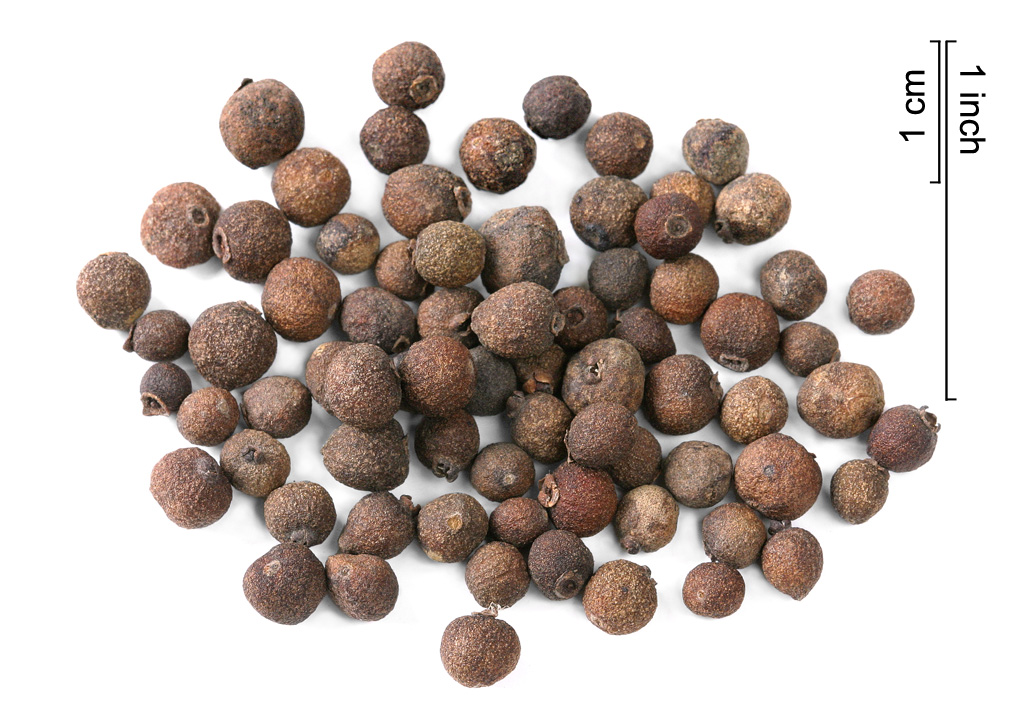 🇯🇲 Jamaica and 2 moreAllspice
The dried green berry of a tropical tree, named for its blend of cinnamon, nutmeg, and clove notes.Fruit · Warm and sweet-spiced · Sweet and mellow
🇯🇲 Jamaica and 2 moreAllspice
The dried green berry of a tropical tree, named for its blend of cinnamon, nutmeg, and clove notes.Fruit · Warm and sweet-spiced · Sweet and mellow
 🇻🇪 Venezuela and 5 moreAjí dulce
A mild, sweet perennial pepper from the Caribbean and Latin America, used as a seasoning base.Chilli · Smoky · Sweet and mellow
🇻🇪 Venezuela and 5 moreAjí dulce
A mild, sweet perennial pepper from the Caribbean and Latin America, used as a seasoning base.Chilli · Smoky · Sweet and mellow
 🇯🇲 JamaicaPimiento
A sweet, heart-shaped red chili pepper used for stuffing olives and making cheese spreads.Chilli · Sweet and mellow · Hot and fiery
🇯🇲 JamaicaPimiento
A sweet, heart-shaped red chili pepper used for stuffing olives and making cheese spreads.Chilli · Sweet and mellow · Hot and fiery
 🇨🇳 China and 4 moreSpearmint
The square-stemmed herb with pointed leaves used for tea and flavouring oil.Leaf
🇨🇳 China and 4 moreSpearmint
The square-stemmed herb with pointed leaves used for tea and flavouring oil.Leaf
Its cousins elsewhere
All bark 🇱🇰 Sri Lanka and 5 moreCinnamon
The dried inner bark of Cinnamomum trees, prized for its sweet warmth and essential oil.Bark · Warm and sweet-spiced · Sweet and mellow
🇱🇰 Sri Lanka and 5 moreCinnamon
The dried inner bark of Cinnamomum trees, prized for its sweet warmth and essential oil.Bark · Warm and sweet-spiced · Sweet and mellow
 🇮🇩 Indonesia and 3 moreNutmeg
The dried seed of a tropical evergreen tree, prized for its warm, pungent flavor.Seed · Warm and sweet-spiced · Sweet and mellow
🇮🇩 Indonesia and 3 moreNutmeg
The dried seed of a tropical evergreen tree, prized for its warm, pungent flavor.Seed · Warm and sweet-spiced · Sweet and mellow
 🇮🇳 India and 3 moreGaram masalaगरम मसाला
A ground blend of warm spices from the Indian subcontinent used to finish curries and stews.Blend · Warm and sweet-spiced · Sharp and pungent
🇯🇴 Jordan and 5 moreBaharatبهارات
A versatile Middle Eastern spice blend used to season meats and soups.Warm and sweet-spiced · Sharp and pungent
🇮🇳 India and 3 moreGaram masalaगरम मसाला
A ground blend of warm spices from the Indian subcontinent used to finish curries and stews.Blend · Warm and sweet-spiced · Sharp and pungent
🇯🇴 Jordan and 5 moreBaharatبهارات
A versatile Middle Eastern spice blend used to season meats and soups.Warm and sweet-spiced · Sharp and pungent