
Kair
In its own language: कैर
Capparis decidua
The spicy pink berry and flower bud of a drought-hardy desert bush
Kair is a spicy pink berry gathered from a drought-hardy shrub native to dry zones across South Asia, North Africa, and the Middle East. Cooks use the tender young buds and fruits raw, stewed into curries, or steeped into fine pickles.
- Produces spicy pink berries and edible flower buds twice a year in May and October.
- Highly drought-tolerant desert shrub that helps prevent soil erosion in arid zones.
- Celebrated in Indian regional cooking under the names kair, karīr, and karil.
- Bears vivid red blossoms on gray-green, mostly leafless branches.
What is Kair?
Capparis decidua is a spiny, highly branched shrub or small tree that thrives in marginal desert soils. It forms a dense tangle of slender, gray-green branches that are largely leafless, growing small, temporary leaves only on young shoots. Showy red flowers bloom in spring and late summer, turning into small, fleshy pink berries. Both the unripe buds and mature fruits are harvested for food. The spicy berries provide a distinctive piquancy, serving as a valuable seasonal food and seasoning in dry, sunny climates.
Where does Kair come from?
Capparis decidua is native to dry and desert landscapes across North Africa, the Middle East, and South Asia. It thrives under harsh conditions, including the sands of the Thar Desert. In northern India, the city of Khair in Uttar Pradesh gained renown for its dense growth of these shrubs. Local cultures throughout northern and western India have utilized the plant for generations, identifying it as kair in Rajasthan, karīr in Punjab, and karil in the Braj region.
What does Kair taste like?
The berries of Capparis decidua are distinctive for their natural spice. Fresh pink fruits deliver a lively, pungent bite rather than a sweet pulp, making them effective as savoury seasoning. The young buds carry a similar sharp character. When eaten raw or steeped in spiced brines, these desert fruits contribute an unmistakable zest and sharpness to vegetable dishes.
How Kair is grown and processed
Capparis decidua is an exceptionally drought-resistant shrub or small tree that rarely grows higher than five metres. It handles arid heat well and can tolerate mild frost. New leaves emerge from November to January, followed by bright red blossoms during two flowering periods: March to April and August to September. Fruits ripen into pink berries in May and October. The bush spreads freely by root suckers and coppices readily, making it effective for combating soil erosion and reclaiming arid land.
Kair, drawn
How Kair is used
Both the spicy pink fruits and the immature buds can be eaten raw right from the bush. In dryland kitchens, cooks prepare the berries as seasoned vegetable dishes or simmer them into rich curries. They are also widely steeped into fine pickles to preserve their spicy flavour for year-round eating. Beyond food, the plant is cultivated in desert gardens and afforestation projects, where its fruit feeds wild birds and its branches shelter beneficial insectivores.
Kair in the world's kitchens
This desert fruit is an essential ingredient in traditional South Asian cooking, particularly in the arid states of northern and western India. In Rajasthan, the berries, called kair, are cooked in curries and pickled. In Punjab, where the plant is known as karīr, and in Braj Bhakha regions where it is named karil, local cooks preserve and stew the spicy fruit. Across North Africa and the Middle East, desert populations similarly forage the wild shrubs.
At a glance: where it turns up


Traditional and medicinal use
In traditional folk medicine and herbalism across arid India and neighbouring desert regions, Capparis decidua is held in high esteem. Local healers have historically employed different parts of the shrub, including its roots, buds, and fruits, in customary remedies to treat common ailments and maintain stamina in unforgiving dryland environments.
Meal
Kair is most often featured in everyday lunch and dinner dishes. The spicy berries are simmered into vegetable preparations and curries that accompany staple grains. Made into preserved pickles, the fruit serves as a long-lasting condiment kept on hand to brighten daily meals across seasons.
Questions people ask about Kair
Where does kair come from?
Kair grows naturally in arid zones across South Asia, North Africa, and the Middle East, including the Thar Desert and northern Indian regions like Uttar Pradesh.
What part of the kair plant is eaten?
Cooks eat both the tender young flower buds and the fleshy pink berries, enjoying them either raw or cooked.
How is kair used in cooking?
The spicy berries are prepared as cooked vegetables, simmered in curries, or preserved into fine table pickles.
When is kair harvested?
The plant flowers twice a year, producing ripe berries ready for harvesting in May and October.
Good reading and sources
- Capparis decidua on WikipediaEncyclopedia
- More photos on Wikimedia CommonsPhotos and video
- Wikidata recordOpen data
The facts on this page come from the Wikipedia article "Capparis decidua", written by its contributors and used under the CC BY-SA 4.0 licence, and from its Wikidata record (CC0). EveryMasala rewrote the text in its own words, with AI assistance, and compares every page with the article to make sure no passage is copied. It may be reused under the same CC BY-SA 4.0 licence with a link back.
It may contain mistakes. Names, strengths and customs differ from one grower, kitchen or shop to the next. Traditional and medicinal uses are described as tradition, never as medical advice, and none of this is a substitute for a doctor. If something is wrong, tell us. Last refreshed 2026-10-04.
More from India
All the spices of India 🇮🇳 India and 4 moreFennel
The anise-scented seeds and crisp bulb of a Mediterranean perennial herbSeed · Anise and liquorice · Sweet and mellow
🇮🇳 India and 4 moreFennel
The anise-scented seeds and crisp bulb of a Mediterranean perennial herbSeed · Anise and liquorice · Sweet and mellow
 🇮🇳 India and 3 moreIndian prickly ash
A pungent fruit from a thorny shrub, used for its tingling spice in coastal India and Vietnam.Fruit · Sharp and pungent · Numbing and tingling
🇮🇳 India and 3 moreIndian prickly ash
A pungent fruit from a thorny shrub, used for its tingling spice in coastal India and Vietnam.Fruit · Sharp and pungent · Numbing and tingling
 🇮🇳 India and 3 moreLong pepperpippali
The dried fruit spike of a climbing vine, once the world's most prized spice.Fruit · Hot and fiery · Sweet and mellow
🇮🇳 India and 3 moreLong pepperpippali
The dried fruit spike of a climbing vine, once the world's most prized spice.Fruit · Hot and fiery · Sweet and mellow
 🇧🇩 Bangladesh and 2 morePiper chaba
A creeping vine from South and Southeast Asia whose stems and roots are used as a pungent spice.Root · Sharp and pungent · Hot and fiery
🇧🇩 Bangladesh and 2 morePiper chaba
A creeping vine from South and Southeast Asia whose stems and roots are used as a pungent spice.Root · Sharp and pungent · Hot and fiery
Its cousins elsewhere
All fruit 🇦🇹 Austria and 5 moreCaraway
The crescent-shaped fruit of a carrot-family herb, used to flavour breads and spirits.Seed · Anise and liquorice · Sharp and pungent
🇦🇹 Austria and 5 moreCaraway
The crescent-shaped fruit of a carrot-family herb, used to flavour breads and spirits.Seed · Anise and liquorice · Sharp and pungent
 🇮🇩 Indonesia and 3 moreNutmeg
The dried seed of a tropical evergreen tree, prized for its warm, pungent flavor.Seed · Warm and sweet-spiced · Sweet and mellow
🇮🇩 Indonesia and 3 moreNutmeg
The dried seed of a tropical evergreen tree, prized for its warm, pungent flavor.Seed · Warm and sweet-spiced · Sweet and mellow
 🇯🇵 JapanKarashiからし
A potent Japanese mustard made from brown mustard seeds, served as a sharp condiment.Seed · Hot and fiery · Sharp and pungent
🇯🇵 JapanKarashiからし
A potent Japanese mustard made from brown mustard seeds, served as a sharp condiment.Seed · Hot and fiery · Sharp and pungent
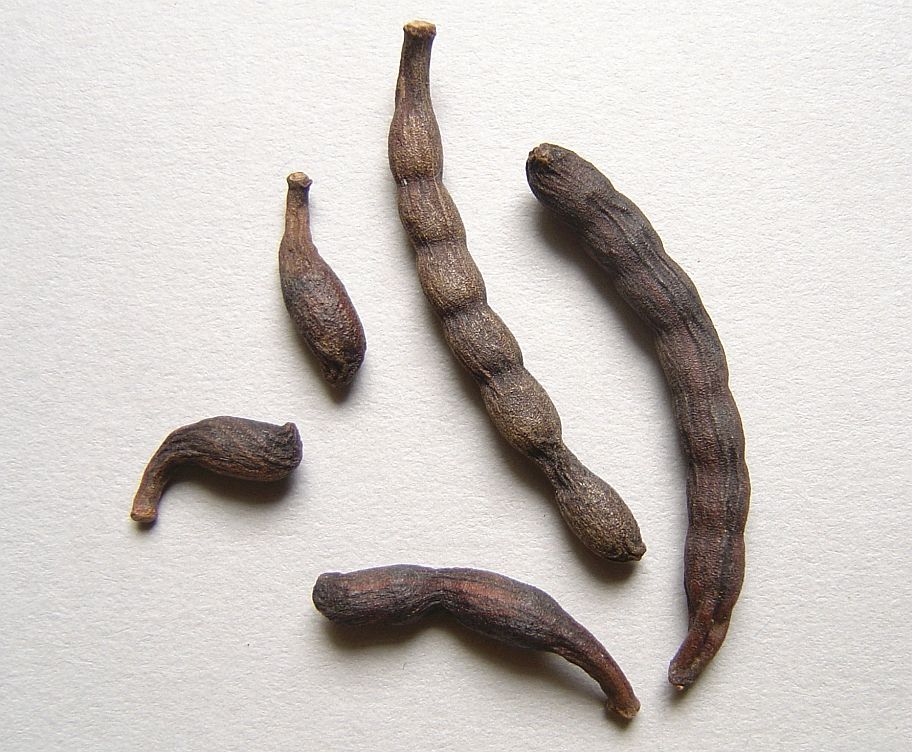 🇬🇭 Ghana and 5 moreGrains of Selimdiarr
The dried fruit of a West African shrub, used as a peppery spice and coffee flavouring.Fruit · Sharp and pungent · Bitter
🇬🇭 Ghana and 5 moreGrains of Selimdiarr
The dried fruit of a West African shrub, used as a peppery spice and coffee flavouring.Fruit · Sharp and pungent · Bitter