
Indian prickly ash
Zanthoxylum rhetsa
A pungent fruit from a thorny shrub, used for its tingling spice in coastal India and Vietnam.
This plant produces small fruits whose woody outer shells serve as a seasoning. It grows across South Asia and northern Australia. The spice delivers a sharp tingle to the tongue.
- Contains sanshool, causing a tongue-tingling numbness.
- Grows from India to northern Australia and the Philippines.
- Used as teppal in Goa and mắc khén in Vietnam.
- Produces red, brown, or black spherical fruits.
- Stems have thick, cone-shaped spines.
What is Indian prickly ash?
Indian prickly ash is a flowering shrub or tree that can reach twenty-six meters tall. Its stems bear thick, cone-shaped spines. The leaves are pinnate with many egg-shaped leaflets. Small white or yellowish flowers appear in summer clusters. These bloom into spherical follicles that turn red, brown, or black. The spice comes from the woody shell surrounding the seeds inside these fruits.
Where does Indian prickly ash come from?
The species ranges widely from India eastward through the Philippines and down to northern Australia. It thrives in rainforests and coastal thickets near sea level up to two hundred meters altitude. In India, it is native to the western coastal regions and inland areas like Coorg. Vietnamese populations in the northwest also utilize this plant.
What does Indian prickly ash taste like?
The spice contains sanshool, a chemical compound that acts as a local anesthetic. This ingredient creates a distinct tingling sensation on the tongue rather than heat. Sanshool is also found in Sichuan pepper and Japanese pepper. The taste profile is defined by this numbing quality, which distinguishes it from other common spices.
How Indian prickly ash is grown and processed
The plant grows in dense vegetation and coastal thickets. It prefers low-altitude environments close to the ocean. Harvesters collect the small spherical fruits when they mature. The woody outer layer, known as the pericarp, is separated for use. The plant supports various butterfly species, serving as a host for their larvae.
Indian prickly ash, drawn
How Indian prickly ash is used
In Goa, Konkan, Kanara, and Coorg, cooks use the dried fruit shells with seafood. Locals call it teppal in Konkani. In Northwest Vietnam, the Muong people use it under the name mắc khén. They add it to grilled meats and dipping sauces. The spice provides a unique texture and flavor boost to savory dishes.
Indian prickly ash in the world's kitchens
Western Indian coastal cuisines rely on it heavily for seafood recipes. The Konkan and Kanara regions use it as a staple seasoning. Coorg cuisine also incorporates it into local dishes. In Vietnam, the Muong ethnic group uses it for grilling. Each culture applies the spice to highlight savory proteins and sauces.
At a glance: where it turns up


Spiritual and ceremonial use
No specific religious rituals or offerings involve this spice according to available records. It does not appear in sacred texts or ceremonial diets. The plant serves primarily as a culinary ingredient rather than a spiritual symbol.
Indian prickly ash at celebrations
There are no recorded festivals or holiday traditions associated with this spice. It is not linked to weddings, births, or harvest celebrations. Cooks use it in everyday meals rather than special occasion banquets.
Traditional and medicinal use
Traditional medicine notes mention the numbing effect of sanshool. However, no specific folk remedies or dosages are documented here. The spice is valued strictly for its sensory impact on food. Users should be aware of its strong anesthetic properties.
Buying and storing Indian prickly ash
Dried fruit shells likely retain their potency if kept dry. Buyers should look for intact woody pericarps without mold.
What to use instead of Indian prickly ash
Sichuan pepper is the closest relative containing similar compounds. Japanese pepper also shares the sanshool ingredient. Cooks seeking a similar tingling effect might try these alternatives. However, the flavor profiles differ slightly between species.
The trade in Indian prickly ash
The spice is traded locally in India and Vietnam. It has not reached global commercial scales like black pepper. Regional markets in coastal India and Vietnamese border towns sell it.
Meal
It features prominently in dinner preparations, especially for fish and meat dishes. Street food vendors may incorporate it into grilled snacks. The spice pairs well with savory dips and sauces served alongside main courses. It is not typically used for breakfast or sweet desserts.
Questions people ask about Indian prickly ash
What does Indian prickly ash taste like?
It tastes numbing and tingling due to sanshool. This compound acts as a local anesthetic on the tongue. It does not provide capsaicin heat like chili peppers. The flavor is sharp and distinctively mouth-numbing.
Where does this spice come from?
It originates in India and spreads east to the Philippines. It also grows in northern Australia and northwest Vietnam. It thrives in coastal thickets and rainforests near sea level.
How is it used in cooking?
Cooks use the woody fruit shells with seafood in India. Vietnamese cooks add it to grilled meats and dipping sauces. It is ground or used whole to season savory dishes. It enhances the texture of protein-based meals.
Is it related to Sichuan pepper?
Yes, both contain sanshool. This chemical causes the characteristic tingling sensation. They belong to the same genus but are different species. Sichuan pepper offers a similar numbing effect.
Good reading and sources
- Zanthoxylum rhetsa on WikipediaEncyclopedia
- More photos on Wikimedia CommonsPhotos and video
- Wikidata recordOpen data
The facts on this page come from the Wikipedia article "Zanthoxylum rhetsa", written by its contributors and used under the CC BY-SA 4.0 licence, and from its Wikidata record (CC0). EveryMasala rewrote the text in its own words, with AI assistance, and compares every page with the article to make sure no passage is copied. It may be reused under the same CC BY-SA 4.0 licence with a link back.
It may contain mistakes. Names, strengths and customs differ from one grower, kitchen or shop to the next. Traditional and medicinal uses are described as tradition, never as medical advice, and none of this is a substitute for a doctor. If something is wrong, tell us. Last refreshed 2026-10-04.
More from India
All the spices of India 🇮🇳 India and 4 moreFennel
The anise-scented seeds and crisp bulb of a Mediterranean perennial herbSeed · Anise and liquorice · Sweet and mellow
🇮🇳 India and 4 moreFennel
The anise-scented seeds and crisp bulb of a Mediterranean perennial herbSeed · Anise and liquorice · Sweet and mellow
 🇮🇳 IndiaKairकैर
The spicy pink berry and flower bud of a drought-hardy desert bushFruit · Sharp and pungent
🇮🇳 IndiaKairकैर
The spicy pink berry and flower bud of a drought-hardy desert bushFruit · Sharp and pungent
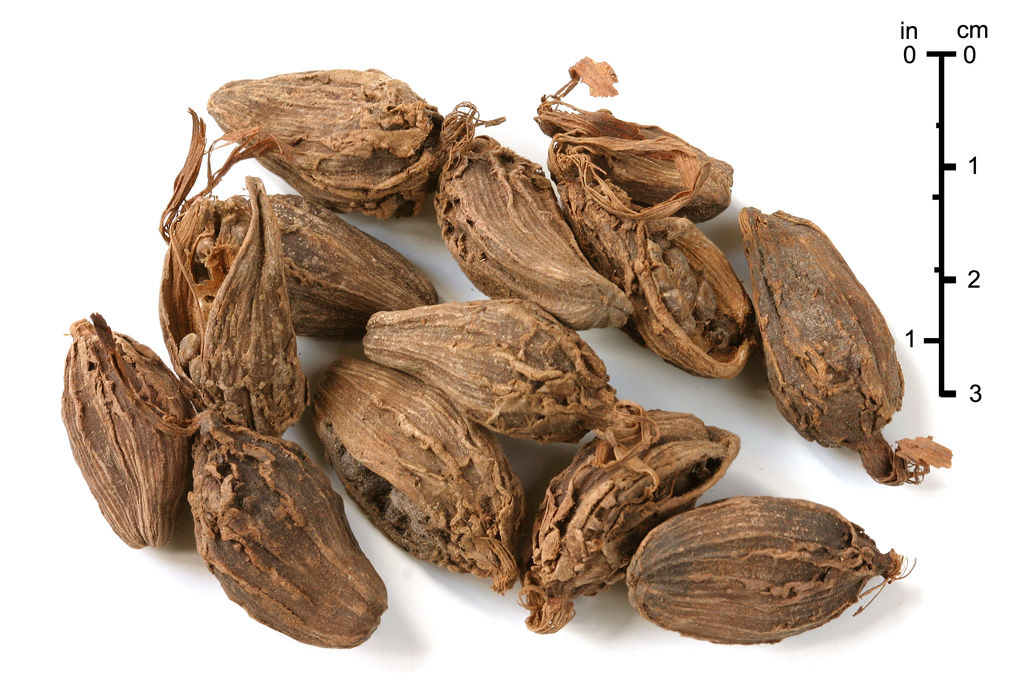 🇳🇵 Nepal and 4 moreBlack cardamom
The dried pod of a Zingiberaceae herb, prized for its smoky, camphor-like flavour in savoury cooking.Fruit · Smoky · Sharp and pungent
🇳🇵 Nepal and 4 moreBlack cardamom
The dried pod of a Zingiberaceae herb, prized for its smoky, camphor-like flavour in savoury cooking.Fruit · Smoky · Sharp and pungent
 🇧🇩 Bangladesh and 2 morePiper chaba
A creeping vine from South and Southeast Asia whose stems and roots are used as a pungent spice.Root · Sharp and pungent · Hot and fiery
🇧🇩 Bangladesh and 2 morePiper chaba
A creeping vine from South and Southeast Asia whose stems and roots are used as a pungent spice.Root · Sharp and pungent · Hot and fiery
Its cousins elsewhere
All fruit 🇺🇸 United States and 1 moreCommon prickly ash
An aromatic North American tree whose bark and berries give a sharp, numbing biteBark · Bitter · Numbing and tingling
🇺🇸 United States and 1 moreCommon prickly ash
An aromatic North American tree whose bark and berries give a sharp, numbing biteBark · Bitter · Numbing and tingling
 🇨🇳 China and 5 moreSichuan pepper花椒 (huājiāo)
The dried husk of Zanthoxylum fruit, prized for its citrus scent and electric numbness.Fruit · Citrus and bright · Sharp and pungent
🇨🇳 China and 5 moreSichuan pepper花椒 (huājiāo)
The dried husk of Zanthoxylum fruit, prized for its citrus scent and electric numbness.Fruit · Citrus and bright · Sharp and pungent
 🇨🇳 ChinaMala麻辣
A fiery, tongue-numbing Chinese seasoning of Sichuan pepper and chilliesPaste · Hot and fiery · Numbing and tingling
🇨🇳 ChinaMala麻辣
A fiery, tongue-numbing Chinese seasoning of Sichuan pepper and chilliesPaste · Hot and fiery · Numbing and tingling
 🇯🇵 Japan and 1 moreSansho山椒
The dried berries and young leaves of a spiny Japanese shrub, prized for their numbing citrus heat.Seed · Citrus and bright · Numbing and tingling
🇯🇵 Japan and 1 moreSansho山椒
The dried berries and young leaves of a spiny Japanese shrub, prized for their numbing citrus heat.Seed · Citrus and bright · Numbing and tingling