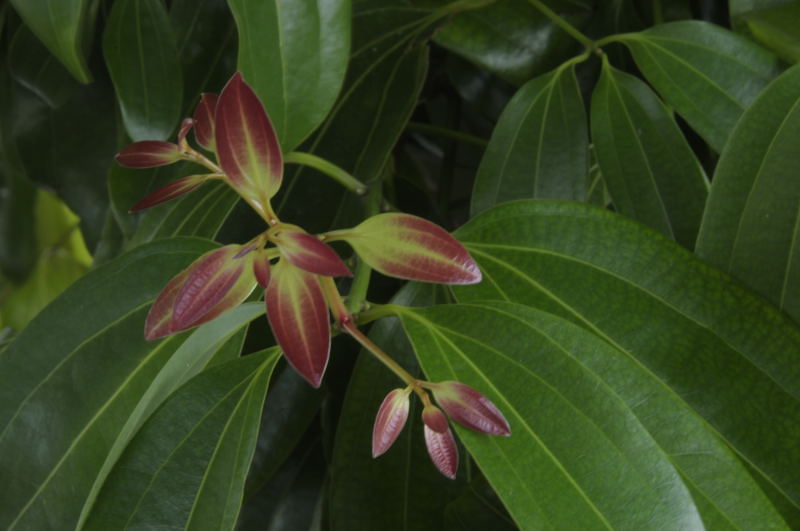
Ceylon cinnamon
Cinnamomum verum
The inner bark of a Sri Lankan evergreen, prized for its delicate, sweet spice.
Native to Sri Lanka, this small tree yields thin, layered bark strips that curl into quills when dried. The spice offers a gentle, sweet warmth without the sharp bite of common cassia varieties.
- Sri Lanka produces 80-90% of the world's supply.
- Inner bark is peeled into thin quills by hand.
- Used traditionally as a digestive aid.
- Studied for potential effects on Alzheimer's disease.
- Graded by diameter: Alba, Continental, Mexican, Hamburg.
What is Ceylon cinnamon?
This spice comes from the inner bark of a small evergreen tree belonging to the Lauraceae family. The plant grows up to fifteen meters tall in its native habitat, featuring oval leaves and greenish flowers. When harvested, the bark is peeled away from the woody branches. It dries into long, hollow tubes known as quills. These quills are lighter in color than other cinnamons and have a fragile texture. The taste is mild and sweet, lacking the intense pungency found in cassia varieties.
Where does Ceylon cinnamon come from?
The species is indigenous to Sri Lanka, formerly known as Ceylon. This historical name remains attached to the botanical synonym Cinnamomum zeylanicum. While the name cinnamon is sometimes applied broadly to related trees, this specific variety originates exclusively from Sri Lankan forests. It has since been introduced to other tropical regions for commercial cultivation.
What does Ceylon cinnamon taste like?
The flavor profile is defined by a soft sweetness and a gentle warmth. Unlike the sharper, more aggressive taste of cassia bark, Ceylon cinnamon provides a subtle aromatic quality. The scent is floral and light, derived from the essential oils within the inner bark layers. This makes it suitable for delicate dishes where a strong spice presence might overwhelm other ingredients.
How Ceylon cinnamon is grown and processed
Trees are cultivated as bushes to facilitate harvesting. They begin production at three years old and continue for several decades. Workers remove small side branches and strip the outer bark, which becomes mulch. The inner bark is loosened using a brass rod and peeled off with a knife. The strips are dried in the shade and then in darkness to form quills. This manual process is labor-intensive and determines the final grade based on diameter and length.
Ceylon cinnamon, drawn
How Ceylon cinnamon is used
Cooking applications favor the whole quills or ground powder form. The spice is commonly added to sweet dishes, beverages, and desserts due to its mild nature. It is used in traditional Sri Lankan cuisine to enhance flavor profiles. The oil extracted from crushed twigs and leaves serves as a less valuable byproduct compared to the high-grade bark.
Ceylon cinnamon in the world's kitchens
Sri Lankan cuisine relies heavily on this spice for both savory and sweet preparations. It is a staple in local households and markets. Other countries like Madagascar, Seychelles, and Tanzania produce it commercially, but Sri Lanka dominates the global supply. The grading system developed there influences international trade standards for quality control.
At a glance: where it turns up
By meal
Cuisines


Ceylon cinnamon at celebrations
It is treated as a general culinary ingredient rather than a ceremonial object tied to specific holidays or life events.
Traditional and medicinal use
Traditional medicine systems have used cinnamon for centuries to aid digestion. Preliminary scientific studies suggest it may slow Alzheimer's symptoms by reducing beta-amyloid oligomerisation. These findings are early-stage and not yet established medical advice. The spice is valued in folk remedies for its potential health benefits beyond flavor enhancement.
Buying and storing Ceylon cinnamon
Dried quills should be kept in a cool, dark place to preserve their volatile oils. Exposure to light can degrade the quality of the spice. Ground powder loses potency faster than whole quills and should be used promptly. Proper storage maintains the delicate aroma and prevents moisture absorption.
What to use instead of Ceylon cinnamon
Cassia cinnamon is often used as a substitute due to its wider availability. However, it has a much stronger and sharper flavor profile. Cooks seeking a milder taste must specifically seek out Ceylon varieties. Other spices cannot replicate the unique floral sweetness of this inner bark.
The trade in Ceylon cinnamon
Sri Lanka produces eighty to ninety percent of the world's supply. The trade involves strict grading systems based on quill diameter. Categories include Alba, Continental, Mexican, and Hamburg grades. Each grade is further subdivided by length and quantity per kilogram. Smaller pieces are sold as quillings or chips. This structured market ensures consistent quality for international buyers.
Meal
It is primarily associated with dessert courses and warm drinks. The mild sweetness makes it ideal for sweetening beverages and baking. It is also used in preserves and fruit-based dishes where a subtle spice note is desired rather than a dominant heat.
Blends with Ceylon cinnamon
Questions people ask about Ceylon cinnamon
What is Ceylon cinnamon?
It is the dried inner bark of Cinnamomum verum, an evergreen tree native to Sri Lanka. The bark is peeled into thin quills that curl as they dry. It offers a mild, sweet flavor distinct from the sharper cassia variety.
Where does this spice come from?
It originates in Sri Lanka, which supplies most of the global market. Commercial cultivation also exists in Madagascar, Seychelles, and Tanzania. The tree thrives in tropical lowland environments.
How does it taste?
The flavor is gently sweet and warm with floral notes. It lacks the intense pungency of common cassia cinnamon. This makes it ideal for delicate desserts and beverages where subtlety is preferred.
Is it used in medicine?
Traditional systems use it as a digestive aid. Preliminary studies suggest it may help reduce beta-amyloid proteins linked to Alzheimer's disease. These are early findings and not confirmed medical treatments.
Good reading and sources
- Encyclopaedia BritannicaArticle
- International trade in non-wood forest products: An overviewFAO, Article
- BBC NEWS | In pictures: Sri Lanka's spice of life, Historic exportBBC, Article
- Cinnamomum verum on WikipediaEncyclopedia
- More photos on Wikimedia CommonsPhotos and video
- Wikidata recordOpen data
The facts on this page come from the Wikipedia article "Cinnamomum verum", written by its contributors and used under the CC BY-SA 4.0 licence, and from its Wikidata record (CC0). EveryMasala rewrote the text in its own words, with AI assistance, and compares every page with the article to make sure no passage is copied. It may be reused under the same CC BY-SA 4.0 licence with a link back.
It may contain mistakes. Names, strengths and customs differ from one grower, kitchen or shop to the next. Traditional and medicinal uses are described as tradition, never as medical advice, and none of this is a substitute for a doctor. If something is wrong, tell us. Last refreshed 2026-10-04.
More from Sri Lanka
All the spices of Sri Lanka 🇱🇰 Sri Lanka and 5 moreCinnamon
The dried inner bark of Cinnamomum trees, prized for its sweet warmth and essential oil.Bark · Warm and sweet-spiced · Sweet and mellow
🇱🇰 Sri Lanka and 5 moreCinnamon
The dried inner bark of Cinnamomum trees, prized for its sweet warmth and essential oil.Bark · Warm and sweet-spiced · Sweet and mellow
 🇮🇳 India and 4 moreBasil
A tender culinary herb with glossy leaves and a licorice-like aroma, native to tropical Asia.Leaf · Anise and liquorice · Warm and sweet-spiced
🇮🇳 India and 4 moreBasil
A tender culinary herb with glossy leaves and a licorice-like aroma, native to tropical Asia.Leaf · Anise and liquorice · Warm and sweet-spiced
 🇱🇰 Sri LankaLunumirisලුණු මිරිස්
A traditional Sri Lankan condiment of ground chillies and saltHot and fiery · Sour and tart
🇱🇰 Sri LankaThuna pahaතුන පහ
A Sri Lankan unroasted curry powder made from cumin, fennel, and coriander seeds.Warm and sweet-spiced · Sharp and pungent
🇱🇰 Sri LankaLunumirisලුණු මිරිස්
A traditional Sri Lankan condiment of ground chillies and saltHot and fiery · Sour and tart
🇱🇰 Sri LankaThuna pahaතුන පහ
A Sri Lankan unroasted curry powder made from cumin, fennel, and coriander seeds.Warm and sweet-spiced · Sharp and pungent
Its cousins elsewhere
All bark 🇮🇩 Indonesia and 3 moreNutmeg
The dried seed of a tropical evergreen tree, prized for its warm, pungent flavor.Seed · Warm and sweet-spiced · Sweet and mellow
🇮🇩 Indonesia and 3 moreNutmeg
The dried seed of a tropical evergreen tree, prized for its warm, pungent flavor.Seed · Warm and sweet-spiced · Sweet and mellow
 🇲🇽 MexicoMulato pepper
A dried Mexican chilli with notes of chocolate and licoriceSweet and mellow · Warm and sweet-spiced
🇲🇽 MexicoMulato pepper
A dried Mexican chilli with notes of chocolate and licoriceSweet and mellow · Warm and sweet-spiced
 🇲🇽 Mexico and 2 moreVanilla
The cured fruit of a climbing orchid, the world's primary source of vanilla flavouringSweet and mellow · Warm and sweet-spiced
🇯🇴 Jordan and 5 moreBaharatبهارات
A versatile Middle Eastern spice blend used to season meats and soups.Warm and sweet-spiced · Sharp and pungent
🇲🇽 Mexico and 2 moreVanilla
The cured fruit of a climbing orchid, the world's primary source of vanilla flavouringSweet and mellow · Warm and sweet-spiced
🇯🇴 Jordan and 5 moreBaharatبهارات
A versatile Middle Eastern spice blend used to season meats and soups.Warm and sweet-spiced · Sharp and pungent