
Ashanti pepper
Piper guineense
The dried fruit of a climbing vine, used for its fresh, herbaceous heat in West African stews.
Ashanti pepper comes from a climbing vine native to Central and Western Africa. Its small, reddish grains offer a fresh, herbaceous spice that is less bitter than cubeb pepper.
- Vines climb trees using adventitious roots up to 20 meters long.
- Contains piperine, giving it a sharp, piquant taste.
- Less bitter and more herbaceous than cubeb pepper.
- Effective natural preservative for catfish in West African studies.
- Used sparingly in Nigerian stews and soups.
What is Ashanti pepper?
This spice is the dried fruit of Piper guineense, a climbing vine found across Central and Western Africa. The berries are small, smooth prolate spheroids with a reddish tint. They differ from cubeb pepper by having curved stalks rather than straight ones. The plant produces piperine, which creates a sharp taste, along with beta-caryophyllene and myristicin. It smells fresher and more herbal than pine-like cubeb, offering a pungent kick without excessive bitterness.
Where does Ashanti pepper come from?
The vine grows naturally in tropical regions of Central and Western Africa. It is semi-cultivated in places like Nigeria. Historically, the spice reached Europe during the Middle Ages, appearing in French cities like Rouen and Dieppe in the fourteenth century. Today, its primary use remains concentrated in its region of origin.
What does Ashanti pepper taste like?
The taste is very similar to cubeb pepper but lacks its intense bitterness. Instead, it delivers a fresh, herbaceous aroma and a piquant heat derived from piperine. The presence of beta-caryophyllene adds depth, while compounds like myristicin and safrole contribute to its complex profile. It provides a sharp, nose-reaching bite that is distinct from black pepper.
How Ashanti pepper is grown and processed
The plants are vines that climb tree trunks using adventitious roots, reaching lengths up to twenty meters. They thrive in tropical climates across Central and Western Africa. In Nigeria, they are semi-cultivated. The fruits are harvested and dried to produce the spice grains used in cooking.
Ashanti pepper, drawn
How Ashanti pepper is used
Cooks use this spice sparingly due to its high value and strong flavor. A few grains are typically ground in a mortar and added to soups or boiled rice alongside black pepper. It serves as a direct substitute for cubeb pepper in recipes, providing a milder, less bitter result. It also appears in some Ethiopian and Eritrean Berbere mixes.
Ashanti pepper in the world's kitchens
West African cuisine relies on it heavily for stews, particularly in Nigeria where the leaves are also used. In Ethiopia and Eritrea, it sometimes enters the Berbere blend, though long pepper is often preferred there. Its use in France was historical and is no longer common.
At a glance: where it turns up
By meal
Cuisines

Traditional and medicinal use
Research indicates the peppers have preservative and antioxidant properties. Studies show they are effective at preserving catfish compared to other native West African peppers.
What to use instead of Ashanti pepper
Cubeb pepper is the closest substitute, though Ashanti pepper is less bitter. Long pepper is often used instead in Ethiopian Berbere mixes because Ashanti pepper can be difficult to find outside its home region.
The trade in Ashanti pepper
The spice is highly esteemed in West Africa but hard to obtain abroad. This scarcity leads cooks in other regions, such as Ethiopia, to prefer long pepper for their blends. Historical trade routes brought it to medieval France, but modern trade is limited to its local area.
Meal
It belongs primarily to dinner meals, specifically within stews and soups. The spice is added to provide spiciness and a pungent aroma to these savory dishes. It is not typically associated with breakfast, snacks, or desserts.
Questions people ask about Ashanti pepper
What does Ashanti pepper taste like?
It offers a fresh, herbaceous flavor with a pungent heat. It is very similar to cubeb pepper but is noticeably less bitter and has a greener, more aromatic profile.
Where does Ashanti pepper come from?
It originates from a climbing vine native to Central and Western Africa. It is semi-cultivated in countries like Nigeria and was historically traded to medieval France.
How is Ashanti pepper used in cooking?
Grains are ground and added sparingly to stews, soups, and boiled rice. It imparts a sharp spice and is sometimes included in Ethiopian Berbere blends.
Can I substitute Ashanti pepper with something else?
Yes, cubeb pepper is the best substitute, though it is more bitter. Long pepper is also used, especially in regions where Ashanti pepper is rare.
Good reading and sources
- Piper guineense on WikipediaEncyclopedia
- More photos on Wikimedia CommonsPhotos and video
- Wikidata recordOpen data
The facts on this page come from the Wikipedia article "Piper guineense", written by its contributors and used under the CC BY-SA 4.0 licence, and from its Wikidata record (CC0). EveryMasala rewrote the text in its own words, with AI assistance, and compares every page with the article to make sure no passage is copied. It may be reused under the same CC BY-SA 4.0 licence with a link back.
It may contain mistakes. Names, strengths and customs differ from one grower, kitchen or shop to the next. Traditional and medicinal uses are described as tradition, never as medical advice, and none of this is a substitute for a doctor. If something is wrong, tell us. Last refreshed 2026-10-04.
More from Nigeria
All the spices of Nigeria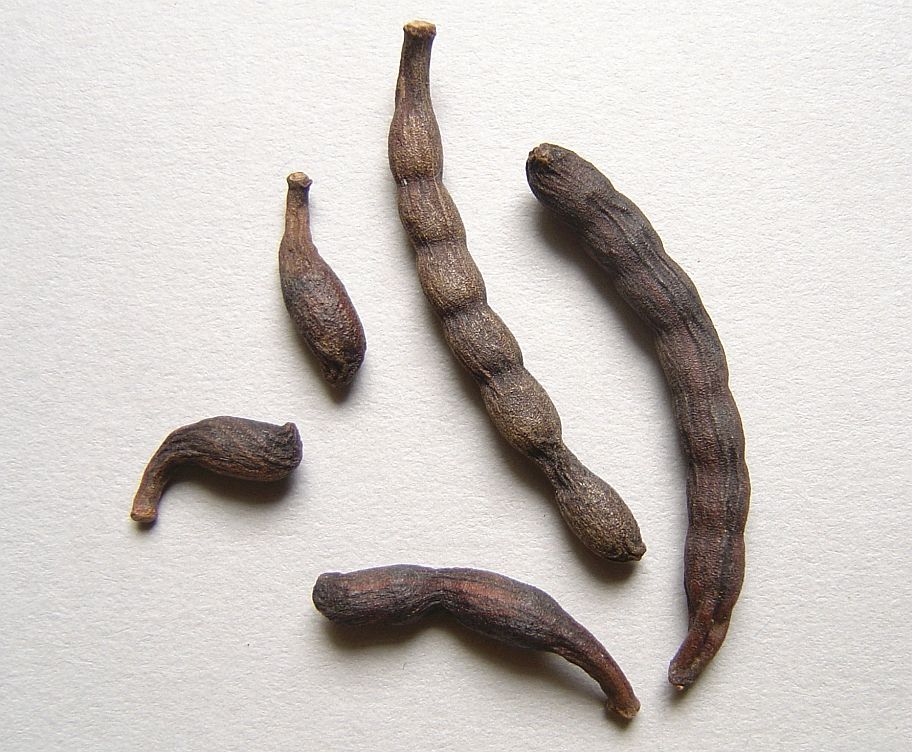 🇬🇭 Ghana and 5 moreGrains of Selimdiarr
The dried fruit of a West African shrub, used as a peppery spice and coffee flavouring.Fruit · Sharp and pungent · Bitter
🇬🇭 Ghana and 5 moreGrains of Selimdiarr
The dried fruit of a West African shrub, used as a peppery spice and coffee flavouring.Fruit · Sharp and pungent · Bitter
 🇳🇬 Nigeria and 1 moreAlligator pepper
The seed pods of West African ginger plants, named for the bumpy texture of their inner kernels.Fruit · Sharp and pungent · Hot and fiery
🇳🇬 Nigeria and 1 moreAlligator pepper
The seed pods of West African ginger plants, named for the bumpy texture of their inner kernels.Fruit · Sharp and pungent · Hot and fiery
 🇬🇭 Ghana and 5 morePrekeseprɛkɛsɛ
The scented pod of a West African tree, used to perfume soups.Fruit · Sweet and mellow
🇬🇭 Ghana and 5 morePrekeseprɛkɛsɛ
The scented pod of a West African tree, used to perfume soups.Fruit · Sweet and mellow
 🇳🇬 NigeriaYaji
A spicy rub from Nigeria made with chili, ginger, and ground peanuts.Blend · Hot and fiery · Earthy and deep
🇳🇬 NigeriaYaji
A spicy rub from Nigeria made with chili, ginger, and ground peanuts.Blend · Hot and fiery · Earthy and deep
Its cousins elsewhere
All fruit 🇬🇷 Greece and 4 moreParsley
A bright green herb from the celery family, used fresh across Europe and the Middle East.Leaf · Bitter · Herbal and green
🇬🇷 Greece and 4 moreParsley
A bright green herb from the celery family, used fresh across Europe and the Middle East.Leaf · Bitter · Herbal and green
 🇬🇷 Greece and 1 moreMasticΜαστίχα
A bitter-sweet resin from the mastic tree, used in desserts and traditional medicine.Bitter · Sharp and pungent
🇬🇷 Greece and 1 moreMasticΜαστίχα
A bitter-sweet resin from the mastic tree, used in desserts and traditional medicine.Bitter · Sharp and pungent
 🇮🇳 India and 2 moreBay leaf
The dried or fresh leaves of the laurel tree, used to infuse depth into slow-cooked dishes.Leaf · Herbal and green · Sharp and pungent
🇮🇳 India and 2 moreBay leaf
The dried or fresh leaves of the laurel tree, used to infuse depth into slow-cooked dishes.Leaf · Herbal and green · Sharp and pungent
 🇲🇽 Mexico and 2 moreEpazoteepazōtl
A pungent leafy herb from the Americas, traditionally used to flavor beans and stews.Sharp and pungent · Citrus and bright
🇲🇽 Mexico and 2 moreEpazoteepazōtl
A pungent leafy herb from the Americas, traditionally used to flavor beans and stews.Sharp and pungent · Citrus and bright