
Black cumin
Nigella sativa
The tiny black seed of a wild annual flower, used across the Middle East and South Asia.
This spice comes from the seeds of an annual plant native to western Asia and eastern Europe. The small black seeds offer a peppery bite with hints of onion and oregano. They are commonly ground into pastes or sprinkled over flatbreads and curries.
- Seeds found in Tutankhamun's tomb date back three millennia.
- Native to western Asia and eastern Europe.
- Contains up to forty percent volatile oil.
- Key ingredient in Bengali panch phoron blend.
- Used to make bitter qizha paste in Palestine.
What is Black cumin?
Black cumin refers to the seeds of Nigella sativa, an annual flowering plant in the buttercup family. The plant produces delicate pale blue or white flowers before forming inflated capsules filled with numerous small, matte-black seeds. These seeds are hard and angular, carrying a distinct aroma that combines notes of black pepper, onion, and oregano. When chewed, they provide a sharp, slightly bitter taste that lingers on the palate.
Where does Black cumin come from?
The plant is native to a region stretching from the Levant through Turkey, Iran, and Iraq, extending into eastern Europe including Bulgaria and Romania. Archaeological finds suggest ancient use, with seeds discovered in Egyptian tombs dating back three millennia and in Hittite flasks from the second millennium BC. It has since naturalized across parts of Europe, North Africa, and as far east as Myanmar.
What does Black cumin taste like?
The flavour profile is complex and pungent, often described as a mix of black pepper and toasted onion with herbal undertones. This character comes from volatile oils comprising thirty-two to forty percent of the seed's composition. Key aromatic compounds include thymoquinone, carvacrol, and trans-anethole, which contribute to its sharp, nose-reaching bite and distinctive earthy scent.
How Black cumin is grown and processed
Nigella sativa grows to about twenty to thirty centimetres tall with finely divided linear leaves. It thrives in warm climates and is harvested when the fruit capsules dry and turn brown. The seeds are then extracted from the inflated follicles. While native to western Asia and eastern Europe, it is now cultivated in India, Russia, and North Africa for culinary and medicinal purposes.
Black cumin, drawn
How Black cumin is used
Cooks use these seeds whole or ground to season a wide variety of dishes. In Palestine, they are ground into a bitter paste called qizha. They are roasted and added to curries, vegetables, pulses, and poultry. In Bengali cuisine, they form part of the panch phoron spice blend. They are also sprinkled on breads like naan-e barbari and used in tresse cheese preparations in the Middle East.
Black cumin in the world's kitchens
In the Middle East, particularly Palestine and surrounding areas, the seeds are essential for traditional pastes and dairy products. In South Asia, specifically Bengali cuisine, they are a key component of five-spice blends used for vegetables and fish. Turkish and Iranian cuisines incorporate them into breads and meat dishes, reflecting their long history in West Asian cooking.
At a glance: where it turns up
Cuisines


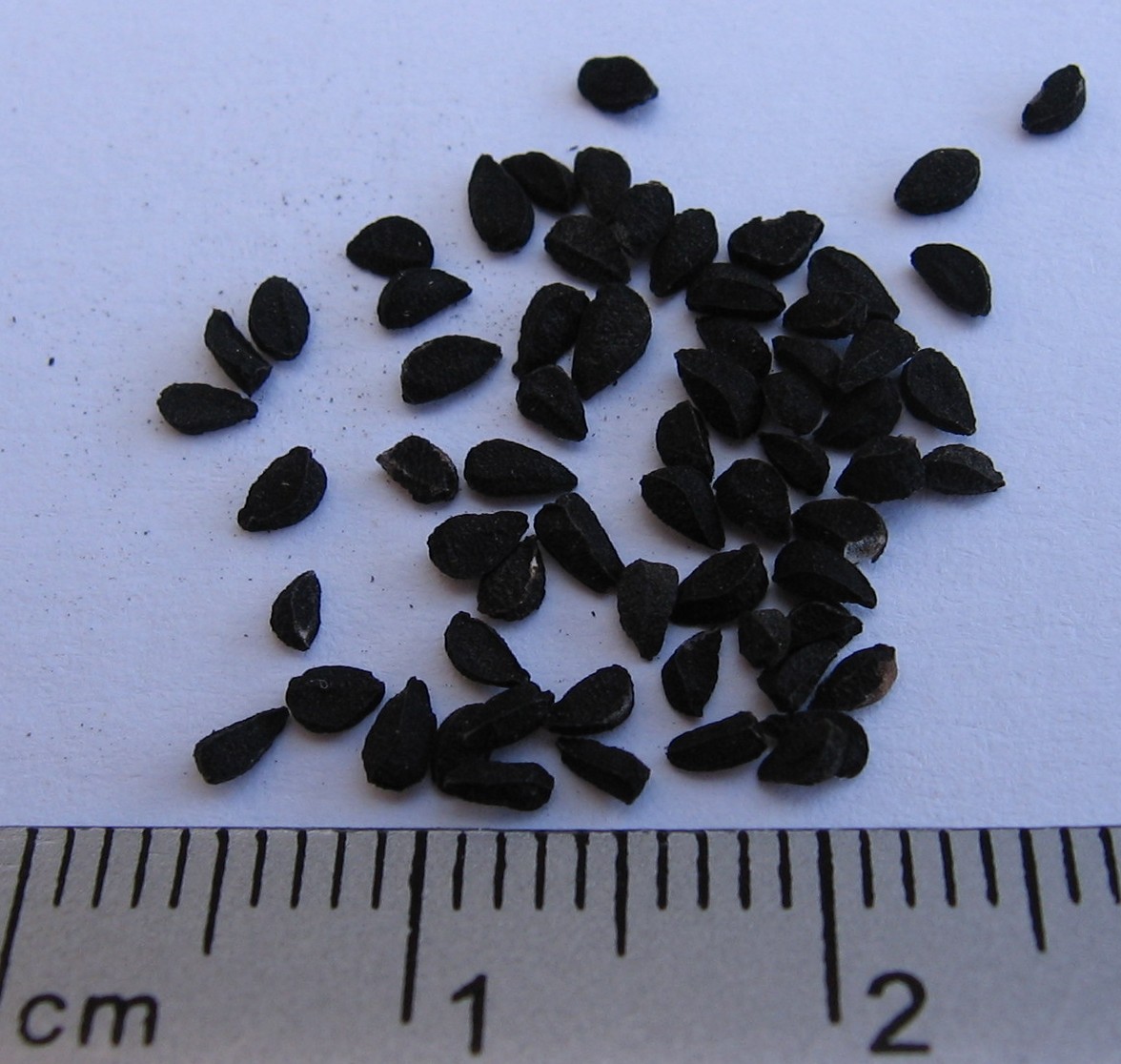
Spiritual and ceremonial use
There is no specific religious ritual or offering tied directly to this spice in the provided sources. However, its historical presence in ancient Egyptian tombs suggests it held significance in burial practices or daily life thousands of years ago. It was also noted by the Persian physician Avicenna for medicinal properties rather than spiritual ones.
Black cumin at celebrations
Its use appears rooted in everyday culinary traditions rather than special occasion ceremonies.
Traditional and medicinal use
Historically, the seeds were used in folk medicine across Africa and Asia. Avicenna recommended them for treating dyspnea in his medical texts. Modern reviews note weak evidence for benefits in lowering blood pressure or cholesterol, but high-quality clinical evidence is insufficient to confirm these effects as fact. It is traditionally used for health support, not as a proven cure.
What to use instead of Black cumin
The seeds are sometimes used as a replacement for Bunium bulbocastanum, also known as black cumin. However, confusion exists because the names black caraway and black cumin can also refer to Elwendia persica, making substitution context-dependent.
The trade in Black cumin
The spice has a long trade history evidenced by archaeological finds in Egypt and Turkey. Today, it is grown and traded in its native range and introduced regions like India and Russia. The United States Food and Drug Administration classifies it as Generally Recognized as Safe for use as a natural seasoning, facilitating its commercial distribution.
Meal
These seeds appear in daily cooking across many regions. They are found in breakfast items like flatbreads and cheese dishes. Lunch and dinner meals benefit from their addition to vegetable stews, lentil dishes, and meat curries. They also serve as a snack ingredient in seasoned breads and street-food style flatbreads.
Blends with Black cumin
Questions people ask about Black cumin
What does black cumin taste like?
It tastes pungent and slightly bitter, resembling a mix of black pepper, onion, and oregano. The flavour comes from volatile oils like thymoquinone and carvacrol within the small black seeds.
Where does black cumin come from?
It is native to western Asia, including Turkey, Iran, and Iraq, as well as eastern Europe like Bulgaria and Romania. It has been cultivated and traded globally for thousands of years.
How is black cumin used in cooking?
It is used whole or ground to season curries, vegetables, and breads. In Palestine, it is made into a paste, while in Bengal, it is part of a five-spice mix. It also flavours cheese and poultry dishes.
Is black cumin the same as black caraway?
Names are often confused. Black cumin refers to Nigella sativa. Black caraway may refer to this plant or to Elwendia persica (Bunium persicum), which is a different species entirely.
Good reading and sources
- Nigella Seeds: What the Heck Do I Do with Those?Smithsonian Magazine, Article
- Is the world ready for this Palestinian dish?BBC, Article
- Nigella sativa on WikipediaEncyclopedia
- More photos on Wikimedia CommonsPhotos and video
- Wikidata recordOpen data
The facts on this page come from the Wikipedia article "Nigella sativa", written by its contributors and used under the CC BY-SA 4.0 licence, and from its Wikidata record (CC0). EveryMasala rewrote the text in its own words, with AI assistance, and compares every page with the article to make sure no passage is copied. It may be reused under the same CC BY-SA 4.0 licence with a link back.
It may contain mistakes. Names, strengths and customs differ from one grower, kitchen or shop to the next. Traditional and medicinal uses are described as tradition, never as medical advice, and none of this is a substitute for a doctor. If something is wrong, tell us. Last refreshed 2026-10-04.
More from Turkey
All the spices of Turkey 🇹🇷 Turkey and 2 moreMahleb
A ground cherry seed used to sweeten Middle Eastern baked goods with an almond-cherry note.Seed · Sweet and mellow · Bitter
🇹🇷 Turkey and 2 moreMahleb
A ground cherry seed used to sweeten Middle Eastern baked goods with an almond-cherry note.Seed · Sweet and mellow · Bitter
 🇬🇷 Greece and 1 moreMasticΜαστίχα
A bitter-sweet resin from the mastic tree, used in desserts and traditional medicine.Bitter · Sharp and pungent
🇬🇷 Greece and 1 moreMasticΜαστίχα
A bitter-sweet resin from the mastic tree, used in desserts and traditional medicine.Bitter · Sharp and pungent
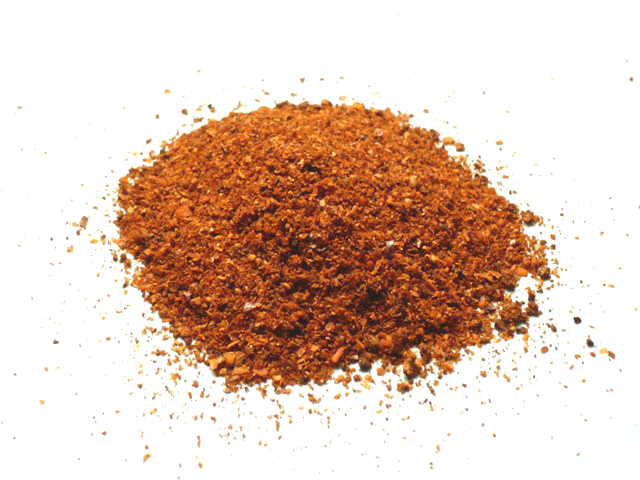 🇸🇾 Syria and 1 moreAleppo pepperفلفل حلبي
A moderately spicy, fruity flake from Syria and Turkey, named for the city of Aleppo.Chilli · Hot and fiery · Sweet and mellow
🇸🇾 Syria and 1 moreAleppo pepperفلفل حلبي
A moderately spicy, fruity flake from Syria and Turkey, named for the city of Aleppo.Chilli · Hot and fiery · Sweet and mellow
 🇹🇷 TurkeyUrfa biber
A sun-dried and night-wrapped chili from Turkey with a smoky, raisin-like taste.Chilli · Smoky · Sweet and mellow
🇹🇷 TurkeyUrfa biber
A sun-dried and night-wrapped chili from Turkey with a smoky, raisin-like taste.Chilli · Smoky · Sweet and mellow
Its cousins elsewhere
All seed 🇬🇷 Greece and 4 moreParsley
A bright green herb from the celery family, used fresh across Europe and the Middle East.Leaf · Bitter · Herbal and green
🇬🇷 Greece and 4 moreParsley
A bright green herb from the celery family, used fresh across Europe and the Middle East.Leaf · Bitter · Herbal and green
 🇮🇳 India and 2 moreBay leaf
The dried or fresh leaves of the laurel tree, used to infuse depth into slow-cooked dishes.Leaf · Herbal and green · Sharp and pungent
🇮🇳 India and 2 moreBay leaf
The dried or fresh leaves of the laurel tree, used to infuse depth into slow-cooked dishes.Leaf · Herbal and green · Sharp and pungent
 🇲🇽 Mexico and 2 moreEpazoteepazōtl
A pungent leafy herb from the Americas, traditionally used to flavor beans and stews.Sharp and pungent · Citrus and bright
🇲🇽 Mexico and 2 moreEpazoteepazōtl
A pungent leafy herb from the Americas, traditionally used to flavor beans and stews.Sharp and pungent · Citrus and bright
 🇳🇬 Nigeria and 3 moreAshanti pepper
The dried fruit of a climbing vine, used for its fresh, herbaceous heat in West African stews.Fruit · Sharp and pungent · Bitter
🇳🇬 Nigeria and 3 moreAshanti pepper
The dried fruit of a climbing vine, used for its fresh, herbaceous heat in West African stews.Fruit · Sharp and pungent · Bitter