
Saigon cinnamon
In its own language: quế Trà My, quế Thanh, quế Quỳ, quế Trà Bồng
Cinnamomum loureiroi
A potent bark from central Vietnam with a complex aroma and high coumarin content.
This evergreen tree produces an aromatic bark used in Southeast Asian cooking. It is closely related to cassia rather than Ceylon cinnamon and contains high levels of cinnamaldehyde and coumarin. The spice is traditionally used to flavour noodle soups and other dishes in Vietnam.
- Contains one of the highest coumarin levels among commercial cinnamon species.
- Native to central Vietnam, not the city of Saigon.
- Essential for authentic Vietnamese phở broth flavour.
- Scientific name corrected to honour botanist João de Loureiro.
- Exports to the US resumed after a twenty-year gap.
What is Saigon cinnamon?
Saigon cinnamon comes from an evergreen tree native to mainland Southeast Asia. The spice consists of dried inner bark that offers a warm, sweet, and pungent taste. Its aroma is more complex and pronounced than common cassia varieties. The plant belongs to the same genus as Ceylon cinnamon but is genetically closer to cassia species. The bark contains significant amounts of essential oil and cinnamaldehyde, which drive its strong flavour profile.
Where does Saigon cinnamon come from?
The tree is indigenous to the Central Highlands of Vietnam, particularly Quảng Ngãi Province. Despite its name, it is not grown near Ho Chi Minh City. The scientific name was originally misspelled as Cinnamomum loureirii but was corrected to honour botanist João de Loureiro under international naming rules.
What does Saigon cinnamon taste like?
The bark delivers a sharp, warming heat distinct from mild cinnamon types. High cinnamaldehyde content creates a bold, spicy sweetness. The essential oil concentration reaches up to five percent, making the flavour intense. This potency distinguishes it from milder cinnamon varieties found elsewhere.
How Saigon cinnamon is grown and processed
Production occurs primarily in Vietnam's central highlands. Historical conflicts disrupted cultivation for decades. Exports resumed in the early twenty-first century after a long pause. The bark is harvested, dried, and processed for domestic use or international trade.
Saigon cinnamon, drawn
How Saigon cinnamon is used
Vietnamese cooks use the bark to flavour phở broth, a popular noodle soup. It adds depth and warmth to savory dishes. The spice is also exported globally for culinary and commercial purposes.
Saigon cinnamon in the world's kitchens
Vietnamese cuisine relies on this bark for traditional phở preparation. It provides a signature flavour profile distinct from Western cinnamon uses. Export markets in countries like the United States have access to it again after previous restrictions.
At a glance: where it turns up
Cuisines


Traditional and medicinal use
Traditional use focuses on culinary applications rather than medicinal ones. However, the bark contains high coumarin levels, which can be toxic to the liver and kidneys in large amounts. Minor neurological issues were linked to prenatal exposure in some studies.
The trade in Saigon cinnamon
Vietnam dominates production for both local consumption and export. Trade routes expanded significantly after the twenty-first century. The spice commands higher prices due to its potent oil content. Commercial samples vary widely in coumarin concentration.
Meal
It features prominently in lunch and dinner dishes, especially soups and stews. The bark infuses broths with its aromatic qualities during slow cooking.
Questions people ask about Saigon cinnamon
Where does Saigon cinnamon actually grow?
It grows in Vietnam's Central Highlands, specifically Quảng Ngãi Province, not near Ho Chi Minh City despite the name.
How does it taste compared to regular cinnamon?
It has a stronger, more complex aroma and sharper taste due to higher cinnamaldehyde and essential oil content.
Is it safe to eat regularly?
It contains high coumarin levels, which may harm the liver and kidneys if consumed in large quantities over time.
What is its main culinary use?
It is a key ingredient in Vietnamese phở broth, providing a distinctive warm and pungent flavour.
Good reading and sources
- Saigon cinnamon on WikipediaEncyclopedia
- More photos on Wikimedia CommonsPhotos and video
- Wikidata recordOpen data
The facts on this page come from the Wikipedia article "Saigon cinnamon", written by its contributors and used under the CC BY-SA 4.0 licence, and from its Wikidata record (CC0). EveryMasala rewrote the text in its own words, with AI assistance, and compares every page with the article to make sure no passage is copied. It may be reused under the same CC BY-SA 4.0 licence with a link back.
It may contain mistakes. Names, strengths and customs differ from one grower, kitchen or shop to the next. Traditional and medicinal uses are described as tradition, never as medical advice, and none of this is a substitute for a doctor. If something is wrong, tell us. Last refreshed 2026-10-04.
More from Vietnam
All the spices of Vietnam 🇮🇩 Indonesia and 5 moreIndonesian cinnamon
A strong, affordable bark from Sumatra used as a common spice and oil source.Bark · Warm and sweet-spiced · Sharp and pungent
🇮🇩 Indonesia and 5 moreIndonesian cinnamon
A strong, affordable bark from Sumatra used as a common spice and oil source.Bark · Warm and sweet-spiced · Sharp and pungent
 🇮🇳 India and 4 moreCurry paste
A blended mixture of spices and aromatics used as the base for curries in Asia.Warm and sweet-spiced · Earthy and deep
🇮🇳 India and 4 moreCurry paste
A blended mixture of spices and aromatics used as the base for curries in Asia.Warm and sweet-spiced · Earthy and deep
 🇹🇭 Thailand and 4 moreBenzoin resin
A sweet balsamic tree resin used in incense, perfumes, and traditional medicine.Resin · Sweet and mellow
🇹🇭 Thailand and 4 moreBenzoin resin
A sweet balsamic tree resin used in incense, perfumes, and traditional medicine.Resin · Sweet and mellow
 🇱🇦 Laos and 2 moreKhao khuaເຂົ້າຂົ້ວ
Dry-toasted sticky rice, ground rough, the nutty backbone of Lao laabSeed · Smoky
🇱🇦 Laos and 2 moreKhao khuaເຂົ້າຂົ້ວ
Dry-toasted sticky rice, ground rough, the nutty backbone of Lao laabSeed · Smoky
Its cousins elsewhere
All bark 🇱🇰 Sri Lanka and 5 moreCinnamon
The dried inner bark of Cinnamomum trees, prized for its sweet warmth and essential oil.Bark · Warm and sweet-spiced · Sweet and mellow
🇱🇰 Sri Lanka and 5 moreCinnamon
The dried inner bark of Cinnamomum trees, prized for its sweet warmth and essential oil.Bark · Warm and sweet-spiced · Sweet and mellow
 🇮🇳 India and 3 moreGaram masalaगरम मसाला
A ground blend of warm spices from the Indian subcontinent used to finish curries and stews.Blend · Warm and sweet-spiced · Sharp and pungent
🇯🇴 Jordan and 5 moreBaharatبهارات
A versatile Middle Eastern spice blend used to season meats and soups.Warm and sweet-spiced · Sharp and pungent
🇮🇳 India and 3 moreGaram masalaगरम मसाला
A ground blend of warm spices from the Indian subcontinent used to finish curries and stews.Blend · Warm and sweet-spiced · Sharp and pungent
🇯🇴 Jordan and 5 moreBaharatبهارات
A versatile Middle Eastern spice blend used to season meats and soups.Warm and sweet-spiced · Sharp and pungent
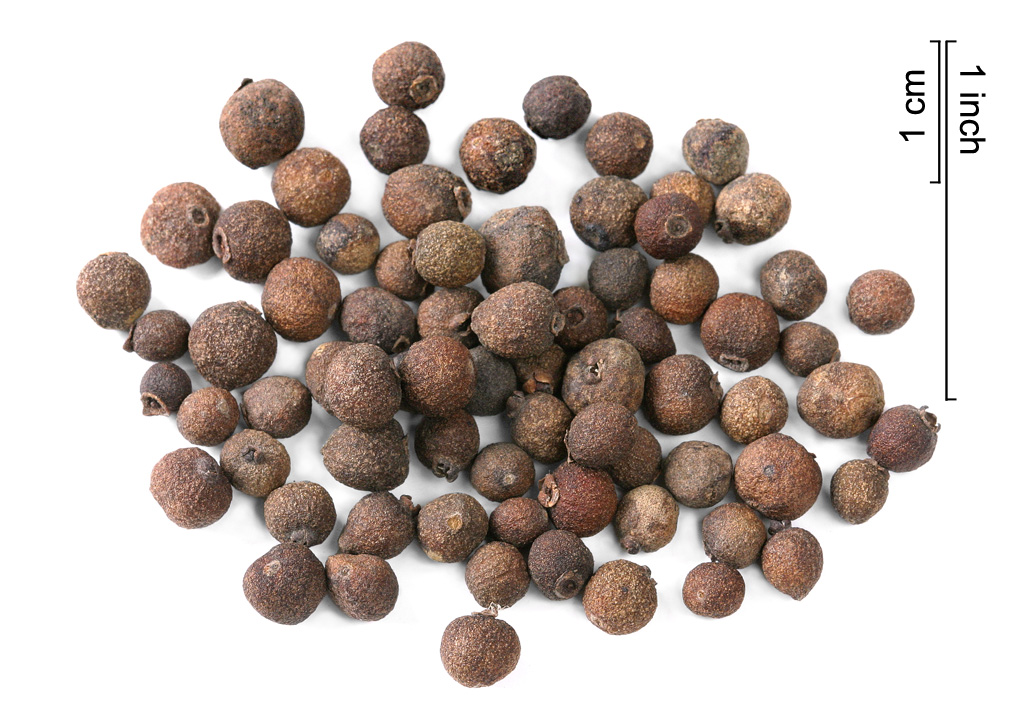 🇯🇲 Jamaica and 2 moreAllspice
The dried green berry of a tropical tree, named for its blend of cinnamon, nutmeg, and clove notes.Fruit · Warm and sweet-spiced · Sweet and mellow
🇯🇲 Jamaica and 2 moreAllspice
The dried green berry of a tropical tree, named for its blend of cinnamon, nutmeg, and clove notes.Fruit · Warm and sweet-spiced · Sweet and mellow