
Bishop's crown
Capsicum baccatum ‘Bishop’s crown’
A wrinkled, three-sided Capsicum baccatum cultivar with mild heat and a sweet flavor.
The bishop's crown is a distinct cultivar of Capsicum baccatum var. pendulum known for its unique, winged shape resembling a bishop's mitre. It offers a crisp texture and very little heat, with sweet and mild flavors concentrated in its flat wings.
- Distinctive three-sided shape resembling a bishop's crown.
- Cultivar of Capsicum baccatum var. pendulum.
- Very little heat with sweet and mild wings.
- Ripens from pale green to red in 90-100 days.
- Plant grows 3-4 feet tall producing 30-50 pods.
What is Bishop's crown?
This pepper is a specific cultivar of the species Capsicum baccatum var. pendulum. It gets its primary name from its unusual physical structure, which features three or four flat, wing-like sections that resemble a traditional bishop's crown. The plant itself grows to a moderate height of about three to four feet. It produces numerous pods that are roughly one and a half inches wide. These fruits have a wrinkled surface and a somewhat saucer-like appearance. The flesh inside is thin but maintains a crisp texture when fresh. They start as a pale green color before ripening into a bright red shade over a period of ninety to one hundred days after planting.
Where does Bishop's crown come from?
While this variety is commonly found in Barbados today, it may actually be indigenous to South America. Historical records suggest it was possibly introduced to Europe by the Portuguese during the eighteenth century, likely originating from Brazil. Despite its potential South American roots, it has also become associated with Nepal, where it is sometimes referred to as the Nepalese bell. Its journey across continents highlights the spread of chili peppers through colonial trade routes and agricultural exchange.
What does Bishop's crown taste like?
The taste profile of this pepper is defined by its gentle nature. The body of the fruit contains very little heat, making it accessible to those who prefer milder spices. The most distinctive part of the flavor comes from the flat wings, which are described as both sweet and mild. This combination creates a subtle culinary experience rather than a pungent or burning one. The crisp texture adds a pleasant mouthfeel that complements the soft sweetness of the mature red fruit.
How Bishop's crown is grown and processed
Growers cultivate this plant to a height of approximately one meter. It requires about ninety to one hundred days from seedling emergence to reach full maturity. During this time, the pods develop their characteristic wrinkled, winged shape. The fruit transitions from a pale green hue to a final red color as it ripens. Each plant typically yields between thirty and fifty pods. The growing conditions allow for a steady production of these unique-shaped peppers throughout the season.
Bishop's crown, drawn
How Bishop's crown is used
Cooks use this pepper primarily for its visual appeal and mild taste. It can be added to dishes where a gentle kick is desired without overwhelming heat. The crisp flesh makes it suitable for fresh preparations or light cooking. Its sweet wings add a subtle flavor note to various recipes. People often incorporate it into meals where the unique shape serves as an interesting garnish or ingredient component.
Bishop's crown in the world's kitchens
In South American contexts, particularly Brazil, this cultivar is recognized as part of the local chili heritage. European cuisines, especially those influenced by Portuguese trade, have adopted it since the eighteenth century. In Nepal, it appears under the name Nepalese bell, indicating its integration into regional gardening practices. These diverse cultural connections show how a single cultivar can adapt to different culinary landscapes while maintaining its core characteristics.
At a glance: where it turns up
By meal
Cuisines


Meal
This pepper fits well into dinner settings where a mild spice is appropriate. It can also serve as a snack option due to its crisp texture and low heat level. The mild sweetness allows it to pair easily with other ingredients without dominating the palate. It is versatile enough to be included in everyday cooking or served as a simple, fresh bite.
Questions people ask about Bishop's crown
What does Bishop's crown look like?
It features a unique three or four-sided shape with flat, wing-like sections that resemble a bishop's crown. The pods are wrinkled, about 1.5 inches wide, and turn from pale green to red upon ripening.
How hot is Bishop's crown?
It has very little heat. The Scoville scale places it between 5,000 and 30,000 units. The body is mild, and the wings are specifically noted for being sweet and gentle.
Where does Bishop's crown come from?
It may be indigenous to South America, specifically Brazil. It was likely brought to Europe by the Portuguese in the 18th century and is now also grown in places like Barbados and Nepal.
What does it taste like?
The flavor is mild and sweet, particularly in the flat wings. The flesh is thin and crisp, offering a gentle taste rather than a spicy burn, making it suitable for those who prefer less heat.
Good reading and sources
- Bishop's crown on WikipediaEncyclopedia
- More photos on Wikimedia CommonsPhotos and video
- Wikidata recordOpen data
The facts on this page come from the Wikipedia article "Bishop's crown", written by its contributors and used under the CC BY-SA 4.0 licence, and from its Wikidata record (CC0). EveryMasala rewrote the text in its own words, with AI assistance, and compares every page with the article to make sure no passage is copied. It may be reused under the same CC BY-SA 4.0 licence with a link back.
It may contain mistakes. Names, strengths and customs differ from one grower, kitchen or shop to the next. Traditional and medicinal uses are described as tradition, never as medical advice, and none of this is a substitute for a doctor. If something is wrong, tell us. Last refreshed 2026-10-04.
More from Brazil
All the spices of Brazil 🇧🇷 Brazil and 5 moreMalagueta peppermalagueta
A small, fiery chili from Capsicum frutescens used across Portuguese-speaking regions.Chilli · Hot and fiery · Sharp and pungent
🇧🇷 BrazilCapsicum recurvatum
A wild nightshade chili that thrives in the humid forests of Brazil.Chilli · Hot and fiery
🇧🇷 Brazil and 2 moreCapsicum parvifolium
A small-leaved wild chili shrub from northern South AmericaChilli · Hot and fiery
🇧🇷 Brazil and 5 moreMalagueta peppermalagueta
A small, fiery chili from Capsicum frutescens used across Portuguese-speaking regions.Chilli · Hot and fiery · Sharp and pungent
🇧🇷 BrazilCapsicum recurvatum
A wild nightshade chili that thrives in the humid forests of Brazil.Chilli · Hot and fiery
🇧🇷 Brazil and 2 moreCapsicum parvifolium
A small-leaved wild chili shrub from northern South AmericaChilli · Hot and fiery
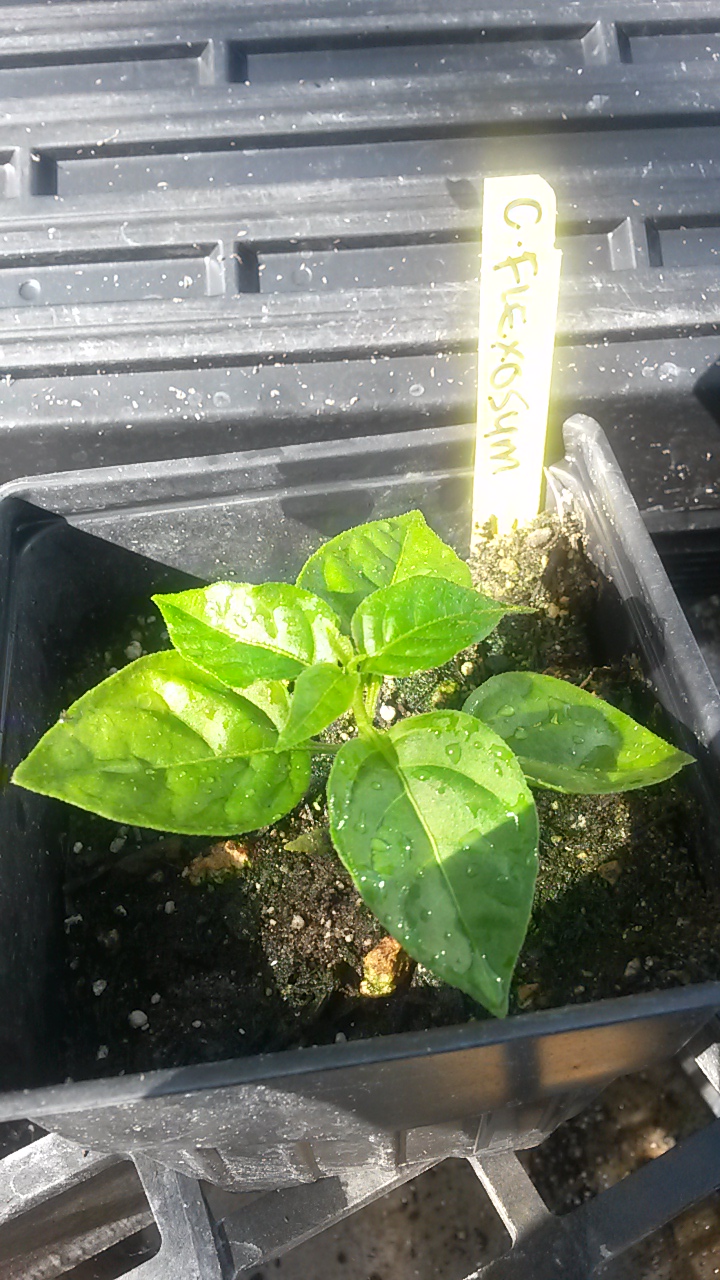 🇧🇷 BrazilCapsicum flexuosum
A tiny, mildly pungent wild chili native to southern Brazil.Chilli · Hot and fiery
🇧🇷 BrazilCapsicum flexuosum
A tiny, mildly pungent wild chili native to southern Brazil.Chilli · Hot and fiery
Its cousins elsewhere
All chilli 🇮🇳 India and 4 moreFennel
The anise-scented seeds and crisp bulb of a Mediterranean perennial herbSeed · Anise and liquorice · Sweet and mellow
🇮🇳 India and 4 moreFennel
The anise-scented seeds and crisp bulb of a Mediterranean perennial herbSeed · Anise and liquorice · Sweet and mellow
 🇱🇰 Sri Lanka and 5 moreCinnamon
The dried inner bark of Cinnamomum trees, prized for its sweet warmth and essential oil.Bark · Warm and sweet-spiced · Sweet and mellow
🇱🇰 Sri Lanka and 5 moreCinnamon
The dried inner bark of Cinnamomum trees, prized for its sweet warmth and essential oil.Bark · Warm and sweet-spiced · Sweet and mellow
 🇮🇩 Indonesia and 3 moreNutmeg
The dried seed of a tropical evergreen tree, prized for its warm, pungent flavor.Seed · Warm and sweet-spiced · Sweet and mellow
🇮🇩 Indonesia and 3 moreNutmeg
The dried seed of a tropical evergreen tree, prized for its warm, pungent flavor.Seed · Warm and sweet-spiced · Sweet and mellow
 🇷🇺 Russia and 4 moreTarragon
A slender perennial herb with anise-scented leaves, prized in French and Middle Eastern cooking.Leaf · Anise and liquorice · Sweet and mellow
🇷🇺 Russia and 4 moreTarragon
A slender perennial herb with anise-scented leaves, prized in French and Middle Eastern cooking.Leaf · Anise and liquorice · Sweet and mellow