
Caper
Capparis spinosa
The pickled flower buds of a drought-tolerant Mediterranean shrub.
Capparis spinosa is a hardy shrub found across the Mediterranean and parts of Asia. Its small green flower buds are harvested, salted, or pickled to add a sharp, peppery bite to dishes.
- Harvested by hand in the morning for best quality.
- Flavor comes from glucocapparin, a sulfur compound.
- Used extensively in Sicilian and Southern Italian cooking.
- Subject to tithes in ancient Jewish law.
- Thrives in arid, rocky environments without much water.
What is Caper?
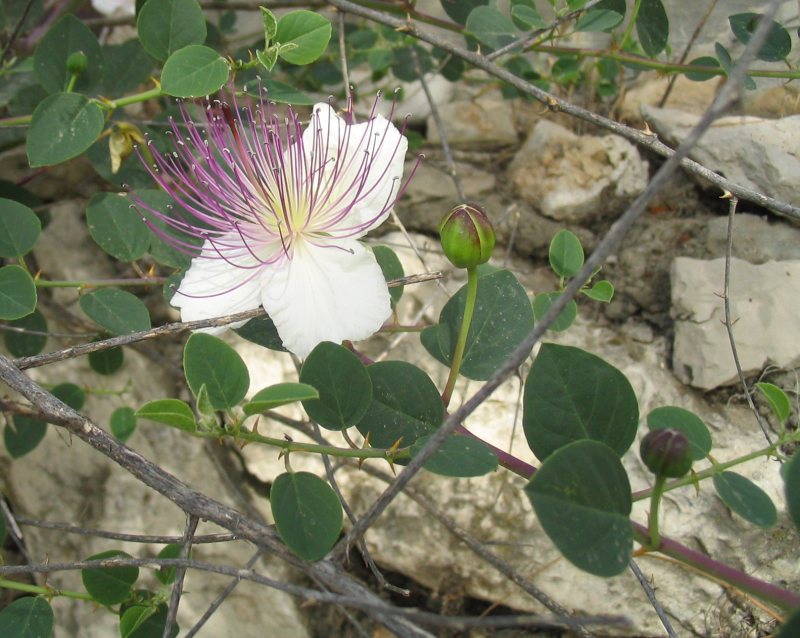
This plant is a leafy shrub with thick, shiny leaves and large, fragrant flowers that range from white to pale pink. The culinary product comes from the unopened flower buds, which are dark olive green before harvesting. These buds are gathered by hand while still tight and small. The plant itself is tough, often growing on rocky slopes or dry hillsides. It produces showy blooms with long violet stamens that rise above the petals. The edible part is distinct from the fruit, known as caper berries, though both come from the same bush.
Where does Caper come from?
The species is native to the circum-Mediterranean area, though its exact origins are debated. Some evidence suggests the Capparaceae family began in the tropics and moved north. Archaeological finds place capers in the Mediterranean and Mesopotamia during the Upper Paleolithic era. Ancient writers like Pliny and Athenaeus discussed the plant extensively. The name likely derives from Greek or Latin roots, possibly linked to Cyprus where the plant grows abundantly.
What does Caper taste like?
The taste is sharp and tangy, often compared to black pepper or mustard. This pungency comes from glucocapparin, an organosulfur compound released when the buds are processed. The flavor profile is dominated by sourness due to the vinegar or salt used in preservation. The texture is firm and slightly crunchy. The bitterness is mild but noticeable, balancing the acidity. The aroma is fresh and vegetal when raw, becoming more intense after curing.
How Caper is grown and processed
The shrub thrives in hot, dry climates with well-drained soil. It requires minimal water once established, making it suitable for arid regions. Harvesting happens daily in the morning to select the smallest, most tender buds. Workers must be careful of thorns, though spineless varieties exist. Seeds can be planted, but old seeds need cold treatment to germinate. The plant is also used for landscaping to prevent erosion on steep banks.
Caper, drawn
How Caper is used
Capers are primarily used as a garnish or seasoning in savory dishes. They are commonly added to pasta sauces, salads, and meat preparations. Italian cuisine features them prominently, especially in Sicilian recipes like spaghetti alla puttanesca and vitello tonnato. The buds are usually drained after being pickled in brine or vinegar. They provide a salty, acidic contrast to rich oils and proteins. Capers are rarely eaten raw due to their strong flavor.
Caper in the world's kitchens
Italian cooking relies heavily on capers, particularly in southern regions and islands like Pantelleria. Sicilian chefs use them to cut through the richness of fish and meat. Greek and Turkish cuisines also incorporate the plant into local dishes. The Mediterranean tradition values the bud for its ability to brighten simple ingredients. Other cultures use the fruit or leaves differently, but the bud remains the standard spice.
At a glance: where it turns up


Spiritual and ceremonial use
In Jewish tradition, caper berries were subject to tithes and dietary laws. The Mishnah and Talmud discuss their consumption and distinction from other plant parts. Biblical texts mention the caper-berry, sometimes linking it to desire or vitality. Early Christian and Roman cultures viewed the plant with interest, noting its medicinal properties. It was not central to major rituals but held cultural significance.
Caper at celebrations
No specific festivals or holidays are tied directly to capers. They are considered everyday ingredients rather than ceremonial foods. Their presence in meals is routine, marking daily sustenance rather than special occasions. Historical records do not link them to weddings, births, or harvest celebrations. They remain a staple of domestic cooking across the Mediterranean.
Traditional and medicinal use
Ancient Greeks used capers as a carminative to aid digestion. Traditional medicine attributed aphrodisiac qualities to the berries in Biblical times. Modern research notes antioxidant properties in the plant's phenolics. However, these uses are historical or preliminary; no medical advice should be derived. The plant is generally safe but high in sodium when preserved. Folk remedies sometimes employed the leaves or roots for external applications.
Buying and storing Caper
Pickled capers last a long time in sealed jars due to the salt and vinegar. Once opened, they should be kept refrigerated to maintain freshness. Dry capers are less common but also have a long shelf life. Look for buds that are firm and uniformly colored. Avoid those that are mushy or discolored. The brine preserves the texture and prevents spoilage.
The trade in Caper
The trade in capers has ancient roots, spanning from Mesopotamia to Rome. Today, production is concentrated in the Mediterranean basin. Italy, Spain, and Greece are key players. Wild harvesting still occurs alongside cultivated orchards. Quality varies by size, with smaller buds commanding higher prices. Adulteration is rare, but misidentification of wild species can pose risks. Geographical indications protect certain regional varieties.
Meal
These ingredients fit best into lunch and dinner settings. They appear in light meals like salads and pasta dishes. Street food vendors may use them in quick bites. They are not typical for breakfast or dessert. Preserved capers serve as a condiment rather than a main course. Their salty nature makes them suitable for pairing with bread or cheese.
Questions people ask about Caper
Where do capers come from?
They are the flower buds of Capparis spinosa, a shrub native to the Mediterranean and parts of Asia. The plant grows in dry, sunny climates and is harvested by hand.
What do capers taste like?
They are sharp, salty, and tangy with a hint of bitterness. The flavor resembles black pepper or mustard due to natural compounds released during pickling.
How are capers prepared for eating?
Fresh buds are too bitter to eat raw. They are typically cured in salt or pickled in vinegar and brine to develop their characteristic sharp flavor and preserve them.
Are capers healthy?
They contain antioxidants and vitamin K but are very high in sodium due to the curing process. They should be consumed in moderation as a condiment rather than a primary food source.
Good reading and sources
- Caper on WikipediaEncyclopedia
- More photos on Wikimedia CommonsPhotos and video
- Wikidata recordOpen data
The facts on this page come from the Wikipedia article "Caper", written by its contributors and used under the CC BY-SA 4.0 licence, and from its Wikidata record (CC0). EveryMasala rewrote the text in its own words, with AI assistance, and compares every page with the article to make sure no passage is copied. It may be reused under the same CC BY-SA 4.0 licence with a link back.
It may contain mistakes. Names, strengths and customs differ from one grower, kitchen or shop to the next. Traditional and medicinal uses are described as tradition, never as medical advice, and none of this is a substitute for a doctor. If something is wrong, tell us. Last refreshed 2026-10-04.
More from Spain
All the spices of Spain 🇵🇹 Portugal and 4 moreRosemary
A fragrant Mediterranean shrub with needle-like leaves used for seasoning and remembranceHerbal and green
🇵🇹 Portugal and 4 moreRosemary
A fragrant Mediterranean shrub with needle-like leaves used for seasoning and remembranceHerbal and green
 🇹🇷 Turkey and 5 moreBay Laurelδάφνη
The dried leaf of a Mediterranean evergreen, used to infuse slow-cooked dishes with herbal depth.Sharp and pungent · Bitter
🇹🇷 Turkey and 5 moreBay Laurelδάφνη
The dried leaf of a Mediterranean evergreen, used to infuse slow-cooked dishes with herbal depth.Sharp and pungent · Bitter
 🇮🇳 India and 4 moreFennel
The anise-scented seeds and crisp bulb of a Mediterranean perennial herbSeed · Anise and liquorice · Sweet and mellow
🇮🇳 India and 4 moreFennel
The anise-scented seeds and crisp bulb of a Mediterranean perennial herbSeed · Anise and liquorice · Sweet and mellow
 🇮🇷 Iran and 4 moreSaffronزعفران
The dried crimson stigmas of the autumn-blooming saffron crocus.Stigma · Sharp and pungent · Bitter
🇮🇷 Iran and 4 moreSaffronزعفران
The dried crimson stigmas of the autumn-blooming saffron crocus.Stigma · Sharp and pungent · Bitter
Its cousins elsewhere
All flower 🇮🇹 Italy and 5 moreMustard
A pungent paste made from ground mustard seeds mixed with liquid and spices.Paste · Sharp and pungent · Hot and fiery
🇮🇹 Italy and 5 moreMustard
A pungent paste made from ground mustard seeds mixed with liquid and spices.Paste · Sharp and pungent · Hot and fiery
 🇬🇷 Greece and 4 moreParsley
A bright green herb from the celery family, used fresh across Europe and the Middle East.Leaf · Bitter · Herbal and green
🇬🇷 Greece and 4 moreParsley
A bright green herb from the celery family, used fresh across Europe and the Middle East.Leaf · Bitter · Herbal and green
 🇬🇭 Ghana and 5 moreGrains of Selimdiarr
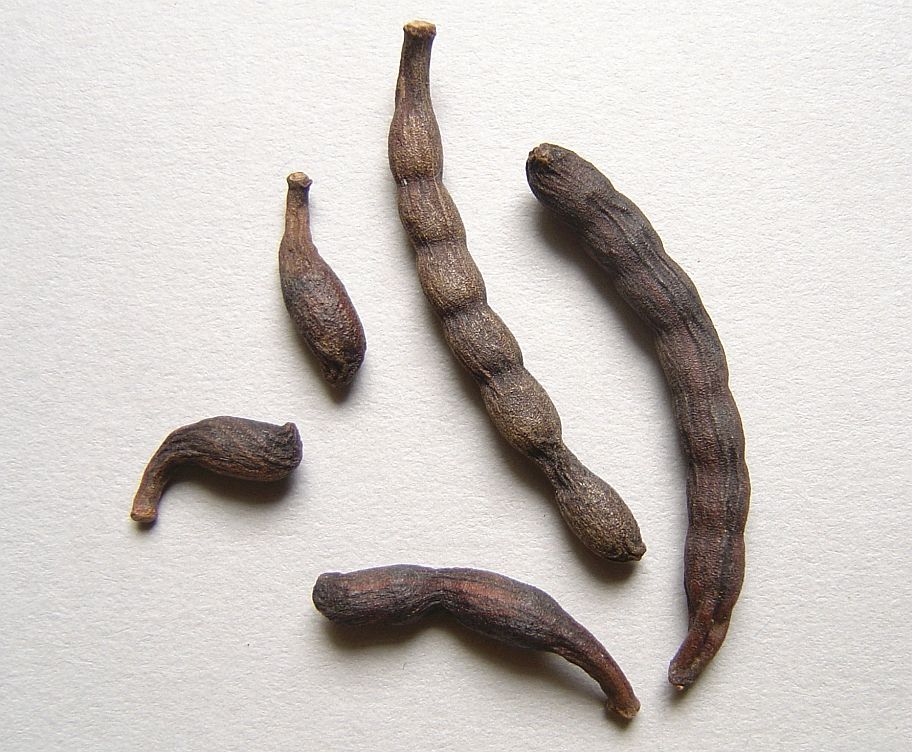
The dried fruit of a West African shrub, used as a peppery spice and coffee flavouring.Fruit · Sharp and pungent · Bitter
🇬🇭 Ghana and 5 moreGrains of Selimdiarr
The dried fruit of a West African shrub, used as a peppery spice and coffee flavouring.Fruit · Sharp and pungent · Bitter
 🇫🇷 France and 1 moreDijon mustardMoutarde de Dijon
A sharp condiment made from brown mustard seeds and white wine or verjuice, originating in Burgundy.Sharp and pungent · Sour and tart
🇫🇷 France and 1 moreDijon mustardMoutarde de Dijon
A sharp condiment made from brown mustard seeds and white wine or verjuice, originating in Burgundy.Sharp and pungent · Sour and tart