
Bay Laurel
In its own language: δάφνη
Laurus nobilis
The dried leaf of a Mediterranean evergreen, used to infuse slow-cooked dishes with herbal depth.
Bay laurel is the aromatic leaf of an evergreen tree native to the Mediterranean basin. It provides a subtle, tea-like bitterness and piney warmth to stews and broths. The leaves are removed before serving or ground for use in soups.
- Native to the Mediterranean basin.
- Contains eucalyptol in essential oil.
- Used in classical Greek and Roman rituals.
- Berries make Aleppo soap ingredients.
- Leaves last one year when dried.
What is Bay Laurel?
Bay laurel comes from an evergreen tree called Laurus nobilis. The leaves are smooth, green, and stiff. They smell like pine and tea. The taste is bitter and warm. The tree grows up to twenty metres tall. It has small yellow-green flowers. The fruit is a black berry. The leaves are used as a seasoning in cooking. They are often removed from dishes before eating. The plant belongs to the Lauraceae family.
Where does Bay Laurel come from?
The tree is native to the Mediterranean region. It was once widespread across the basin. Drier climates caused forests to retreat. Remnants remain in Turkey, Syria, Spain, Portugal, and Morocco. Evidence of use dates back to seventh century BC Israel. The plant is central to Greco-Roman culture. Apollo wore wreaths made from its leaves. The Pythia priestess chewed leaves at Delphi. Romans associated it with victory and emperors.
What does Bay Laurel taste like?
The leaves contain about one percent essential oil. Eucalyptol makes up most of this oil. This gives a sharp, camphor-like scent. The taste is pungent and slightly bitter. It adds a herbal warmth to food. Ground leaves can be eaten safely. Whole leaves are usually removed. The berries contain fatty oils. These are pressed for use in Aleppo soap.
How Bay Laurel is grown and processed
The tree thrives in Mediterranean climates. It is also grown in oceanic regions. Gardeners use it for topiary shapes. It grows slowly and takes years to reach height. Pests include jumping plant lice and scale insects. Leaves are harvested for drying. Drying preserves the flavor compounds. Whole leaves last about one year. They are stored away from heat and moisture.
Bay Laurel, drawn
How Bay Laurel is used
Cooking uses whole or ground leaves. Whole leaves flavor stews and soups. They are added during preparation. Chefs remove them before serving. Ground leaves go into stocks and Bloody Marys. Berries act as a robust spice. Wood smoke flavors meat. Oil is used in aromatherapy. Soap makers press berries for fat. The oil is a key ingredient in traditional soaps.
Bay Laurel in the world's kitchens
Mediterranean cuisines rely on this herb. Greece uses it in classical rituals. Italy wears wreaths for graduation. The UK calls it simply bay tree. Spanish and Portuguese kitchens use it daily. Israeli history shows early cultivation. Turkish mountains hold wild remnants. Syrian forests provide ancient stock. Each region values the leaf differently.
At a glance: where it turns up


Spiritual and ceremonial use
Greeks linked the plant to Apollo. Daphne transformed into a laurel tree. Wreaths symbolized highest status. The Pythia induced trance states. Romans saw it as immortal. Augustus planted trees at his home. Emperors wore wreaths for triumphs. Lightning protection beliefs existed. Fire crackling proved divine nature. Modern Italians wear wreaths for school.
Bay Laurel at celebrations
Graduation marks modern celebrations. Students wear wreaths in Italy. Ancient Greeks awarded Pythian prizes. Victors received crowns of leaves. Roman emperors celebrated military wins. Births did not traditionally feature the plant. Funerals lacked specific associations. Harvest days ignored the foliage. New Year customs avoided the spice.
Traditional and medicinal use
Herbalists used aqueous extracts as salves. Open wounds received poultice treatments. Massage therapy incorporates the oil. Aromatherapy uses the extracted scents. Pliny listed cures for paralysis. Spasms and sciatica were targeted. Headaches and ear infections faced treatment. Rheumatism received topical applications. Folk remedies treated poison ivy rashes. These uses remain traditional only.
Buying and storing Bay Laurel
Whole leaves keep for one year. Store them in dry conditions. Humidity reduces their potency. Ground leaves lose flavor faster. Keep containers sealed tightly. Light degrades the essential oils. Check for color fading over time. Freshness ensures better culinary results.
What to use instead of Bay Laurel
No direct substitute matches the leaf. Other plants share similar names. California bay lacks the same depth. Cherry laurel is toxic and different. Mountain laurel offers no culinary value. Cooks must accept the unique profile. No blend replicates the eucalyptol note. Patience is required when seasoning.
The trade in Bay Laurel
Historical trade routes moved the plant. Classical cultures valued it highly. Modern markets sell dried leaves globally. Adulteration is rare due to distinct shape. Certification exists for ornamental varieties. Geographical indications protect some origins. Production remains regional today. Turkey and Syria hold wild stocks. Commercial farming supports garden demand.
Meal
Bay leaves belong to dinner meals. They season hearty stews and roasts. Snacks may include infused oils. Preserves sometimes use the fruit. Street food rarely features them directly. Breakfast dishes do not typically use them. Desserts avoid the bitter leaf profile. Feasts might use symbolic wreaths instead.
Place
ashkelon, southern turkey, northern syria
Questions people ask about Bay Laurel
Where does bay laurel come from?
It originates from the Mediterranean region. Wild trees grow in Turkey, Syria, Spain, Portugal, and Morocco. Ancient evidence appears in seventh-century Israel. The climate suits its evergreen growth.
What does bay laurel taste like?
The leaves offer a bitter, piney flavor. Eucalyptol provides a sharp, herbal aroma. The taste warms the palate gently. Ground leaves add more intensity than whole ones.
How should I use bay leaves in cooking?
Add whole leaves to stews and soups. Remove them before serving. Use ground leaves in stocks or drinks. Berries work as a robust spice. Oil flavors soap and massage therapies.
Can I eat the black berries?
Yes, dried berries act as spices. They contain fatty oils for pressing. These oils create traditional soaps. The berries provide a strong flavor profile.
Why is it called sweet bay?
The name distinguishes it from toxic lookalikes. True laurel has edible leaves. Other plants share the laurel name but differ chemically. Sweet bay confirms its culinary safety.
Good reading and sources
- Laurus nobilis on WikipediaEncyclopedia
- More photos on Wikimedia CommonsPhotos and video
- Wikidata recordOpen data
The facts on this page come from the Wikipedia article "Laurus nobilis", written by its contributors and used under the CC BY-SA 4.0 licence, and from its Wikidata record (CC0). EveryMasala rewrote the text in its own words, with AI assistance, and compares every page with the article to make sure no passage is copied. It may be reused under the same CC BY-SA 4.0 licence with a link back.
It may contain mistakes. Names, strengths and customs differ from one grower, kitchen or shop to the next. Traditional and medicinal uses are described as tradition, never as medical advice, and none of this is a substitute for a doctor. If something is wrong, tell us. Last refreshed 2026-10-04.
More from Turkey
All the spices of Turkey 🇬🇷 Greece and 1 moreMasticΜαστίχα
A bitter-sweet resin from the mastic tree, used in desserts and traditional medicine.Bitter · Sharp and pungent
🇬🇷 Greece and 1 moreMasticΜαστίχα
A bitter-sweet resin from the mastic tree, used in desserts and traditional medicine.Bitter · Sharp and pungent
 🇹🇷 Turkey and 2 moreMahleb
A ground cherry seed used to sweeten Middle Eastern baked goods with an almond-cherry note.Seed · Sweet and mellow · Bitter
🇹🇷 Turkey and 2 moreMahleb
A ground cherry seed used to sweeten Middle Eastern baked goods with an almond-cherry note.Seed · Sweet and mellow · Bitter
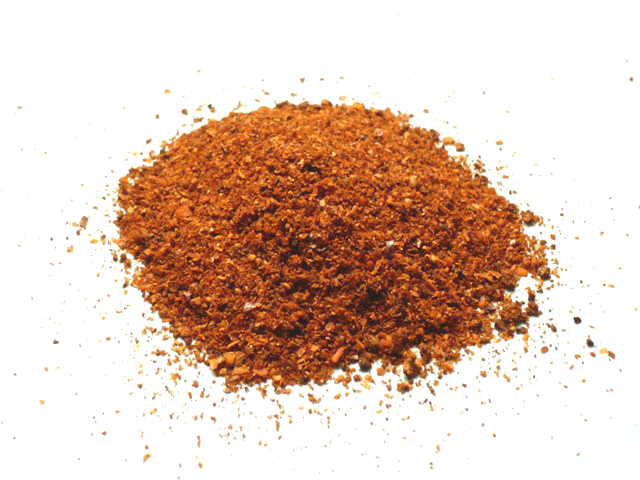 🇸🇾 Syria and 1 moreAleppo pepperفلفل حلبي
A moderately spicy, fruity flake from Syria and Turkey, named for the city of Aleppo.Chilli · Hot and fiery · Sweet and mellow
🇸🇾 Syria and 1 moreAleppo pepperفلفل حلبي
A moderately spicy, fruity flake from Syria and Turkey, named for the city of Aleppo.Chilli · Hot and fiery · Sweet and mellow
 🇹🇷 TurkeyUrfa biber
A sun-dried and night-wrapped chili from Turkey with a smoky, raisin-like taste.Chilli · Smoky · Sweet and mellow
🇹🇷 TurkeyUrfa biber
A sun-dried and night-wrapped chili from Turkey with a smoky, raisin-like taste.Chilli · Smoky · Sweet and mellow
Its cousins elsewhere
 🇬🇷 Greece and 4 moreParsley
A bright green herb from the celery family, used fresh across Europe and the Middle East.Leaf · Bitter · Herbal and green
🇬🇷 Greece and 4 moreParsley
A bright green herb from the celery family, used fresh across Europe and the Middle East.Leaf · Bitter · Herbal and green
 🇦🇫 Afghanistan and 5 moreLovageлюбисток
A tall European herb with celery-like leaves and spicy seeds used in soups and broths.Leaf · Sharp and pungent · Herbal and green
🇦🇫 Afghanistan and 5 moreLovageлюбисток
A tall European herb with celery-like leaves and spicy seeds used in soups and broths.Leaf · Sharp and pungent · Herbal and green
 🇮🇳 India and 2 moreBay leaf
The dried or fresh leaves of the laurel tree, used to infuse depth into slow-cooked dishes.Leaf · Herbal and green · Sharp and pungent
🇮🇳 India and 2 moreBay leaf
The dried or fresh leaves of the laurel tree, used to infuse depth into slow-cooked dishes.Leaf · Herbal and green · Sharp and pungent
 🇫🇷 France and 3 moreHerbes de Provenceèrbas de Provença
A dried herb blend from southwestern France, now a global kitchen staple.Warm and sweet-spiced · Herbal and green
🇫🇷 France and 3 moreHerbes de Provenceèrbas de Provença
A dried herb blend from southwestern France, now a global kitchen staple.Warm and sweet-spiced · Herbal and green