
Chinese cassia
Cinnamomum cassia
The thick-barked spice tree of southern China, yielding a bold and sweet bark used in cooking and medicine.
An evergreen tree native to southern China, this plant is cultivated across South and Southeast Asia for its aromatic bark. The spice offers a sweeter, stronger taste than Ceylon cinnamon, with a rougher texture and higher oil content in some varieties.
- Native to southern China, cultivated in Vietnam and Indonesia.
- Bark is thick, hard, and sweeter than Ceylon cinnamon.
- Contains coumarin, which can harm the liver in high doses.
- Used in traditional Chinese medicine for fevers and digestion.
- Flower buds resemble cloves and are used in pickling.
What is Chinese cassia?
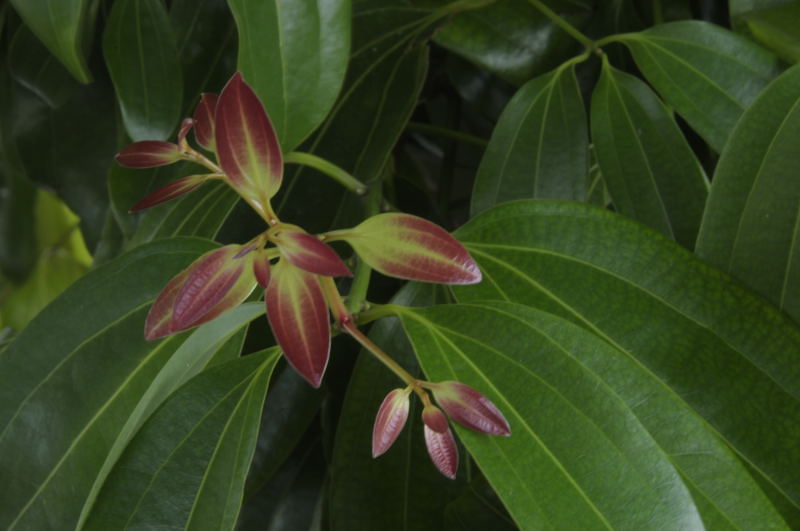
This evergreen tree produces a hardy bark that serves as a primary culinary spice. The tree itself reaches heights of fifteen meters, displaying greyish outer layers and elongated leaves that turn reddish when young. The spice comes from the dried inner bark, which forms thick, single-layered sticks. These sticks are much harder to crush than their Ceylon counterparts. The flower buds are also harvested, resembling small cloves with a mild, floral scent. The bark provides a robust, sweet warmth that differs significantly from the delicate notes of other cinnamon species.
Where does Chinese cassia come from?
The tree originates in the southern regions of China. It has been utilized by humans since at least two thousand seven hundred B.C., according to herbalist records. Ancient Egyptians valued it around five hundred B.C. for embalming mixtures. The Greeks, Romans, and Hebrews adopted it for cooking and perfumes. It reached Europe by the seventeenth century for culinary purposes. Today, it is widely cultivated in Vietnam and Indonesia to meet global demand.
What does Chinese cassia taste like?
The taste profile is distinctly sweet and warm, with a stronger punch than Ceylon cinnamon. This intensity comes from essential oils concentrated within the bark. Vietnamese Saigon cinnamon contains high oil levels for a sharp flavour. Indonesian varieties have lower oil content and cost less. Chinese cassia sits between these extremes, offering a sweeter note similar to Saigon but with moderate oil presence. The rough texture of the bark contributes to a coarser grind compared to finer cinnamon powders.
How Chinese cassia is grown and processed
Farmers cultivate the tree in southern China, particularly in Guangxi, Guangdong, and Yunnan provinces. Harvesting involves stripping the bark from the trunk. In Vietnam, production faced disruptions during the mid-twentieth century, shifting trade towards Indonesian highlands. Indonesian growers on Sumatra increased output to fill the gap left by war-related supply issues. The resulting bark is thinner and cheaper than Chinese or Vietnamese variants.
Chinese cassia, drawn
How Chinese cassia is used
Cooking applications include confectionery, desserts, pastries, and meat dishes. It appears in curry recipes where Ceylon cinnamon proves unsuitable due to its milder nature. Whole sticks or ground powder are common forms. The buds serve pickling, marinades, and teas. Essential oils extracted from the bark appear in health products and beverages. The spice is often blended into Ceylon cinnamon, though its thicker consistency remains distinct. Sticks consist of a single hard layer, unlike the multi-layered quills of Ceylon cinnamon.
Chinese cassia in the world's kitchens
Chinese cuisine features the bark as one of fifty fundamental herbs in traditional medicine and cooking. Indian recipes employ the buds alongside the bark for specific curries. North American markets prefer this variety over Ceylon cinnamon for general use. European cuisines adopted it after the seventeenth century for baking and spiced drinks. Indonesian producers supply the global market with a more affordable, less oily alternative.
At a glance: where it turns up

Spiritual and ceremonial use
Ancient Hebrew texts mention the spice as part of anointing oil prescribed by Moses. Egyptian embalmers incorporated it into preservation mixtures for the dead. Traditional Chinese medicine classifies it as a fundamental herb for balancing bodily energies. While not central to modern ritual worship, its historical role in sacred ointments and burial practices highlights its spiritual significance in antiquity.
Chinese cassia at celebrations
Its historical use in ancient embalming and biblical anointing oils suggests ceremonial importance in early civilizations. However, contemporary celebrations do not prominently feature it as a required element for weddings, births, or harvest days.
Traditional and medicinal use
Traditional Chinese medicine lists it among fifty core herbs for treating diarrhea, fevers, and menstrual issues. The bark contains coumarin, a blood-thinning compound that can harm the liver in large quantities. European health agencies warn against excessive consumption due to this risk. Other bioactive compounds like cinnamaldehyde and styrene may also be toxic in high doses. These safety notes apply strictly to traditional medicinal contexts.
Buying and storing Chinese cassia
Whole sticks should be kept in airtight containers to preserve essential oils. Ground powder loses potency faster and benefits from cool, dark storage. Check for hardness in sticks; soft or crumbling bark indicates age or moisture damage. Avoid storing near strong odors, as the spice absorbs surrounding smells easily.
What to use instead of Chinese cassia
Ceylon cinnamon serves as a milder substitute when a gentler flavor is desired. Vietnamese Saigon cinnamon offers a stronger, oil-rich alternative closer to Chinese cassia's intensity. Indonesian cassia provides a budget-friendly option with a sweeter but less potent taste. No direct substitute matches the exact thickness and hardness of Chinese cassia sticks.
The trade in Chinese cassia
China and Vietnam lead production, with Indonesia supplying significant volumes. The Vietnam War disrupted Saigon cinnamon exports, boosting Indonesian highland farming. Indonesian cassia commands lower prices due to reduced oil content. North America consumes the most of this variety globally. Nomenclatural disputes persist regarding scientific naming, with proposals to conserve the name Cinnamomum cassia despite earlier taxonomic conflicts.
Meal
Desserts and sweet treats form the primary category for this spice. Pastries and confectionery rely on its strong sweetness. Meat dishes also utilize the bark for its warming properties. Snacks and preserved foods benefit from the bud variety in pickles and marinades. It does not typically appear in breakfast items or light lunches, favoring richer, heavier meals or sweet finishes.
Blends with Chinese cassia
Questions people ask about Chinese cassia
What is Chinese cassia?
It is an evergreen tree from southern China grown for its aromatic bark and flower buds. The bark forms thick, hard sticks used as a spice in cooking and traditional medicine.
How does it taste compared to Ceylon cinnamon?
Chinese cassia tastes sweeter and stronger than Ceylon cinnamon. Its bark is thicker, rougher, and harder to crush, providing a more intense warm flavor suitable for robust dishes.
Where is it grown today?
Primary production occurs in China, Vietnam, and Indonesia. Vietnamese varieties have high oil content, while Indonesian cassia is cheaper with lower oil levels.
Is it safe to eat in large amounts?
Health agencies warn against high consumption because the bark contains coumarin, a compound that can damage the liver. Moderate culinary use is generally considered safe.
Good reading and sources
- Cinnamomum cassia on WikipediaEncyclopedia
- More photos on Wikimedia CommonsPhotos and video
- Wikidata recordOpen data
The facts on this page come from the Wikipedia article "Cinnamomum cassia", written by its contributors and used under the CC BY-SA 4.0 licence, and from its Wikidata record (CC0). EveryMasala rewrote the text in its own words, with AI assistance, and compares every page with the article to make sure no passage is copied. It may be reused under the same CC BY-SA 4.0 licence with a link back.
It may contain mistakes. Names, strengths and customs differ from one grower, kitchen or shop to the next. Traditional and medicinal uses are described as tradition, never as medical advice, and none of this is a substitute for a doctor. If something is wrong, tell us. Last refreshed 2026-10-04.
More from China
All the spices of China 🇨🇳 ChinaYongfeng chili sauce永丰辣酱
A fermented paste of peppers, rice and wheat from Hunan province, one of the region's three treasures.Paste · Hot and fiery · Sweet and mellow
🇨🇳 ChinaYongfeng chili sauce永丰辣酱
A fermented paste of peppers, rice and wheat from Hunan province, one of the region's three treasures.Paste · Hot and fiery · Sweet and mellow
 🇨🇳 China and 2 moreChinese prickly-ash
A thorny East Asian shrub whose reddish berries yield Sichuan pepperFruit
🇨🇳 China and 2 moreChinese prickly-ash
A thorny East Asian shrub whose reddish berries yield Sichuan pepperFruit
 🇨🇳 China and 5 moreSichuan pepper花椒 (huājiāo)
The dried husk of Zanthoxylum fruit, prized for its citrus scent and electric numbness.Fruit · Citrus and bright · Sharp and pungent
🇨🇳 China and 5 moreSichuan pepper花椒 (huājiāo)
The dried husk of Zanthoxylum fruit, prized for its citrus scent and electric numbness.Fruit · Citrus and bright · Sharp and pungent
 🇨🇳 China and 5 moreChili oil辣椒油
A red condiment of infused vegetable oil and hot peppers used across Asia and Europe.Hot and fiery · Smoky
🇨🇳 China and 5 moreChili oil辣椒油
A red condiment of infused vegetable oil and hot peppers used across Asia and Europe.Hot and fiery · Smoky
Its cousins elsewhere
All bark 🇮🇳 India and 4 moreFennel
The anise-scented seeds and crisp bulb of a Mediterranean perennial herbSeed · Anise and liquorice · Sweet and mellow
🇮🇳 India and 4 moreFennel
The anise-scented seeds and crisp bulb of a Mediterranean perennial herbSeed · Anise and liquorice · Sweet and mellow
 🇱🇰 Sri Lanka and 5 moreCinnamon
The dried inner bark of Cinnamomum trees, prized for its sweet warmth and essential oil.Bark · Warm and sweet-spiced · Sweet and mellow
🇱🇰 Sri Lanka and 5 moreCinnamon
The dried inner bark of Cinnamomum trees, prized for its sweet warmth and essential oil.Bark · Warm and sweet-spiced · Sweet and mellow
 🇮🇩 Indonesia and 3 moreNutmeg
The dried seed of a tropical evergreen tree, prized for its warm, pungent flavor.Seed · Warm and sweet-spiced · Sweet and mellow
🇮🇩 Indonesia and 3 moreNutmeg
The dried seed of a tropical evergreen tree, prized for its warm, pungent flavor.Seed · Warm and sweet-spiced · Sweet and mellow
 🇱🇰 Sri Lanka and 3 moreCeylon cinnamon
The inner bark of a Sri Lankan evergreen, prized for its delicate, sweet spice.Bark · Sweet and mellow · Warm and sweet-spiced
🇱🇰 Sri Lanka and 3 moreCeylon cinnamon
The inner bark of a Sri Lankan evergreen, prized for its delicate, sweet spice.Bark · Sweet and mellow · Warm and sweet-spiced