
Syrian oregano
In its own language: زَعْتَر
Origanum syriacum
The aromatic herb native to the Levant, essential for making za'atar.
Syrian oregano is a perennial herb from the mint family, native to the Middle East. It provides the primary herbal flavor in za'atar, a traditional spice blend mixed with sumac and sesame seeds.
- Native to the Levant and essential for za'atar spice blends.
- Likely the biblical ezov used in ancient Temple rituals.
- Harvested between May and August in the wild.
- Protected by law in Israel; wild foraging is prohibited.
- Traditionally used in Lebanon for digestive ailments.
What is Syrian oregano?
This plant is an aromatic perennial herb belonging to the mint family. It grows up to one meter tall and produces small white or pale pink flowers pollinated by bees. The dried leaves are the part used, offering a warm, herbal taste with bitter and sour notes. It is the key ingredient in za'atar, a popular spice mixture.
Where does Syrian oregano come from?
The species is native to the Palestine region and other parts of the Middle East. Historically, it was used in the Temple in Jerusalem for ceremonial purification rites involving water and ashes. Jewish oral tradition identifies this plant as the biblical ezov, distinct from Greek hyssop.
What does Syrian oregano taste like?
The leaves provide a distinctive warm and herbal profile. In culinary blends, this herb balances the sourness of sumac and the nuttiness of sesame seeds. The taste is characteristic of the Levantine palate, providing depth without heat.
How Syrian oregano is grown and processed
It grows on stony ground and coastal strips, particularly in Sinai. Harvesting occurs between May and August. Due to high demand and protection laws in some areas, wild foraging is restricted, leading to increased cultivation efforts to meet supply needs.
Syrian oregano, drawn
How Syrian oregano is used
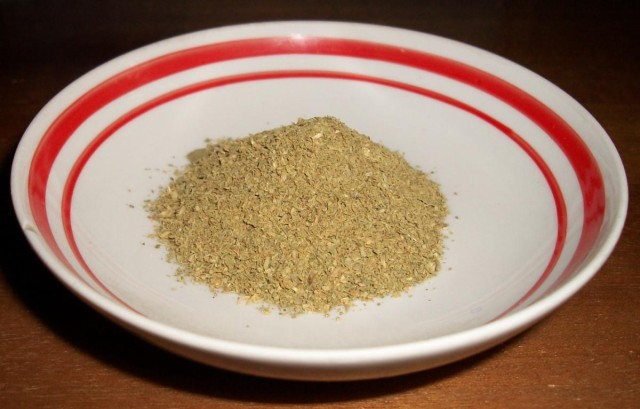
The dried leaves are primarily used to make za'atar. This blend includes sumac, sesame seeds, and salt. Home cooks mix the powder with olive oil to create a spread for manakish, a flatbread eaten at breakfast or as a snack.
Syrian oregano in the world's kitchens
Levantine cuisine relies heavily on this herb. In Lebanon, blends often combine it with Thymbra spicata. The preparation varies slightly by region but consistently features the herb as the central aromatic component alongside sumac and sesame.
At a glance: where it turns up
By meal
Celebrations


Spiritual and ceremonial use
In Jewish tradition, the plant holds significance as the likely identity of the biblical ezov. It was used in ancient Temple rituals for sprinkling purification waters. Muslim traditions also recognize its value through the Arabic term za'atar.
Traditional and medicinal use
In Lebanese folk medicine, dried leaves are traditionally used to treat gastrointestinal issues, including stomach aches, coughs, and pharyngitis. These uses are described as traditional practices rather than medical advice.
What to use instead of Syrian oregano
Greek hyssop (Hyssopus officinalis) is sometimes confused with this plant, though they are different species. Other plants like Thymus capitatus or Satureja thymbra may be referred to as types of za'atar but are distinct botanical entities.
The trade in Syrian oregano
Wild foraging is illegal under Israeli law due to endangered status protections. This restriction has driven recent attempts at cultivation. The herb remains highly prized in the Levant, where it is gathered despite legal risks.
Meal
It is commonly consumed during breakfast and as a snack. The olive oil and za'atar spread on flatbread serves as a quick meal or appetizer in Levantine households.
Questions people ask about Syrian oregano
What is Syrian oregano?
It is an aromatic perennial herb native to the Middle East. Its dried leaves are the main ingredient in za'atar, a spice mix used widely in Levantine cooking.
Where does it come from?
The plant is native to Palestine and surrounding Middle Eastern regions. It grows naturally on stony ground and coastal areas in countries like Lebanon, Syria, and Egypt.
How does it taste?
The leaves have a warm, herbal flavor with bitter and sour undertones. When blended with sumac and sesame, it creates a complex, tangy seasoning profile.
Is it used in religious texts?
Yes, it is believed to be the biblical ezov mentioned in Jewish scriptures. It was historically used in Temple ceremonies for purification rituals involving water and ashes.
Good reading and sources
- Origanum syriacum on WikipediaEncyclopedia
- More photos on Wikimedia CommonsPhotos and video
- Wikidata recordOpen data
The facts on this page come from the Wikipedia article "Origanum syriacum", written by its contributors and used under the CC BY-SA 4.0 licence, and from its Wikidata record (CC0). EveryMasala rewrote the text in its own words, with AI assistance, and compares every page with the article to make sure no passage is copied. It may be reused under the same CC BY-SA 4.0 licence with a link back.
It may contain mistakes. Names, strengths and customs differ from one grower, kitchen or shop to the next. Traditional and medicinal uses are described as tradition, never as medical advice, and none of this is a substitute for a doctor. If something is wrong, tell us. Last refreshed 2026-10-04.
More from Palestine
All the spices of Palestine 🇵🇸 Palestine and 4 moreGreek sage
A hairy Mediterranean shrub with pink flowers and edible fruit galls.Leaf · Herbal and green · Sweet and mellow
🇵🇸 Palestine and 4 moreGreek sage
A hairy Mediterranean shrub with pink flowers and edible fruit galls.Leaf · Herbal and green · Sweet and mellow
 🇱🇧 Lebanon and 5 moreZa'atarزَعْتَر
A Levantine blend of dried herbs, sumac, sesame seeds, and salt used in breads and dips.Blend · Earthy and deep · Citrus and bright
🇱🇧 Lebanon and 5 moreZa'atarزَعْتَر
A Levantine blend of dried herbs, sumac, sesame seeds, and salt used in breads and dips.Blend · Earthy and deep · Citrus and bright
 🇱🇾 Libya and 5 moreWhorled savoryza'atar rumi; za'atar franji
A pungent Mediterranean shrub with dark leaves and pink flowers, used in ancient cooking and modern herbal teas.Sharp and pungent · Herbal and green
🇱🇾 Libya and 5 moreWhorled savoryza'atar rumi; za'atar franji
A pungent Mediterranean shrub with dark leaves and pink flowers, used in ancient cooking and modern herbal teas.Sharp and pungent · Herbal and green
 🇹🇷 Turkey and 5 moreBlack cumin
The tiny black seed of a wild annual flower, used across the Middle East and South Asia.Seed · Sharp and pungent · Herbal and green
🇹🇷 Turkey and 5 moreBlack cumin
The tiny black seed of a wild annual flower, used across the Middle East and South Asia.Seed · Sharp and pungent · Herbal and green
Its cousins elsewhere
 🇬🇪 GeorgiaKhmeli suneliხმელი სუნელი
A flexible Georgian blend of dried herbs and seeds for stews and meats.Blend · Warm and sweet-spiced · Earthy and deep
🇬🇪 GeorgiaKhmeli suneliხმელი სუნელი
A flexible Georgian blend of dried herbs and seeds for stews and meats.Blend · Warm and sweet-spiced · Earthy and deep
 🇮🇳 India and 4 moreBasil
A tender culinary herb with glossy leaves and a licorice-like aroma, native to tropical Asia.Leaf · Anise and liquorice · Warm and sweet-spiced
🇮🇳 India and 4 moreBasil
A tender culinary herb with glossy leaves and a licorice-like aroma, native to tropical Asia.Leaf · Anise and liquorice · Warm and sweet-spiced
 🇬🇷 Greece and 4 moreParsley
A bright green herb from the celery family, used fresh across Europe and the Middle East.Leaf · Bitter · Herbal and green
🇬🇷 Greece and 4 moreParsley
A bright green herb from the celery family, used fresh across Europe and the Middle East.Leaf · Bitter · Herbal and green
 🇮🇹 Italy and 5 moreMustard
A pungent paste made from ground mustard seeds mixed with liquid and spices.Paste · Sharp and pungent · Hot and fiery
🇮🇹 Italy and 5 moreMustard
A pungent paste made from ground mustard seeds mixed with liquid and spices.Paste · Sharp and pungent · Hot and fiery