
Black pepper
Piper nigrum
The dried fruit of a climbing vine, the world's most traded spice.
Black pepper is the dried fruit of Piper nigrum, a flowering vine native to South Asia. It provides a sharp, pungent heat from piperine and seasons dishes across global cuisines.
- Native to the Malabar Coast of India.
- Spiciness comes from the compound piperine.
- Used in Roman cookbooks since the first century CE.
- White pepper is made from ripe seeds without skin.
- Portuguese controlled the spice trade for 150 years.
What is Black pepper?
Black pepper comes from the drupes of Piper nigrum, a perennial woody vine in the Piperaceae family. These small fruits grow on pendulous spikes at leaf nodes. A single stem may carry dozens of these fruiting spikes. The spice appears as black, white, green, or red peppercorns depending on processing. Black peppercorns are cooked unripe fruits dried until wrinkled. White pepper uses ripe seeds with the outer skin removed. Green peppercorns retain their colour through drying or pickling. Red peppercorns are fully ripe berries preserved in brine. Each form offers a distinct texture and visual profile for culinary use.
Where does Black pepper come from?
The plant is native to South Asia, specifically the Malabar Coast of India. Wild vines once grew extensively in the Western Ghats region. Historical records show cultivation there since antiquity. The ancient port of Muziris exported pepper to Rome, Egypt, and Yemen. Trade routes extended into Southeast Asia by the tenth century. Chinese settlers introduced it to East Malaysia in the nineteenth century. The crop spread through Indian Ocean trade networks connecting India, China, and Indonesia.
What does Black pepper taste like?
The spiciness derives from piperine, an alkaloid compound. This creates a sharp, nose-reaching heat distinct from capsaicin found in chillies. Black pepper offers a robust, earthy pungency. White pepper lacks the outer skin compounds, resulting in a milder, slightly fermented taste. Green peppercorns provide a fresh, bright aroma when unpreserved. Pickled versions add a sour, salty tang. The flavour profile changes significantly based on which part of the fruit is used and how it is processed.
How Black pepper is grown and processed
Vines climb supporting trees or trellises using aerial roots. Cuttings are planted near rough-barked hosts for better grip. Plants require moist, well-drained soil rich in organic matter. They thrive below three thousand feet elevation. Young plants need regular watering for three years. Fruit production begins around the fourth year. Harvest occurs before full ripeness for black pepper. Spikes are picked while fruits are still hard. They are then dried in the sun or machines until shrivelled.
Black pepper, drawn
How Black pepper is used
Peppercorns are used whole or ground into powder. Black pepper seasons nearly all savoury dishes globally. It is often paired with salt on dining tables. White pepper hides in light sauces and mashed potatoes. Green peppercorns appear in fresh Thai preparations. Pickled berries add acidity to salads. The spice enhances meat, poultry, and vegetable recipes. Essential oils extracted from crushed berries flavour certain dishes.
Black pepper in the world's kitchens
Western kitchens treat it as a universal staple. Chinese cuisine favours white pepper in soups and stir-fries. Thai cooks use fresh green peppercorns for brightness. Portuguese dishes incorporate ground white pepper. Turkish cuisine lists it among essential seasonings. Roman cookbooks from antiquity featured it prominently. Modern global trade has made it ubiquitous in every national kitchen.
At a glance: where it turns up
Celebrations


Spiritual and ceremonial use
No specific religious rituals centre on black pepper. It does not hold sacred status in major faiths. The spice was traded for wealth rather than worship. Ancient cultures valued it for commerce and medicine. It lacks ceremonial roles in Hindu, Buddhist, or Islamic practices. Its history is tied to economics and exploration rather than spirituality.
Black pepper at celebrations
Black pepper is not linked to specific festivals or holidays. It is a daily ingredient rather than a celebratory one. No weddings or harvest ceremonies feature it specially. It does not mark new year observances or births. The spice supports everyday sustenance and hospitality. Its value lies in consistent availability rather than seasonal rarity.
Traditional and medicinal use
Ancient texts describe peppercorns as traditional medicine. Indians used them for flavour and health since two thousand BCE. Romans believed they aided digestion and vitality. Traditional systems prescribed them for various ailments. Modern science confirms piperine's properties. However, these historical uses remain folk remedies. No medical advice should be derived from these traditions.
Buying and storing Black pepper
Whole peppercorns keep their potency longer than ground powder. Store them in airtight containers away from light. Heat and moisture degrade the essential oils quickly. Ground pepper loses its punch within months. Buy whole berries and grind them fresh. Check for freshness by smelling the aromatic oils.
The trade in Black pepper
Venetian merchants monopolized European pepper trade for centuries. This monopoly motivated Portuguese sea voyages to India. Vasco da Gama reached Calicut in fourteen ninety eight. Portugal controlled the spice route for one hundred fifty years. Dutch and English traders later challenged this dominance. The Maluku Islands became key sources for nutmeg and pepper. Global trade routes expanded due to this high-value commodity.
Meal
This seasoning belongs to daily cooking across all meals. It flavours breakfast eggs and lunch soups. Dinner entrees rely on its pungent kick. Street food stalls use it heavily for quick flavour. Snacks and preserves benefit from its heat. It accompanies drinks and desserts in some traditions. The spice adapts to casual street fare and formal feasts alike.
Blends with Black pepper
Questions people ask about Black pepper
What is black pepper?
It is the dried fruit of the Piper nigrum vine. The fruit is called a drupe and contains a single seed. Processing methods create black, white, or green varieties.
Where does it come from?
The plant is native to South Asia, particularly India's Malabar Coast. Wild vines grow in the Western Ghats. It is now cultivated in Indonesia, Vietnam, and Brazil.
How does it taste?
It delivers a sharp, pungent heat from piperine. This differs from chilli heat. White pepper tastes milder and slightly fermented. Green peppercorns offer a fresh, bright aroma.
Why are there different colours?
Colour depends on ripeness and processing. Black is dried unripe fruit. White is the seed after skin removal. Green is preserved unripe fruit. Red is fully ripe preserved fruit.
Is it related to chilli peppers?
No. Chilli peppers belong to the Capsicum genus. Black pepper comes from Piper nigrum. They share heat but use different chemical compounds.
Good reading and sources
- Black pepper on WikipediaEncyclopedia
- More photos on Wikimedia CommonsPhotos and video
- Wikidata recordOpen data
The facts on this page come from the Wikipedia article "Black pepper", written by its contributors and used under the CC BY-SA 4.0 licence, and from its Wikidata record (CC0). EveryMasala rewrote the text in its own words, with AI assistance, and compares every page with the article to make sure no passage is copied. It may be reused under the same CC BY-SA 4.0 licence with a link back.
It may contain mistakes. Names, strengths and customs differ from one grower, kitchen or shop to the next. Traditional and medicinal uses are described as tradition, never as medical advice, and none of this is a substitute for a doctor. If something is wrong, tell us. Last refreshed 2026-10-04.
More from India
All the spices of India 🇮🇳 India and 4 moreFennel
The anise-scented seeds and crisp bulb of a Mediterranean perennial herbSeed · Anise and liquorice · Sweet and mellow
🇮🇳 India and 4 moreFennel
The anise-scented seeds and crisp bulb of a Mediterranean perennial herbSeed · Anise and liquorice · Sweet and mellow
 🇮🇳 IndiaKairकैर
The spicy pink berry and flower bud of a drought-hardy desert bushFruit · Sharp and pungent
🇮🇳 IndiaKairकैर
The spicy pink berry and flower bud of a drought-hardy desert bushFruit · Sharp and pungent
 🇮🇳 India and 3 moreIndian prickly ash
A pungent fruit from a thorny shrub, used for its tingling spice in coastal India and Vietnam.Fruit · Sharp and pungent · Numbing and tingling
🇮🇳 India and 3 moreIndian prickly ash
A pungent fruit from a thorny shrub, used for its tingling spice in coastal India and Vietnam.Fruit · Sharp and pungent · Numbing and tingling
 🇮🇳 India and 3 moreLong pepperpippali
The dried fruit spike of a climbing vine, once the world's most prized spice.Fruit · Hot and fiery · Sweet and mellow
🇮🇳 India and 3 moreLong pepperpippali
The dried fruit spike of a climbing vine, once the world's most prized spice.Fruit · Hot and fiery · Sweet and mellow
Its cousins elsewhere
All fruit 🇱🇾 Libya and 1 morePilpelchumaפלפלצ'ומה
A steamed chili and garlic paste from Libyan Jewish cuisine, now common in Israel.Hot and fiery · Sharp and pungent
🇱🇾 Libya and 1 morePilpelchumaפלפלצ'ומה
A steamed chili and garlic paste from Libyan Jewish cuisine, now common in Israel.Hot and fiery · Sharp and pungent
 🇬🇧 United Kingdom and 4 moreRock samphire
A coastal succulent with peppery leaves and carrot-scented roots, used fresh or pickled.Leaf · Hot and fiery · Sharp and pungent
🇬🇧 United Kingdom and 4 moreRock samphire
A coastal succulent with peppery leaves and carrot-scented roots, used fresh or pickled.Leaf · Hot and fiery · Sharp and pungent
 🇯🇵 JapanKarashiからし
A potent Japanese mustard made from brown mustard seeds, served as a sharp condiment.Seed · Hot and fiery · Sharp and pungent
🇯🇵 JapanKarashiからし
A potent Japanese mustard made from brown mustard seeds, served as a sharp condiment.Seed · Hot and fiery · Sharp and pungent
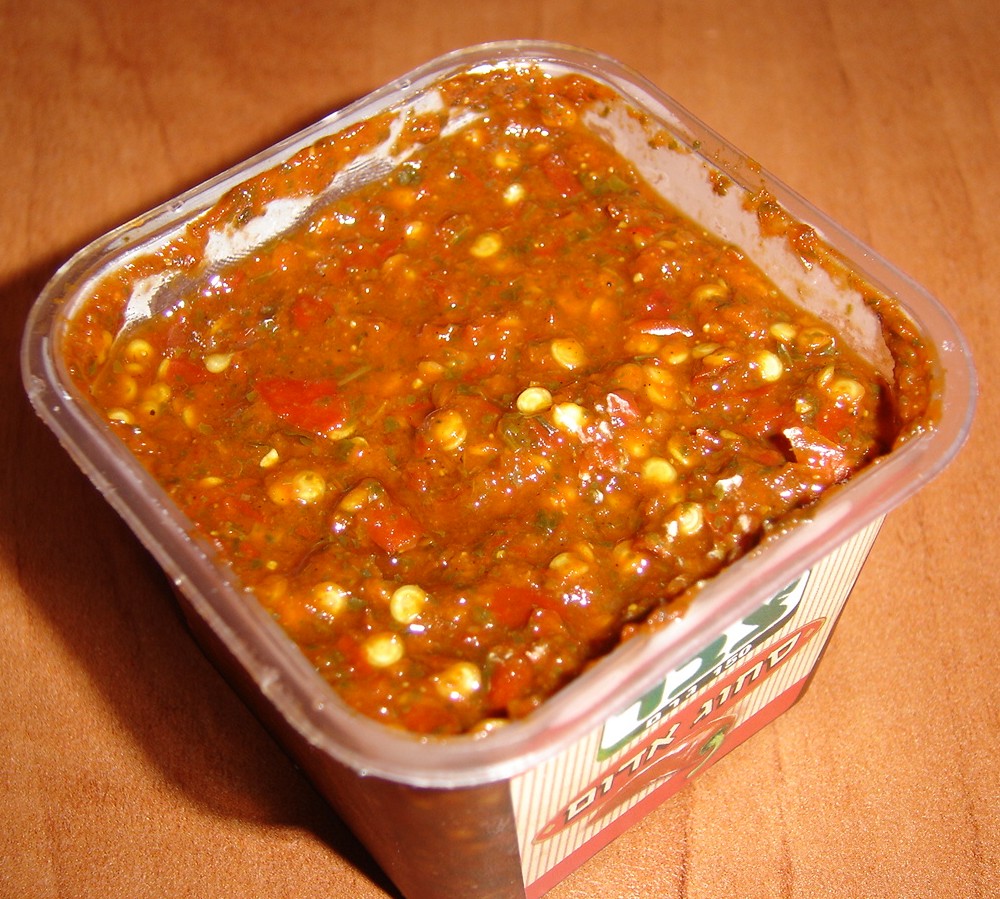 🇾🇪 Yemen and 1 moreZhugسحوق
A Yemeni hot sauce of crushed chilies, garlic, and corianderHot and fiery · Sharp and pungent
🇾🇪 Yemen and 1 moreZhugسحوق
A Yemeni hot sauce of crushed chilies, garlic, and corianderHot and fiery · Sharp and pungent