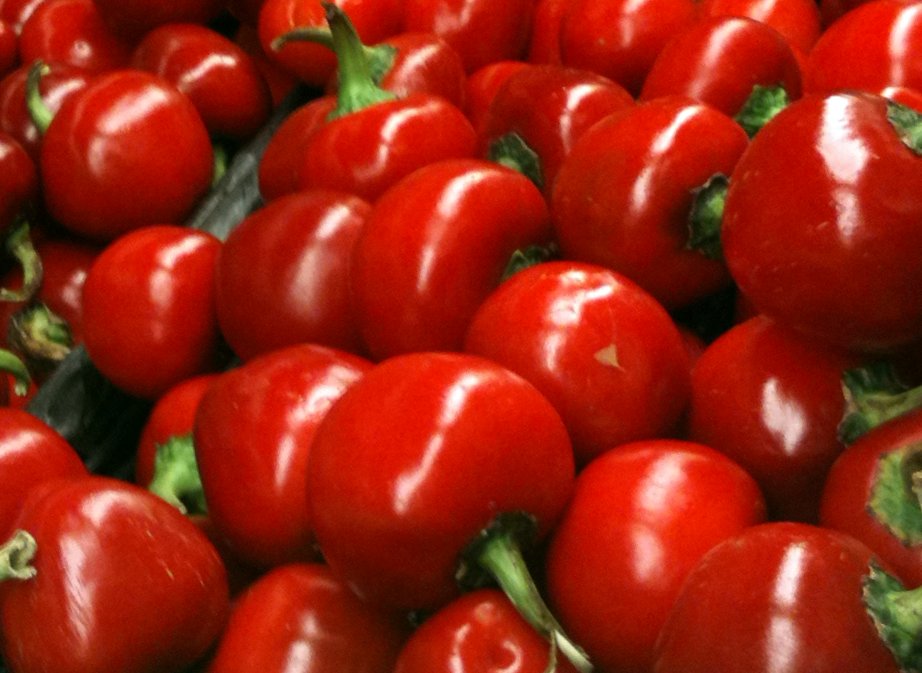
Cherry pepper
In its own language: cseresznyepaprika
Capsicum annuum
A small Capsicum annuum cultivar from Hungary, used for paprika and preserves.
The cherry pepper is a cultivar of Capsicum annuum grown primarily in Hungary. Its pods turn red when ripe and are used to make paprika or preserved in dishes like csalamádé.
- Belongs to the Capsicum annuum species.
- Pods turn from green to red when ripe.
- Used to make Hungarian paprika.
- Key ingredient in halászlé and pörkölt.
- Grown in Kalocsa and Szentes regions.
What is Cherry pepper?
This spice is a specific type of chili pepper belonging to the species Capsicum annuum. The plant produces small, round pods that resemble cherries in shape. When the fruit is young, it appears green. As it matures, the skin changes color to a bright red. Growers cultivate different varieties within this group. Some types offer a mild sweetness, while others provide a noticeable heat level. The pods are harvested once they reach full ripeness and their characteristic red hue.
Where does Cherry pepper come from?
The cherry pepper is strongly associated with Hungary. In Hungarian, the name translates directly to cherry chili. It has been a staple in the region for generations. Farmers traditionally hung bundles of these peppers in windows to dry. This practice served both as a preservation method and as decoration. The plant is also grown as an ornamental specimen in gardens. Specific local varieties have developed over time in dedicated agricultural zones.
What does Cherry pepper taste like?
The taste profile varies depending on the specific cultivar. Some versions are sweet, offering a gentle flavor without much heat. Other varieties are spicy, delivering a pungent kick. The heat level is not uniform across all plants of this type. The mature red pods contain the capsaicin responsible for the spiciness. Sweet types provide a fruity depth suitable for milder cooking applications.
How Cherry pepper is grown and processed
Farmers grow this pepper in specific regions of Hungary, notably around Kalocsa and Szentes. The plants are cultivated outdoors in suitable climates. Harvesting occurs when the pods turn fully red. After picking, traditional methods involved tying them into balls or bundles. These were then hung in well-ventilated areas to air-dry naturally. Modern processing also involves grinding dried pods into powder.
Cherry pepper, drawn
How Cherry pepper is used
Cooking in Hungary frequently features this pepper. It is ground into paprika, a fundamental seasoning for the cuisine. Fresh or dried pods are added to stews such as pörkölt. They are essential ingredients in fish soup known as halászlé. The pepper is also pickled or mixed into salads called csalamádé. Both whole dried pods and ground powder appear in kitchens.
Cherry pepper in the world's kitchens
Hungarian cuisine relies heavily on this cultivar. The Kalocsa and Szentes regions are famous for producing high-quality specimens. Local specialties include the Kalocsai and Szentesi varieties. The large Cseresznye type is also exported from these areas. The pepper defines many national dishes and provides the base for the country's signature paprika powder.
At a glance: where it turns up
Traditional and medicinal use
Traditional storage methods involved hanging dried peppers in windows. This practice was common in Hungarian households. The peppers were kept as ornaments as well as food supplies. No medicinal uses or folk remedies are described in the available information.
Buying and storing Cherry pepper
Traditionally, the peppers were stored by tying them into balls or bundles. These bundles were hung in windows to keep them dry and preserve them. This method allowed for long-term storage without refrigeration. The dried pods can be ground into powder for later use.
The trade in Cherry pepper
The Kalocsai and Szentesi varieties are recognized as local specialties. These specific types are exported from the Kalocsa and Szentes regions. The cultivation supports local agriculture and culinary identity. The production of paprika from these peppers forms part of the regional trade.
Meal
This spice belongs to everyday home cooking in Hungary. It flavors main courses served at dinner, particularly hearty stews and soups. The dried pods are also used in preserves. Pickled cherry peppers serve as side dishes or condiments. They accompany meals rather than appearing in breakfast or dessert contexts.
Questions people ask about Cherry pepper
What is a cherry pepper?
It is a cultivar of Capsicum annuum known for its small, round shape. The pods start green and turn red when mature. Varieties range from sweet to spicy.
Where does it come from?
It is primarily grown in Hungary. Specific regions like Kalocsa and Szentes are famous for their local varieties.
How is it used in cooking?
It is ground into paprika powder. It also flavors stews like pörkölt and fish soup halászlé. Pickled versions are used in preserves.
What does it taste like?
Taste varies by cultivar. Some are sweet and mild. Others are hot and pungent. The mature red pods provide the flavor.
Good reading and sources
The facts on this page come from the Wikipedia article "Cherry pepper", written by its contributors and used under the CC BY-SA 4.0 licence, and from its Wikidata record (CC0). EveryMasala rewrote the text in its own words, with AI assistance, and compares every page with the article to make sure no passage is copied. It may be reused under the same CC BY-SA 4.0 licence with a link back.
It may contain mistakes. Names, strengths and customs differ from one grower, kitchen or shop to the next. Traditional and medicinal uses are described as tradition, never as medical advice, and none of this is a substitute for a doctor. If something is wrong, tell us. Last refreshed 2026-10-04.
More from Hungary
All the spices of Hungary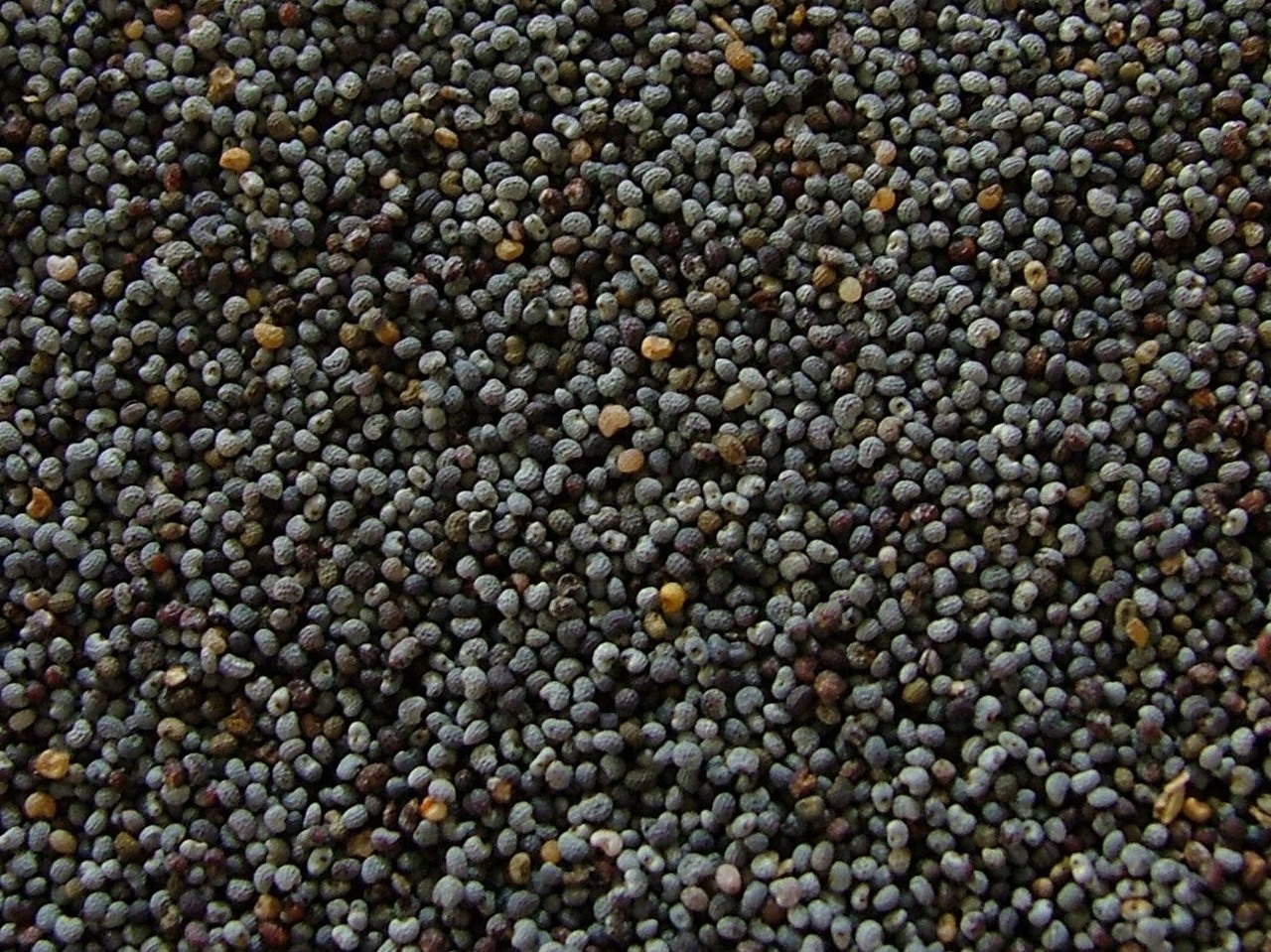 🇹🇷 Turkey and 5 morePoppy seed
The tiny kidney-shaped oilseed of the opium poppy, used in baking and cooking across Europe and South Asia.Seed · Earthy and deep
🇹🇷 Turkey and 5 morePoppy seed
The tiny kidney-shaped oilseed of the opium poppy, used in baking and cooking across Europe and South Asia.Seed · Earthy and deep
 🇲🇽 Mexico and 5 morePaprika
A red powder made from dried Capsicum annuum peppers, used to colour and flavour dishes across Europe and the Middle EasSeed · Sweet and mellow · Hot and fiery
🇲🇽 Mexico and 5 morePaprika
A red powder made from dried Capsicum annuum peppers, used to colour and flavour dishes across Europe and the Middle EasSeed · Sweet and mellow · Hot and fiery
 🇮🇳 India and 5 moreMustard seed
Tiny seeds from Brassica plants that become a sharp condiment or cooking oil.Seed · Sharp and pungent · Hot and fiery
🇮🇳 India and 5 moreMustard seed
Tiny seeds from Brassica plants that become a sharp condiment or cooking oil.Seed · Sharp and pungent · Hot and fiery
Its cousins elsewhere
All chilli 🇮🇳 IndiaChammanthi podi
A dry coconut and spice condiment from Kerala that preserves fresh chutney for months.Hot and fiery · Earthy and deep
🇮🇳 IndiaChammanthi podi
A dry coconut and spice condiment from Kerala that preserves fresh chutney for months.Hot and fiery · Earthy and deep
 🇨🇳 ChinaYongfeng chili sauce永丰辣酱
A fermented paste of peppers, rice and wheat from Hunan province, one of the region's three treasures.Paste · Hot and fiery · Sweet and mellow
🇨🇳 ChinaYongfeng chili sauce永丰辣酱
A fermented paste of peppers, rice and wheat from Hunan province, one of the region's three treasures.Paste · Hot and fiery · Sweet and mellow
 🇯🇵 Japan and 1 moreShishito pepper獅子唐辛子 (Shishitōgarashi)
A slender East Asian chili that is mostly mild with occasional spicy surprises.Sweet and mellow · Hot and fiery
🇯🇵 Japan and 1 moreShishito pepper獅子唐辛子 (Shishitōgarashi)
A slender East Asian chili that is mostly mild with occasional spicy surprises.Sweet and mellow · Hot and fiery
 🇺🇸 United StatesCarolina Reaper
A gnarled red cultivar of Capsicum chinense bred in South Carolina for extreme heat.Chilli · Hot and fiery · Sweet and mellow
🇺🇸 United StatesCarolina Reaper
A gnarled red cultivar of Capsicum chinense bred in South Carolina for extreme heat.Chilli · Hot and fiery · Sweet and mellow