Poppy seed
Papaver somniferum
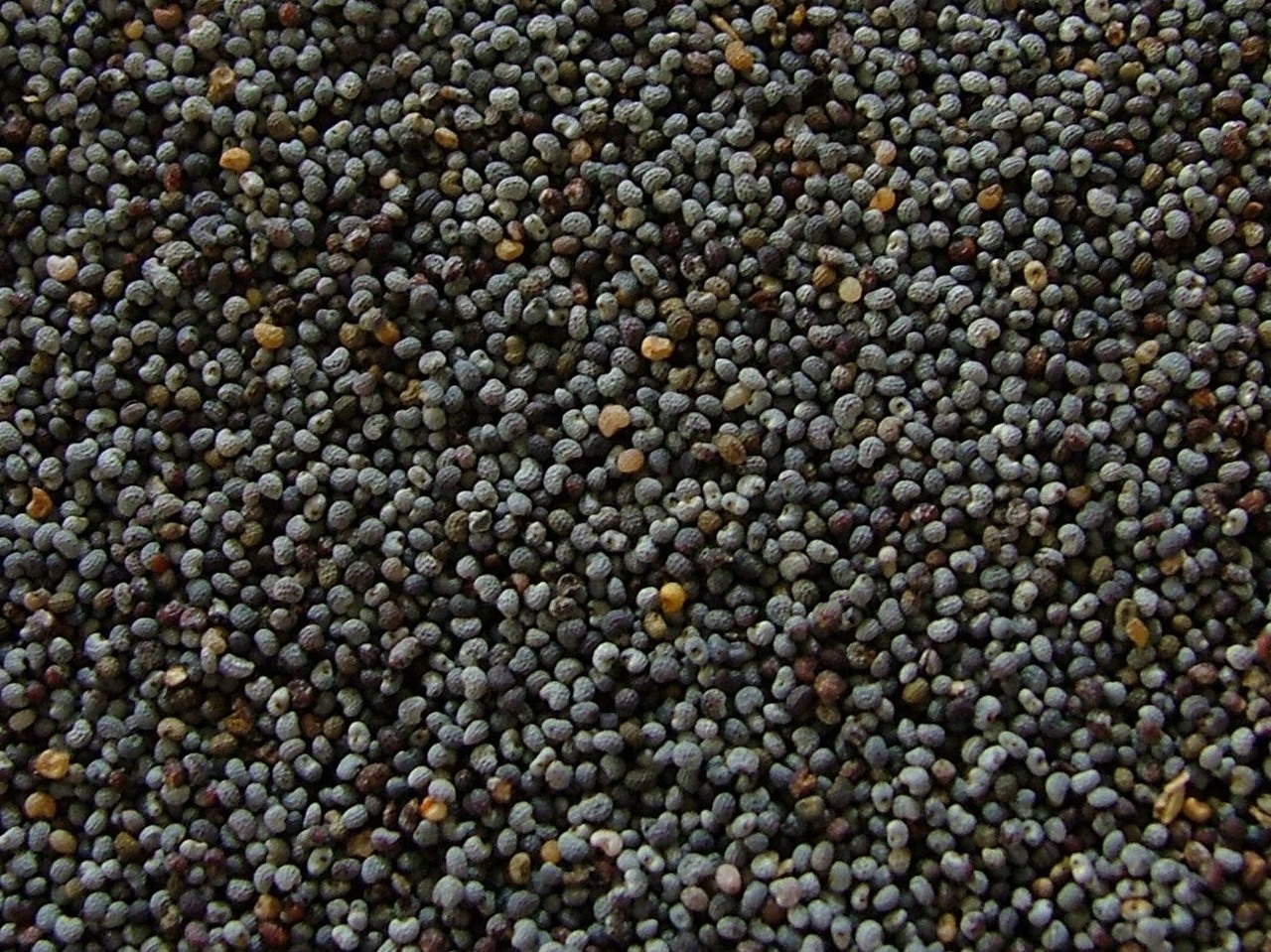
The tiny kidney-shaped oilseed of the opium poppy, used in baking and cooking across Europe and South Asia.
Poppy seeds are harvested from the dried pods of Papaver somniferum. They are widely used in Central European pastries and South Asian curries, offering a nutty flavor and thickening properties to dishes.
- One gram contains about 3,300 tiny seeds.
- Turkey produces over 8,000 tonnes annually.
- Used in Bengali curries for thickness and flavor.
- Can cause false positive drug tests for opiates.
- Traditional filling for Purim hamantashen pastries.
What is Poppy seed?
Poppy seeds are small, kidney-shaped oilseeds taken from the dried capsules of the opium poppy plant. Each seed is less than a millimeter long with a pitted surface. A single gram contains roughly 3,300 seeds. The primary flavor compound is 2-pentylfuran. They appear in white, black, or slate-blue varieties. The seeds are rich in fat and protein, providing a distinct nutty taste when eaten whole or ground.
Where does Poppy seed come from?
Civilizations have harvested these seeds for thousands of years. Ancient Egyptian medical texts from 1550 BCE list them as a sedative. The Minoan civilization on Crete cultivated poppies around 2700 BCE, using milk and honey mixtures to calm infants. The Sumerians also grew these plants early in history. Today, Turkey is the largest producer, followed by Serbia and the Czech Republic.
What does Poppy seed taste like?
The taste is described as nutty and earthy. The texture varies from crunchy when whole to smooth when ground into a paste. The flavor comes primarily from 2-pentylfuran. When pressed into oil, the seeds yield a valuable commercial product used in both cooking and industry. The seeds themselves contain very low levels of opiates compared to the plant's latex.
How Poppy seed is grown and processed
Farmers grow annual and biennial poppies directly in the ground. Harvesting for high-quality seeds requires waiting until the pods are fully dry and ripe. This timing conflicts with opium production, which uses green pods. Seeds are washed and sorted. In some regions, they are mixed with Amaranthus paniculatus seeds due to their similar appearance and lower cost.
Poppy seed, drawn
How Poppy seed is used
Whole seeds top baked goods like bagels, muffins, and cakes. Ground seeds thicken curries and stews, particularly in Bengali cuisine where they form pastes for korma or potato dishes. In Europe, they fill pastries such as strudels and rolls. The seeds can be pressed for oil or ground into a paste with sugar and water for sweet fillings. They are also used in candy bars made with boiled seeds and honey.
Poppy seed in the world's kitchens
Central European cuisines use blue and white seeds extensively in breads and Christmas pastries. Jewish cuisine features them in hamantashen during Purim. Bengali cuisine relies on white seeds for thickening gravies and making raw pastes with mustard oil. Pakistani cuisine uses them in meatball dishes called kofta. German, Polish, and Hungarian cooks incorporate them into holiday cakes and buns.
At a glance: where it turns up
Celebrations


Spiritual and ceremonial use
In Hindu tradition, seeds are added to festive drinks like thandai and sharbat. Jewish communities serve poppy seed-filled pastries during the festival of Purim. These treats are traditional foods for Ashkenazi Jews. The seeds are also part of Christmas Eve dinners in Poland, Hungary, and Lithuania, where yeast biscuits are soaked in poppy seed milk.
Poppy seed at celebrations
Poppy seeds are central to Christmas celebrations in Central and Eastern Europe. Families prepare special pastries and breads for the holiday season. In Jewish tradition, they are essential for Purim feasts. The seeds are also used in daily cooking across many cultures, appearing in everyday breads and curries without specific ceremonial requirements.
Traditional and medicinal use
Ancient Egyptians used poppy seeds as a sedative in medical treatments. Modern folk medicine sometimes utilizes them, though scientific advice warns against consumption before drug tests. Eating foods with these seeds can cause false positives for opiates. Athletes are advised to avoid them before competitions. Allergic reactions are rare but possible.
Buying and storing Poppy seed
Store seeds in a cool, dry place to prevent rancidity due to their high oil content. Commercial pastes contain preservatives and emulsifiers to maintain texture. Freshly ground seeds offer better texture and taste for pastry fillings. Whole seeds can be kept for extended periods if protected from moisture and heat.
What to use instead of Poppy seed
Amaranthus paniculatus seeds are sometimes mixed with poppy seeds due to visual similarity. Sesame seeds can be used as a topping substitute in some baked goods. For thickening curries, other nut pastes might be used, though they alter the flavor profile significantly. No exact substitute replicates the unique taste and texture of ground poppy seeds.
The trade in Poppy seed
Turkey leads global production with over 8,000 tonnes annually. The Czech Republic is the top exporter, shipping thousands of tonnes to international markets. Trade is regulated in several countries due to opiate traces. Singapore bans sales entirely. China prohibits spice mixes containing poppy parts. Saudi Arabia also restricts imports for drug control reasons.
Meal
These seeds appear in breakfast items like bagels and rusk. They feature in desserts such as sponge cakes and sweet pastries. In South Asia, they accompany lunch and dinner dishes like rice and vegetable curries. They are also found in street food snacks and preserved in candy bars. Traditional Christmas meals in Eastern Europe often include poppy seed-based sweets.
Days Poppy seed is used for
Questions people ask about Poppy seed
Where do poppy seeds come from?
They are harvested from the dried seed pods of the opium poppy plant, Papaver somniferum. Major producers include Turkey, Serbia, and the Czech Republic.
What do poppy seeds taste like?
They have a mild, nutty, and earthy flavor. When ground, they add a creamy texture to dishes. The taste comes from compounds like 2-pentylfuran.
How are poppy seeds used in cooking?
They top baked goods like bagels and cakes. Ground seeds thicken curries in Indian cuisine and fill pastries in European baking. They are also pressed into oil.
Are poppy seeds safe to eat?
Yes, but they may contain trace opiates. Consumption can lead to false positive results on drug tests. Athletes should avoid them before competitions.
What colors are poppy seeds?
They come in white, black, and slate-blue varieties. Blue seeds are popular in Central Europe, while white seeds are preferred for thickening sauces in South Asia.
Good reading and sources
- Encyclopaedia BritannicaArticle
- How British greed spurred the creation of one of Bengal’s most loved dishesThe Indian Express, Article
- Poppy seed on WikipediaEncyclopedia
- More photos on Wikimedia CommonsPhotos and video
- Wikidata recordOpen data
The facts on this page come from the Wikipedia article "Poppy seed", written by its contributors and used under the CC BY-SA 4.0 licence, and from its Wikidata record (CC0). EveryMasala rewrote the text in its own words, with AI assistance, and compares every page with the article to make sure no passage is copied. It may be reused under the same CC BY-SA 4.0 licence with a link back.
It may contain mistakes. Names, strengths and customs differ from one grower, kitchen or shop to the next. Traditional and medicinal uses are described as tradition, never as medical advice, and none of this is a substitute for a doctor. If something is wrong, tell us. Last refreshed 2026-10-04.
More from Turkey
All the spices of Turkey 🇹🇷 Turkey and 2 moreMahleb
A ground cherry seed used to sweeten Middle Eastern baked goods with an almond-cherry note.Seed · Sweet and mellow · Bitter
🇹🇷 Turkey and 2 moreMahleb
A ground cherry seed used to sweeten Middle Eastern baked goods with an almond-cherry note.Seed · Sweet and mellow · Bitter
 🇹🇷 Turkey and 5 moreBlack cumin
The tiny black seed of a wild annual flower, used across the Middle East and South Asia.Seed · Sharp and pungent · Herbal and green
🇹🇷 Turkey and 5 moreBlack cumin
The tiny black seed of a wild annual flower, used across the Middle East and South Asia.Seed · Sharp and pungent · Herbal and green
 🇮🇳 India and 5 moreCumin
The dried seed of a small parsley-family herb, used whole or ground in many world cuisines.Seed · Warm and sweet-spiced · Earthy and deep
🇮🇳 India and 5 moreCumin
The dried seed of a small parsley-family herb, used whole or ground in many world cuisines.Seed · Warm and sweet-spiced · Earthy and deep
 🇬🇷 Greece and 1 moreMasticΜαστίχα
A bitter-sweet resin from the mastic tree, used in desserts and traditional medicine.Bitter · Sharp and pungent
🇬🇷 Greece and 1 moreMasticΜαστίχα
A bitter-sweet resin from the mastic tree, used in desserts and traditional medicine.Bitter · Sharp and pungent
Its cousins elsewhere
All seed 🇵🇪 Peru and 5 moreChili pepperchīlli
The pungent berry of the Capsicum plant, used to add heat to dishes worldwide.Fruit · Hot and fiery · Earthy and deep
🇵🇪 Peru and 5 moreChili pepperchīlli
The pungent berry of the Capsicum plant, used to add heat to dishes worldwide.Fruit · Hot and fiery · Earthy and deep
 🇮🇷 Iran and 4 moreSaffronزعفران
The dried crimson stigmas of the autumn-blooming saffron crocus.Stigma · Sharp and pungent · Bitter
🇮🇷 Iran and 4 moreSaffronزعفران
The dried crimson stigmas of the autumn-blooming saffron crocus.Stigma · Sharp and pungent · Bitter
 🇱🇾 Libya and 1 morePilpelchumaפלפלצ'ומה
A steamed chili and garlic paste from Libyan Jewish cuisine, now common in Israel.Hot and fiery · Sharp and pungent
🇱🇾 Libya and 1 morePilpelchumaפלפלצ'ומה
A steamed chili and garlic paste from Libyan Jewish cuisine, now common in Israel.Hot and fiery · Sharp and pungent
 🇮🇳 IndiaLakadong turmericShynrai Lakadong (Khasi), Chyrmit Lakadong (Pnar)
A high-curcumin turmeric variety grown organically in the Jaintia Hills of Meghalaya, India.Earthy and deep · Bitter
🇮🇳 IndiaLakadong turmericShynrai Lakadong (Khasi), Chyrmit Lakadong (Pnar)
A high-curcumin turmeric variety grown organically in the Jaintia Hills of Meghalaya, India.Earthy and deep · Bitter