
Temulawak
Curcuma zanthorrhiza
The rhizome of a Javanese ginger relative, used for its earthy flavour and traditional wellness drinks.
Temulawak is a rhizome from the ginger family native to Java in Indonesia. It carries an earthy, slightly bitter taste with notes of turmeric and ginger. People traditionally use it to make herbal teas and digestive tonics.
- Native to Java, Indonesia
- Rhizome contains curcumin
- Used to make sari temulawak drink
- Traditional remedy for dyspepsia
- Grows in loose tropical soil
What is Temulawak?
Temulawak belongs to the ginger family and grows as a tropical plant. The part used is the underground rhizome, which functions like a root. It contains starch and essential oils rich in sesquiterpenes. The rhizome also holds curcumin, a compound found in other turmeric varieties. The taste is distinctly earthy and slightly bitter. It smells and tastes similar to ginger but with a deeper, more robust profile. Cooks and herbalists value it for these specific aromatic qualities.
Where does Temulawak come from?
This plant originated on the island of Java in Indonesia. From there, it spread across the Malesia biogeographical region. It is known by different local names, including koneng gede in Sundanese. The scientific name Curcuma zanthorrhiza is sometimes spelled with an x, but this is just a variant. Its natural home remains deeply tied to Indonesian culture and agriculture.
What does Temulawak taste like?
The rhizome provides an earthy and bitter flavour profile. This comes from its content of sesquiterpenes and curcumin. The essential oil gives it a distinct aroma separate from common ginger. It lacks the sharp heat of peppers or the sweetness of vanilla. Instead, it offers a grounded, medicinal taste that pairs well with warm beverages.
How Temulawak is grown and processed
Temulawak thrives in tropical climates up to 1500 meters above sea level. It requires loose soil for its rhizomes to develop properly. Most cultivation happens in Indonesia, Malaysia, Thailand, and the Philippines. Outside Southeast Asia, it appears in places like China, India, and the United States, though less commonly. Farmers harvest the rhizomes when the plant reaches maturity.
Temulawak, drawn
How Temulawak is used
People primarily use the rhizome to make traditional drinks. In Java, juice from the plant creates sari temulawak, a popular herbal beverage. It is also used as a spice in cooking. Historically, it served as a pesticide against mushroom mites. The rhizome is processed to extract its oils and starch for various applications.
Temulawak in the world's kitchens
It is central to Javanese culinary traditions. The drink sari temulawak is a staple in Java. While grown in Malaysia, Thailand, and the Philippines, its strongest cultural link remains with Indonesia. Other regions use it more sparingly or for medicinal purposes rather than daily cuisine.
At a glance: where it turns up


Spiritual and ceremonial use
There are no specific religious rituals or spiritual offerings tied to this spice in the provided information. It does not appear in sacred texts or ceremonial diets described here.
Traditional and medicinal use
In traditional medicine, the rhizome is used to treat dyspepsia, or indigestion. It is valued for its ability to soothe the stomach. The plant contains curcumin and essential oils believed to aid digestion. These uses are based on folk practices and traditional knowledge, not clinical medical advice.
The trade in Temulawak
Cultivation is concentrated in Indonesia, Malaysia, Thailand, and the Philippines. It has spread to other countries like China, India, Japan, and the United States.
Meal
Temulawak is most associated with drinks. It forms the base of sari temulawak, a traditional Javanese herbal tea. It is not typically used in breakfast, lunch, or dinner dishes as a main ingredient. Instead, it serves as a functional beverage consumed for its properties.
Questions people ask about Temulawak
What is temulawak?
Temulawak is a rhizome from the ginger family native to Java, Indonesia. It is also called Java ginger. It is used to make herbal drinks and is traditionally taken for digestive health.
Where does temulawak come from?
It originates from the island of Java in Indonesia. It is now also cultivated in Malaysia, Thailand, and the Philippines, with some presence in other tropical regions worldwide.
What does temulawak taste like?
It has an earthy and slightly bitter flavour. The taste comes from sesquiterpenes and curcumin in the rhizome. It resembles ginger but is less spicy and more robust.
How is temulawak used?
It is primarily used to make sari temulawak, a traditional Javanese herbal drink. The rhizome is also used as a spice and in traditional medicine for indigestion.
Good reading and sources
- Curcuma zanthorrhiza on WikipediaEncyclopedia
- More photos on Wikimedia CommonsPhotos and video
- Wikidata recordOpen data
The facts on this page come from the Wikipedia article "Curcuma zanthorrhiza", written by its contributors and used under the CC BY-SA 4.0 licence, and from its Wikidata record (CC0). EveryMasala rewrote the text in its own words, with AI assistance, and compares every page with the article to make sure no passage is copied. It may be reused under the same CC BY-SA 4.0 licence with a link back.
It may contain mistakes. Names, strengths and customs differ from one grower, kitchen or shop to the next. Traditional and medicinal uses are described as tradition, never as medical advice, and none of this is a substitute for a doctor. If something is wrong, tell us. Last refreshed 2026-10-04.
More from Indonesia
All the spices of Indonesia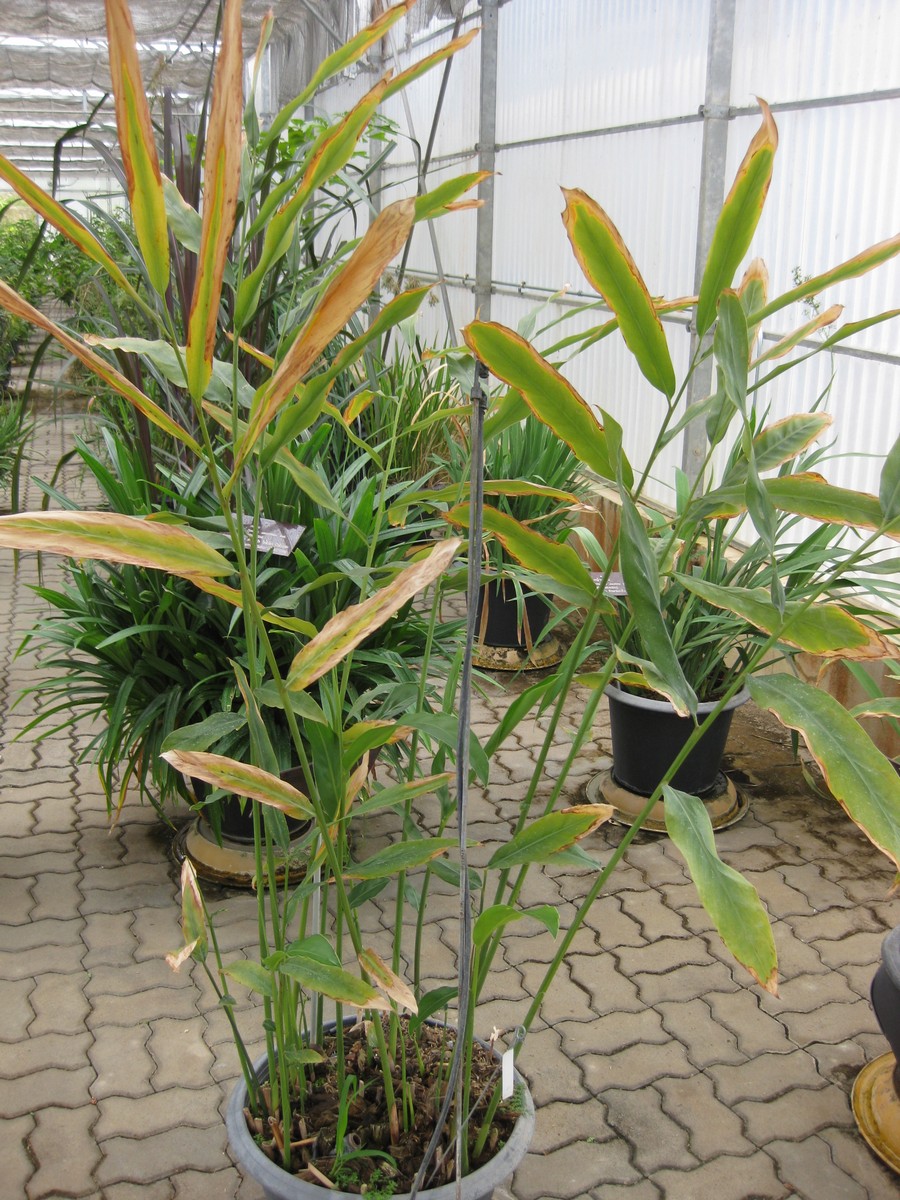 🇮🇩 Indonesia and 5 moreGreater galangalข่า
The pungent rhizome of a ginger relative, essential in Southeast Asian soups and curries.Root · Sharp and pungent · Citrus and bright
🇮🇩 Indonesia and 3 moreGalangal
The pungent rhizome of the ginger family, essential to Southeast Asian soups and pastes.Root · Sharp and pungent · Warm and sweet-spiced
🇮🇩 Indonesia and 5 moreGreater galangalข่า
The pungent rhizome of a ginger relative, essential in Southeast Asian soups and curries.Root · Sharp and pungent · Citrus and bright
🇮🇩 Indonesia and 3 moreGalangal
The pungent rhizome of the ginger family, essential to Southeast Asian soups and pastes.Root · Sharp and pungent · Warm and sweet-spiced
 🇮🇩 Indonesia and 5 moreGinger
The pungent rhizome of a flowering perennial, one of the world's most traded spices.Root · Hot and fiery · Sharp and pungent
🇮🇩 Indonesia and 5 moreGinger
The pungent rhizome of a flowering perennial, one of the world's most traded spices.Root · Hot and fiery · Sharp and pungent
 🇮🇩 Indonesia and 5 moreKencur沙姜
A stemless ginger-family rhizome with a peppery, camphorous biteRoot · Sharp and pungent · Herbal and green
🇮🇩 Indonesia and 5 moreKencur沙姜
A stemless ginger-family rhizome with a peppery, camphorous biteRoot · Sharp and pungent · Herbal and green
Its cousins elsewhere
All root 🇮🇷 Iran and 4 moreSaffronزعفران
The dried crimson stigmas of the autumn-blooming saffron crocus.Stigma · Sharp and pungent · Bitter
🇮🇷 Iran and 4 moreSaffronزعفران
The dried crimson stigmas of the autumn-blooming saffron crocus.Stigma · Sharp and pungent · Bitter
 🇮🇳 IndiaLakadong turmericShynrai Lakadong (Khasi), Chyrmit Lakadong (Pnar)
A high-curcumin turmeric variety grown organically in the Jaintia Hills of Meghalaya, India.Earthy and deep · Bitter
🇮🇳 IndiaLakadong turmericShynrai Lakadong (Khasi), Chyrmit Lakadong (Pnar)
A high-curcumin turmeric variety grown organically in the Jaintia Hills of Meghalaya, India.Earthy and deep · Bitter
 🇾🇪 Yemen and 1 moreHilbehحلبة
A frothy Yemeni condiment made from ground fenugreek seeds and waterPaste · Bitter · Earthy and deep
🇾🇪 Yemen and 1 moreHilbehحلبة
A frothy Yemeni condiment made from ground fenugreek seeds and waterPaste · Bitter · Earthy and deep
 🇴🇲 Oman and 3 moreDried lime
Sun-dried limes from the Persian Gulf, used whole or ground to add sour depth to Middle Eastern dishes.Fruit · Sour and tart · Earthy and deep
🇴🇲 Oman and 3 moreDried lime
Sun-dried limes from the Persian Gulf, used whole or ground to add sour depth to Middle Eastern dishes.Fruit · Sour and tart · Earthy and deep