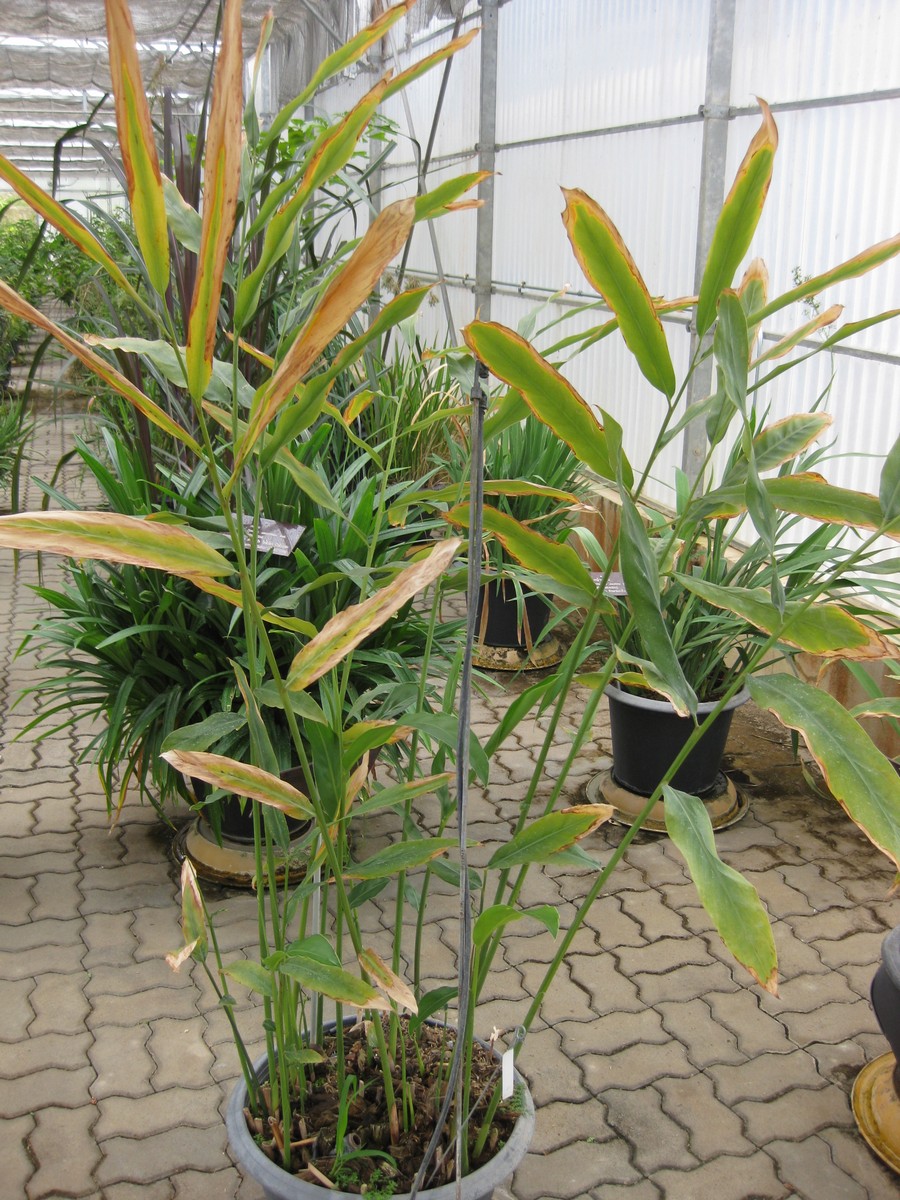
Greater galangal
In its own language: ข่า
Alpinia galanga
The pungent rhizome of a ginger relative, essential in Southeast Asian soups and curries.
Greater galangal is the rhizome of Alpinia galanga, a perennial plant in the ginger family native to South and Southeast Asia. It has a sharp, citrusy taste with notes of black pepper and pine, used fresh or dried in Thai and Indonesian cooking. Traditionally, it serves as a medicinal root in Unani and Ayurvedic systems for respiratory ailments.
- Native to South and Southeast Asia, with Java as its historic cultivation center.
- Rhizome has a pungent, citrusy taste with notes of black pepper and pine.
- Essential ingredient in Thai tom kha kai and Indonesian spice pastes.
- Used in Unani and Ayurvedic medicine for respiratory ailments.
- Red fruit tastes similar to cardamom and is used in traditional Chinese medicine.
What is Greater galangal?
Greater galangal is the thick, knobby rhizome of Alpinia galanga, a tall evergreen plant belonging to the ginger family. The root comes in two main varieties: white and red. The white form is primarily culinary, while the red variety is often reserved for traditional medicine. The rhizome has a hard texture and a distinctively strong aroma. Its flavor profile is sharp and pungent, carrying bright citrus notes alongside hints of black pepper and pine needles. The red fruit of the plant is also utilized, offering a taste similar to cardamom.
Where does Greater galangal come from?
This spice originates from South and Southeast Asia. During the historical spice trade, Java served as its primary center of cultivation. Today, it remains widely grown across Island Southeast Asia, particularly in the Greater Sunda Islands and the Philippines. Cultivation has expanded into Mainland Southeast Asia, with Thailand becoming a significant producer. The name 'galangal' likely traces back through Persian and Arabic terms to the Chinese gao liang jiang, reflecting its long history of movement along trade routes.
What does Greater galangal taste like?
The taste of greater galangal is defined by its intense pungency and aromatic complexity. It delivers a sharp bite that clears the sinuses, driven by volatile oils like cineol, pinene, and eugenol. The primary flavor notes are citrusy and resinous, reminiscent of pine needles. This is balanced by a warm, peppery undertone. Unlike common ginger, which is sweeter and spicier, galangal offers a cleaner, more structured heat with a lingering floral-citrus finish.
How Greater galangal is grown and processed
The plant grows in clumps from underground rhizomes, producing stiff stalks that can reach up to two meters in height. It features long leaves and produces red fruit. As an evergreen perennial, it thrives in tropical climates typical of Southeast Asia. Harvesting involves digging up the mature rhizomes. In some regions, the roots are sliced and dried for preservation. Fresh rhizomes are preferred for cooking to maintain their volatile oils, though dried versions are available for storage.
Greater galangal, drawn
How Greater galangal is used
In Thai cuisine, the rhizome is a staple in curries and soups, most notably tom kha kai. It is typically added fresh, either in chunks, thin slices, or mashed into curry pastes. In Indonesia, it is known as lengkuas and laos, forming the base of many spice pastes. Among the Mansaka people of the Philippines, the rhizome is traditionally fermented with honey to create a wine called byais. It is also used in Javanese and Sundanese cooking, often paired with other aromatics.
Greater galangal in the world's kitchens
Thai cuisine relies heavily on fresh galangal for its signature soups and green or red curries. Indonesian cooking uses it extensively in spice blends (bumbu) for meats and vegetables. In the Philippines, it appears in both everyday cooking and traditional fermented beverages. Unani medicine utilizes it as a prepared drug ingredient, while Ayurveda and Siddha traditions employ it in herbal formulations. Each culture treats the root slightly differently, from fresh slicing in kitchens to powdered forms in medicine cabinets.
At a glance: where it turns up
By meal
Spiritual use


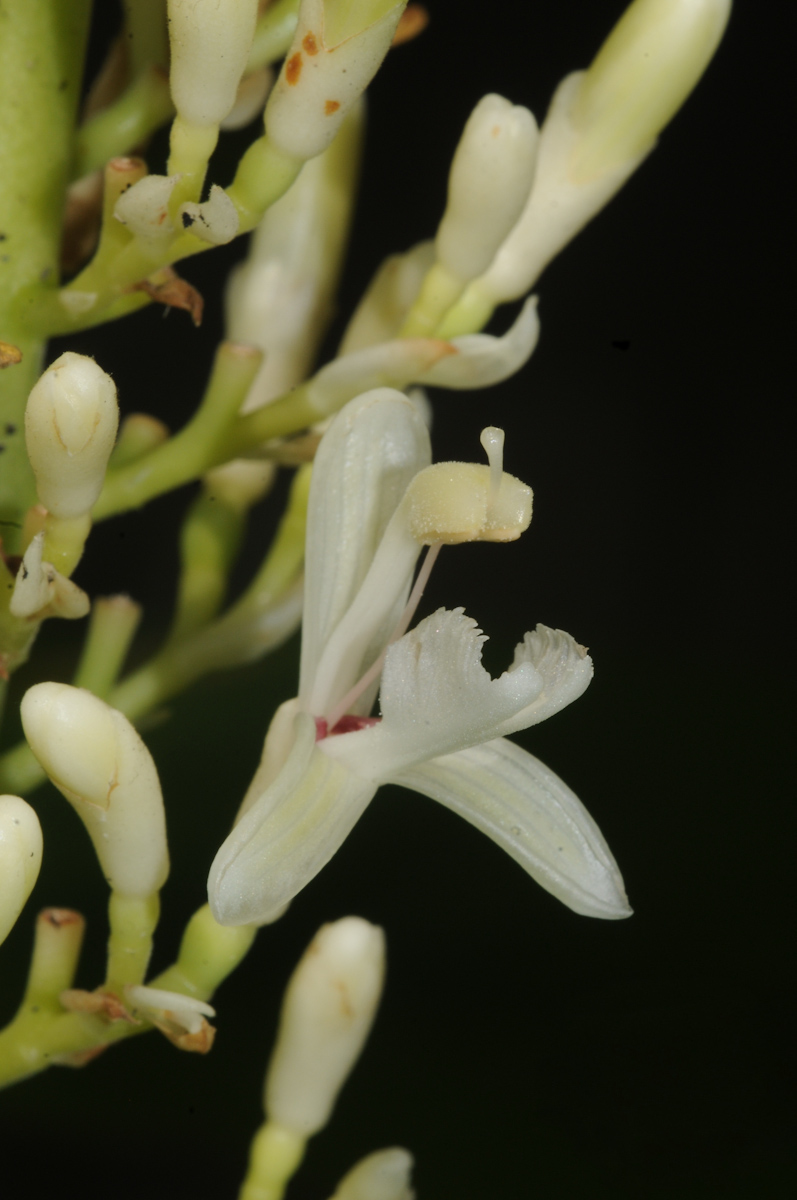
Spiritual and ceremonial use
In Hindu and Ayurvedic traditions, the plant holds medicinal significance. It is considered a Vata Shamana drug in Ayurveda, helping to balance bodily energies. In Tamil Siddha medicine, it is known as perarathai and used in rituals involving health and wellness. The Kavalan people of Taiwan use its leaves to make nanel, a rolled leaf instrument played as a traditional children's toy, linking the plant to Austronesian cultural heritage rather than strict religious ritual.
Greater galangal at celebrations
There are no specific festivals or celebrations directly tied to greater galangal in the provided sources. Its use is integrated into daily cooking and traditional healthcare practices rather than being reserved for special holidays or ceremonial events. It is a staple ingredient rather than a seasonal novelty.
Traditional and medicinal use
Traditional medicine systems value this rhizome highly. In Unani medicine, it is called khulanjan and used as a cardiac tonic and expectorant for asthma, coughs, and sore throats. Ayurveda and Siddha medicine use it similarly for respiratory issues, often combined with licorice root. African American folk medicine and hoodoo have historically referred to it as 'chewing John' or 'court case root,' using it in folk magic and remedies. These uses are described as traditional practices only.
Buying and storing Greater galangal
Fresh rhizomes should be stored in a cool, dry place or refrigerated to prevent drying out. They can be frozen for longer-term storage without losing their essential oils. Dried pieces should be kept in airtight containers away from light and moisture to preserve their potency. Over time, the flavor diminishes, so fresh roots are preferred for optimal taste.
The trade in Greater galangal
Java was the original center of cultivation during the historic spice trade, establishing its importance in regional commerce. Today, production remains concentrated in Island Southeast Asia, particularly Indonesia and the Philippines. Thailand has also become a major growing region. The spice moves through local markets and international trade networks, often sold fresh in wet markets or dried in spice shops. Adulteration is less common than with saffron, but confusion between greater and lesser galangal occurs.
Meal
Greater galangal is most commonly associated with dinner and street-food settings. It forms the backbone of savory soups and curries served as main courses. In Thailand, these dishes are popular street food options. While less common in breakfasts, its use in hearty, warming broths makes it suitable for cooler evening meals. It is rarely found in desserts or sweet snacks due to its savory and pungent nature.
Questions people ask about Greater galangal
What does greater galangal taste like?
It has a sharp, pungent flavor with strong citrus notes, accompanied by hints of black pepper and pine needles. It is less sweet and spicy than common ginger, offering a cleaner, more aromatic heat.
Where is greater galangal originally from?
It is native to South and Southeast Asia. Java was its primary center of cultivation during the spice trade, and it remains widely grown in Indonesia, Thailand, and the Philippines today.
How is it used in cooking?
It is commonly used fresh in Thai curries and soups like tom kha kai. It is added in chunks, slices, or mashed into pastes. In the Philippines, it is sometimes fermented with honey to make wine.
What is the difference between greater and lesser galangal?
Greater galangal (Alpinia galanga) is larger, more pungent, and has stronger citrus and pine flavors. Lesser galangal is smaller, milder, and less aromatic. They are not fully interchangeable.
Is it used in traditional medicine?
Yes. In Unani and Ayurvedic traditions, it is used as a tonic for the heart and lungs, treating asthma, coughs, and sore throats. It is often combined with licorice root in herbal preparations.
Good reading and sources
- Alpinia galanga on WikipediaEncyclopedia
- More photos on Wikimedia CommonsPhotos and video
- Wikidata recordOpen data
The facts on this page come from the Wikipedia article "Alpinia galanga", written by its contributors and used under the CC BY-SA 4.0 licence, and from its Wikidata record (CC0). EveryMasala rewrote the text in its own words, with AI assistance, and compares every page with the article to make sure no passage is copied. It may be reused under the same CC BY-SA 4.0 licence with a link back.
It may contain mistakes. Names, strengths and customs differ from one grower, kitchen or shop to the next. Traditional and medicinal uses are described as tradition, never as medical advice, and none of this is a substitute for a doctor. If something is wrong, tell us. Last refreshed 2026-10-04.
More from Indonesia
All the spices of Indonesia 🇮🇩 Indonesia and 3 moreTemulawak
The rhizome of a Javanese ginger relative, used for its earthy flavour and traditional wellness drinks.Root · Earthy and deep · Bitter
🇮🇩 Indonesia and 3 moreTemulawak
The rhizome of a Javanese ginger relative, used for its earthy flavour and traditional wellness drinks.Root · Earthy and deep · Bitter
 🇮🇩 Indonesia and 5 moreGinger
The pungent rhizome of a flowering perennial, one of the world's most traded spices.Root · Hot and fiery · Sharp and pungent
🇮🇩 Indonesia and 3 moreGalangal
The pungent rhizome of the ginger family, essential to Southeast Asian soups and pastes.Root · Sharp and pungent · Warm and sweet-spiced
🇮🇩 Indonesia and 5 moreGinger
The pungent rhizome of a flowering perennial, one of the world's most traded spices.Root · Hot and fiery · Sharp and pungent
🇮🇩 Indonesia and 3 moreGalangal
The pungent rhizome of the ginger family, essential to Southeast Asian soups and pastes.Root · Sharp and pungent · Warm and sweet-spiced
 🇮🇩 Indonesia and 5 moreKencur沙姜
A stemless ginger-family rhizome with a peppery, camphorous biteRoot · Sharp and pungent · Herbal and green
🇮🇩 Indonesia and 5 moreKencur沙姜
A stemless ginger-family rhizome with a peppery, camphorous biteRoot · Sharp and pungent · Herbal and green
Its cousins elsewhere
All root 🇮🇳 India and 2 moreCardamom
Aromatic seeds from spindle-shaped pods used in sweet and savory dishes across Asia and the Middle East.Seed · Sharp and pungent · Warm and sweet-spiced
🇮🇳 India and 2 moreCardamom
Aromatic seeds from spindle-shaped pods used in sweet and savory dishes across Asia and the Middle East.Seed · Sharp and pungent · Warm and sweet-spiced
 🇮🇱 Israel and 5 moreCoriander
The leaves and dried seeds of an annual Mediterranean herb used in cuisines worldwide.Leaf · Citrus and bright · Warm and sweet-spiced
🇮🇱 Israel and 5 moreCoriander
The leaves and dried seeds of an annual Mediterranean herb used in cuisines worldwide.Leaf · Citrus and bright · Warm and sweet-spiced
 🇵🇪 Peru and 3 morePink peppercornmulli
The dried pink drupes of the Schinus molle tree, sold as a peppery alternative to black pepper.Fruit · Sharp and pungent · Citrus and bright
🇵🇪 Peru and 3 morePink peppercornmulli
The dried pink drupes of the Schinus molle tree, sold as a peppery alternative to black pepper.Fruit · Sharp and pungent · Citrus and bright
 🇱🇰 Sri Lanka and 5 moreCinnamon
The dried inner bark of Cinnamomum trees, prized for its sweet warmth and essential oil.Bark · Warm and sweet-spiced · Sweet and mellow
🇱🇰 Sri Lanka and 5 moreCinnamon
The dried inner bark of Cinnamomum trees, prized for its sweet warmth and essential oil.Bark · Warm and sweet-spiced · Sweet and mellow