
Torch ginger
In its own language: kecombrang
Etlingera elatior
The edible pink flower bud of a rhizomatous plant, used for sourness in Southeast Asian cooking.
Torch ginger is a flowering herb native to the Malay Peninsula and Indonesian islands. Its pink buds provide a distinct sour note to fish stews, noodle soups, and salads across Southeast Asia.
- Native to the Malay Peninsula and Indonesian islands.
- Flower buds provide a distinct sour flavor to dishes.
- Essential ingredient in Malaysian asam laksa soup.
- Used by Karo people in North Sumatra for fish stews.
- Leaves contain high levels of chlorogenic acid.
What is Torch ginger?
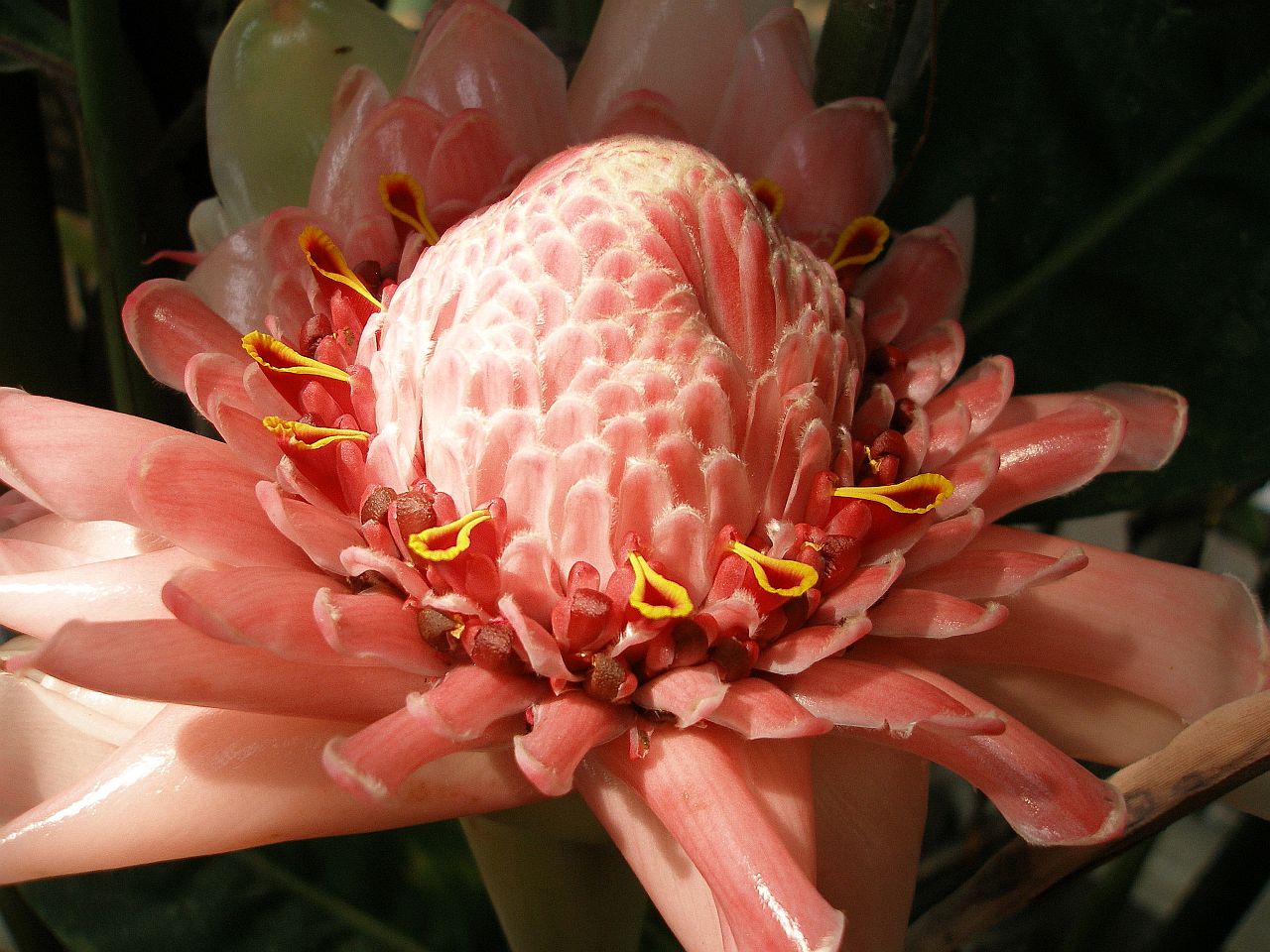
Torch ginger is an herbaceous perennial plant belonging to the ginger family. It grows from a rhizome into a tall pseudostem that can reach several metres in height. The plant produces large, showy pink flowers arranged in a cone-like shape called an inflorescence. These blooms consist of many layers of bracts surrounding small true flowers. The leaves are broad, leathery, and grooved down the center. While the bright flowers are often used for decoration, the unopened buds are the part valued in the kitchen. They offer a unique sensory profile that distinguishes them from other culinary herbs.
Where does Torch ginger come from?
This species originates from the Malesia bioregion, specifically the Malay Peninsula and the islands of Indonesia. It is also found in New Guinea. The plant has been cultivated and utilized by various local communities in these regions for generations. Different cultures have developed their own names for it, reflecting its deep integration into local environments. The Karo people of North Sumatra and Sundanese communities in Java have long recognized its culinary importance.
What does Torch ginger taste like?
The primary characteristic of torch ginger buds is their sour quality. This tartness makes them suitable for balancing rich or spicy dishes. Alongside the sourness, there is a mild pungency that adds depth to the flavor profile. The taste is fresh and slightly herbal. In some preparations, the ripe seed pods contribute additional sour notes. The combination allows the spice to cut through heavy fats and enhance the brightness of seafood and vegetable mixtures.
How Torch ginger is grown and processed
The plant develops from a rhizome, sending up a leafy shoot within weeks. The shoot matures over roughly seventy days before producing a flower head. The inflorescence takes more than fifty days to swell and turn pink before blooming fully. The resulting cone can be quite large, reaching up to twenty-five centimeters in diameter. Farmers harvest the buds before they open completely to preserve their texture and flavor. The strong fibers of the plant support its tall growth structure in tropical climates.
Torch ginger, drawn
How Torch ginger is used
Cooking with torch ginger involves using the raw or lightly cooked buds. In North Sumatra, the Karo people add them to fish stews spiced with Andaliman peppers. Balinese cooks use the lower trunk parts for one chili sauce and the buds for another. Malaysians include the flower in asam laksa, a spicy sour noodle soup, and in kerabu salads. Thai cuisine incorporates it into similar salad preparations. The sour element helps define the character of these regional dishes.
Torch ginger in the world's kitchens
Southeast Asian cuisines rely heavily on this spice. Malay cooking uses it in sour soups and salads. Thai cuisine employs it for freshness in mixed dishes. Indonesian traditions vary by region; the Karo people use it in fish stews, while Balinese cooks integrate it into chili sauces. Sundanese cuisine utilizes the buds for their specific sour punch. Each culture adapts the ingredient to local tastes, but the core function of adding acidity remains constant across these diverse culinary landscapes.
At a glance: where it turns up



Traditional and medicinal use
Traditional medicine systems may utilize extracts from the leaves. Research indicates the presence of caffeoylquinic acids and flavonoids in the foliage. A standardized extract containing forty percent chlorogenic acid has been developed from the leaves. This content is higher than that found in commercial honeysuckle extracts. However, these uses are described as traditional or experimental rather than established medical advice.
The trade in Torch ginger
The plant is native to specific regions in Southeast Asia and is traded locally within those areas. Local markets in Indonesia, Malaysia, and Thailand likely handle its distribution. The focus remains on regional consumption rather than international export routes.
Meal
This ingredient appears primarily in lunch and dinner settings. It features prominently in street food stalls serving noodle soups and quick salads. The sour profile makes it ideal for main courses rather than breakfast items. It is also used in preserves like sambals, which serve as condiments alongside heavier meals. The versatility allows it to function in both casual daily eating and more elaborate feast-style preparations involving fish.
Questions people ask about Torch ginger
What does torch ginger taste like?
It has a distinct sour taste with a mild pungency. This acidity makes it perfect for balancing rich flavors in seafood dishes and spicy salads across Southeast Asia.
Where does torch ginger come from?
It is native to the Malesia bioregion, including the Malay Peninsula, Indonesia, and New Guinea. It is widely used in the cuisines of these countries today.
How is it used in cooking?
The unopened pink buds are chopped and added to soups, stews, and salads. They provide a necessary sour note in dishes like asam laksa and Karo fish stews.
Is it related to regular ginger?
Yes, it belongs to the Zingiberaceae family, making it a relative of common ginger. However, it is grown for its flower buds rather than its root rhizome.
Good reading and sources
- Etlingera elatior on WikipediaEncyclopedia
- More photos on Wikimedia CommonsPhotos and video
- Wikidata recordOpen data
The facts on this page come from the Wikipedia article "Etlingera elatior", written by its contributors and used under the CC BY-SA 4.0 licence, and from its Wikidata record (CC0). EveryMasala rewrote the text in its own words, with AI assistance, and compares every page with the article to make sure no passage is copied. It may be reused under the same CC BY-SA 4.0 licence with a link back.
It may contain mistakes. Names, strengths and customs differ from one grower, kitchen or shop to the next. Traditional and medicinal uses are described as tradition, never as medical advice, and none of this is a substitute for a doctor. If something is wrong, tell us. Last refreshed 2026-10-04.
More from Indonesia
All the spices of Indonesia 🇮🇩 Indonesia and 4 moreClove
The dried flower bud of a tropical tree, prized for its intense warmth and numbing bite.Flower · Sharp and pungent · Warm and sweet-spiced
🇮🇩 Indonesia and 4 moreClove
The dried flower bud of a tropical tree, prized for its intense warmth and numbing bite.Flower · Sharp and pungent · Warm and sweet-spiced
 🇮🇩 Indonesia and 3 moreNutmeg
The dried seed of a tropical evergreen tree, prized for its warm, pungent flavor.Seed · Warm and sweet-spiced · Sweet and mellow
🇮🇩 Indonesia and 3 moreNutmeg
The dried seed of a tropical evergreen tree, prized for its warm, pungent flavor.Seed · Warm and sweet-spiced · Sweet and mellow
 🇮🇳 India and 4 moreCurry paste
A blended mixture of spices and aromatics used as the base for curries in Asia.Warm and sweet-spiced · Earthy and deep
🇮🇳 India and 4 moreCurry paste
A blended mixture of spices and aromatics used as the base for curries in Asia.Warm and sweet-spiced · Earthy and deep
 🇮🇩 Indonesia and 3 moreTemulawak
The rhizome of a Javanese ginger relative, used for its earthy flavour and traditional wellness drinks.Root · Earthy and deep · Bitter
🇮🇩 Indonesia and 3 moreTemulawak
The rhizome of a Javanese ginger relative, used for its earthy flavour and traditional wellness drinks.Root · Earthy and deep · Bitter
Its cousins elsewhere
All flower 🇫🇷 France and 1 moreDijon mustardMoutarde de Dijon
A sharp condiment made from brown mustard seeds and white wine or verjuice, originating in Burgundy.Sharp and pungent · Sour and tart
🇫🇷 France and 1 moreDijon mustardMoutarde de Dijon
A sharp condiment made from brown mustard seeds and white wine or verjuice, originating in Burgundy.Sharp and pungent · Sour and tart
 🇮🇹 ItalyMostardamostarda di frutta
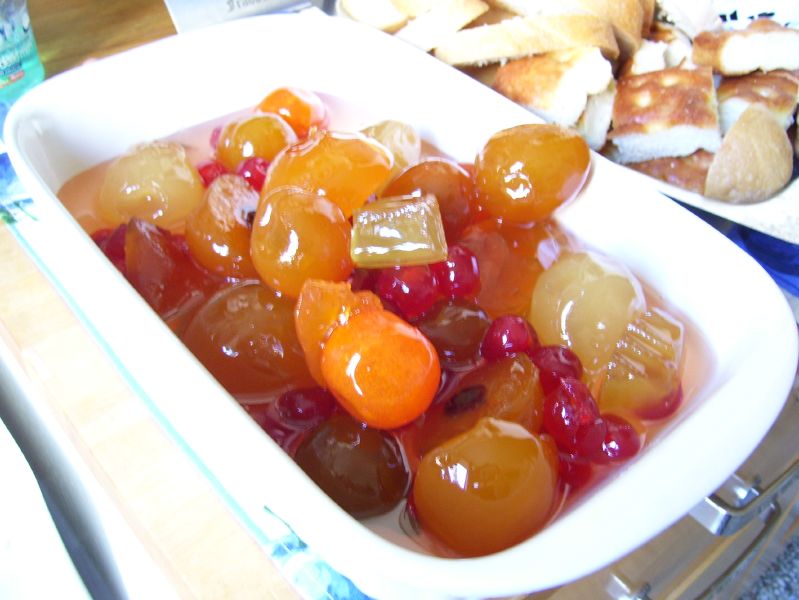
A northern Italian condiment of candied fruit in a sharp mustard syrupBlend · Sweet and mellow · Sharp and pungent
🇮🇹 ItalyMostardamostarda di frutta
A northern Italian condiment of candied fruit in a sharp mustard syrupBlend · Sweet and mellow · Sharp and pungent
 🇮🇹 Italy and 5 moreMustard
A pungent paste made from ground mustard seeds mixed with liquid and spices.Paste · Sharp and pungent · Hot and fiery
🇮🇹 Italy and 5 moreMustard
A pungent paste made from ground mustard seeds mixed with liquid and spices.Paste · Sharp and pungent · Hot and fiery
 🇯🇵 JapanGariガリ
Thinly sliced young ginger pickled in sweet vinegar, served with sushi.Sweet and mellow · Sour and tart
🇯🇵 JapanGariガリ
Thinly sliced young ginger pickled in sweet vinegar, served with sushi.Sweet and mellow · Sour and tart