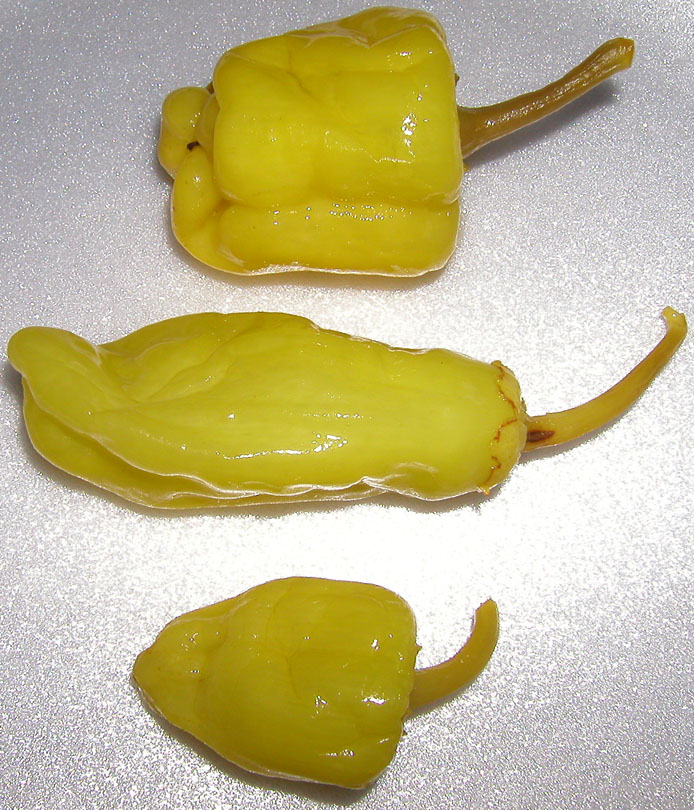
Friggitello
Capsicum annuum
A mild sweet Italian chilli often pickled, known for its complex flavour and slight heat.
Friggitello is a sweet Italian cultivar of Capsicum annuum prized for its mild heat and complex taste. It grows best in warm climates and is frequently eaten fresh, stuffed, or preserved in jars.
- Mild heat ranges from 100 to 500 Scoville units.
- Often pickled and sold in jars for preservation.
- Associated strongly with the Tuscany region of Italy.
- Requires staking to support the weight of its fruits.
- Known as pepperoncini in some United States markets.
What is Friggitello?
Friggitello is a sweet cultivar of the Capsicum annuum species, widely recognized as an Italian chilli pepper. Also called the Tuscan pepper or Golden Greek pepper, it produces fruits that range from bright yellow to green before ripening to red. The flesh is thick enough to hold up well when cooked, yet tender enough to eat raw. Its profile balances sweetness with a gentle warmth and a subtle bitter edge, making it versatile for both fresh eating and preservation.
Where does Friggitello come from?
The pepper traces its roots to Italy, where it holds a strong connection to the Tuscany region. A sweeter variant developed in Greece has also gained popularity across Europe and North America. In the United States, growers sometimes label these peppers as pepperoncini, though this term can cause confusion with hotter Italian varieties. The distinction between the mild friggitello and the spicy peperoncino remains important in culinary markets.
What does Friggitello taste like?
The taste combines a clear sweetness with a faint kick of heat and a touch of bitterness. This complexity makes it preferable to eat fresh rather than relying solely on pickling, although the brine process softens the bitter notes. The mild Scoville rating ensures it adds colour and texture without overwhelming dishes with fire, allowing its fruity undertones to shine alongside savoury ingredients.
How Friggitello is grown and processed
Cultivation demands a warm environment rich in sunlight, as the plants cannot survive frost. Seeds require ten to fourteen days to sprout, followed by seventy to eighty days until maturity. They thrive in slightly nutrient-rich, well-drained soil, though excessive fertilizer reduces the fruit yield. Staking supports the heavy harvest, and picking occurs at five to seven centimetres long while still green, even though full red ripening eventually happens.
Friggitello, drawn
How Friggitello is used
Chefs value friggitello for sautéing, stuffing, and quick frying due to its sturdy texture. It pairs effectively with fruits in salads and compotes, or sits atop sandwiches. Pickled versions are common in jars, often rinsed briefly in cold water to mellow the brine before serving. They also accompany grilled meats like kebabs, adding a cooling contrast to spiced dishes.
Friggitello in the world's kitchens
Italian cooking claims friggitello as a regional staple, especially within Tuscany. Greek agriculture contributes a sweeter cultivar that circulates through European kitchens. American markets adopt the fruit under different local names, creating a cross-cultural presence. The pepper bridges Mediterranean traditions, appearing in both rustic home cooking and commercial food production.
At a glance: where it turns up
Meal
The pepper fits into lunch and dinner settings, particularly in salads, sandwiches, and main courses featuring grilled meats. Pickled jars serve as preserves or snacks, while fresh fruits work well as street-food accompaniments or side dishes. Their versatility allows them to bridge light meals and heartier evening plates.
Questions people ask about Friggitello
What does a friggitello look like?
The fruits grow five to seven centimetres long and appear in bright yellow or yellow-green hues before turning red. They have a sturdy shape suitable for stuffing or slicing, offering a visual pop of colour to dishes.
How hot is a friggitello pepper?
It registers a mild heat level between 100 and 500 Scoville units. This gentle warmth provides a slight kick without dominating the palate, making it accessible to those who prefer sweet over spicy flavours.
Can I eat friggitelli raw?
Yes, they are excellent fresh and appreciated for their complex flavour profile. Eating them raw highlights the balance of sweetness, mild heat, and subtle bitterness better than any cooked preparation.
What is the difference between friggitello and peperoncino?
Friggitello is a sweet, mild cultivar, whereas peperoncino refers to hot Italian chili peppers. Confusion arises in the United States where friggitelli may be mislabelled as pepperoncini, despite the distinct heat levels.
Good reading and sources
The facts on this page come from the Wikipedia article "Friggitello", written by its contributors and used under the CC BY-SA 4.0 licence, and from its Wikidata record (CC0). EveryMasala rewrote the text in its own words, with AI assistance, and compares every page with the article to make sure no passage is copied. It may be reused under the same CC BY-SA 4.0 licence with a link back.
It may contain mistakes. Names, strengths and customs differ from one grower, kitchen or shop to the next. Traditional and medicinal uses are described as tradition, never as medical advice, and none of this is a substitute for a doctor. If something is wrong, tell us. Last refreshed 2026-10-04.
More from Italy
All the spices of Italy 🇬🇧 United Kingdom and 4 moreRock samphire
A coastal succulent with peppery leaves and carrot-scented roots, used fresh or pickled.Leaf · Hot and fiery · Sharp and pungent
🇬🇧 United Kingdom and 4 moreRock samphire
A coastal succulent with peppery leaves and carrot-scented roots, used fresh or pickled.Leaf · Hot and fiery · Sharp and pungent
 🇮🇹 Italy and 5 moreMustard
A pungent paste made from ground mustard seeds mixed with liquid and spices.Paste · Sharp and pungent · Hot and fiery
🇮🇹 Italy and 5 moreMustard
A pungent paste made from ground mustard seeds mixed with liquid and spices.Paste · Sharp and pungent · Hot and fiery
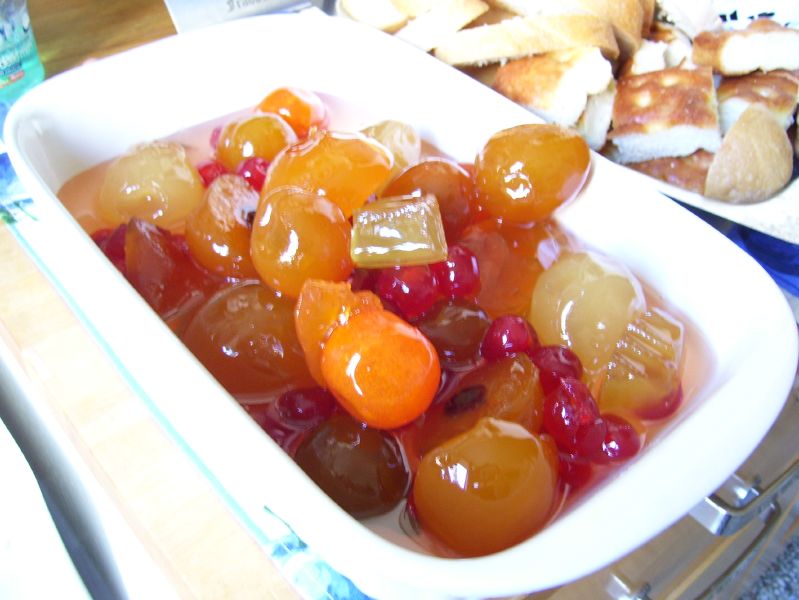 🇮🇹 ItalyMostardamostarda di frutta
A northern Italian condiment of candied fruit in a sharp mustard syrupBlend · Sweet and mellow · Sharp and pungent
🇮🇹 ItalyMostardamostarda di frutta
A northern Italian condiment of candied fruit in a sharp mustard syrupBlend · Sweet and mellow · Sharp and pungent
 🇮🇹 ItalyRed Sulmona GarlicAglio rosso di Sulmona
A traditional garlic cultivar from the Abruzzo region of Italy, grown on the Sulmona plateau.Bulb · Sharp and pungent · Earthy and deep
🇮🇹 ItalyRed Sulmona GarlicAglio rosso di Sulmona
A traditional garlic cultivar from the Abruzzo region of Italy, grown on the Sulmona plateau.Bulb · Sharp and pungent · Earthy and deep
Its cousins elsewhere
 🇮🇳 IndiaChammanthi podi
A dry coconut and spice condiment from Kerala that preserves fresh chutney for months.Hot and fiery · Earthy and deep
🇮🇳 IndiaChammanthi podi
A dry coconut and spice condiment from Kerala that preserves fresh chutney for months.Hot and fiery · Earthy and deep
 🇯🇵 Japan and 1 moreShishito pepper獅子唐辛子 (Shishitōgarashi)
A slender East Asian chili that is mostly mild with occasional spicy surprises.Sweet and mellow · Hot and fiery
🇯🇵 Japan and 1 moreShishito pepper獅子唐辛子 (Shishitōgarashi)
A slender East Asian chili that is mostly mild with occasional spicy surprises.Sweet and mellow · Hot and fiery
 🇨🇳 ChinaYongfeng chili sauce永丰辣酱
A fermented paste of peppers, rice and wheat from Hunan province, one of the region's three treasures.Paste · Hot and fiery · Sweet and mellow
🇨🇳 ChinaYongfeng chili sauce永丰辣酱
A fermented paste of peppers, rice and wheat from Hunan province, one of the region's three treasures.Paste · Hot and fiery · Sweet and mellow
 🇲🇽 Mexico and 5 morePaprika
A red powder made from dried Capsicum annuum peppers, used to colour and flavour dishes across Europe and the Middle EasSeed · Sweet and mellow · Hot and fiery
🇲🇽 Mexico and 5 morePaprika
A red powder made from dried Capsicum annuum peppers, used to colour and flavour dishes across Europe and the Middle EasSeed · Sweet and mellow · Hot and fiery