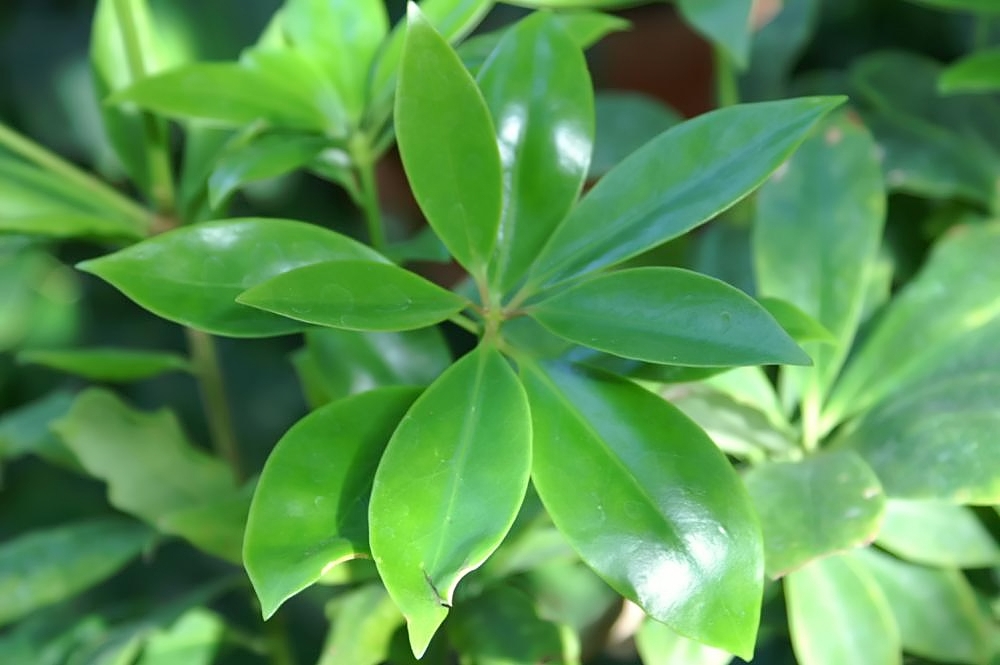
Star anise
In its own language: 八角 (bājiǎo)
Illicium verum
The reddish-brown star-shaped fruit of a Chinese evergreen tree, used for its licorice-like flavor.
Native to South China and northeast Vietnam, this spice is the dried fruit of Illicium verum. It tastes like sweet anise due to anethole. It flavors soups, meats, and drinks across Asia and Europe.
- Native to South China and northeast Vietnam
- Contains anethole, giving it a licorice taste
- Key ingredient in Chinese five-spice powder
- Flavors Vietnamese pho noodle soup
- Source of shikimic acid for Tamiflu production
What is Star anise?
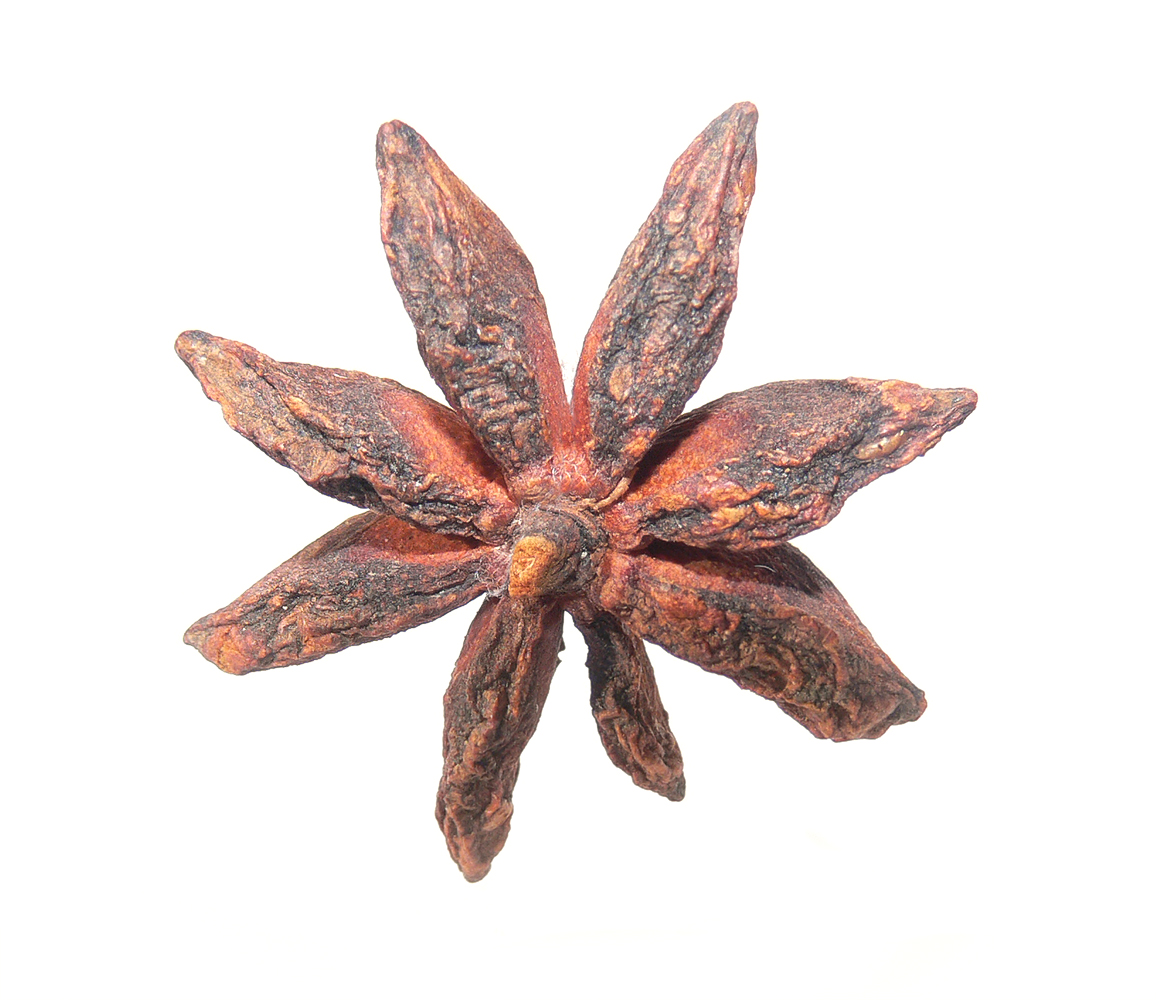
Star anise is the dried fruit of a medium-sized evergreen tree called Illicium verum. The fruit looks like a reddish-brown star with six to eight points. Each point holds a single shiny brown seed. The tree has pink flowers and thick leaves. The spice smells strongly of sweet licorice. This taste comes from a chemical called anethole. Anethole is also found in regular anise plants. However, star anise has a deeper, more complex flavor. It is not related to anise but shares its main taste compound. The fruit is harvested just before it fully ripens. It is then dried until hard and woody.
Where does Star anise come from?
The plant is native to South China and northeast Vietnam. China remains the primary producer today. Vietnam follows as another major growing region. Other Southeast Asian countries also cultivate it commercially. The name 'badian' likely comes from the Chinese term bājiǎo, meaning 'eight horns'. Another theory links it to the Persian word for fennel. The Latin name means 'true enticement', referring to its strong aroma.
What does Star anise taste like?
The dominant flavor is sweet and anise-like. This comes from high levels of anethole. The taste is warmer and spicier than common anise. It adds depth to savory dishes and sweetness to desserts. The aroma is intense and fragrant. When heated, the flavor releases slowly into liquids. It pairs well with meat, spices, and hot drinks. The seeds inside the star are where most of the flavor lives.
How Star anise is grown and processed
Star anise grows on evergreen trees in warm climates. Farmers harvest the fruits just before they ripen. The green or reddish fruits are dried in the sun or by smoke. Drying turns them into hard, woody stars. The process preserves the essential oils. Trees produce flowers that are pink to dark red. These flowers develop into the star-shaped capsules. Harvesting requires care to avoid damaging the trees. The fruit must be fully dry for storage.
Star anise, drawn
How Star anise is used
In cooking, whole stars are often added to soups and stews. They are removed before eating. Ground powder is used in spice blends. It is a key part of Chinese five-spice powder. In Vietnam, it flavors pho noodle soup. In India, it is used in biryani and chai tea. Europeans use it in mulled wine and baked goods. It enhances meat dishes and liqueurs like Galliano. The pods can be steeped in coffee for extra flavor.
Star anise in the world's kitchens
Chinese cuisine uses it in five-spice powder and braised meats. Vietnamese cuisine relies on it for pho broth. Indian cooking includes it in masala chai and biryani. Indonesian and Malay cuisines use it in spicy curries. French cooking employs it in vin chaud. It serves as a cheaper substitute for anise in Western baking.
At a glance: where it turns up


Spiritual and ceremonial use
There are no specific religious rituals mentioned for star anise. Unlike some spices, it is not tied to sacred offerings or dietary laws in major faiths. Its use is primarily culinary and industrial.
Star anise at celebrations
No festivals or celebrations are linked to star anise. It is not associated with weddings, births, or harvest days. It is a daily ingredient rather than a ceremonial one. Its role is functional in cooking rather than symbolic.
Traditional and medicinal use
However, related species like Japanese star anise are toxic. Ingesting these look-alikes causes seizures and kidney damage. True star anise is safe when identified correctly. Adulteration with toxic varieties is a known risk.
Buying and storing Star anise
Store whole stars in airtight containers. Keep them away from light and heat. Ground spice loses flavor faster. Whole pods last longer if kept dry. Check for freshness by smelling the aroma. A strong licorice scent indicates quality.
What to use instead of Star anise
Anise seeds are the closest substitute. Fennel seeds work in a pinch. Both share the anethole compound. However, their flavor is milder. Star anise cannot be fully replaced in five-spice powder. Use anise cautiously in soups to avoid overpowering.
The trade in Star anise
China dominates global production. Vietnam is the second largest exporter. Roche Pharmaceuticals once used 90% of the crop for Tamiflu. This drug requires shikimic acid from the spice. Modern production now uses genetically modified bacteria. This shift reduced demand for wild harvesting. ISO standards help identify pure star anise. Adulteration with toxic relatives remains a trade concern.
Meal
It appears in dinner dishes like soups and curries. Street food vendors use it in broth-based noodles. It flavors drinks such as mulled wine and chai. Bakers add it to desserts and pastries. It is also used in breakfast beverages like coffee. Its versatility makes it suitable for many meals.
Blends with Star anise
Questions people ask about Star anise
What does star anise taste like?
It tastes like sweet licorice. This flavor comes from anethole. It is stronger and warmer than regular anise. The taste deepens when cooked in liquids.
Where does star anise come from?
It is native to South China and northeast Vietnam. China remains the top producer. Vietnam and other Southeast Asian countries also grow it commercially.
Is star anise safe to eat?
True star anise is safe. However, look-alikes like Japanese star anise are toxic. They cause seizures and kidney damage. Always buy from trusted sources to avoid adulteration.
How is star anise used in cooking?
Whole stars are added to soups and stews. They are removed before serving. Ground powder goes into spice blends. It flavors meats, drinks, and baked goods.
Good reading and sources
- Illicium verum on WikipediaEncyclopedia
- More photos on Wikimedia CommonsPhotos and video
- Wikidata recordOpen data
The facts on this page come from the Wikipedia article "Illicium verum", written by its contributors and used under the CC BY-SA 4.0 licence, and from its Wikidata record (CC0). EveryMasala rewrote the text in its own words, with AI assistance, and compares every page with the article to make sure no passage is copied. It may be reused under the same CC BY-SA 4.0 licence with a link back.
It may contain mistakes. Names, strengths and customs differ from one grower, kitchen or shop to the next. Traditional and medicinal uses are described as tradition, never as medical advice, and none of this is a substitute for a doctor. If something is wrong, tell us. Last refreshed 2026-10-04.
More from China
All the spices of China 🇮🇩 Indonesia and 3 moreCubeb
The dried fruit of a climbing vine, known for its long tail and sharp taste.Fruit · Sharp and pungent · Warm and sweet-spiced
🇮🇩 Indonesia and 3 moreCubeb
The dried fruit of a climbing vine, known for its long tail and sharp taste.Fruit · Sharp and pungent · Warm and sweet-spiced
 🇮🇩 Indonesia and 5 moreAndaliman
A citrus-scented, tongue-numbing seed husk related to Sichuan pepperFruit · Numbing and tingling · Citrus and bright
🇮🇩 Indonesia and 5 moreAndaliman
A citrus-scented, tongue-numbing seed husk related to Sichuan pepperFruit · Numbing and tingling · Citrus and bright
 🇨🇳 China and 4 moreFingerrootกระชาย
The finger-shaped rhizome of a tropical ginger relative, used fresh or pickled in Southeast Asian cooking.Sharp and pungent · Citrus and bright
🇨🇳 China and 4 moreFingerrootกระชาย
The finger-shaped rhizome of a tropical ginger relative, used fresh or pickled in Southeast Asian cooking.Sharp and pungent · Citrus and bright
 🇮🇩 Indonesia and 5 moreIndonesian cinnamon
A strong, affordable bark from Sumatra used as a common spice and oil source.Bark · Warm and sweet-spiced · Sharp and pungent
🇮🇩 Indonesia and 5 moreIndonesian cinnamon
A strong, affordable bark from Sumatra used as a common spice and oil source.Bark · Warm and sweet-spiced · Sharp and pungent
Its cousins elsewhere
All fruit 🇮🇳 India and 4 moreFennel
The anise-scented seeds and crisp bulb of a Mediterranean perennial herbSeed · Anise and liquorice · Sweet and mellow
🇮🇳 India and 4 moreFennel
The anise-scented seeds and crisp bulb of a Mediterranean perennial herbSeed · Anise and liquorice · Sweet and mellow
 🇷🇺 Russia and 4 moreTarragon
A slender perennial herb with anise-scented leaves, prized in French and Middle Eastern cooking.Leaf · Anise and liquorice · Sweet and mellow
🇷🇺 Russia and 4 moreTarragon
A slender perennial herb with anise-scented leaves, prized in French and Middle Eastern cooking.Leaf · Anise and liquorice · Sweet and mellow
 🇰🇷 South Korea and 5 moreKorean mint배초향
An anise-scented Asian mint leaf used in Korean stews and herbal traditionsLeaf · Anise and liquorice · Herbal and green
🇰🇷 South Korea and 5 moreKorean mint배초향
An anise-scented Asian mint leaf used in Korean stews and herbal traditionsLeaf · Anise and liquorice · Herbal and green
 🇪🇬 Egypt and 3 moreAnise
The sweet, licorice-flavored seed of an annual herb from the Mediterranean basin.Seed · Sweet and mellow · Anise and liquorice
🇪🇬 Egypt and 3 moreAnise
The sweet, licorice-flavored seed of an annual herb from the Mediterranean basin.Seed · Sweet and mellow · Anise and liquorice