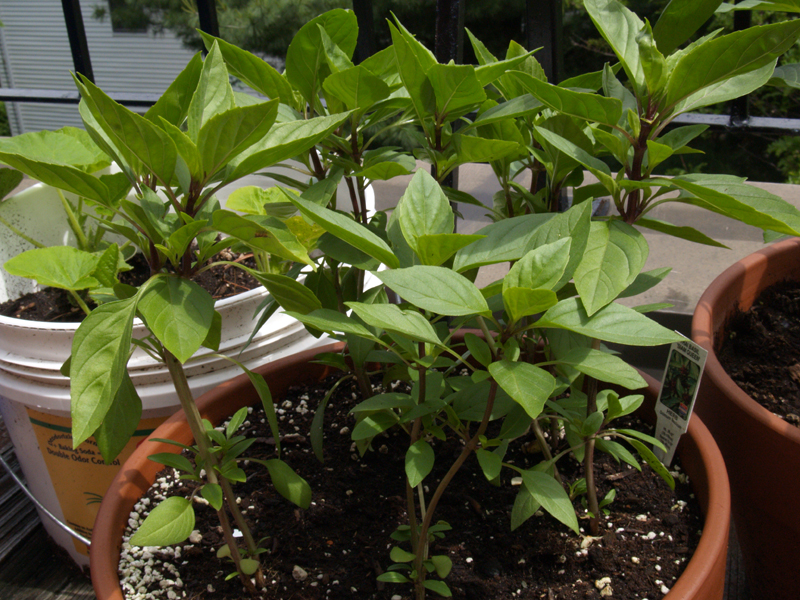
Thai basil
In its own language: โหระพา
Ocimum basilicum var. thyrsiflora
A Southeast Asian herb with purple stems and anise notes, used in curries and soups.
This variety of Ocimum basilicum is native to Southeast Asia and prized for its licorice-like flavor. It features narrow leaves and purple stems that withstand heat better than sweet basil. Cooks use it in Vietnamese pho and Thai curries for a distinct spicy-sweet aroma.
- Purple stems distinguish it from sweet basil.
- Flavor combines anise, licorice, and mild heat.
- Native to Southeast Asia and Taiwan.
- Used raw in Vietnamese pho and Thai curries.
- Scientific name is Ocimum basilicum var. thyrsiflora.
What is Thai basil?
Thai basil is a cultivated type of sweet basil known for its unique appearance and taste. The plant grows up to forty-five centimeters tall with shiny green leaves that are narrower than common varieties. Its stems are square and purple, a trait shared with other mint family members. The flowers appear as pink or purple clusters in late summer. Unlike the broad leaves of Italian basil, these leaves have slightly serrated edges. The scent is strong and sweet, dominated by anise and liquorice notes. A subtle spiciness sets it apart from milder herbs. This compact plant is sturdy and holds its shape well during cooking.
Where does Thai basil come from?
The herb originates from Southeast Asia, where it has been grown for generations. It is widely naturalized across Thailand, Vietnam, Cambodia, and Laos. In Taiwan, locals refer to it by a name meaning nine-storey pagoda due to its flower structure. While often associated with Thai cuisine, it plays a major role in Vietnamese food as well. Western markets frequently stock this variety because it is easier to find than holy basil. Some regions call it cinnamon basil, though that name usually belongs to a different plant. Taxonomists classify it as a specific variety of the common basil species.
What does Thai basil taste like?
The taste profile is defined by strong anise and liquorice undertones. These sweet, aromatic qualities are balanced by a mild heat that lacks the bitterness of other herbs. The spice level is gentle, providing warmth without overwhelming the palate. This combination makes it ideal for dishes requiring long simmering times. The flavor remains stable under high temperatures, unlike sweet basil which can turn bitter. The aroma is pungent and herbal, releasing oils when crushed. Cooks appreciate how the licorice notes complement rich meats and broths.
How Thai basil is grown and processed
Gardeners treat this plant as an annual despite its perennial nature. It thrives in tropical climates free from frost, typically surviving in USDA zone ten. Plants require full sun for six to eight hours daily and fertile soil with good drainage. A pH between six point five and seven point five works best. Growers pinch off flowers to keep leaves tender and prevent bitterness. Harvesting involves picking individual leaves regularly to encourage new growth. Seeds or cuttings can start new plants. The narrow foliage requires careful handling to avoid damage.
Thai basil, drawn
How Thai basil is used
Cooks add fresh leaves to hot dishes near the end of preparation. In Vietnam, raw sprigs accompany noodle soups like pho so diners can season their own bowls. Thai kitchens use it in green and red curries for a bright finish. Taiwanese chefs include it in three-cup chicken for depth. While holy basil is traditional for drunken noodles in Thailand, Western cooks substitute this variety due to availability. It serves as a condiment alongside many street foods. The leaves pair well with pork, seafood, and chicken. Pinching flowers ensures continuous leaf production.
Thai basil in the world's kitchens
Thai cuisine relies on it for curries and stir-fries, offering a sharper contrast to holy basil. Vietnamese cooking uses it extensively as a fresh garnish for pho and bun bo Hue. Cambodian and Lao kitchens incorporate it into similar regional preparations. Taiwanese cuisine highlights it in braised chicken dishes. Western cooks often substitute it for sweet basil in pasta sauces when seeking anise notes. Each culture adapts its use based on local preferences and available substitutes. The herb bridges several culinary traditions across Southeast Asia.
At a glance: where it turns up
By meal


Spiritual and ceremonial use
No religious rituals or sacred offerings specifically involve this basil variety. Holy basil holds significant spiritual weight in Hindu and Buddhist traditions, but Thai basil lacks those associations. It is primarily a culinary ingredient rather than a ceremonial object. Communities do not burn it as incense or place it in shrines. Its value lies entirely in its flavor contribution to daily meals.
Thai basil at celebrations
Festivals and weddings do not center around this herb. It does not mark harvest celebrations or new year events. Families consume it during regular daily meals rather than special occasions. There are no traditional banquets dedicated to honoring its cultivation. It remains a staple of everyday cooking rather than a symbol of joyous gatherings.
Traditional and medicinal use
Traditional medicine systems do not prominently feature this specific cultivar. While holy basil has medicinal history, Thai basil is valued mainly for taste. No folk remedies or safety warnings are attached to its consumption. Cooks use it purely for seasoning. There are no documented health claims regarding its leaves or stems. It remains a safe culinary addition to various diets.
Buying and storing Thai basil
Fresh leaves wilt quickly if not kept moist. Store them wrapped in a damp paper towel inside a plastic bag. Refrigeration extends their life for a few days. Drying destroys the delicate anise oils, so fresh use is preferred. Whole stems last longer than detached leaves. Avoid freezing unless planning for cooked dishes where texture matters less.
What to use instead of Thai basil
Sweet basil offers a similar texture but lacks the anise punch. Holy basil provides heat but tastes peppery rather than licorice. Anise leaves or fennel fronds mimic the flavor profile in salads. Licorice root tea captures the taste but changes the dish's liquid balance. Western cooks often reach for these alternatives when Thai basil is unavailable.
The trade in Thai basil
Global trade favors this variety over holy basil in Western supermarkets. Supply chains move it from Southeast Asia to international markets. Adulteration is rare since the purple stems make identification easy. Geographical indications do not protect its name globally. Producers in Thailand and Vietnam dominate export volumes. The herb's stability during transport makes it a reliable commodity.
Meal
This herb appears in dinner plates featuring noodles or rice. Street vendors serve fresh leaves alongside savory snacks and fast meals. Vietnamese eateries provide bundles of raw basil for customers to customize their soups. It enhances lunchtime curries and stews with its aromatic presence. Desserts rarely feature this savory herb. Breakfast dishes seldom include its distinct licorice flavor. It fits best into midday or evening meals where bold spices shine.
Questions people ask about Thai basil
What does Thai basil taste like?
It tastes strongly of anise and licorice with a mild spicy kick. This flavor differs from the clove-like taste of sweet basil. The heat is gentle and does not overwhelm other ingredients.
Where is Thai basil originally from?
It originates in Southeast Asia, particularly Thailand, Vietnam, and Cambodia. It is also widely grown in Taiwan. The plant thrives in warm tropical climates without frost.
Can I use Thai basil instead of sweet basil?
Yes, but the flavor will be much stronger and more anise-forward. Sweet basil is milder and sweeter. Use Thai basil in Asian dishes where its distinct licorice notes are desired.
How should I store fresh Thai basil?
Keep it refrigerated wrapped in a damp paper towel inside a bag. Treat it like cilantro to prevent wilting. Do not freeze it if you want to preserve the fresh texture for garnishes.
Good reading and sources
- Thai basil on WikipediaEncyclopedia
- More photos on Wikimedia CommonsPhotos and video
- Wikidata recordOpen data
The facts on this page come from the Wikipedia article "Thai basil", written by its contributors and used under the CC BY-SA 4.0 licence, and from its Wikidata record (CC0). EveryMasala rewrote the text in its own words, with AI assistance, and compares every page with the article to make sure no passage is copied. It may be reused under the same CC BY-SA 4.0 licence with a link back.
It may contain mistakes. Names, strengths and customs differ from one grower, kitchen or shop to the next. Traditional and medicinal uses are described as tradition, never as medical advice, and none of this is a substitute for a doctor. If something is wrong, tell us. Last refreshed 2026-10-04.
More from Thailand
All the spices of Thailand 🇱🇦 Laos and 5 moreLemon basil
A hybrid herb with a bright citrus scent, used across Southeast Asia and Africa.Leaf · Citrus and bright · Herbal and green
🇱🇦 Laos and 5 moreLemon basil
A hybrid herb with a bright citrus scent, used across Southeast Asia and Africa.Leaf · Citrus and bright · Herbal and green
 🇲🇾 Malaysia and 3 moreKesum
An aromatic herb from Southeast Asia, used fresh in salads and soups.Leaf · Sharp and pungent · Herbal and green
🇲🇾 Malaysia and 3 moreKesum
An aromatic herb from Southeast Asia, used fresh in salads and soups.Leaf · Sharp and pungent · Herbal and green
 🇰🇭 Cambodia and 5 moreVietnamese corianderrau răm
The fresh leaves of a tropical herb used in Southeast Asian soups and saladsLeaf · Citrus and bright · Sharp and pungent
🇰🇭 Cambodia and 5 moreVietnamese corianderrau răm
The fresh leaves of a tropical herb used in Southeast Asian soups and saladsLeaf · Citrus and bright · Sharp and pungent
 🇹🇭 Thailand and 5 moreKaffir limeมะกรูด
The bumpy-skinned citrus fruit and double-leafed shrub of Southeast AsiaFruit · Citrus and bright · Sharp and pungent
🇹🇭 Thailand and 5 moreKaffir limeมะกรูด
The bumpy-skinned citrus fruit and double-leafed shrub of Southeast AsiaFruit · Citrus and bright · Sharp and pungent
Its cousins elsewhere
All leaf 🇮🇳 India and 4 moreFennel
The anise-scented seeds and crisp bulb of a Mediterranean perennial herbSeed · Anise and liquorice · Sweet and mellow
🇮🇳 India and 4 moreFennel
The anise-scented seeds and crisp bulb of a Mediterranean perennial herbSeed · Anise and liquorice · Sweet and mellow
 🇷🇺 Russia and 4 moreTarragon
A slender perennial herb with anise-scented leaves, prized in French and Middle Eastern cooking.Leaf · Anise and liquorice · Sweet and mellow
🇷🇺 Russia and 4 moreTarragon
A slender perennial herb with anise-scented leaves, prized in French and Middle Eastern cooking.Leaf · Anise and liquorice · Sweet and mellow
 🇯🇵 Japan and 1 moreShishito pepper獅子唐辛子 (Shishitōgarashi)
A slender East Asian chili that is mostly mild with occasional spicy surprises.Sweet and mellow · Hot and fiery
🇯🇵 Japan and 1 moreShishito pepper獅子唐辛子 (Shishitōgarashi)
A slender East Asian chili that is mostly mild with occasional spicy surprises.Sweet and mellow · Hot and fiery
 🇨🇳 ChinaYongfeng chili sauce永丰辣酱
A fermented paste of peppers, rice and wheat from Hunan province, one of the region's three treasures.Paste · Hot and fiery · Sweet and mellow
🇨🇳 ChinaYongfeng chili sauce永丰辣酱
A fermented paste of peppers, rice and wheat from Hunan province, one of the region's three treasures.Paste · Hot and fiery · Sweet and mellow