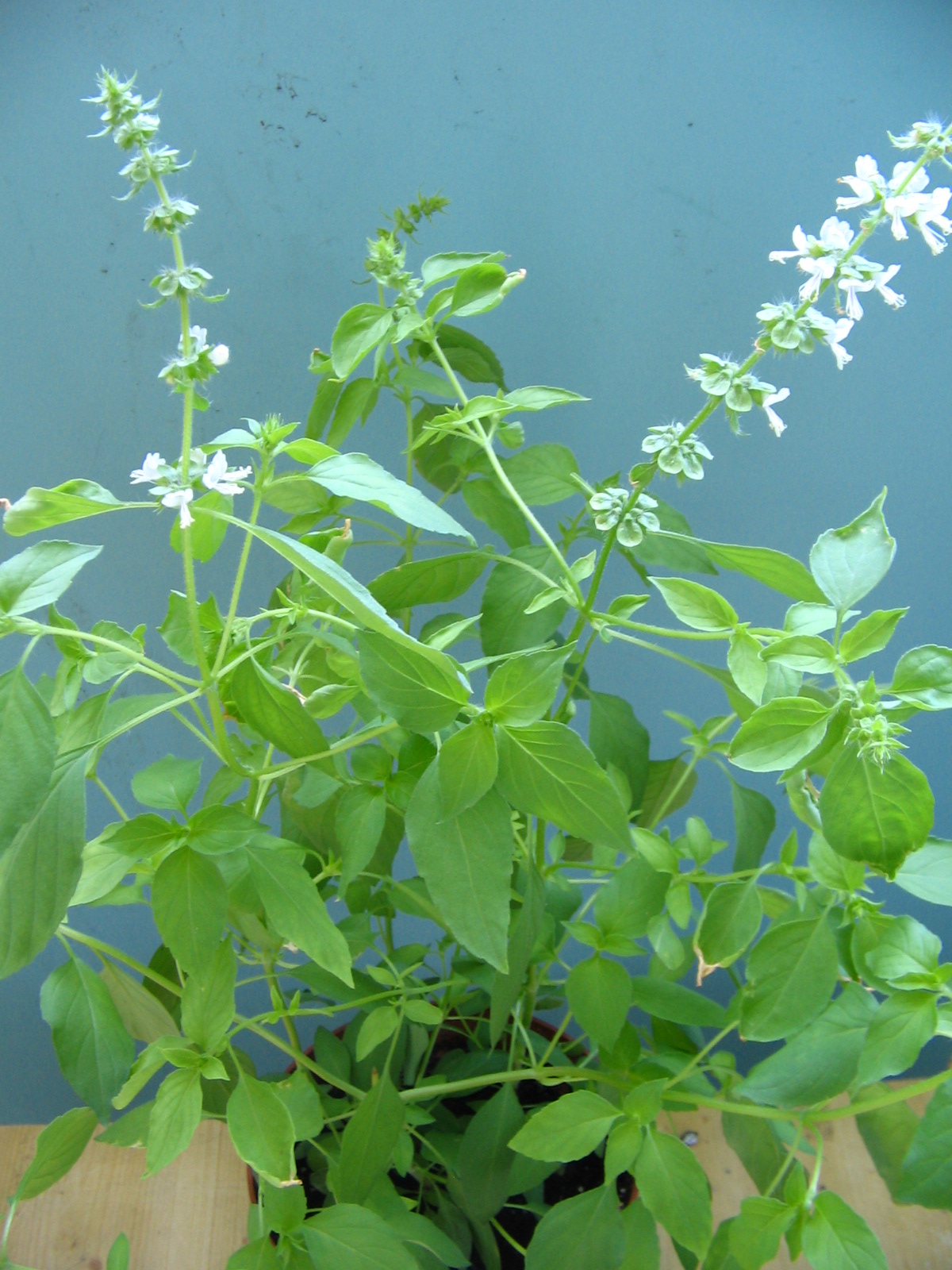
Lemon basil
Ocimum × africanum
A hybrid herb with a bright citrus scent, used across Southeast Asia and Africa.
Lemon basil is a fragrant hybrid of sweet basil and American basil. It grows in tropical regions from Africa to Asia. The leaves offer a distinct lemon taste and are used fresh in soups, curries, and salads.
- Hybrid of Ocimum basilicum and Ocimum americanum
- Essential ingredient in Lao cuisine
- Leaves have a distinct lemon aroma
- Seeds resemble chia when soaked
- Grows up to 40 cm tall
What is Lemon basil?
This herb is a cross between common basil and American basil. It produces narrow leaves with slightly jagged edges. The plant reaches about forty centimeters in height. White flowers appear in late summer. The leaves carry a strong lemon aroma. The flavor is bright and citrusy. Seeds form after the flowers bloom. These seeds dry naturally on the stem.
Where does Lemon basil come from?
The plant is a natural hybrid. It combines species from different continents. Growers cultivate it in northeastern Africa. It is also grown throughout southern Asia. The herb thrives in warm tropical climates. Its popularity spread through trade routes. Cooks in many regions adopted it quickly.
What does Lemon basil taste like?
The taste is defined by its lemon notes. It smells like fresh citrus zest. The herbal quality comes from the basil lineage. Heat is absent from this variety. The flavor profile is clean and sharp. Leaves provide the main aromatic component. Flowers do not contribute significantly to cooking.
How Lemon basil is grown and processed
Growers need full sun for at least six hours daily. The plant tolerates heat well. Water when the soil surface feels dry. Remove flower buds to keep leaves tender. Letting flowers bloom makes leaves leathery. Harvest stems weekly to encourage bushiness. Seeds can be collected in autumn. Cuttings root easily in water jars.
Lemon basil, drawn
How Lemon basil is used
Cooks use the leaves fresh in most dishes. Lao cuisine relies on it for stews. Indonesian cooks eat it raw with vegetables. Thai recipes include it in curries. Filipino soups use it for flavor. Indian preparations add it to pickles. Nigerian dishes call it curry leaf. Seeds swell in water for desserts.
Lemon basil in the world's kitchens
Lao cuisine considers it essential. No other basil substitutes work there. Indonesian meals pair it with sambal. Thai cooks use it in noodle dishes. Filipino soups gain depth from its leaves. Indian tribal groups make fermented sauces. Nigerian cooks treat it as a standard herb.
At a glance: where it turns up
Spiritual and ceremonial use
No religious rituals involve this herb. It holds no sacred status in major faiths. Temples do not use it for offerings. Dietary laws do not restrict or require it. It remains a purely culinary ingredient.
Lemon basil at celebrations
Festivals do not specifically feature this spice. Weddings do not mandate its presence. Birth ceremonies ignore it entirely. Harvest days celebrate the crop generally. New year celebrations lack specific ties. It belongs to everyday meal preparation.
Traditional and medicinal use
Traditional medicine does not prominently list it. Folk healers rarely prescribe it. Safety concerns are minimal for culinary use. Overconsumption may cause mild digestive issues. Pregnant women should consult doctors first. It lacks documented medicinal potency.
Buying and storing Lemon basil
Keep fresh leaves in the refrigerator. Wrap them in damp paper towels. Use within three days for best flavor. Dried leaves lose their citrus punch. Store seeds in a cool dry place. Freezing extends shelf life slightly.
What to use instead of Lemon basil
Sweet basil offers a similar texture. Holy basil provides a stronger anise note. Lemon verbena mimics the citrus scent. Mint adds freshness but changes the profile. No exact substitute matches its unique blend.
The trade in Lemon basil
Local markets supply most of the demand. Export volumes remain small globally. Farmers sell directly to consumers. Quality varies by growing region. Adulteration is rare due to distinct appearance. Certification programs focus on organic methods.
Meal
It appears in daily home cooking. Stews and soups feature it heavily. Salads use the leaves as garnish. Street food stalls incorporate it into snacks. Preserves like chutneys contain chopped leaves. Desserts utilize soaked seeds. It fits lunch and dinner menus equally.
Questions people ask about Lemon basil
What does lemon basil taste like?
It tastes strongly of lemon with herbal undertones. The flavor is bright and citrusy. Leaves provide the main taste. Flowers do not contribute much flavor.
Where does lemon basil come from?
It is a hybrid native to tropical regions. Growers cultivate it in Africa and Asia. It thrives in warm climates worldwide.
How is lemon basil used in cooking?
Cooks add fresh leaves to soups and curries. Indonesians eat it raw with vegetables. Filipinos use it in green soups. Seeds go into sweet desserts.
Can I grow lemon basil at home?
Yes, it needs six hours of sunlight daily. Water when soil feels dry. Pinch off flowers to keep leaves tender. Harvest stems regularly for bushier growth.
Is lemon basil hot or spicy?
It contains no capsaicin heat. The flavor is purely citrus and herbal. It adds brightness without burning the tongue.
Good reading and sources
- Lemon basil on WikipediaEncyclopedia
- More photos on Wikimedia CommonsPhotos and video
- Wikidata recordOpen data
The facts on this page come from the Wikipedia article "Lemon basil", written by its contributors and used under the CC BY-SA 4.0 licence, and from its Wikidata record (CC0). EveryMasala rewrote the text in its own words, with AI assistance, and compares every page with the article to make sure no passage is copied. It may be reused under the same CC BY-SA 4.0 licence with a link back.
It may contain mistakes. Names, strengths and customs differ from one grower, kitchen or shop to the next. Traditional and medicinal uses are described as tradition, never as medical advice, and none of this is a substitute for a doctor. If something is wrong, tell us. Last refreshed 2026-10-04.
More from Laos
All the spices of Laos 🇰🇭 Cambodia and 5 moreVietnamese corianderrau răm
The fresh leaves of a tropical herb used in Southeast Asian soups and saladsLeaf · Citrus and bright · Sharp and pungent
🇰🇭 Cambodia and 5 moreVietnamese corianderrau răm
The fresh leaves of a tropical herb used in Southeast Asian soups and saladsLeaf · Citrus and bright · Sharp and pungent
 🇹🇭 Thailand and 4 moreBenzoin resin
A sweet balsamic tree resin used in incense, perfumes, and traditional medicine.Resin · Sweet and mellow
🇹🇭 Thailand and 4 moreBenzoin resin
A sweet balsamic tree resin used in incense, perfumes, and traditional medicine.Resin · Sweet and mellow
 🇱🇦 Laos and 2 moreKhao khuaເຂົ້າຂົ້ວ
Dry-toasted sticky rice, ground rough, the nutty backbone of Lao laabSeed · Smoky
🇱🇦 Laos and 2 moreKhao khuaເຂົ້າຂົ້ວ
Dry-toasted sticky rice, ground rough, the nutty backbone of Lao laabSeed · Smoky
 🇮🇳 India and 4 moreEast Indian arrowrootകൂവ
A wild South Asian ginger valued for its turmeric-scented foliage and starchy rhizome.Root · Earthy and deep · Herbal and green
🇮🇳 India and 4 moreEast Indian arrowrootകൂവ
A wild South Asian ginger valued for its turmeric-scented foliage and starchy rhizome.Root · Earthy and deep · Herbal and green
Its cousins elsewhere
All leaf 🇮🇳 India and 4 moreBasil
A tender culinary herb with glossy leaves and a licorice-like aroma, native to tropical Asia.Leaf · Anise and liquorice · Warm and sweet-spiced
🇮🇳 India and 4 moreBasil
A tender culinary herb with glossy leaves and a licorice-like aroma, native to tropical Asia.Leaf · Anise and liquorice · Warm and sweet-spiced
 🇭🇹 HaitiEpis
A blended flavor base of peppers, garlic, and herbs essential to Haitian cookingHot and fiery · Sharp and pungent
🇭🇹 HaitiEpis
A blended flavor base of peppers, garlic, and herbs essential to Haitian cookingHot and fiery · Sharp and pungent
 🇬🇷 Greece and 4 moreThyme
The dried leaves of a Mediterranean mint-family herb, used to perfume stews and baths alike.Leaf · Earthy and deep · Warm and sweet-spiced
🇬🇷 Greece and 4 moreThyme
The dried leaves of a Mediterranean mint-family herb, used to perfume stews and baths alike.Leaf · Earthy and deep · Warm and sweet-spiced
 🇲🇽 Mexico and 1 moreHoja santa
The large, heart-shaped leaf of a Mexican pepper plant, used to wrap and flavor food.Anise and liquorice · Warm and sweet-spiced
🇲🇽 Mexico and 1 moreHoja santa
The large, heart-shaped leaf of a Mexican pepper plant, used to wrap and flavor food.Anise and liquorice · Warm and sweet-spiced