
Kencur
In its own language: 沙姜
Kaempferia galanga
A stemless ginger-family rhizome with a peppery, camphorous bite
Kencur is a dark, rounded rhizome native to open landscapes across southern China, India, and Southeast Asia. Renowned for its distinctive peppery and camphorous taste, it seasons Javanese, Balinese, and Chinese dishes, and flavors traditional herbal drinks.
- Unlike other galangals, this plant is stemless and produces dark brown, rounded rhizomes.
- A key ingredient in beras kencur, a traditional Indonesian jamu tonic made with rice flour.
- Its fresh green leaves are finely sliced into the Malay herbal rice dish nasi ulam.
- Known in Chinese cooking as sha jiang, it delivers a distinct peppery and camphorous taste.
What is Kencur?
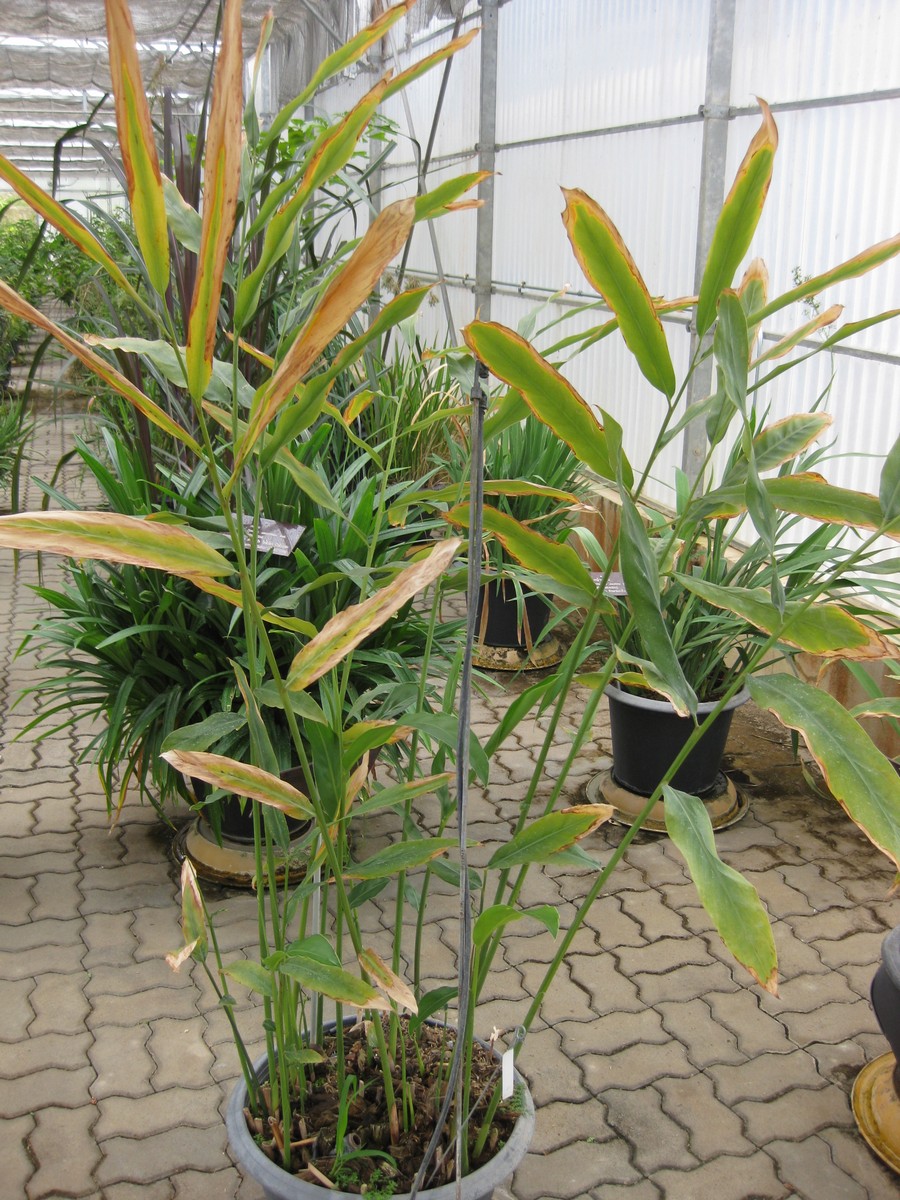
Kaempferia galanga is a monocot plant belonging to the ginger family. Unlike other galangals, this plant grows without an upright stem above the ground. It produces rounded underground rhizomes with a dark brown outer skin. The fresh root and its dried forms are recognized for their distinct, peppery bite with strong camphorous notes. Its green leaves can also be harvested for culinary use. It is one of four distinct roots commonly referred to as galangal across Asian cooking traditions.
Where does Kencur come from?
This spice naturally thrives in open habitats across southern China, Taiwan, India, Cambodia, and Indonesia. Over time, its cultivation spread extensively across Southeast Asia. In regional languages, it acquired diverse local names, being known as kencur in Indonesia, cekur in Malaysia, sha jiang in China, and prâh in Cambodia. While it shares the broader galangal name, it remains a distinct botanical species historically integrated into island Southeast Asian and southern Chinese foodways and domestic trade.
What does Kencur taste like?
The taste of this rhizome is sharp, peppery, and noticeably camphorous. Its aromatic qualities stem from a complex mix of essential oils and chemical constituents. Key compounds include cineol, borneol, camphene, and 3-carene, alongside cinnamaldehyde, ethyl cinnamate, and ethyl p-methoxycinnamate. These terpenes, phenolics, and esters give the root its piercing fragrance, setting it apart from true ginger and ordinary galangal varieties.
Kencur, drawn
How Kencur is used
Cooks use both the subterranean rhizome and the foliage of the plant. In Indonesia, especially within Balinese and Javanese culinary traditions, the fresh or dried root is a fundamental seasoning in savoury dishes. Malay cooks incorporate the fresh leaves directly into herb-laden rice dishes such as nasi ulam. In Chinese cuisine, dried pieces or ground root, sold as sand ginger, season various regional dishes. Thai cooks rarely place it in daily pots, but dried root is traded at herbal counters.
Kencur in the world's kitchens
The spice holds a central place in Javanese and Balinese culinary practices under the name kencur. In Malaysia, where it is known as cekur, its foliage flavors classic rice preparations like nasi ulam. Chinese kitchens utilize the dried root, labelled as sha jiang, for savoury seasoning. Conversely, Thai cooking favors other ginger relatives like krachai over this plant, restricting its presence in Thailand primarily to traditional medicine stalls under names like proh horm or waan horm.
At a glance: where it turns up
Spiritual use
Celebrations
Traditional and medicinal use
Traditional Chinese medicine utilizes the rhizome in decoctions and powders. Alcoholic macerations of the root have traditionally served as a topical liniment for rheumatism. In Indonesia, it forms the foundation of beras kencur, an established jamu health tonic. Historical traditions also note that leaf sap and decoctions were thought to produce hallucinogenic sensations, which researchers link to unidentified essential oil components.
What to use instead of Kencur
Cooks sometimes confuse this plant with lesser galangal, a name that formally applies to Alpinia officinarum. It is also compared to fingerroot, known as krachai in Thailand, though the two are used differently. Unlike other galangal varieties that display tall stems and pale pinkish-brown rhizomes, this species is stemless with dark brown roots.
Meal
This seasoning features prominently in lunchtime and evening rice preparations, such as Malay mixed-herb rice. It is also an essential component in beverages. In Indonesia, powdered dried rhizome is mixed with ground rice flour to create beras kencur, a widespread traditional jamu tonic enjoyed across Java and Bali.
Questions people ask about Kencur
Where does kencur come from?
It is native to open areas across southern China, Taiwan, India, Cambodia, and Indonesia. Today, farmers cultivate it widely throughout Southeast Asia for both cooking and herbal use.
What does kencur taste like?
The rhizome has a distinctive peppery, camphorous flavour. This pungent profile comes from its aromatic essential oils, which contain compounds such as cineol, borneol, camphene, and cinnamaldehyde.
How is kencur used in cooking?
In Indonesia, cooks season Balinese and Javanese dishes with the root and brew it into herbal drinks. In Malaysia, the leaves flavor rice dishes like nasi ulam, while Chinese cooks use the dried root as sand ginger.
How is it different from other galangal species?
While other galangal varieties grow with tall stems and produce pale rose-brown roots, this unique species lacks an above-ground stem and produces dark brown, rounded rhizomes.
Good reading and sources
- Kaempferia galanga on WikipediaEncyclopedia
- More photos on Wikimedia CommonsPhotos and video
- Wikidata recordOpen data
The facts on this page come from the Wikipedia article "Kaempferia galanga", written by its contributors and used under the CC BY-SA 4.0 licence, and from its Wikidata record (CC0). EveryMasala rewrote the text in its own words, with AI assistance, and compares every page with the article to make sure no passage is copied. It may be reused under the same CC BY-SA 4.0 licence with a link back.
It may contain mistakes. Names, strengths and customs differ from one grower, kitchen or shop to the next. Traditional and medicinal uses are described as tradition, never as medical advice, and none of this is a substitute for a doctor. If something is wrong, tell us. Last refreshed 2026-10-04.
More from Indonesia
All the spices of Indonesia 🇮🇩 Indonesia and 2 moreIndonesian bay leafdaun salam
The aromatic leaves of a Myrtaceae tree used to flavour soups and stews across Indonesia and Suriname.Leaf · Bitter
🇮🇩 Indonesia and 2 moreIndonesian bay leafdaun salam
The aromatic leaves of a Myrtaceae tree used to flavour soups and stews across Indonesia and Suriname.Leaf · Bitter
 🇮🇩 Indonesia and 3 moreTemulawak
The rhizome of a Javanese ginger relative, used for its earthy flavour and traditional wellness drinks.Root · Earthy and deep · Bitter
🇮🇩 Indonesia and 3 moreTemulawak
The rhizome of a Javanese ginger relative, used for its earthy flavour and traditional wellness drinks.Root · Earthy and deep · Bitter
 🇮🇩 Indonesia and 5 moreGreater galangalข่า
The pungent rhizome of a ginger relative, essential in Southeast Asian soups and curries.Root · Sharp and pungent · Citrus and bright
🇮🇩 Indonesia and 3 moreGalangal
The pungent rhizome of the ginger family, essential to Southeast Asian soups and pastes.Root · Sharp and pungent · Warm and sweet-spiced
🇮🇩 Indonesia and 5 moreGreater galangalข่า
The pungent rhizome of a ginger relative, essential in Southeast Asian soups and curries.Root · Sharp and pungent · Citrus and bright
🇮🇩 Indonesia and 3 moreGalangal
The pungent rhizome of the ginger family, essential to Southeast Asian soups and pastes.Root · Sharp and pungent · Warm and sweet-spiced
Its cousins elsewhere
All root 🇬🇷 Greece and 4 moreParsley
A bright green herb from the celery family, used fresh across Europe and the Middle East.Leaf · Bitter · Herbal and green
🇬🇷 Greece and 4 moreParsley
A bright green herb from the celery family, used fresh across Europe and the Middle East.Leaf · Bitter · Herbal and green
 🇬🇧 United Kingdom and 4 moreRock samphire
A coastal succulent with peppery leaves and carrot-scented roots, used fresh or pickled.Leaf · Hot and fiery · Sharp and pungent
🇬🇧 United Kingdom and 4 moreRock samphire
A coastal succulent with peppery leaves and carrot-scented roots, used fresh or pickled.Leaf · Hot and fiery · Sharp and pungent
 🇬🇷 Greece and 1 moreMasticΜαστίχα
A bitter-sweet resin from the mastic tree, used in desserts and traditional medicine.Bitter · Sharp and pungent
🇬🇷 Greece and 1 moreMasticΜαστίχα
A bitter-sweet resin from the mastic tree, used in desserts and traditional medicine.Bitter · Sharp and pungent
 🇺🇸 United States and 1 moreCalifornian white sage
An aromatic desert shrub whose seeds flavour maize foods and roots make tonic teaSeed · Herbal and green · Sharp and pungent
🇺🇸 United States and 1 moreCalifornian white sage
An aromatic desert shrub whose seeds flavour maize foods and roots make tonic teaSeed · Herbal and green · Sharp and pungent