
Sel gris
A coarse, moist sea salt harvested from the bottom of French salt pans.
Sel gris is a coarse granular sea salt popularized by French cooks. It comes from the same solar evaporation ponds as fleur de sel but is raked from the clay or tile bottom, giving it a gray color and about 13 percent residual moisture.
- Harvested from the clay bottom of salt pans, giving it a gray color.
- Contains about 13 percent residual moisture, making it damp.
- Coarser and denser than fleur de sel or kosher salt.
- Popularized by French cooks from regions like Guerande.
- Daily yield per harvester is 41 to 75 kilograms.
What is Sel gris?
Sel gris, meaning gray salt in French, is a type of sea salt known for its coarse texture and distinct appearance. Unlike fine table salts, these crystals are large and irregular. The salt gets its characteristic gray hue from contact with the mineral-rich bottom of the evaporation ponds. It retains about 13 percent water, making it damp to the touch rather than dry and free-flowing. This moisture helps it cling to food without drawing out juices, unlike drier salts.
Where does Sel gris come from?
This salt originates from the coastal regions of France, where it has been produced using traditional methods for centuries. The name refers to the specific harvesting technique used in the Atlantic coast salt pans. While similar salts exist elsewhere, such as Grigio di Cervia in Italy or Alcochete sal grosso in Portugal, the term sel gris is most strongly associated with French production centers like Guerande.
What does Sel gris taste like?
The taste is primarily salty, derived from sodium chloride, but carries subtle earthy notes from the minerals picked up from the pond floor. Because it is coarser and moister than kosher or table salt, it dissolves differently on the tongue. The texture provides a noticeable crunch, and the residual moisture allows the saltiness to linger without drying out the palate or the food it touches.
How Sel gris is grown and processed
Harvesters, known as paludiers, work in shallow solar evaporation ponds lined with clay, basalt, sand, concrete, or tile. They carefully rake the crystallizing salt from the bottom, known as the oeillet, using long wooden tools. This must be done gently to avoid breaking through the brine layer into the silt below, which would contaminate the batch. The raked salt is piled at the edges to dry slightly before storage. A single harvester can collect between 41 and 75 kilograms per day.
Sel gris, drawn
How Sel gris is used
Chefs use sel gris both during cooking and as a finishing seasoning. Its coarse grains allow for controlled sprinkling over dishes just before serving. Because it does not absorb moisture from meat or vegetables like kosher salt might, it preserves the natural juiciness of the food. It is often used on breads, roasted meats, and salads where a visible crystal and a burst of salty flavor are desired.
Sel gris in the world's kitchens
French cuisine relies heavily on sel gris for its finishing touches, particularly in coastal regions. Producers in Guerande, Île de Ré, and Noirmoutier supply much of this salt. Other European traditions produce similar varieties, such as the Italian Grigio di Cervia and Portuguese Alcochete sal grosso. These regional salts share the trait of being harvested from the pond bottom, distinguishing them from surface-skimmed salts like fleur de sel.
At a glance: where it turns up
Spiritual and ceremonial use
There are no specific religious rituals or spiritual ceremonies tied directly to sel gris in the provided sources. It remains a secular culinary ingredient used in everyday cooking practices without ceremonial significance.
Sel gris at celebrations
It is treated as a staple ingredient for daily consumption rather than a special item reserved for holidays or banquets.
Traditional and medicinal use
Traditional use involves employing the salt to enhance flavor without dehydrating food. The method of raking from the clay-lined bottom is a historical practice passed down to paludiers.
Buying and storing Sel gris
Due to its 13 percent residual moisture, sel gris should be stored in a way that prevents clumping while maintaining its texture. It is denser than other salts, so volume measurements require adjustment compared to table salt. Buyers should look for coarse, gray crystals that feel slightly damp but not wet.
What to use instead of Sel gris
Fleur de sel is the closest alternative, though it is finer, drier, and harvested from the surface. Kosher salt is another substitute but lacks the moisture and mineral complexity. Table salt is too fine and pure, lacking the earthy notes and coarse texture that define sel gris.
The trade in Sel gris
The trade of sel gris is centered around French salt pans, with major producers also making fleur de sel. Daily yields are significantly higher than for surface salts, ranging from 90 to 165 pounds per harvester. The salt is distributed globally under names like Grigio di Cervia and Alcochete sal grosso, reflecting local variations of the same bottom-harvested technique.
Meal
This salt fits into daily cooking across all main meals. It is common at breakfast on eggs and toast, used in lunch preparations for sandwiches and salads, and essential for dinner entrees. Street food vendors may use it for quick seasoning of grilled items. It is also suitable for preserves where a steady saline presence is needed without altering the texture of the ingredients.
Questions people ask about Sel gris
What is sel gris?
It is a coarse, moist sea salt from France, harvested from the bottom of evaporation ponds. It gets its gray color from minerals in the clay lining and retains about 13 percent water.
How does it differ from fleur de sel?
While both come from the same ponds, fleur de sel is skimmed from the surface and is dry and fine. Sel gris is raked from the bottom, is coarser, and stays moist due to residual water.
Why is sel gris gray?
The gray hue comes from contact with the pond bottom, which is lined with clay, sand, or tile. Minerals from these materials mix with the crystals during raking.
Is it good for finishing food?
Yes. Its moisture means it does not draw out juices from meat or vegetables. The coarse grains provide a pleasant crunch and a burst of salty flavor when sprinkled on finished dishes.
Good reading and sources
The facts on this page come from the Wikipedia article "Sel gris", written by its contributors and used under the CC BY-SA 4.0 licence, and from its Wikidata record (CC0). EveryMasala rewrote the text in its own words, with AI assistance, and compares every page with the article to make sure no passage is copied. It may be reused under the same CC BY-SA 4.0 licence with a link back.
It may contain mistakes. Names, strengths and customs differ from one grower, kitchen or shop to the next. Traditional and medicinal uses are described as tradition, never as medical advice, and none of this is a substitute for a doctor. If something is wrong, tell us. Last refreshed 2026-10-04.
More from France
All the spices of France 🇫🇷 France and 1 moreDijon mustardMoutarde de Dijon
A sharp condiment made from brown mustard seeds and white wine or verjuice, originating in Burgundy.Sharp and pungent · Sour and tart
🇫🇷 France and 1 moreDijon mustardMoutarde de Dijon
A sharp condiment made from brown mustard seeds and white wine or verjuice, originating in Burgundy.Sharp and pungent · Sour and tart
 🇮🇹 Italy and 5 moreMustard
A pungent paste made from ground mustard seeds mixed with liquid and spices.Paste · Sharp and pungent · Hot and fiery
🇮🇹 Italy and 5 moreMustard
A pungent paste made from ground mustard seeds mixed with liquid and spices.Paste · Sharp and pungent · Hot and fiery
 🇫🇷 France and 3 moreHerbes de Provenceèrbas de Provença
A dried herb blend from southwestern France, now a global kitchen staple.Warm and sweet-spiced · Herbal and green
🇫🇷 France and 3 moreHerbes de Provenceèrbas de Provença
A dried herb blend from southwestern France, now a global kitchen staple.Warm and sweet-spiced · Herbal and green
 🇫🇷 France and 1 moreEspelette pepperpiment d'Espelette
A mild Basque chili with sweet, fruity notes and protected origin status.Chilli · Sweet and mellow · Hot and fiery
🇫🇷 France and 1 moreEspelette pepperpiment d'Espelette
A mild Basque chili with sweet, fruity notes and protected origin status.Chilli · Sweet and mellow · Hot and fiery
Its cousins elsewhere
 🇮🇷 Iran and 4 moreSaffronزعفران
The dried crimson stigmas of the autumn-blooming saffron crocus.Stigma · Sharp and pungent · Bitter
🇮🇷 Iran and 4 moreSaffronزعفران
The dried crimson stigmas of the autumn-blooming saffron crocus.Stigma · Sharp and pungent · Bitter
 🇱🇾 Libya and 1 morePilpelchumaפלפלצ'ומה
A steamed chili and garlic paste from Libyan Jewish cuisine, now common in Israel.Hot and fiery · Sharp and pungent
🇱🇾 Libya and 1 morePilpelchumaפלפלצ'ומה
A steamed chili and garlic paste from Libyan Jewish cuisine, now common in Israel.Hot and fiery · Sharp and pungent
 🇲🇽 Mexico and 5 moreAnnatto
The orange-red pigment from achiote seeds used as a natural food coloring and mild spice.Seed · Earthy and deep · Sweet and mellow
🇲🇽 Mexico and 5 moreAnnatto
The orange-red pigment from achiote seeds used as a natural food coloring and mild spice.Seed · Earthy and deep · Sweet and mellow
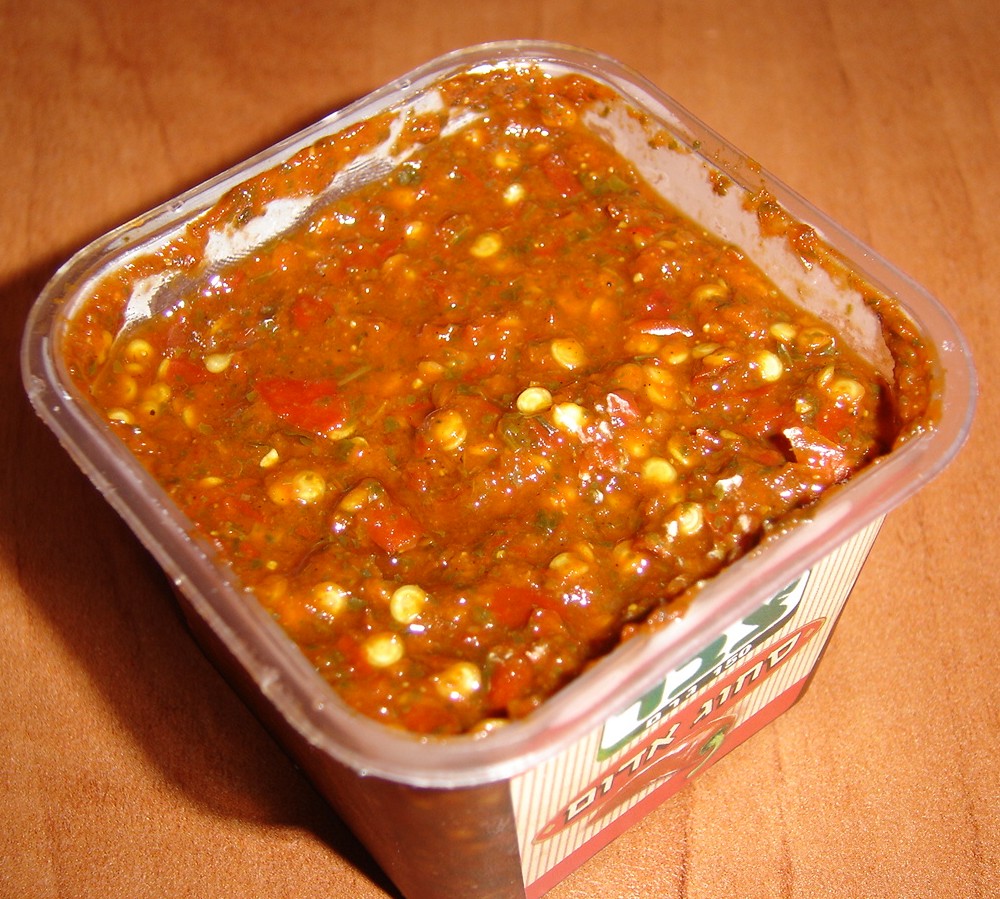 🇾🇪 Yemen and 1 moreZhugسحوق
A Yemeni hot sauce of crushed chilies, garlic, and corianderHot and fiery · Sharp and pungent
🇾🇪 Yemen and 1 moreZhugسحوق
A Yemeni hot sauce of crushed chilies, garlic, and corianderHot and fiery · Sharp and pungent